Simplicity


My dad, a toolmaker for Ford Motor Company, used to say he could make anything out of metal. He also said, “The difficult I can do tomorrow; the simple takes a little longer.” It’s the same with photography—or any kind of art or design endeavor. Nature is in the complexity business. Attempts toward simplicity however, whether in creative expression or lifestyle, requires concerted effort.

In my Visual Communication classes we discussed the continuum of complex imagery at one end of the spectrum and simplicity on the other. It’s not just the number of visual elements within a frame that makes an image complex. It’s also the fact that the expanded relationship—element to element—provides a high level of potential for viewers to “read out” and “read into” the image. The upside of complex imagery is that it carries a great deal of information. That’s the downside as well. With so much potential to read or interpret, there’s a tendency to treat complex images superficially, to give them a glance—long enough for recognition and response—and move on. This is how we consume magazines, movies and the electronic media. It doesn’t have to be that way, but as a culture we Americans tend to be information hungry and rapid consumers of it—like we have to get it all in as quickly as possible. Since childhood, we’ve been taught that more information is better. No doubt. But under certain circumstances, there’s more power to be realized in simplicity—because it triggers emotion.

As noted, simple images require more attention and effort. Make a frame with your fingers and look around your room. Try to find any subject matter that has just a few elements within that frame. Out in the world it becomes even more difficult. Exceptions include certain monasteries where simplicity of lifestyle and environmental design is a lived discipline. The message and practice in these places is consume less and appreciate more.

Simplicity is largely absent from our everyday environments—and lives—because it requires the reduction or elimination of elements. Consuming more—media especially—leaves little time for appreciating what we have. Neither approach is right or wrong, good or bad. Each derives from different perceptions of the world, life and the cosmos. In contrast to the simple image above, here’s a complex image.

So a simple design requires a process of elimination. As the number of elements are reduced, the impact of the image increases. In the image of the single push pin there are only three elements—the black background, the plastic holder and the metal pin. The complex image contains the identical subject matter, but the number of elements is significantly higher—and the brain tries to make sense of it by considering the relationships. After a quick glance we move on so as not to be overloaded. With a simple image we engage longer because it’s unusual and appealing. There a harmony, a quality of satisfaction and interest that come from tapping into the essence of a subject, perhaps its perfection.

When the communication objective is to convey information, complex imagery or design is the advisable approach. When it’s to convey an experience or emotion, simplicity is a better strategy. Sometimes. Like verbal communication, visual communication can be messy. There are always exceptions.

Applying these observations to my life, I notice how difficult it is to simplify. It’s not just that I have so much stuff—I need it to do my work and pursue my interests. I think of the Native Americans who, living in teepees, could gather their belongings in a morning and move on. I also think of the people who educate themselves and work hard for many years to achieve high level positions and salaries, only to find their jobs stressful and unfulfilling. In his groundbreaking and visionary book, Voluntary Simplicity, Duane Elgin made the case for living with balance and ecological awareness—a life that is “outwardly simple and inwardly rich.” More recently, Linda Breen Pierce’s book, Choosing Simplicity: Real People Finding Peace and Fulfillment in a Complex World provides compelling stories of people who chose to simplify their lives.

Seeing the above images together, I notice that they depict different states of consciousness as well as communication and lifestyle strategies. Waking consciousness is extremely complex and dynamic. It needs to be in order for us to engage in and process information. Recently, brain researchers found that sleep performs a cleansing function for the neurons, equivalent to erasing the buildup of chalk on a blackboard. The mind becomes renewed. The act of contemplation does the same thing in a waking state by focusing for a time on just one thing. And perhaps the ultimate elimination of mental complexity comes with meditation. The reason, I suppose, is that meditation’s proper object is being rather than doing or having. Just being.

Simple can be harder than complex: You have to work hard to get your thinking clean to make it simple. But it’s worth it in the end because once you get there, you can move mountains.

Steve Jobs

About This Image

Title: Push Pin

Simplicity is one of the qualities I look for and try to create when photographing. In the world outside the studio this is extremely challenging. It’s hard to eliminate, to crop out elements that don’t contribute to the point of critical focus. Even with a closeup lens, for instance when shooting flowers, there are leaves or weeds or fences in the background.

This is why I often bring subject matter into the studio and shoot it against a black or white background. I’d photographed a push pin in my early years of college. It was a nice image, except the camera’s lens was not very sharp. Reviewing it years later I thought the subject had possibilities, so I shot it again and composed it differently. Here, the camera looked down on the pin, which lay on a piece of glass suspended over a velvet cloth. The pins on the white background were shot on a light table.


Transition


As we transition into Autumn, rather than post a series of images—as I did through the summer months—I’ll return to the original format of posting a single image with a brief, associated contemplation. As stated on the home page, the purpose of this blog is to, by way of demonstration, encourage you to use your camera (or camera phone) to deepen your experience of photography by making images that exercise your aesthetic preferences in the first place and then expand your perception of self and world.

What and how we photograph is not an accident. It’s an incident of self-projection, a process whereby we formalize our perception within a frame by selecting what to show and what to exclude in order to express how we feel—and observe how we organize the aesthetic dimensions (line, texture, contrast, etc.) within a frame. Most people stop there, content if others who view them appreciate the subject and composition. Because these projections are also reflections, they can inform us about ourselves. But only if we look.

This offering suggests that the “images you make,” beyond the “pictures you take,” contain a wealth of information about who you are and how you currently perceive yourself, the world and the cosmos. It’s about making images that in turn make meaning. All it takes is spending some alone and quiet time with an image, allowing it to speak to you.

By looking back at some of the early posts—and forward to those yet to come—you’ll get a sense of the kinds of issues to ponder, questions to pursue and journeys of imagination to take. These demonstrations are not intended to promote my photography, argue ideas or state my personal philosophy or values. They are intended however, to encourage and inspire a deeper relationship to the images you make, particularly through the “energies” of appreciation and gratitude for all that is, as it is, in front of your camera.

Note also, for those who are following, beginning next week these blogs will show up on Sundays rather than Saturdays.

Life transitions are about letting go of roles, unraveling your identity, and discovering new dimensions of yourself from the inside out.

Frederic M. Hudson


Guatemala

Between here and the volcano, in the middle of Lake Atitlan, there is a submerged Maya ruin the size of a small city.

One of the many docking areas in Lake Atitlan.

Canoes

Hand-made conoes lining the bank at Lake Atitlan.

Laundry day at Lake Atitlan—probably every day for many women.

The reeds used to make mats & fans

The tule reeds that are plentiful along the shores of Lake Atitlan have many purposes, perhaps the most common being woven mats, fans and baskets.

Farm With Terraces

This farmer terraced his hill in order to more efficiently water his crops. Also, it’s easier to access the beds. It’s no coincidence that the land rises like a pyramid and has terraces with a house on top. Ancient Maya temples were god-houses that sat atop stone mountains.

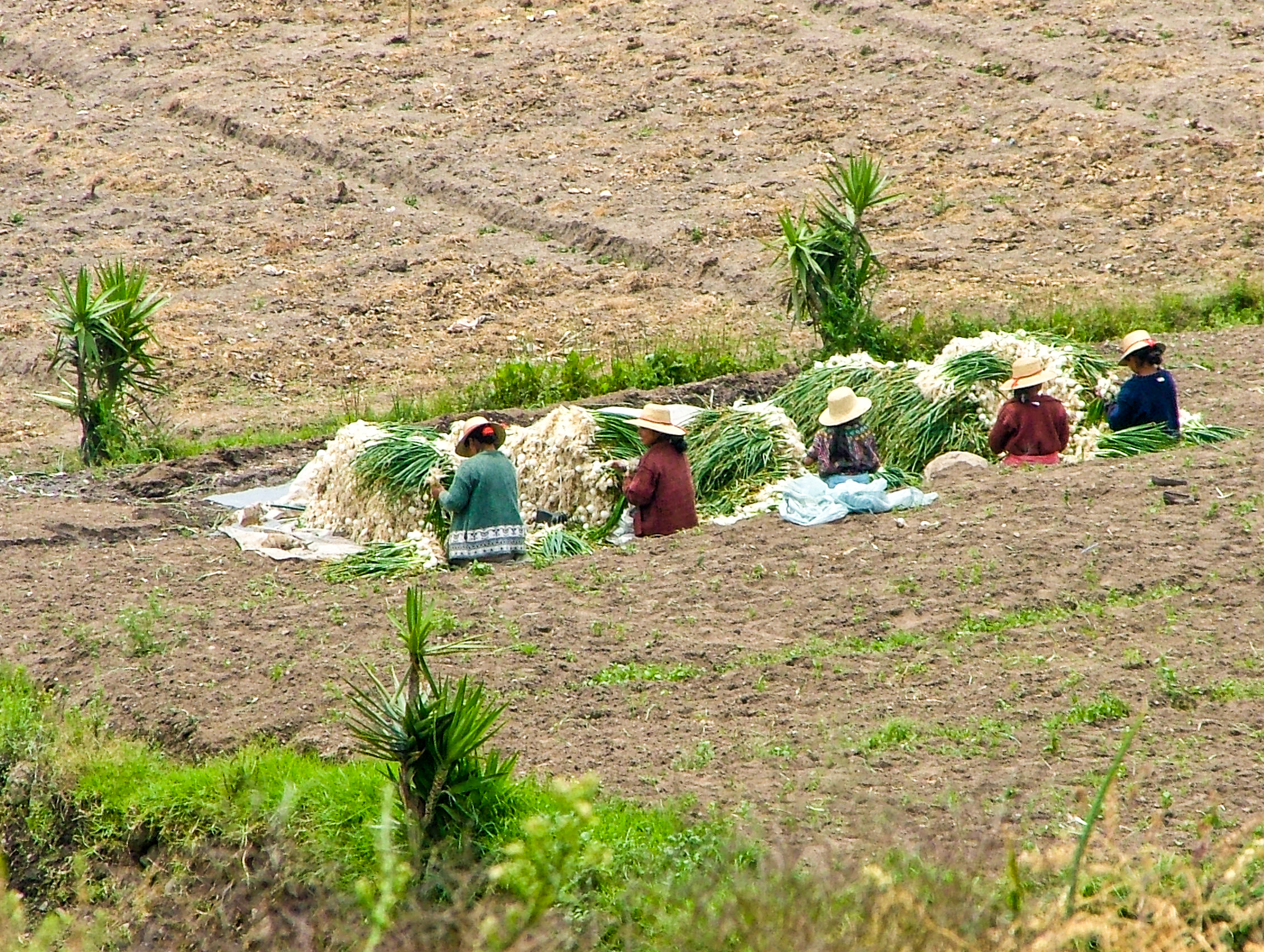
Women cutting & sorting, harvesting onions

These women are cutting and sorting onions. The tall green plants are property markers.


The church at Panajachel, Guatemala.

Dyes used by the ancient Maya were derived from plant, seashell and mineral sources. The colors were mainly red, yellow, purple and blue. They mixed them together to make other hues,. The colors seen today are much richer because the dyes are synthetic and imported.


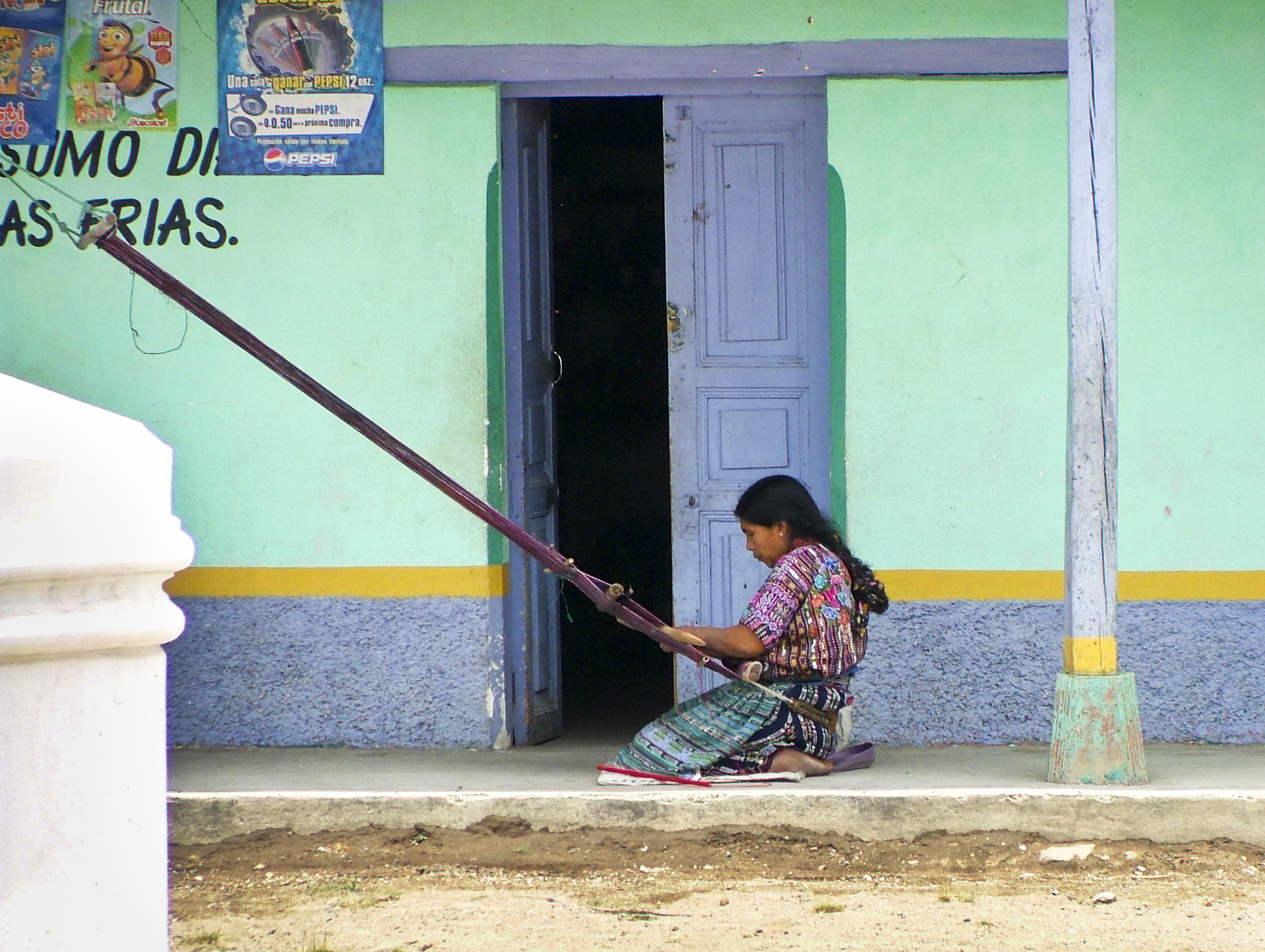
With few exceptions, Maya women weave and sell the results. By the time a girl is five or six, she is weaving on a backstrap loom. She receives no direct instruction, learning solely by watching their mothers and grandmothers. Nearly every pattern in a woven fabric has a meaning. Not everyone can articulate it, but scholars trace some of the designs to ancient icons and symbols that relate to ancient Maya cosmology.

The coiled turban headwrap, a likely derivative of ancient serpent headdresses, identifies the wearer as a member of a particular community.

A woman sitting in the typical (and ancient) position for weaving on a backstrap loom. Notice the leather strap around her waist The woman next to her is also weaving, and you can see the front part of the loom. Notice also the tail of the kitty (Bottom right).

These are the colors the camera captured. No photoshop adjustments.

Woman Carrying Bundle On Her Head

Walking along, whenever I asked anyone if I could take their picture they were happy to accommodate—for a quetzal, about the equivalent of a dollar.

An efficient and low cost way to climb the side of a wall.

My guide said: “They train us at a very young age.” I remarked, “The women carry firewood?” She replied, “We do everything!”


My guide—a Maya woman with a PhD in anthropology from Harvard University—had me wait at the bottom of the steps while she went to see who lived here. The compound turned out to be the home of a shaman. Shown here are his wife, sister and children. She spoke with them in Mayan, and the shaman allowed me to take photographs at one quetzal each.

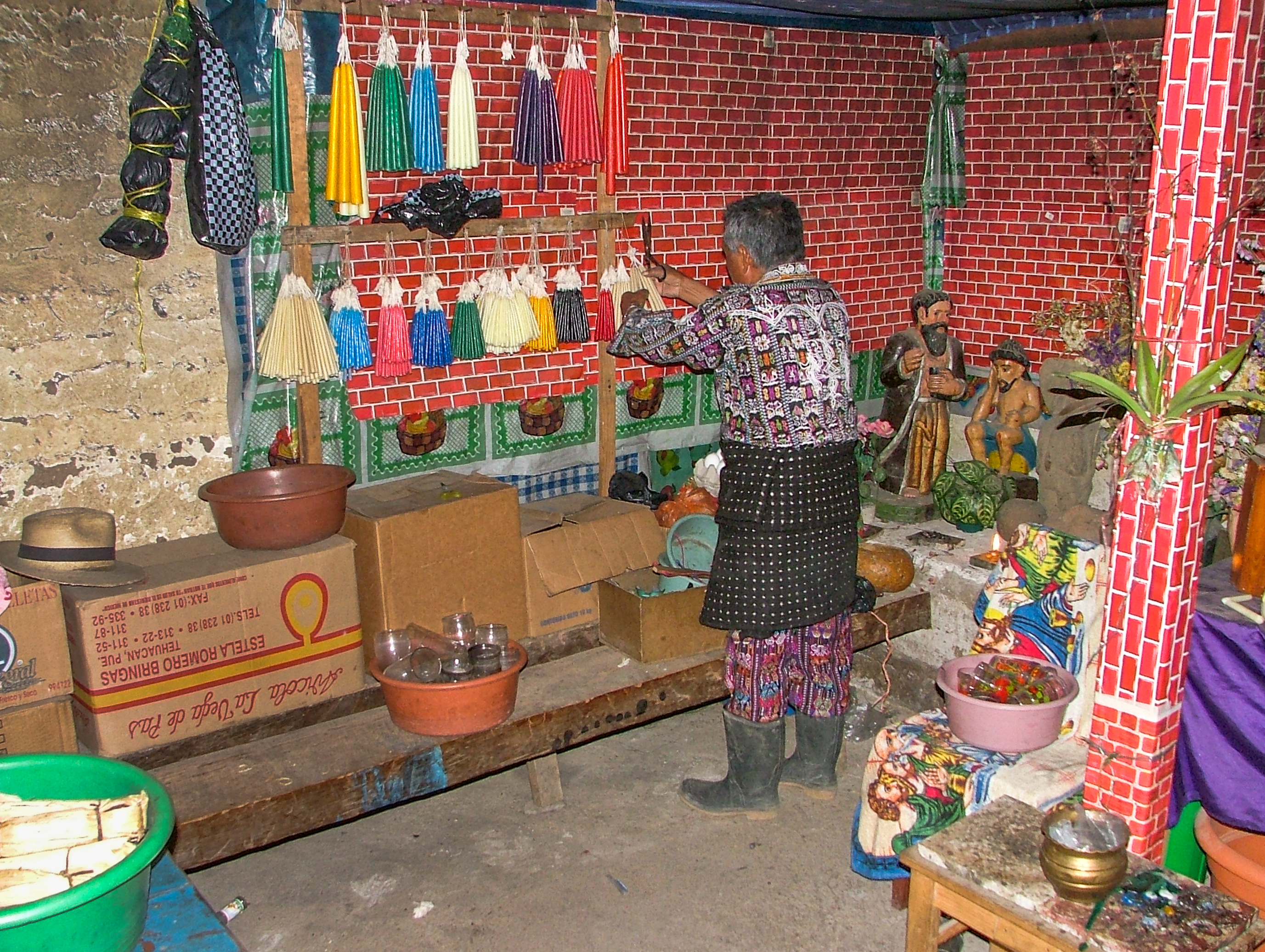
This is something tourists never get to see. Here, the  shaman is hanging candles on pegs in his workshop. He’d just finished with a “client.” Behind him on the right are his “saints,”—named  statues that contain some of their spirit-essence. Candles are kept burning in front of them. He wears the traditional dress of his community. His altar is at the bottom right.


The shaman’s altar consists of beans, crystals, special stones, flowers, candles, figurines and other objects that contain spirit power. Everything has its rightful place to honor the gods of the four sacred directions. Even the colors are associated with these directions.


These are the beans, crystals and stones the shaman uses to perform a “layout” as part of his divination process—to help clients who come to him with an ailment, relationship problem or question.

The bustling marketplace at Santiago Atitlan. Bargaining is the order of the day.

Nautical


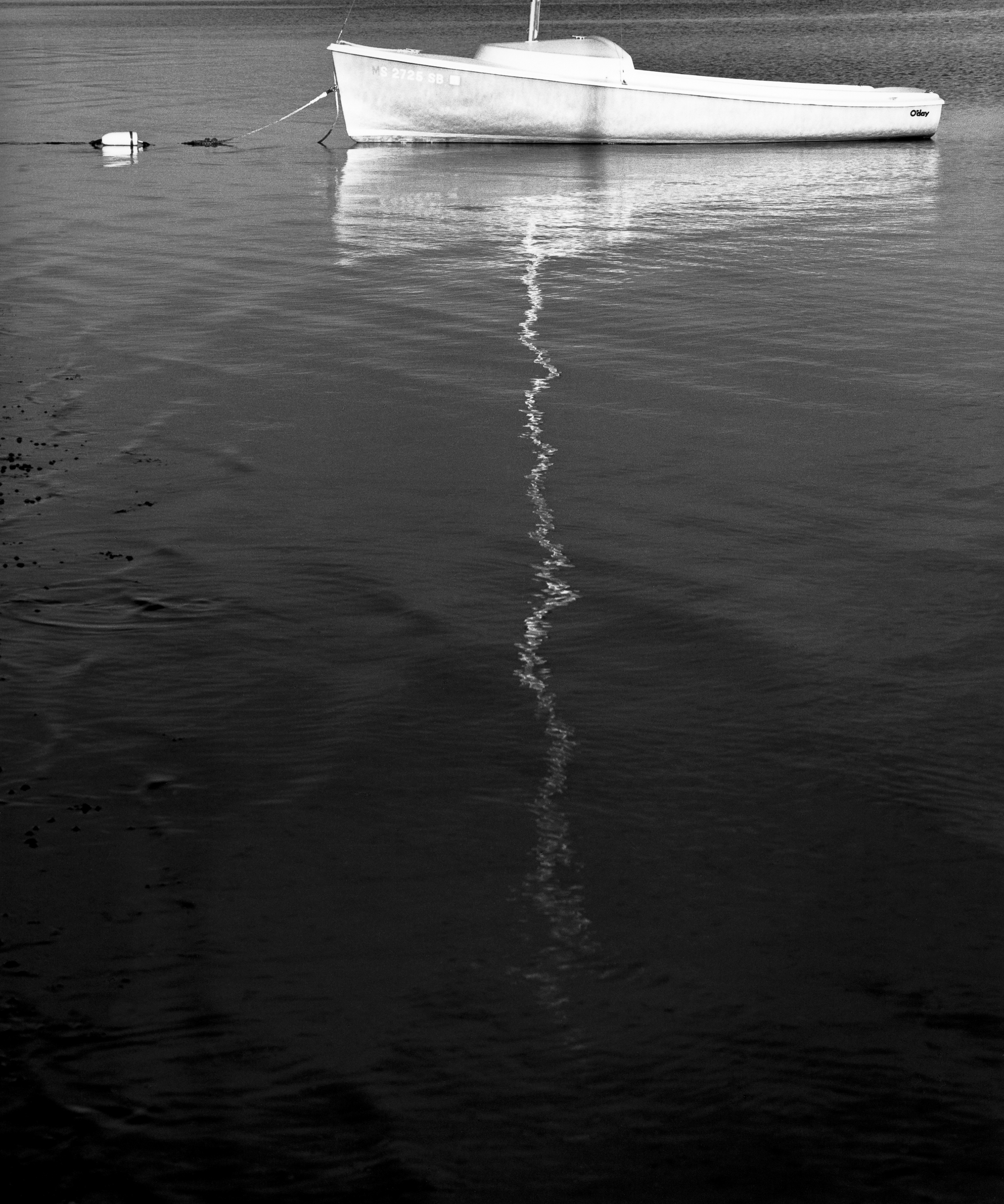
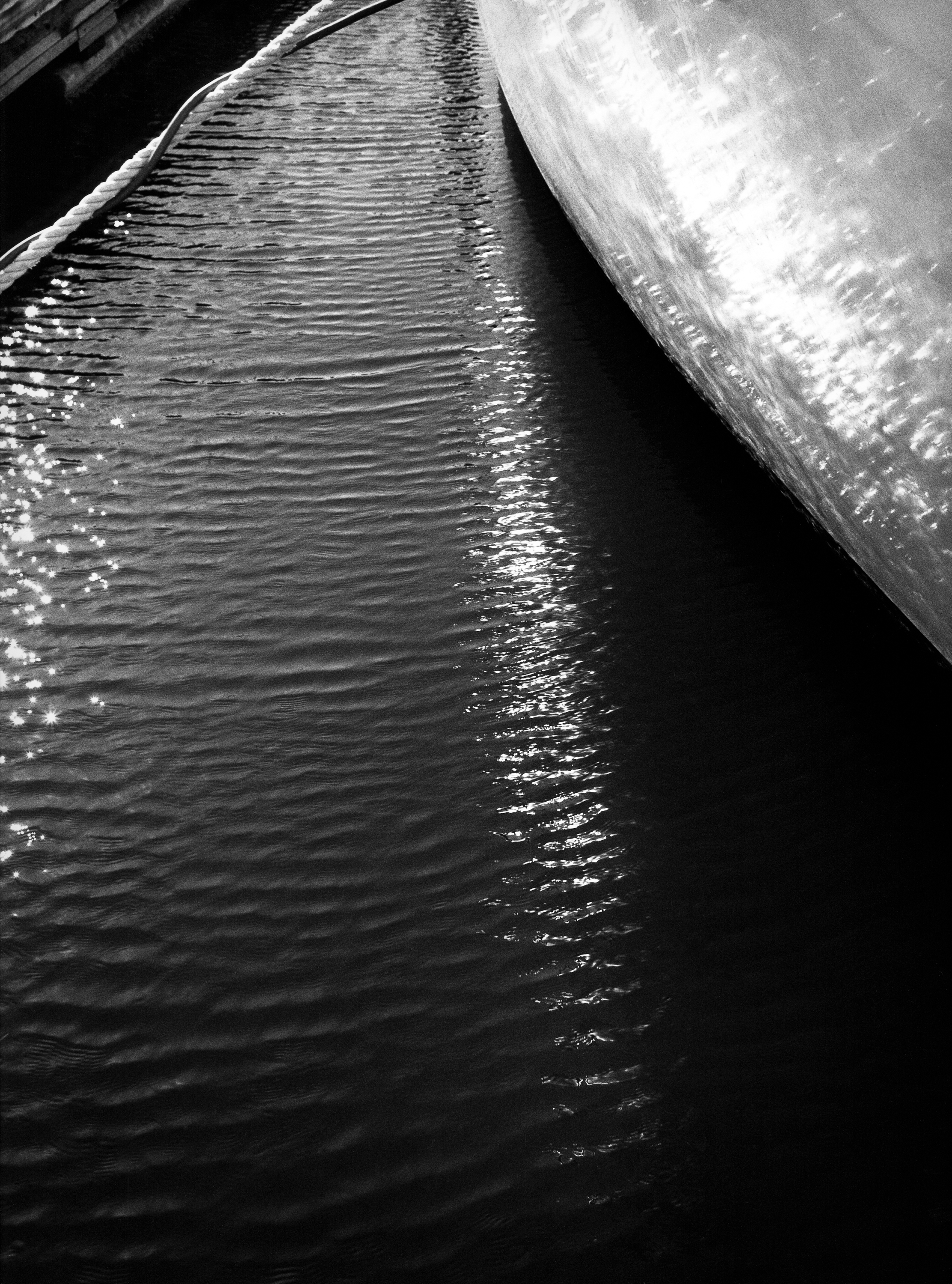
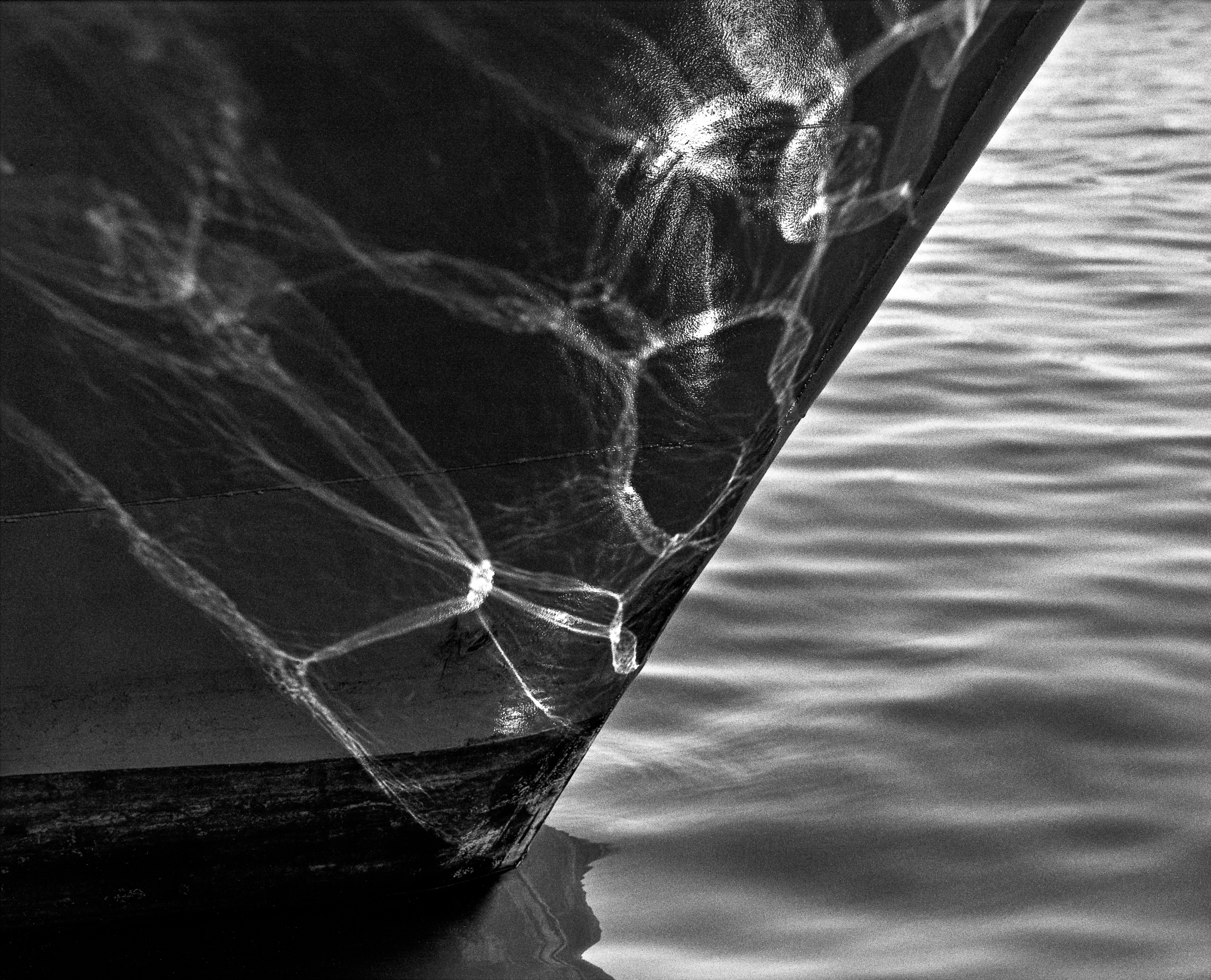
I’ve always been attracted to things nautical: ships, boats, rope, sail and rigging, running paint and patterned reflections. Beyond function, I delight in the surfaces, textures, rhythms and forms that I find on piers, docks, harbors and marinas. They interrupt light beautifully, illuminating the full spectrum of aesthetic dimensions— line, contrast, shadow, gradation, texture and so on.

Like life, water and everything on it is in constant motion. The rising and falling of waves and tide are a kind of breathing which results in randomness and order—the generators of the aesthetic dimensions, there for light to reveal. Nautical subjects also lend themselves to abstraction, the urge to make images that point to something beyond the subject matter and its label. When something seems more than what it is, or something other that what it is, a “picture” is transformed into an “image,” an experience that sparks the imagination.

These analytical perspectives are attempts to understand something very simple: I don’t know why, but my aesthetic sensibilities soar when I’m around water, ships, boats and rigging.

“I can’t control the wind but I can adjust the sail.”

Ricky Skaggs


Ship Rope & Port Holes


Maize

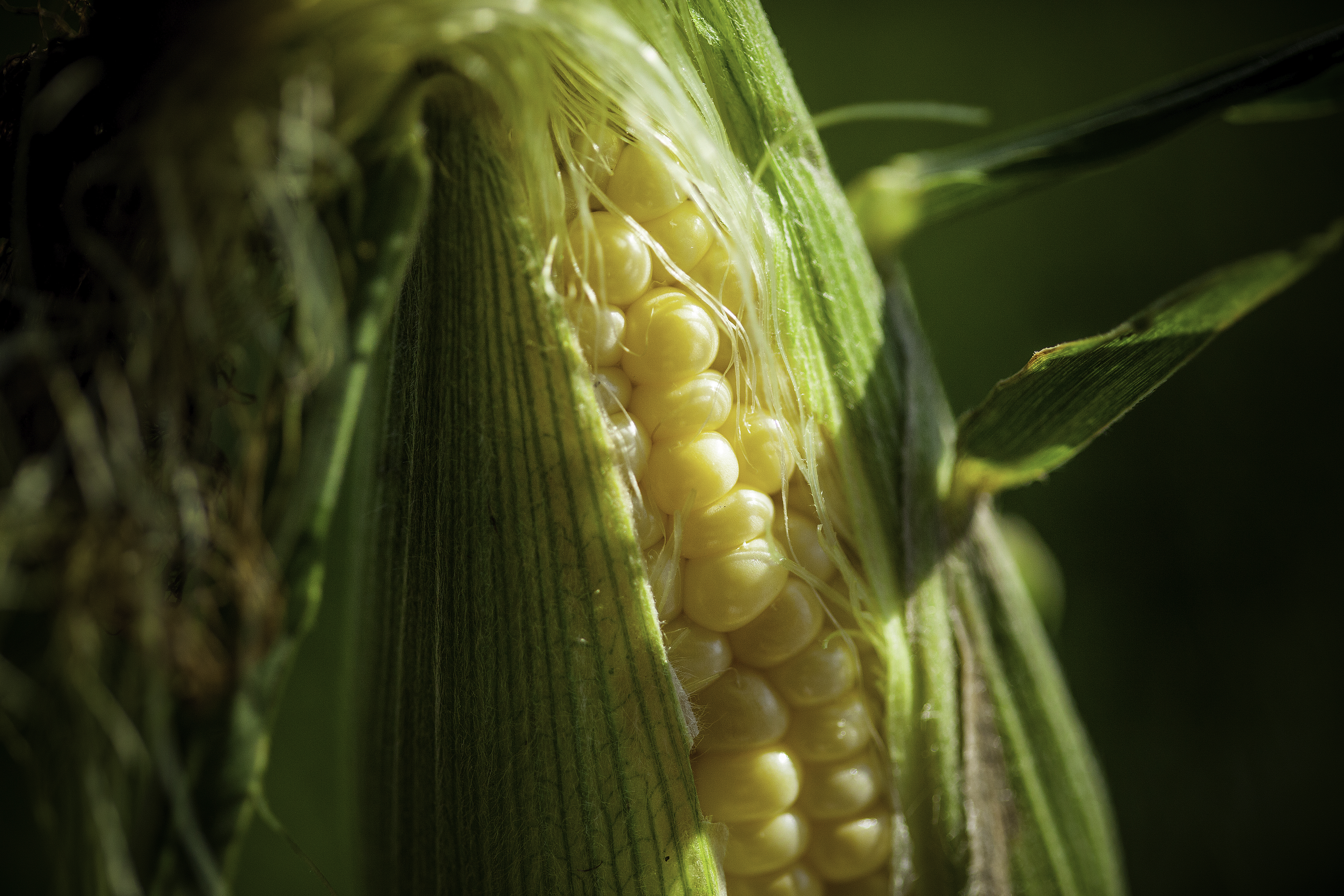
For me, one of the best things about summer in Ohio is corn! Considering my affinity toward Central America, I prefer the term “maize.” It’s an Indian word meaning “sacred mother,” or “giver of life.” The ancient Maya creation story features the maize god—referred to as “First Father.” When the waters that covered the earth receded, the first mountain to appear contained enormous bounties within it. Having sacrificed himself to defeat certain flaws, the maize god descended into the Underworld. Chaak, a lightning and rain god, came along and with his mighty axe split open the earth, which was perceived as a great turtle or crocodile. The maize god ascended through the crack, thereby defeating death and distributing the bounty, maize in particular. First Mother ground the maize into a dough and that became flesh for the first human beings. The ancient Maya were known as the “People of Maize” because they literally believed they were constituted of it. And ever after, the maize plant has been a primary metaphor for the human lifecycle.

First cultivated in Mexico, maize was developed by natives living in Central America—Olmec and Maya—at least 7,000 years ago. It was heavily traded throughout North, Central, and South America. Native Americans used sweet corn leaves as chewing gum. Columbus brought it back to Europe. The early settlers in the New World learned from the natives how to make various dishes including corn bread, corn pudding, corn soup, and fried corn cakes.

Maize is a domesticated grass. It does not exist in the wild. The tassel at the top of the stalk is the male part and the silk of the ear is the female part. The tassel releases millions of grains of pollen, and some of them are caught by the silk. There is one strand of silk for each kernel on a cob. Depending upon the cultivated type, the crop may be ready for harvesting in 65-90 days. On average an ear of maize has 800 kernels in 16 rows, and there is always an even number of rows on every cob.
The U.S. corn crop acreage, put together, would cover all of Germany. In the U.S., it takes 91 gallons of water to produce one pound of corn (European word). Maize is cholesterol free and a good source of vitamin C and A, potassium, thiamine and fiber. It’s very high in antioxidants, 100% whole grain, and high in natural sugars/starches.

If you wish to make an impact for one year, plant corn; if you wish to make an impact for a generation, plant a tree; if you wish to make an impact for an eternity, educate a child.

Chinese Proverb

The Atmosphere


A cloud does not know why it moves in just such a direction and at such a speed… It feels an impulsion… this is the place to go now. But the sky knows the reasons and the patterns behind all clouds, and you will know, too, when you lift yourself high enough to see beyond horizons.

Richard Bach

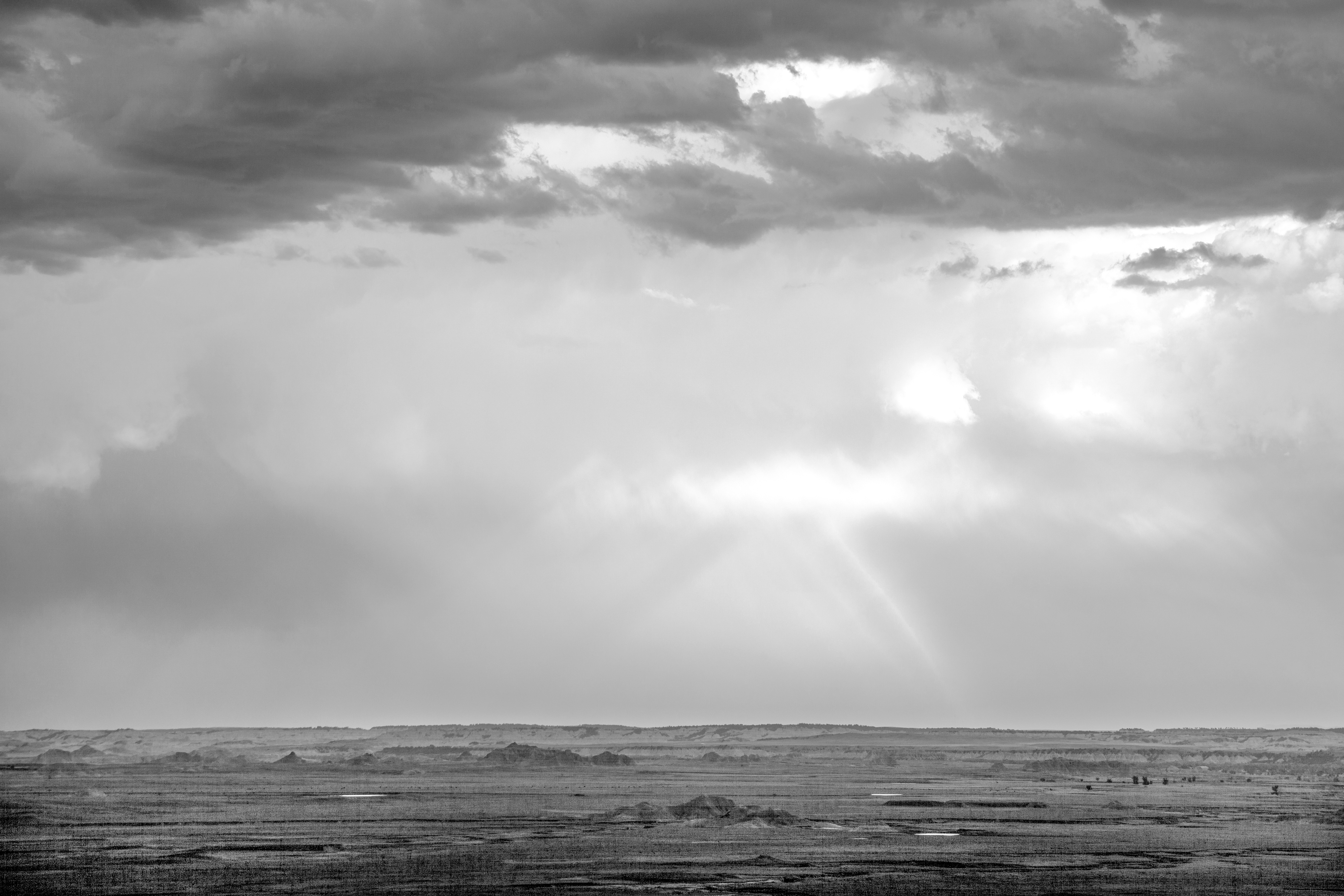
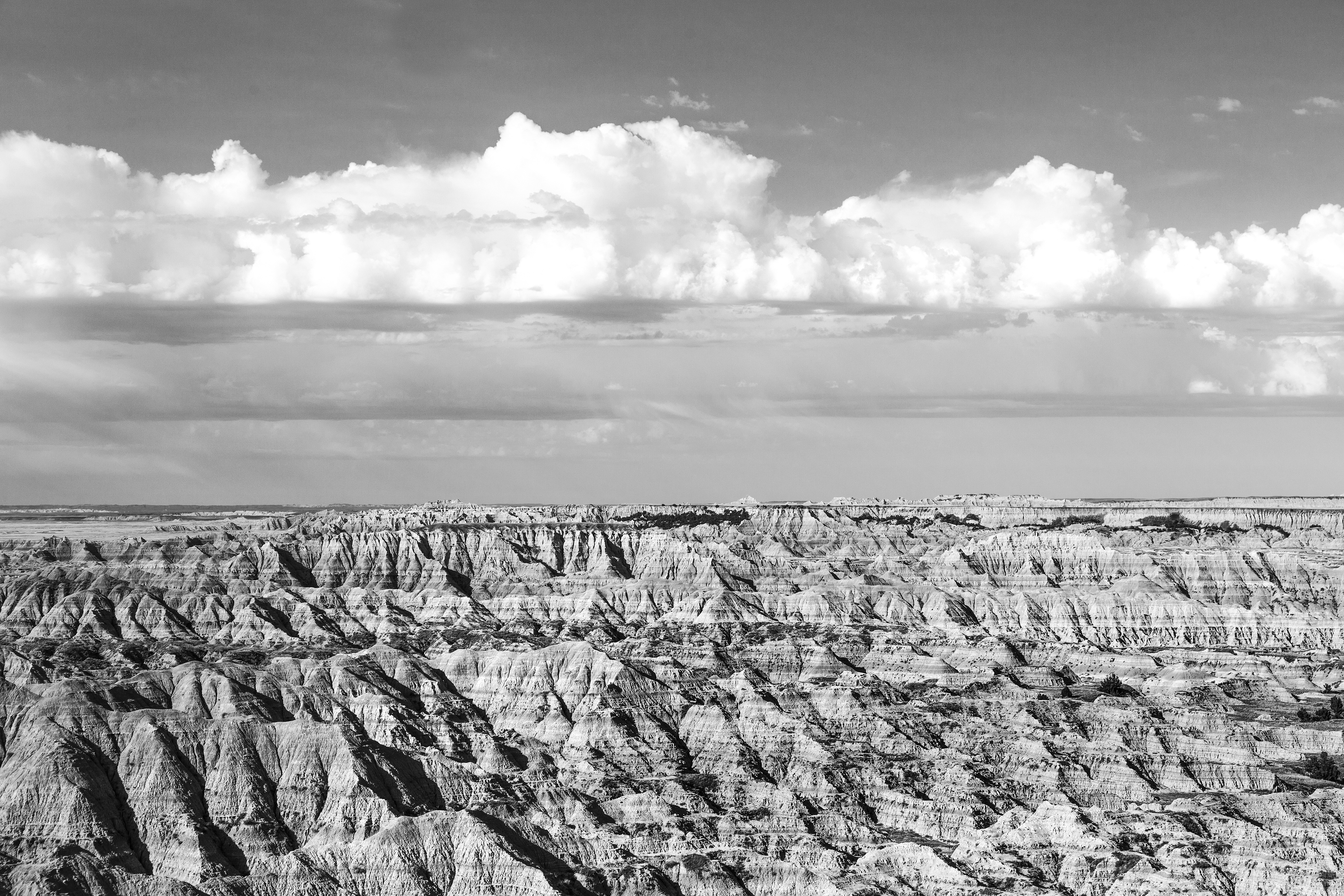
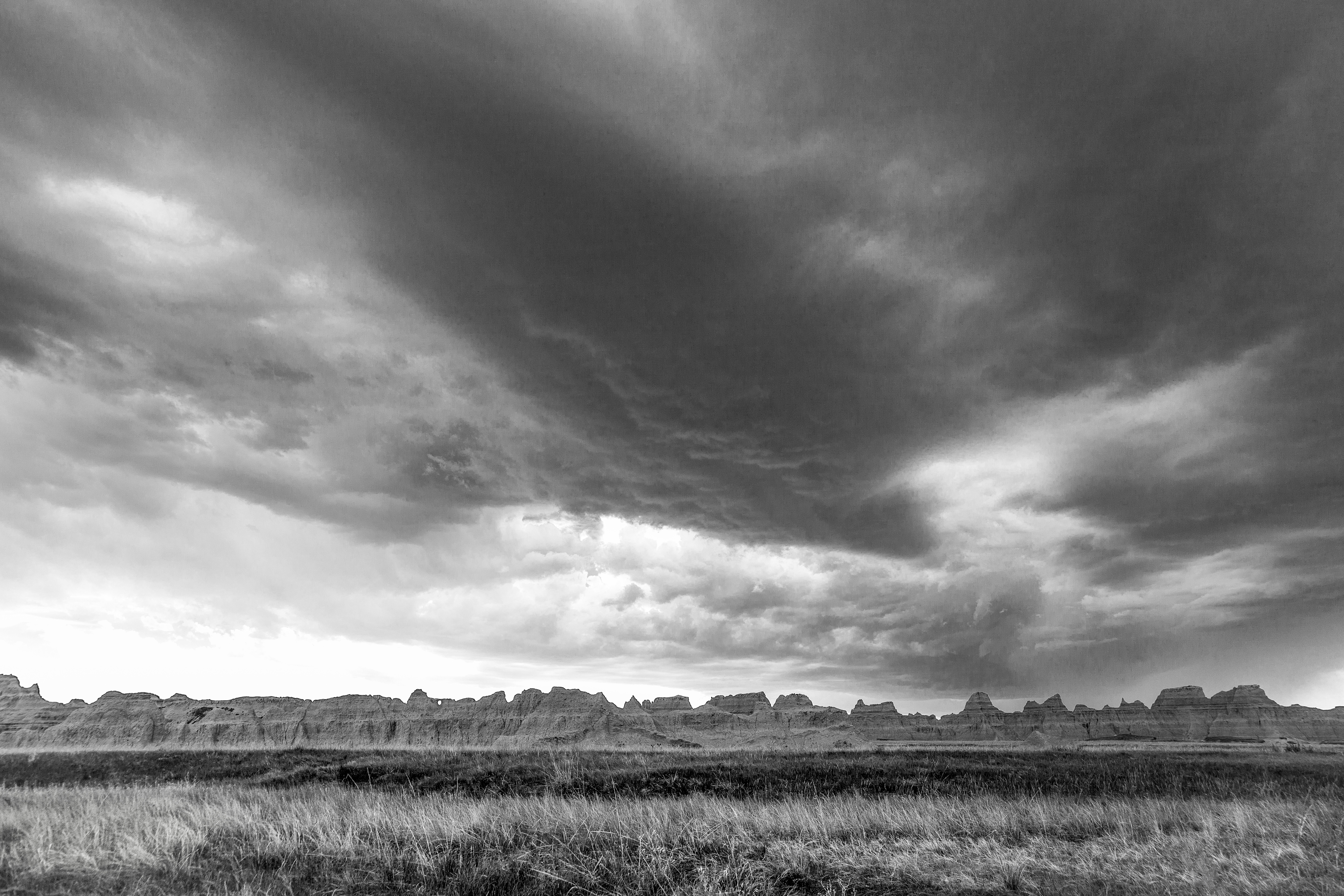
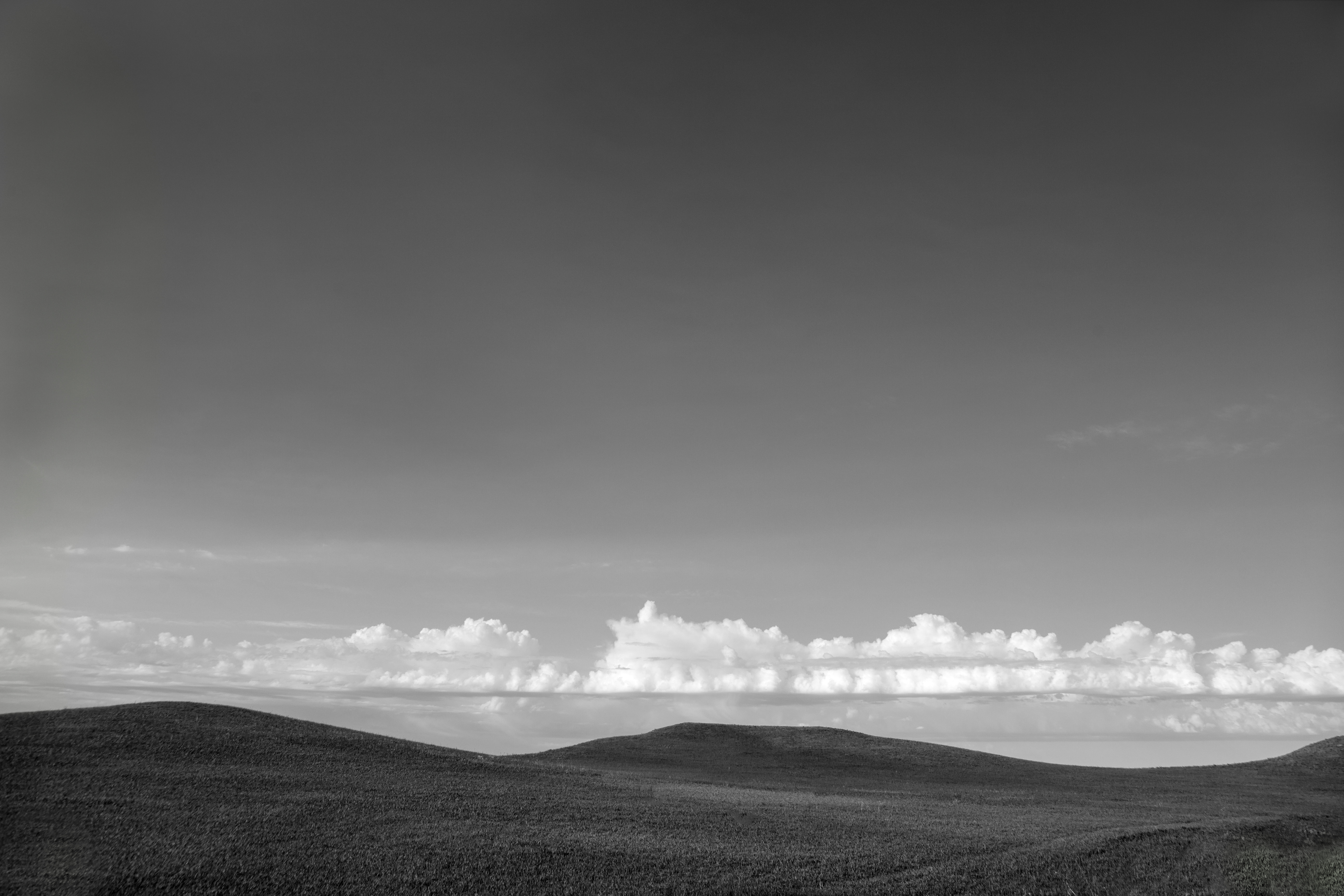
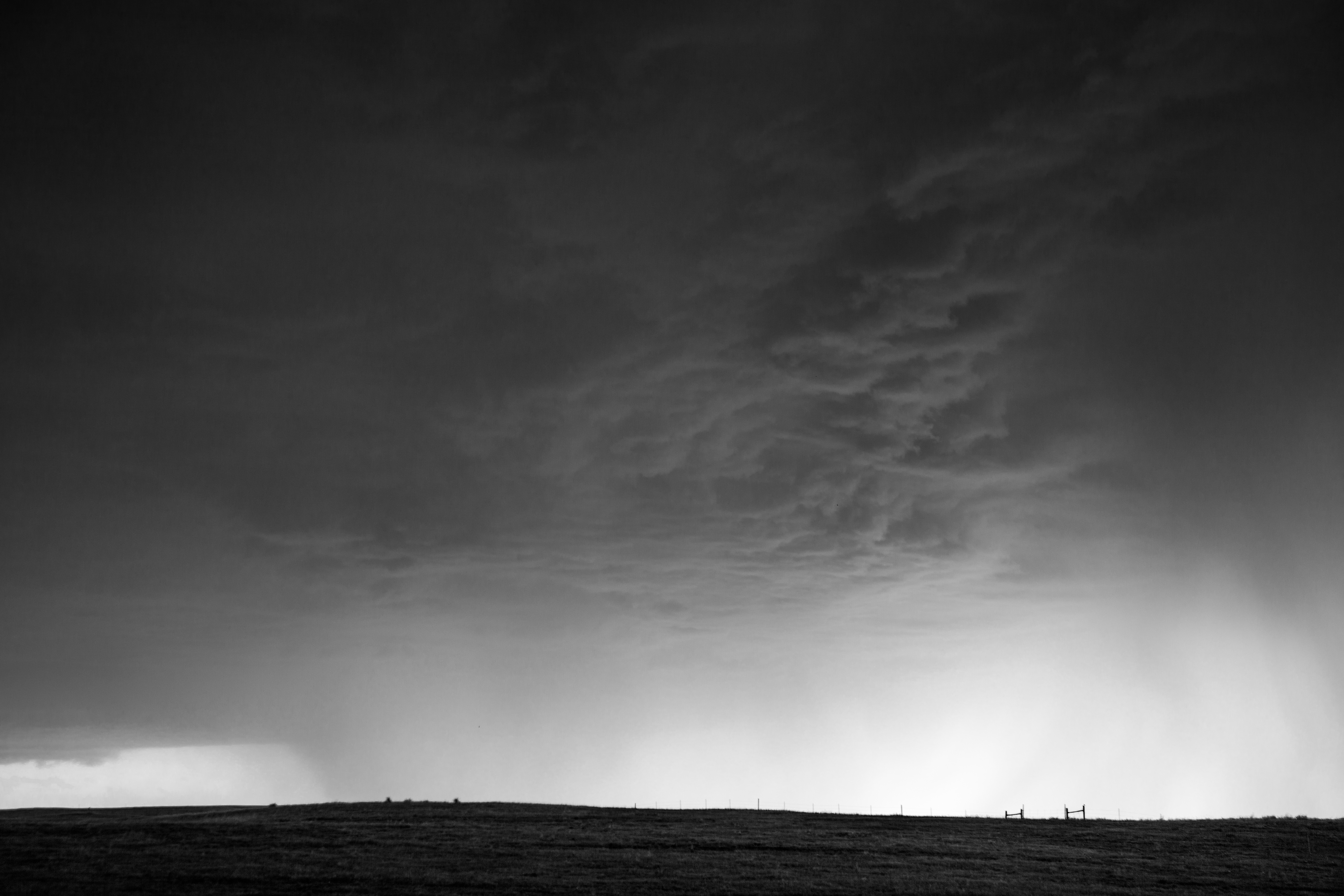
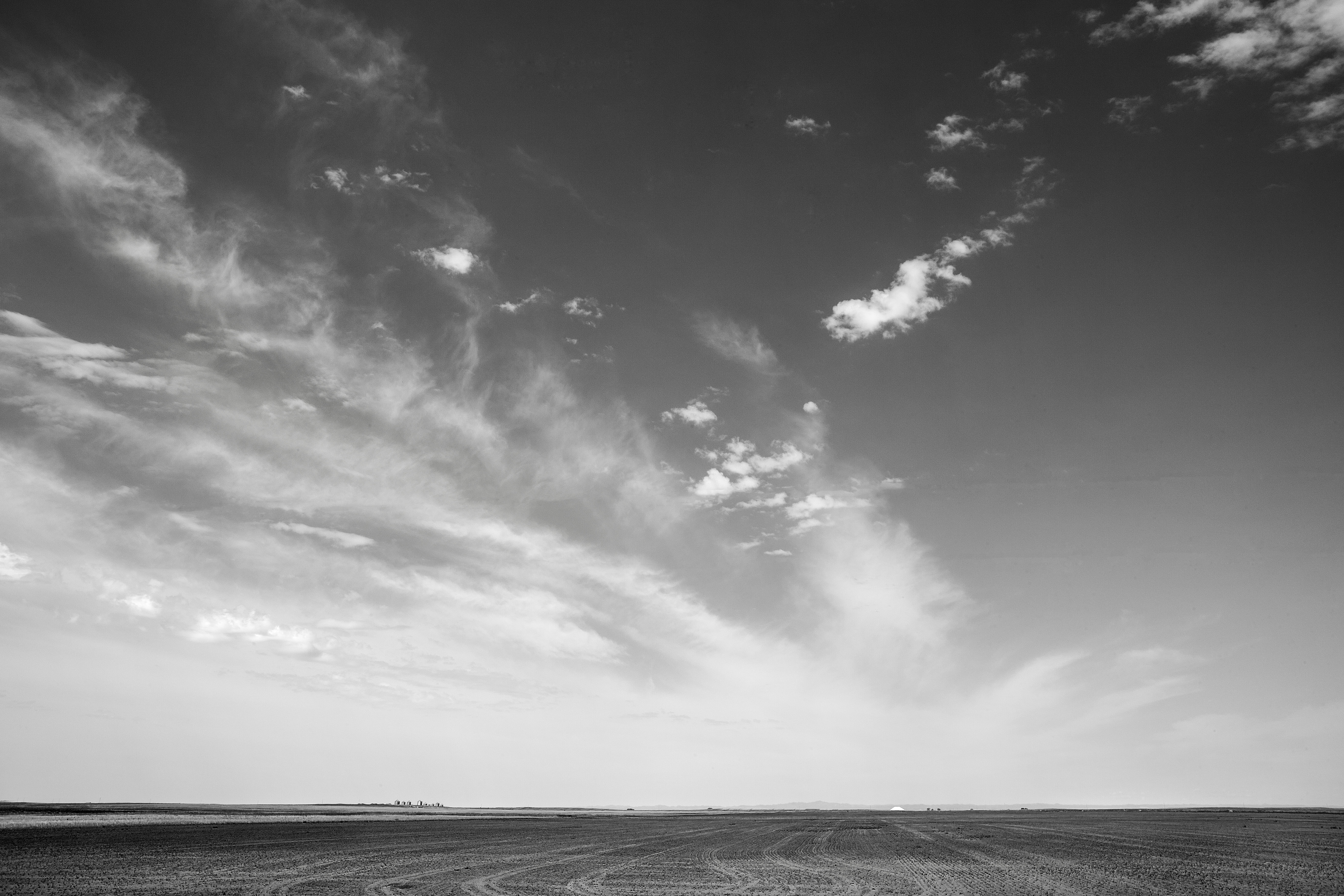
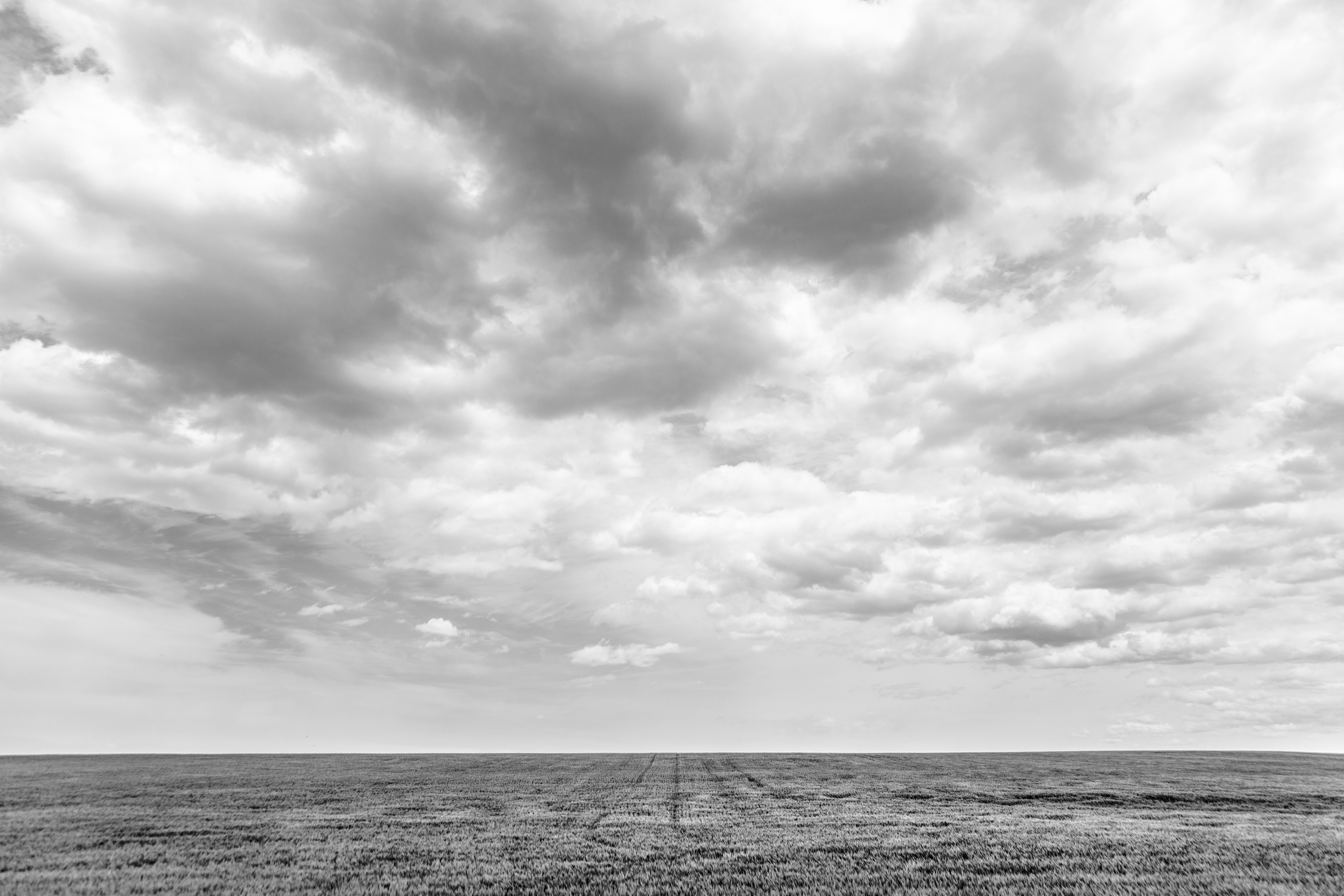
In response to requests from last week’s posting, “Space: It’s Not Nothing,” I present some additional images from my South Dakota and Nebraska photographic expedition. Along those same lines thematically, and because the selections here involve clouds and atmosphere, I wondered about the composition of the atmosphere. What I found was that the air we breathe at sea level contains mostly Nitrogen (78.084%), Oxygen (20.947%), Argon (.934%), and Carbon Dioxide (.0314%), with traces of about eleven other elements.

Regarding argon, I learned that we breathe it in and out without absorbing it because it’s an inert gas—it doesn’t undergo chemical reactions under certain conditions. So when we exhale, the argon atoms re-enter the room—or outdoors—to be inhaled again by others.

Astronomer Harlow Shapley calculated that in one year, the argon atoms we exhale today will circulate around the planet and fifteen of them will come back to us to be breathed in again. On that basis, he further calculated that every breath we take has millions of argon atoms that were once in the bodies of Joan of Arc and Jesus Christ and the bodies of dinosaurs and sabre-toothed tigers 65 million years ago.

I photographed the Great Plains landscape hoping to catch the sensibility of vast space as a way to engage and appreciate the fact that space is not empty, that it’s filled with invisible particles, forces and fields. Now, they are showing me that the space within which we live and breath is a veritable and dynamic nature-made “soup” consisting of water vapor and a host of elemental particles—precisely proportioned to give rise to and sustain life. Air. Breathable atmosphere. So far, in all our exploring, we haven’t found anything to match it anywhere else in the universe. It’s good not to take it for granted.


Space: Nowhere Is It Empty


Photographing on the American Great Plains was heavenly—not only for what was there but also for what was not there. In 2012 I ambled the backroads of South Dakota and Nebraska for ten days, intent on capturing space—rather than landscapes or objects. My interest in “space” as a creative challenge was sparked by readings in science:

  • The Quantum Universe by Brian Cox & Jeff Forshaw: “What we call ‘empty space’ is really a seething maelstrom of subatomic particles. The vacuum has an incredibly rich structure made up of all the possible ways that particles can pop in and out of existence.”
  • Higgs Discovery by Lisa Randall: “Empty space is not truly empty. It can have energy and charge. It just doesn’t have matter.”
  • Fabric Of The Cosmos by Brian Greene: “Empty space is teeming with quantum activity. It is far from empty. Particles fluctuate. They’re created and destroyed, come in and out of being. Space is “teeming” with fields and particles. It’s so flooded it has been shown experimentally to force things together. One of the properties of space is that it “wants” to expand, faster and faster.”

Scientists writing about the contents of “outer space” being filled with invisible particles, waves and fields prompted the realization that these energies and more, permeate our world and everyday life. For evidence, we need only observe the many and varied electronic towers and satellite dishes that have become ubiquitous. Right this moment, you and your environment are permeated with radio and television waves, microwaves, photons, ultraviolet light, infrared rays, X-rays and gamma rays, cell phone waves and sub-atomic particles such as neutrinos and bosons. And that’s on top of the more subtle and mysterious “stuff” called dark matter and dark energy. Indeed, space is a teeming maelstrom of invisible particles and waves. I observe this, not as a complaint or a cause for distress, but to marvel at the complexities and geometrical beauty of these energies and fields which, although invisible, are natural and powerful components of the universe.

It made me wonder if there was a way that I could capture the sensibility of these forces on film. Linda offered an idea: For space to be seen or noticed, it needs to have a material reference or context. She offered  my photograph “Solitude”—a high contrast black and white image of fishermen in a little rowboat surrounded all around by pure white space—as an example. (See my posting of February 8, 2014).

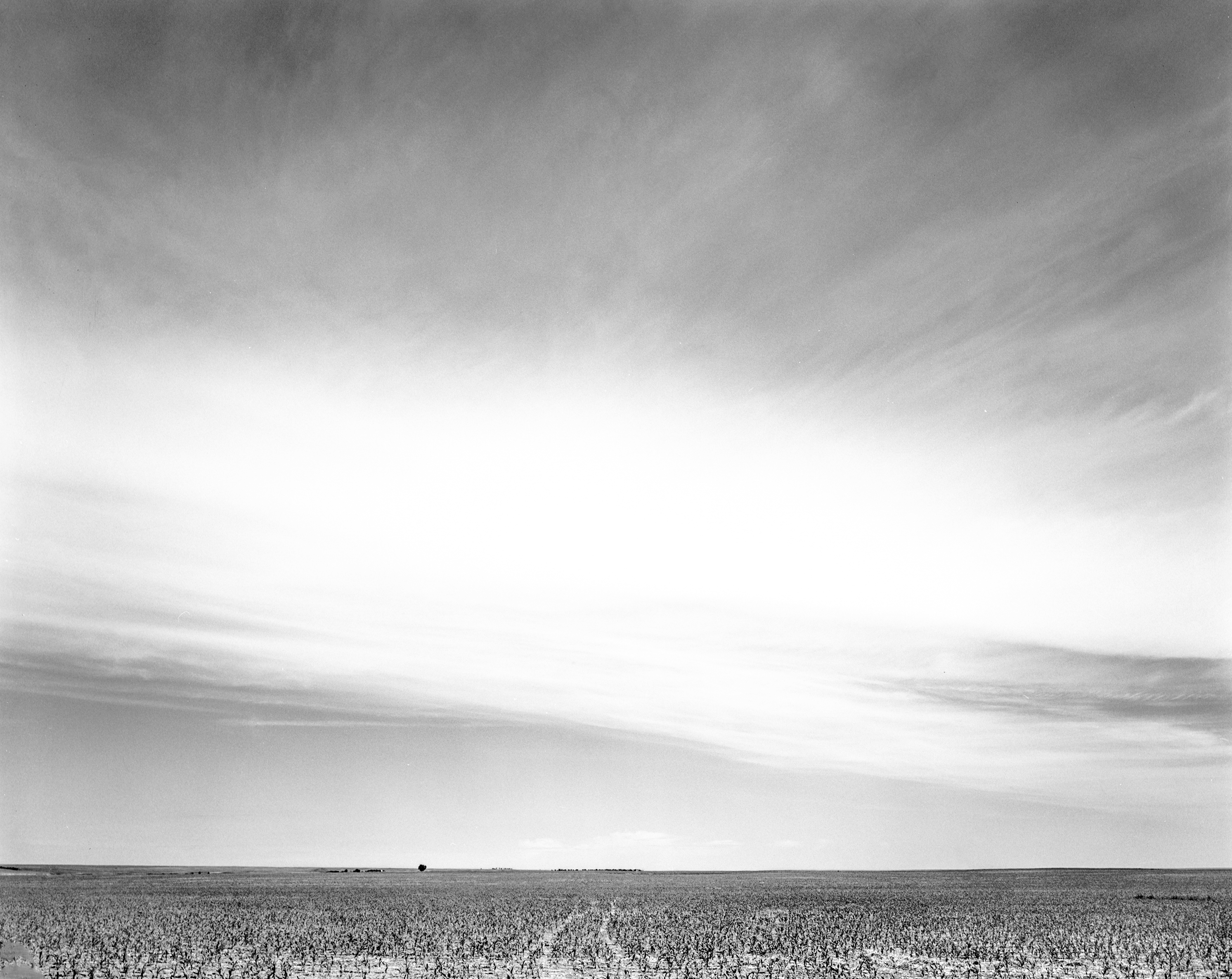
After much consideration and research, the quest for wide open vistas led me to the Great Plains. And I found what I was looking for—vast fields and open skies. Considering that the universe is constituted of only 5%  matter, I composed many of my landscape shots so the sky would occupy 95% of the space within the frame. I emphasized converging lines to convey distance. In a closeup of whip grass, wind blurring the feathery strands was a demonstration of natural forces. And cultivated fields provided a metaphor for, well, “fields.”

Part of the joy of being literally lost in space for those ten days, was not contending with visual obstructions such as billboards, businesses, expressways or jet trails. The challenge of working around telephone poles, wires, fences and road signs was gone. I could set up my 4×5 view camera in the middle of the road with no concern about traffic. There were times when I wouldn’t see a car or a human being for nearly an hour. And the clouds were spectacular, like they knew I was wanting to capture the sensibility of immensity and space. It was a time of great joy, creative outpouring and freedom—being in the flow.

While these images do not actually show the particles, waves and fields mentioned here, they take me to a place where I can imagine them. And that evokes appreciation, sometimes awe.

The non-visible world’s nature differs so radically from the material world that it cannot be  pictured. It’s both nonmaterial and non-visible. Even so, it is profoundly real and powerful. The new cosmology depends upon an understanding of the reality and power of this realm.

Brian Swimme


Fireworks For The Soul


Peony

Peony

Flowers know the secret of beauty. 130 million years ago, plants learned that modifications in their form, texture, color, and odor can evoke the experience of beauty in other sentient beings. And they have been doing it ever since, wherever plants grow. Still today, flowers exercise the power of attraction as a reproductive strategy—so strongly, that 70 billion units of consciousness are moved by them. The amount of energy that goes into their cultivation and exchange is immeasurable. We use them not only to experience beauty personally, but also to express gratitude, appreciation, and love to one another. Even painted or photographic images of these masters in the use of light, prompt a response that is universal and akin to fireworks. We may not understand the nature of beauty, but we recognize it with every Wow!


Flowers don’t worry about how they’re going to bloom. They just open up and turn toward the light and that makes them beautiful.

Jim Carrey


Calendula

Calendula

Amarillys (Red)

Amarillys

Iris

Iris

Pissia

Pissia

Poppy Field

Poppies

Poppy

Poppy

Calla Lily

Calla Lily

Pansy

Pansy

Hibiscus

Hybiscus

Hibiscus

Hybiscus

Rose

Rose

Orchid

Orchid

Allium

Allium

Rose

Rose

_____________________________________________________

What had to happen for flowers—and these images of them—to exist?

Literally, everything.

_____________________________________________________

In order to expand the reach of this blog, I now have a David L. Smith Facebook page.

A Father’s Day Card — Car Show Reflections

It is highly significant that light was the first creation of the universe. Light, existing outside of time and space, is the metaphysical link between the timeless eternity that preceded our universe and the world of time space and matter within which we live.
Gerald Schroeder

1948 Buick Roadmaster hood

1948 Buick Roadmaster

'73 Corvette Stingray

1973 Corvette Stingray

1934 Ford Coupe

1949 Oldsmobile

'73 Corvette

1973 Corvette

'42 Willis

1942 Willis

1949 Oldsmobile fender

1949 Oldsmobile

1948 Chevrolet hood

1948 Chevrolet

'48 Buick

1948 Buick

1934 Ford Coupe

1934 Ford

2003 Ford Thunderbird

2003 Ford Thunderbird

Appreciation 1

Dear Followers:

I’m in the final stage of formatting my novel for publication, and devoting more time to producing new work in preparation for a major exhibit, so for the summer months I will post an image each week, but with only a comment or quote rather than my longer contemplations. Also, this allow me to share some images that speak more directly to the heart rather than the mind.

Raindrops On Stems

You in the very immediateness of your present awareness, are in fact the entire world, in all its frost and fever, in all its glories and its grace, in all its triumphs and its tears. You do not see the sun, you are the sun; you do not hear the rain, you are the rain; you do not feel the earth, you are the earth.

Ken Wilber