Evolutionary Transformation


These wind turbines speak to me of innovation and progress in the field of energy. They also stand as testament to the values of adaptation, ingenuity, determination and collaboration. One of the lessons of systems science applied to social evolution is that once established, a system’s curve of development increases with time until the forces of change cause it to peak and then decline. It’s the typical bell curve. And it applies to all systems, even systems of thought. Everything in the universe rises, peaks and then falls. Or transforms.

Leaders in some systems in the modern era, most obviously those in the arena of commerce, become aware of immanent or existing decline and make an attempt to recreate their enterprises in an effort to begin a new growth cycle. They do it by adapting to changing circumstances in ways that are more sustainable. Adaptation is how and why evolution is an advance in complexity and consciousness.

Whether applied to businesses, social systems or political systems, the process of moving from decline to revitalization is called “evolutionary transformation.” It’s a term and concept I learned when documenting a friend’s consulting firm in Washington D.C.. In videotaping their process and conducting interviews, I observed that a prerequisite for positive change was a shift in the thinking of the leader or the leadership team. They had to be to think more expansively about their organization’s identity, purpose and mission, and relate it directly to human needs and wants. Steve Jobs, Jeff Bezos, Elon Musk and Bill Gates are just a few of the contemporary examples of individuals who kept their businesses vital in this way.

The image of the wind turbine evidences transformative thinking that has blossomed world wide. Many leaders in energy industries looked ahead and saw that fossil resources, while plentiful now, are nonetheless finite, expensive to acquire and process and detrimental to the environment. The expansion in their thinking went from short to long term sustainability, and rather than pit themselves in the middle between environmentalists and lobbyists, they elected to move in the direction renewable and clean energies.

At the same time it’s important to note that positive change in social systems can have negative consequences as well. Wars can win territory or consolidate power, but at the cost of many lives. We’re seeing how improved technologies, robotics for example, have resulted in  job losses. And less demand for natural resources, notably coal, has devastated communities. Another principle I learned from my interviews was that “crisis precedes transformation.” When a system is in crisis, it’s already in transformative mode. Whether it results in dissolution or increased vitality depends largely on how leaders respond. Little or no responds favors decline. And many systems fail because the response is insufficient, too difficult or radical.

Crisis or breakdown itself can actually be seen as an “evolutionary driver,” providing the impetus to affect a shift toward survival and growth rather than allow the forces of entropy to have their way. Critical to the consciousness of those who lead in the first place is whether or not there’s a desire to make a fresh start. And if so, are they and their employees, members or citizens willing to do what’s necessary in order to move in the more viable direction? Chapter Eleven bankruptcy filings were created specifically to allow time for entities to restructure, often by replacing leaders with those who are willing to take those steps. At times, we hear of employees taking a reduction in salary to keep a company alive.

Driving through the older sections of cities we see abandoned buildings and shops with windows boarded up, trash on the sidewalks and weeds growing through the pavement. As victims to the forces of entropy, they are gone forever—unless and until a future developer sees the potential for something new. But what about the communities that still have some life left in them, areas on the slippery slope of decline with only hope and a prayer that “the good old days” will return? They won’t. They can’t because the conditions that gave rise to them have changed.

On a much larger scale, the process of “globalization” has been seen by many as a threat to national sovereignty. What is the proper response to increasing complexity, consciousness and interconnectedness? Certainly, it’s not to build a wall around itself. That would exclude it from diverse and even vital goods and services. The more viable option is to view it as motivation to innovate and stimulate increased trade.

The positive news for declining communities is that they can rise again—if within them a leader or a collaborative group emerges to provide the will and the way. I think of the factories abandoned due to cheaper and more willing labor abroad, as well as the one product or single resource communities on the descending curve. Waiting and hoping for the government or someone else to restore them to prosperity is akin to the unemployed men we see standing on the street corner letting life pass them by. Governments are not saviors. Their function is to defend and govern, not to create wealth. They can regulate it, of course, but it is people who create wealth.

I think there’s a misperception of identity. Human beings are more than what they do. Mining, manufacturing and production are roles, and they can change. As souls with unlimited potential, when the door closes on one role, we can open another that is on the cusp rather than the tail end of history. And that is good news. Getting back to lessons learned at ESI, positive transformation requires a change of mind, a shift in perception from viewing one’s world as a diminishing circle to seeing change as an opportunity to widen it in a more viable, inclusive and sustainable direction. As we’ve seen and what was much talked about in the recent election, in a global, interdependent economy workers are in direct competition with their counterparts in other countries. Trade deals, tariffs and regulations may temper the employment drain for a while, but it cannot eliminate it. Executives are smart. For many it’s not just about money. It’s also about differences in cultural attitudes, values, work ethics and philosophies. So what are disadvantaged workers to do? Here again, I refer to the strategies of ESI: What it takes for a system or worker experiencing decline is a shift in thinking from helplessness and dependency to confidence and initiative.

In the old paradigm mentality of the industrial revolution, we exchanged time and labor for money, all of which was managed by, well, management. Top down domination. When a man was out of work he had to find another job in his field of expertise and conform to the company rules and culture or starve. In the new paradigm, largely because of communication technologies, a person may not have a “job” but they can usually find “work.” The difference—and the trend—is significant: a job requires one’s presence and conformity to a set of rules, whereas the performance of work provides freedom to activate one’s own intelligence, creativity and skills doing what’s fulfilling and without imposed rules. What began as “freelancing” is now a normal and preferred way of working for millions of people around the world. The great discovery was that, while jobs provided security, income and freedom was fixed by someone else. Work however, had the advantage of greater income potential and freedom to manage one’s work and family life. Of course, as a lifestyle choice it’s not for everyone.

Applying this growing trend in the workplace, the challenge for those who think—or have been told—that they only have one skill and that it’s no longer needed, is a shift in perception: from “I am only good at one thing; I hope things will get better,” to “I am capable of much more; I’m going to develop new skills and make things better.” It’s the difference between surrendering and taking charge. Next for these individuals comes the question of “How?” The first step is the biggest: reaching inside to discover the potentials, talents and skills that have been lying dormant and are yearning to be expressed. In this people need help, and that’s what community development professionals and social workers are hopefully providing, because potentials, once identified and acted upon, bring results. And as the initial seeds of initiative are watered, the gardener finds himself in charge of a garden—both a leader and a model for the community.

An example of this is the Magnolia Market in Waco, Texas, where Chip and Joanne Gains, the hosts of the popular HGTV program “Fixer Upper,” used their construction and design skills to build, one step at a time, a national business with one of their several initiatives being the restoration (transformation) of an old farm-and-seed facility with huge solos, which now attracts tourists to shop, play and eat.

An example of leveraging potentials on a simpler scale is Susan Branch, who through her blog and books has built a worldwide community of appreciators and customers simply by writing about, illustrating and photographing her lifestyle, home and pets.

So this week my appreciation goes to the evolutionary transformers, people assisting others at every level, especially those in need, to help them discover and realize their potentials so their lives and initiatives can once again ascend the curve of prosperity. According to a popular metaphor, by “teaching them how to fish,” these helpers are also contributing to the success of the nation. The good is recognized and replicated. The following quotes are familiar, but they deserve repeating in this context.

You can’t learn less, you can only learn more.

Buckminster Fuller (Engineer, futurist)

Never doubt that a small group of thoughtful, committed citizens can change the world: indeed, it’s the only thing that ever has.

Margaret Mead (Social anthropologist)
ABOUT THIS IMAGE

Title: Wind Turbines

Location: Milford, IL

File: 988-B3

Just driving around I happened upon scores of wind turbines. Aside from their monstrous appearance and being much bigger than I’d imagined, I was surprised to observe that their blades kept turning despite the lack of wind on the ground. After shooting these great machines in groups with foregrounds of mostly corn and soybean fields, I managed to find one that I could mostly isolate within the frame. My challenge then was to decide the position of the blades. In this image, after several exposures, I managed to click the shutter just when one of them was in the twelve o’clock position. In Adobe Lightroom, I graded the sky from top to bottom. Otherwise, the blades would have stood against the light sky without much contrast.

Energy Flow


This leaf and the ones to follow have “reticulated” veins, meaning they repeatedly branch. I zoomed in on this one to better appreciate the extent of this phenomenon.


“Energy Flow” is an established scientific field that describes and analyzes food chains within ecosystems, involving producers, consumers and decomposers. As one who produces and contemplates photographic images, my interest in leaves included some basic science, but it was their aesthetic qualities moved me to collect and photograph them last week.

As with most of my contemplations, I begin with a consideration of origins. Above, I observe that this red leaf began its life as a tiny bud on a tree limb—a branch among many branches. With the continuous flow of nutrients from the roots, it expanded and produced chlorophyl to become one among the many photosynthesis agents on the tree, all engaged in the process of converting light energy into chemical energy to further fuel the tree and produce oxygen for the atmosphere by consuming carbon dioxide. Continuing the leaf’s lifecycle, it performed this function for a season and as the climate changed it released its chlorophyl and water until it dried and fell to the ground. This, in order to fulfill another essential purpose, the enrichment of the soil so the parent tree could continue to grow. Notice, the roots of the tree also display a branching pattern.


The lifecycle of leaves is a well established metaphor for human life so I skip over that and instead return to the branching feature, observing how chemical energy is distributed along main arteries connected to the tree, then to secondary and tertiary arteries and veins that resemble streets on a city map. The pattern is clear: energy flows from larger to smaller channels. It’s a fanning out phenomenon observable in human and animal systems, highway systems, educational systems, farm irrigation systems, corporate and military hierarchies, food distribution systems, telephone systems, electronic circuit boards, and rivers that flow into deltas. While many rivers invert that order, beginning life as trickles of water from glacier or snow melt, or springs that bubble up from the ground, geological features eventually entrain them to connect with other rivers and streams in a branching pattern. Seen from space, they and erosions in sand and mud all resemble leaf veins.

Cognitively, one such pattern of energy flow is deductive reasoning, where many sub-thoughts derive from a grand thought. President Kennedy challenged us to put a man on the moon and a small group of thinkers attracted a larger group of thinkers—and so on until the thoughts of thousands of thinkers made it happen. The diffusion of thought is how dreams become realized.

I also observe the branching pattern in social systems, particularly as a result of the internet where the thought or action of one “influencer” can fan out to millions of people in the course of hours or a day. We say the image or information has gone “viral,” and that’s exactly the right word. Like a virus, it has spread out quickly through the electronic arteries. For me this raises the issue of content. What are the energies that are flowing through the social body? In Grow Or Die: The Unifying Principle of Transformation, George Lockland wrote that “technology is the self-extension that liberates man to use his energy and information to transform our world.”


As technologies come along to speed and extend the reach and capabilities of communication energy—with less effort and at lower costs—we would do well to take a lesson from the leaves. It’s nutrients that maintain and contribute to growth. Socially, these include images and information that’s true, accurate, useful, helpful, inspirational, educational and empowering. To name a few. The negation of these life-sustaining qualities contributes to desiccation, the drying up of our capacity to better relate, find meaning and become responsible stewards of the planet. One of the primary systems designed to foster nutritional thinking and behaviors at all levels in our society is the educational enterprise. Easily, it can be envisioned as a deeply veined leaf on the great tree of life. Positive or negative, the energies we put into it has consequences.

Energy is neither positive nor negative, we alone have the power to choose which it will become.

Curt Schleier

Love is a sacred reserve of energy, and the very blood stream of spiritual evolution; that is the first discovery we can make from the sense of Earth.

Teilhard de Chardin S.J.

Paying attention is how we use our psychic energy, and how we use our psychic energy determines the kind of self we are cultivating, the kind of person we are learning to be.

Robert Bellah

Note: Wikipedia provides an abundance of botanical information on the science of leaves.

ABOUT THESE IMAGES

Title: Leaf Veins

File: DC10299 / DC 10300 / DC 10325 / DX 10341

I recently collected several leaves from Spring Grove Cemetery, an optimal source since it has the largest variety of trees in the Greater Cincinnati area. So the leaves would flatten I let them soak in a tray of water for about an hour, and then put them between towels to dry. A couple of day later I photographed them on a light table, varying the length of the exposure, but always keeping the aperture at f16 to maximize depth of field with the closeup lens. In Photoshop I eliminated some distracting holes in all the leaves.


Jaguar Rising (The Novel)


I’m happy to announce the re-publication of the first novel in the trilogy, The Path of the Jaguar. The revised edition of Jaguar Rising has far less Maya vocabulary and I use the contemporary rather than ancient names of their cities. In the course of editing the book it turned out to be shorter—and I think more readable for lay readers.

When I wrote the first edition, I expected the primary audience for the series would be Maya scholars—archaeologists, art historians and anthropologists. I was very wrong! Turns out, very few of these professionals have the time or inclination to read novels of any sort. Most gratifying for me has been the response from people who simply like to read books in the “historical novel” genre.  The reviews on Amazon and elsewhere have all been five-star.

The three stories stand alone, but if read in order—Jaguar Rising, Jaguar Wind and Waves and Jaguar Sun—the reader gains a perspective that is only hinted at in each book. That is, “Jaguar” in the titles is used as a metaphor for the soul—spoken of in the text as “ch’ulel,” the Maya word for the soul—which was and is perceived differently in some ways from Western cultures. So the series is, in essence, the path of the soul, each story featuring the same soul, variously male and female, in three incarnations that span the Classic period of Maya civilization, and each plot takes this soul through trials and initiations on his way toward self-realization. The story is not about reincarnation, but I used that idea as a literary device so the story could be written in first person, present tense. I wanted readers to experience the jungle as well as the history, lifestyles, politics, myths and consciousness of the Ancient Maya.

The new edition is available at Amazon.com. Here’s the description on the back cover:

Jaguar Rising: A Novel of the Preclassic Maya is an adventurous coming of age historical novel about a young man who struggles to find his place at a time when charismatic rulers and innovators were building cities and giving form to their ideology in art, architecture and ritual spectacle. By 35 B.C.E., Maya civilization was already flourishing in the jungles of Belize, Mexico and Guatemala.

K’akich Bahlam, “Fire-Eyes Jaguar,” is caught in a tug-of-war. Raised the son of a long distance merchant who was away on expedition for long periods, and being closer to his uncles, he wants to follow them onto the path of builders. On the doorstep to manhood however, he discovers that he has inherited royal blood and that the prophecy given at his birth requires him to prepare for a life of privilege leading to the possibility of ruling.  Although they are at odds with one another, both his overbearing father, Thunder-Flute Rabbit, and his spiritual teacher, White Grandfather, guide K’akich toward the throne. They say a man cannot resist his blood; neither can he refuse to walk the path the ancestors laid out for him. Along the way, K’akich discovers that he has the heart of a mural painter.

Encounters with men and women at every level of society combine with altered-state experiences, initiation rites, battles, shamanic rituals and painting commissions to carry him to the inevitable like a canoe on a fast-moving stream. Must he choose the path of his blood or can he follow his heart? Can he choose both? Can he choose at all?

Daylily Leaf


For over a year now I’ve been photographing flowers, plants and weeds in the studio against plain black and white backgrounds. This initiative entitled Reverence For Nature’s Geometry: Flowers, Plants and Weeds In Black and White began with the intention of exhibiting the prints in a gallery setting, allowing me to use my 4×5 view camera and see the images large and framed. I got into a pattern of photographing on most Mondays, processing the film on Tuesdays and making 16×20 prints on Wednesdays.

Through the Fall of 2015 and continuing through the Winter months of 2016, I printed and archivally processed images from three negatives a week. While the quantity was small, the experience of being able to take my time with lighting and printing was wonderful. Black and white photographs—images on photographic paper, including the process of making them—have always fed my soul. Wanting to return to my photographic roots after a dry period, and realizing that I’d been photographing flowers, plants and weeds in black and white since I began using a camera seriously, I initiated this project. The joy it provided continues to this day.

Every particular in nature, a leaf, a drop, a crystal, a moment of time is related to the whole, and partakes of the perfection of the whole. 

Ralph Waldo Emerson


ABOUT THE IMAGES

They are each variations on a single daylily leaf.

Morning Light

Early Morning Fog


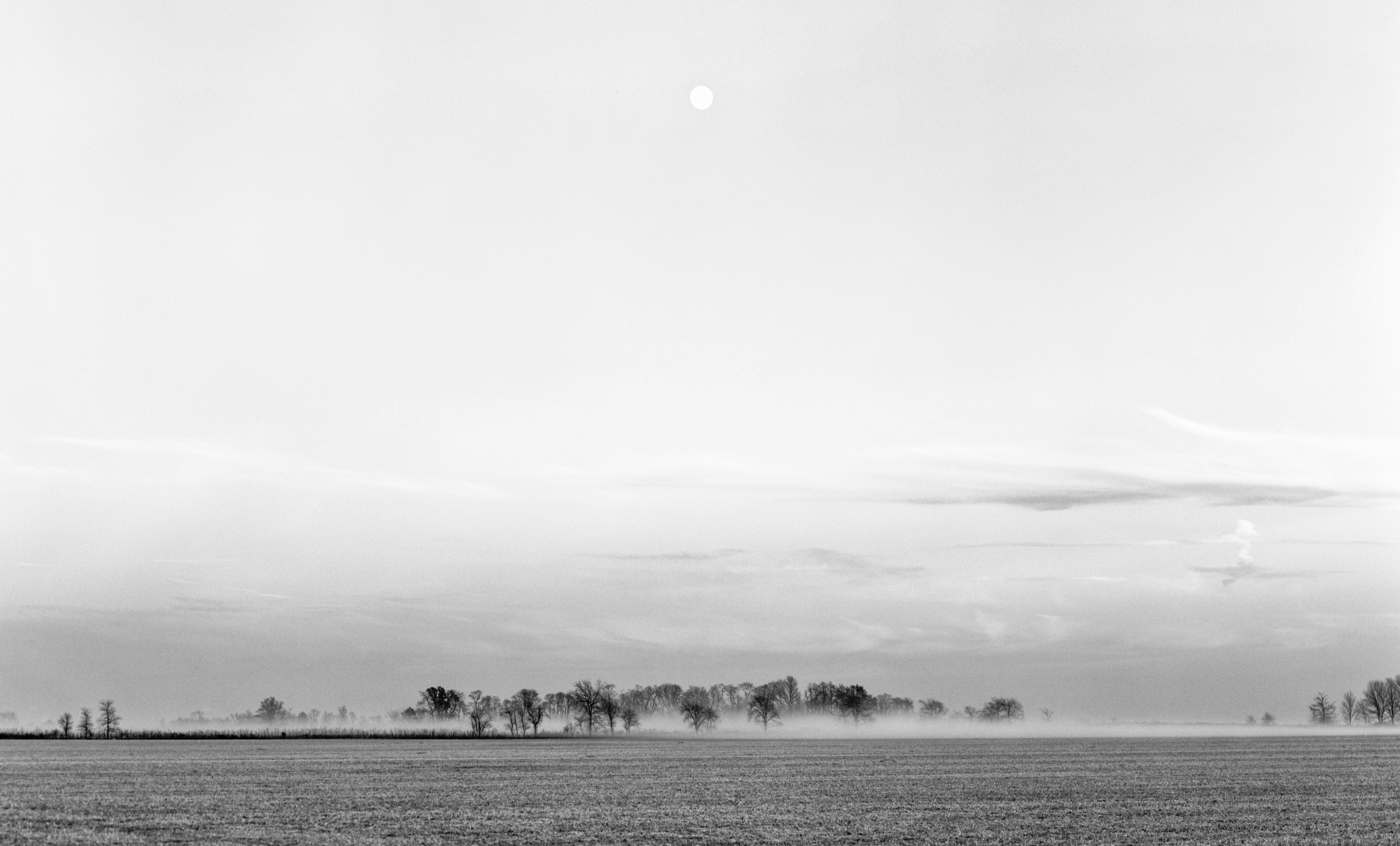
This past week I gave myself a birthday present—four days of photographing in the rolling farmlands of Central Ohio. I thought I would share a few of the images, particularly those shot around sunrise.

An early-morning walk is a blessing for the whole day.

Henry David Thoreau


Nature’s Fireworks

Happy Fourth of July!


The Healing Power of Art


In the process of attempting to find a home for my photographs on the walls of hospitals, nursing homes, hospice centers, physician and dental offices I sought out evidence for what I already knew—that beautiful images can and do contribute to healing. What I found was fascinating and encouraging for serious photographers, amateurs and the public at large. Some of the more pertinent and useful findings are presented here in modified form, enough to demonstrate conclusively that art, and photographs in particular, significantly contribute to health and healing.

My primary source for what follows is A Guide to Evidence-Based Art, by Kathy Hathorn and Upali Nanda.

Art Is A Critical Component Of The Healthcare Environment

  • “Hospital interior design features were the most common room features noticed by 380 participants in this study. Their comments relating to décor were often about the artwork in a room.”
  • “Of the 2,000 hospitals responding, 73% reported permanent displays of visual art in the hospital. 32% had rotating exhibits, typically of art by local or regional artists. 96% of hospital arts programs were intended to serve patients directly… Benefit to patients was the primary reason (78.8%) given for having arts programs, noting them specifically to be a part of their mental and emotional recovery (72.8 %).”
  • Of the hospital arts programs surveyed, 55% “focused on the hospital staff as a way of reducing stress and burnout, which is a monumental problem for hospitals.”

Research conclusion: “The evidence makes a strong case that art is a critical component of the healthcare environment, which can aid the healing process.” (Harris, McBride, 2002)

Evolution Favors Certain Subjects In Art

  • “Richard Coss is credited as the first researcher to advance the theory that humans respond to art on an evolutionary level as well as an intellectual or aesthetic level.”
  • “Humans are genetically predisposed to notice and be positively effected by smiling or sympathetic human faces.” (Ulrich and Gilpin, 2003). Ulrich has substantiated the above claim with respect to nature art with a preponderance of evidence on how access to nature (even nature in art) affects patients. He found that “postoperative gall-bladder surgery patients whose rooms had windows with views of a park had better outcomes than those patients whose rooms had windows with views of a brick wall. Patients complained less to staff, needed analgesic pain medication of lesser strength, and were discharged earlier.” (Ulrich, 1984).
  • “In a study with postoperative heart patients in Sweden it was found that exposing heart-surgery patients in intensive care units to nature pictures improved outcomes. On the other hand, patients reacted in a strongly negative manner to abstract art.” (Ulrich, Lunden, and Eltinge, 1993).
  • “In another preference study Eisen (2005) showed that children in hospital settings also prefer representational nature art to abstract art. In fact, contrary to common assumptions that children only like large cartoon-like or fantasy images, a study with patients at Memorial Hermann Hospital in Houston, TX, showed that children highly rate nature images with bright colors, water features, and non-threatening wildlife.” (Nanda, Hathorn, Chanaud, & Brown, 2007).
  • “In addition to the preference for natural landscapes, Ulrich and Gilpin (2003) cite previous works by Ulrich (1993), Coss (1968), and Orians (1986) to stress how evolutionary theory is an indicator of subject matter that should be avoided, especially for highly stressed patients. These include natural elements and situations that may be perceived as dangerous or threatening such as snakes and spiders, reptilian-like tessellated patterns, large mammals staring straight at the viewers, and angry or scary human faces.”
  • “Based on an extensive body of both scientific studies and anecdotal accounts, Ulrich and Gilpin (2003) have developed the following guidelines for appropriate art content in healthcare settings:
    • Waterscapes: Calm or non-turbulent water
    • Landscapes: Visual depth or open foreground trees with broad canopy savannah landscapes
    • Verdant vegetation
    • Positive cultural artifacts (e.g., barns and older houses)
    • Flowers that are healthy, fresh and familiar
    • Gardens with open foreground
    • Figurative art: Emotionally positive faces, diverse, leisurely

Themes Discovered In Kathy Hathorn’s Study

  • Art makes patients and staff feel better.
  • Art allows patients and visitors to focus on something other than than themselves and other people’s condition.
  • Art contributes to the perception of a caring environment.
  • Art makes the hospital less intimidating.
  • Patients, visitors, and staff use favorite pieces of art to destress; particularly true for the staff.
  • Prominent pieces of art serve as landmarks for patients and visitors.

Nature Art Promotes Restoration

  • “Nature art (or art with views or representations of nature) will promote restoration if it contains the following features: calm or slowly moving water, verdant foliage, flowers, foreground spatial openness, park-like or Savannah-like properties (scattered trees, grassy undershot), and birds or other unthreatening wildlife.” (Ulrich and Gilpin, 2003, p.123).

Murals Provide A Distraction From Pain And Anxiety

  • “Murals, as a distraction, resulted in a significant decrease in reported pain intensity, pain quality, and anxiety by burn patients.” (Miller, Hickman, & Lemasters, 1992).
  • “Evidence from heart-rate recordings and questionnaires showed that stress in a dental clinic was appreciably lower on days when a large mural was hung at the back of a waiting room.” (Heerwagen, 1990).
  • “Images of serene nature scenes mounted to the ceiling were shown to highly stressed pre-surgical patients on gurneys; this resulted in lower blood pressure.” (Coss, 1990).

Study Findings Reported In The Wall Street Journal by Laura Landro

  • “With studies showing a direct link between the content of images and the brain’s reaction to pain, stress, and anxiety, hospitals are considering and choosing artworks based on the evidence and giving it a higher priority than merely decoration for sterile rooms and corridors.”
  • “These are not just accoutrements or aesthetics anymore,” says Lisa Harris, a nephrologist and chief executive of Eskenazi Health, affiliated with the Indiana University School of Medicine in Indianapolis.
  • “Anne Berry, 81, says, ‘It makes me think of flying.’ She visits the hospital for procedures and tests such as a mammogram and always takes time to look at the artworks. She has “white coat syndrome,” which makes her nervous about going to a doctor, but she says, ‘I have found the art and the environment at Eskenazi makes it less stress-inducing for me.’”
  • “One 1993 study found that patients exposed to a nature image experienced less postoperative anxiety and were more likely to switch to weaker painkillers than those who viewed an abstract image or no image.”
  • “A 2011 study found that nature images helped calm restless behavior and noise levels in two Texas emergency department waiting rooms.”
  • “In the spring 2014 issue of the same journal, the Cleveland Clinic reported that patients surveyed on its contemporary collection—which includes abstract and nonrepresentational imagery by some prominent artists—reported a significant positive effect on their experience and on mood, stress, comfort and expectations.”
  • “The aim is to take your mind away from the disease and replace the time you are losing inside hospital with some beauty.”
  • “Some patients in the Cleveland Clinic’s survey reported they were ‘motivated to get out of bed to view the artwork.’ Patients with post-traumatic stress disorder and generalized anxiety disorder reported the most significant positive improvement in mood.”
  • “The Mayo Clinic in Jacksonville, Florida, chooses art to create a ‘healing environment,’ says Chrysanthe Yates, director of its Lyndra P. Daniel Center for Humanities in Medicine.”

These studies and comments are significant for photographers whose intention is, at least in part, to produce images that have the potential for healing—by suggesting subject matter. Laura Landro’s finding that “Visual images positively affects stress, anxiety, fear and pain,” in hospital environments says to me that photographs can convey the same benefits in the home. As Linda and I have, I would encourage readers to select one or two of your most beautiful photographs to enlarge, frame and display in your home. If you don’t think you have some images that are suitable, take your camera to someplace beautiful—or find something or someone beautiful—and create.

References

Coss, R. G. (1990). Picture perception and patient stress: A study of anxiety reduction and postoperative stability. Unpublished paper, Department of Psychology, University of California, Davis.

Eisen, S. (2005). Artfully designed pediatric environments. Unpublished doctoral dissertation, Texas A & M University.

Harris, P. B., McBride, G., Ross, C., & Curtis, L. (2002). A place to heal: Environmental sources of satisfaction among hospital patients. Journal of Applied Social Psychology, 32, 1276–1299.

Heerwagen, J. (1990). The psychological aspects of windows and window design. Paper presented at the 21st Annual Conference of the Environmental Research Design Association, Oklahoma City, OK.

Miller, A. C., Hickman, L. C., & Lemasters, G. K. (1992). A distraction technique for control of burn pain. Journal of Burn Care Rehabilitation, 13(5), 576–580.

Nanda, U. & Hathorn, K. (2006). Current Research on Evidence-based Art Programs. Healthcare Design Conference. November 2-6. Dallas, Texas.

Orians, G. H. (n.d.).The Society for the Psychology of Aesthetics, Creativity, and the Arts: An evolutionary perspective on aesthetics. Retrieved Jan, 15, 2007 from http://www.apa.org

Reber, R., Schwarz, N., & Winkielman, P. (2004). Processing fluency and aesthetic pleasure: Is beauty in the perceiver’s processing experience? Personality and Social Psychology Review, 8(4), 364–382.

Ulrich, R. S., Lundén, O., & Eltinge, J. L. (1993). Effects of exposure to nature and abstract pictures on patients recovering from heart surgery. Paper presented at the Thirty-Third Meetings of the Society for Psychophysiological Research, Rottach-Egern, Germany. Abstract published in Psychophysiology, 30(Suppl. 1), 7.

Ulrich, R. (1984). View through a window may influence recovery from surgery. Science, 4647, 420–421.

Ulrich, R. S., & Gilpin, L. (2003). Healing arts: Nutrition for the soul. In S. B. Frampton,L. Gilpin, & P. A. Charmel (Eds.), Putting patients first: Designing and practicing patient-centered care (pp. 117–146). San Francisco, CA: John Wiley & Sons.

The Benefits of Photography


A recent study in the Journal of Personality and Social Psychology found that “Taking photos enhances the enjoyment of positive experiences across a range of contexts and methodologies.” Among the 2000 individuals studied, those who took photos generally derived more enjoyment from a positive experience—such as a family outing or travel—than those who did not.

Researchers in the study observed that taking photos “directs greater visual attention to aspects (italics mine) of the experience….” Certainly. With cameras in our hands we’re in hunter-gatherer mode. The brain switches from general observation where we’re looking, to specific considerations of a subject where we’re perceiving—seeing in the sense of trying to understand and better relate to what we’re seeing.

The capacity that a camera provides is not only the ability to capture an image and share it—which alone is pleasurable—it also expands the ability to see, imagine, understand and appreciate. And because photos capture a moment in time, we can study the content more closely—as in these contemplations—and revisit the images as historical documents.

There are those who argue that seeing the world through a camera lens is a step removed from direct experience. Indeed, that would be a problem if the viewfinder provided the sole means of observation. But it doesn’t.

We use cameras selectively. When something attracts our attention, we want to explore it further, hold onto it, share it or engage it creatively. There are many different reasons for taking pictures, but almost always the desire is prompted by an attraction. Whether or not we are aware of it, we create images as a response to love, the energy of attraction.

Obviously, a photo of a peony is not a peony. It is, however, a representation that provides a different kind of experience. The odor and movement of the flower are missing and the colors may be somewhat different, but its image—on paper or on a screen—generates the experience of beauty nonetheless. It touches the aesthetic “nerve.” And there are differences in consequences. Experiencing a flower directly can be exquisite, but it’s also momentary. We take in the colors and odor, marvel at its very being, comment on its beauty and condition and so on.

One step removed, a painting or photograph of that flower evokes the experience of beauty, perhaps not as poignantly, but now it includes insight into and a reflection of the person who made the reproduction. Attention shifts back and forth between the object and the image maker. Is the reproduction a faithful rendering or an attempt at impressionism? It is a unique or interesting interpretation? Does it resemble images made by notable painters or photographers? Why did the artist choose this perspective and these colors? What was he “saying,” given the choices he made? And so on. In this way, the act of photographing expands both the artist’s perception and her awareness of self and subject matter.

I discovered photography in 1955 by joining my high school Camera Club. It was the only extra curricular on the list that appealed to me.

Some months later, just moments after this picture was taken, I was adjusting the focus knob on the enlarger and knew for certain that, whatever else would happen in my life, photography would play a prominent role. At that time and for decades later, the bright lights in photography were those who made and exhibited pristine photographs. When I met Ansel Adams at RIT in 1963 he’d just published a book but was relatively unknown.

Technically and aesthetically his 16×20 prints amazed us. He set the bar impossibly high, given the technologies of the day. Other photographers who gained prominence before and after him were  those who could achieve high levels of technical and pictorial quality. Photo historians regarded them as “masters.” And rightly so. Their preferences in subject matter tended toward land and cityscapes, architecture and nudes.

Cameras with more features and better lenses, paralleled by improved color quality ushered in the Modern Period where the preference was for big, colorful and beautiful images that evoked a Wow! response. Following this movement and into the present, the preferences of Post-Modern photographers were more on the bizarre with a preponderance of social commentary, favoring documentation over aesthetics.

Until recently, photographic excellence required a lengthy and technical learning curve. With the advent of digital technology that is no longer the case. A child with a smart phone can produce equal or better technical quality than an expensive film camera.

I make a distinction between “taking pictures” and “making images.” Clearly, the study cited above focused on the former—recording subjects and events for the delight of sharing.

Taking pictures does, in fact, “heightens the enjoyment of an experience” through focused attention and increased engagement. But in terms of camera use, even by the general public, enjoyment is just the tip of the proverbial iceberg. The act of making images can be and do so much more—as I hope this blog has demonstrated. The making and contemplation of images and photographs—images on a paper substrate—for the purpose of exploration and creative expression can contribute substantially to personal growth, Self and social awareness and spiritual enrichment.

Don’t take my word for it. Take your camera out for a whirl. Go somewhere you’ve never been before with the intention of capturing images that convey the spirit of the place. Print the images that work best for you and sit with them in silence to see if there is one, or a combination of images, that evoke consideration—thoughts or feelings about life, living, yourself or the world. What in particular do the images say about you and your preferences for subject matter and composition?

Keep in mind that finding information in a photograph is not a matter of identifying objects, but rather in finding meaningful patterned relationships between you and the world as you see and experience it. Notice subtle feelings as you contemplate your images. They are a reflection, in truth a representation of your consciousness! Ask if they were successful in expressing the spirit of the place. If so, what were the contributing factors? If not what would you do differently in order to make the images more expressive—to yourself and others? Ultimately, immersion into any creative process is a journey into Self. Like any other tool, a camera can be used in many different ways. Whether we’re talking about hammers, computers or cameras what matters is how we choose to use them.

Once it has selected a photographer, spirit always stands still long enough to be recorded.

Anonymous

Photography brings what is not visible to the surface. I continue on my way seeking my own truth ever affirming today. When I photograph, I make love. Photography is my passion; the search for truth my obsession.

Alfred Stieglitz

I have always felt that is is how one sees rather than what one sees that makes any photograph interesting.

Michael A. Smith

What is it that I feel most deeply about in life? Are these feelings coming through in my images? What is the subject matter I relate to the most intimately and profoundly? What is it that I see that no one else does, that only I can show the world?

Robert Hecht

The mission of photography is to explain man to man and each man to himself.

Edward Steichen

ABOUT THE PHOTOGRAPHS

The posy was growing in Linda’s garden and I photographed it there. The image of myself in the darkroom was taken by another student, Charlie Keyes. We were constant companions most days after school, printing the photographs we’d taken for the yearbook. Many years later I published a Blurb book entitled “Milestones,” to tell the story of my life in photography, illustrated with photographs that marked milestones in my development. The book begins with a picture of my mother and me next to my first birthday cake and my one gift—a Kodak Brownie.

You can connect to my PORTFOLIO SITE here.

Web Site Announcement


I’ve been working on a portfolio web site for quite some time. Now that it’s on-line I am delighted to share it with you. The purpose of the site is primarily to gain more exposure for my work. There are many images, so you might want to bookmark the site and review it a bit at a time.

Because I believe that beautiful images can contribute to healing, I am also interested in having them find a home on the walls of hospitals, nursing homes, hospice centers, certain non-profit organizations, socially responsible corporations and interior design firms who serve these entities.

Toward that end I will be sending 5×7 photographs to those in charge of interior design in these facilities. The front side will have the above image on it, and the back will have the site’s address. If you would like to receive one of these, perhaps to use as a bookmark—or have me send one to someone you know—just make a request via email <smithdl@cinci.rr.com>. I hope you enjoy the photographs.

www.DavidLSmithPhotography.com


Publication Of “Contemplative Photography”

Contemplative Photography: Reflecting On Photographs is a compilation of images and related texts derived from my weekly blog postings. This and my other photography books can be previewed page by page by going to the links below. When I was getting started in photography the quality of printed books was generally very poor. The only way to experience high quality photographs was to attend an exhibition of original gelatin-silver prints. No longer. The quality of inkjet prints has been excellent for several years.

Now the quality of black and white inkjet printing has caught up. Since archival tests have shown these prints to hold up for close to one hundred years—if kept in a light-tight, low humidity box—many, perhaps most, notable photographers have abandoned the film and wet process, particularly since  galleries are increasingly selling digital inkjet prints. At a conference of photo gallery owners in New York I attended a few years back, color inkjet prints were selling alongside gelatin-silver for thousands of dollars. Black and white inkjet prints were just beginning to sell, but at much reduced prices. That too has changed. Some photographers and dealers are saying the quality of an inkjet print can be better than a silver-gelatin print.

One of the consequences of advances in digital imaging and printing technologies has been a substantial reduction in the number of photographic exhibitions—outside of the five largest cities in the United States. Work is still exhibited at outdoor fairs and certain city-wide celebrations of photography, but the traditional exhibition by a single photographer is rare. They are costly to produce, launch and promote. There are time restrictions and sales by non-celebrity photographers barely cover the cost. The publication of photography books by unknown photographers—or those without a gimmick or sensational content—has for years been virtually impossible. This is understandable, considering the publishing industry’s struggle for economic survival in the digital age.

On the upside, photographers of all stripes can reasonably and cheaply self-publish high quality books. While not achieving a large national audience, these books appeal to collectors and people who appreciate fine photography. They make great gifts. The photographer designs every aspect of the formatting and printing. And promotion and sales are handled by a third party. Beyond the prestige factor, the reasons not to self-publish is the small audience and lack of profitability.

In such a climate artists need to  examine their purpose. Why do I photograph? To make money? Communicate? Become known? Make a contribution to the field? Or simply have the work seen? Equally important—For whom am I producing this work? Where does my satisfaction lie? My response to the question of purpose flows from the discovery early on that I was compelled to photograph. I would do it, even if there was a certainty that not one person would ever see what I produced. Simply put, I love the world and photography is the best way I can express that love.

My intention has never been to document or comment. Neither did I intend to make money or gain notoriety as a photographer. I just wanted to express the feelings of love and awe that begin with observing the subject and extend throughout the process, even to the signing of the finished print. I always wanted to my work to be seen—in the hope that some of what I felt could be shared, if even just a little. If my prints could talk, I’d want them to be a statement about the blessedness of Being.

Toward these ends, self-publishing has been a blessing for me. This is my twelfth photography book. I’m very pleased with the quality of the printing. And I invite you to give it look. On the Blurb website, click on the book’s cover. When the page opens, click the “Preview” tab, then select “Dust Jacket” and click on the book again to turn the pages. The book(s) can be enlarged to full screen by clicking on the double, out-pointing arrows above the book. I’ve allowed that every page can be previewed. And the text is readable at the enlarged size.

Here is where you will find all twelve of my photography books.

Here is where you will find “Contemplative Photography” alone.


Aesthetic Preferences

This haunting little image was made before sunrise on a cold October morning. I was cruising the back roads in the hills of Amish country in mid-state Ohio, when I saw an orange light in the window and a whisp of smoke—not much else—as can be seen in the color image below. That original was tack sharp and very underexposed. When I saw the smoke I wondered if there was some gradation there, so I made a duplicate and converted it to black and white in Photoshop.

After teasing out some detail in the elements surrounding the house and boosting the exposure level I noticed that I preferred the black and white image, despite the appeal of the orange light in the window cutting through the overall blue atmosphere. The increased camera sensitivity and exposure boost in the black and white image resulted in a lot of “noise.” The graininess is very apparent when it’s enlarged even a little. Viewed at this size however, the black and white  appealed to my aesthetic, more so than the color image. You may disagree.

It raised a question in me. Considering that the  light in the window is what captured my attention on location, why do I now prefer the black and white image? As I was reviewing my black and white collection for possible images to contemplate this week, I stopped on this one and kept staring at it. I liked it but didn’t know why, and a theme wasn’t coming to mind. The nature of contemplation is precisely to hold the attention on something long enough that an insight can emerge. So I stayed with it, kept looking and asking that question.

I noticed that themes having to do with the occupants of the house, their economic situation or the Amish way of life didn’t appeal. Those weren’t tracks I wanted to explore. Looking at the images side-by-side, I realized that what captured and held my attention—made me stop to engage heart as well as mind—was the aesthetics involved. While the original image benefitted from simple color contrast—orange against deep blue—the black and white image had some “tooth” to it, expressed in the wispy tail of smoke, the woodland textures and fence, the swing set and slide, the light in the window and the hint of daylight on the front of the house.

Combined, these elements evoked in me the sensibility of “early morning” rather than the “middle of the night.” I usually prefer image simplicity, as few elements as possible to create impact. But here’s an instance where complexity—more information—shifted the statement from “Here’s a house where everyone’s asleep and the light was left on,” to “Someone in the family is up early, warming the house, preparing for the day.” In the color image there’s a light in the window. In the black and white image the light is in a person or family. There’s a sense of caring that comes across. Arguably, that’s one of the qualities that makes a “house” a “home.” Of course, the reality could be very different from the one imagined here, but the prerogative of the image maker is to express his or her personal preferences—a unique way of seeing.


In the dark we will always seek the light; that is the real bottom line.

Deepak Chopra
ABOUT THIS IMAGE

Title: Light In A Window / Smoking Chimney

Location: Baltic, OH (Amish Area)

Before I rolled down the window to take the shot I turned the car’s dome light on so I could see to crank the camera’s sensitivity (ISO) setting to increase the chances of actually recording something. I turned off the engine to eliminate vibration, braced myself and the camera for the slow shutter speed, made the exposure, closed the window and drove off hoping I could “fix it in post.”