VII. Emphasis

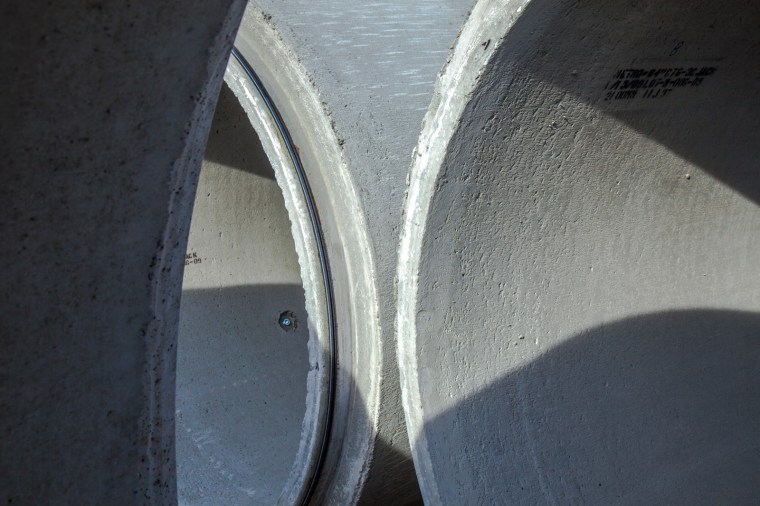
As an aesthetic tool, “emphasis” shows one element standing out or apart from others. It can differ from them in subject matter, color, size, shape or placement within the frame. Whatever the difference, the exceptional element stands out as the center of interest. It’s the most important element and key to the image’s meaning.

The Dynamic

Within a frame, when an element is emphasized by some difference, it commands attention. Once it has been identified, the viewer’s eye moves around the frame but keeps returning to the center of interest in a split-second attempt to understand the reason for its being prominent. Why did the artist want me to focus my attention there? What’s so special about that particular element? What does it mean? What does it say? 

Application

Having one subject stand out from the other elements in a frame is a powerful way to command the viewer’s attention.

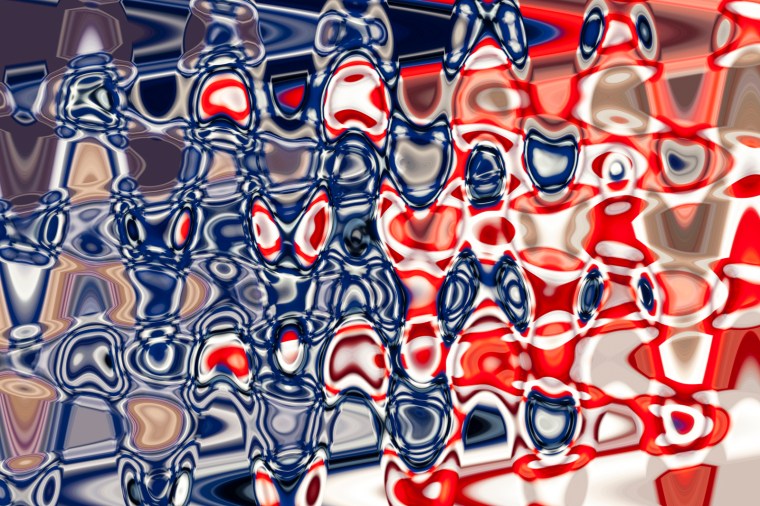
If the objective is to communicate information, a difference is enhanced by having many elements that are alike, except for one. In the above image, the element that’s emphasized informs the viewer about gas prices. Alternatively, it could be a comment on those prices. That all the other elements are less colorful makes the sign distinctive.

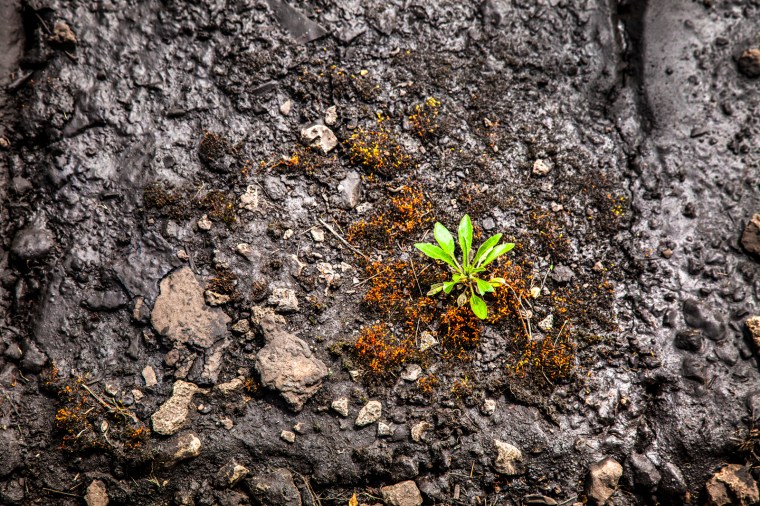
If the objective is to express a feeling, shock or other emotion, a difference is enhanced by the severity of the difference—the contrast—between the primary and secondary elements—like a plant growing up from the mud.

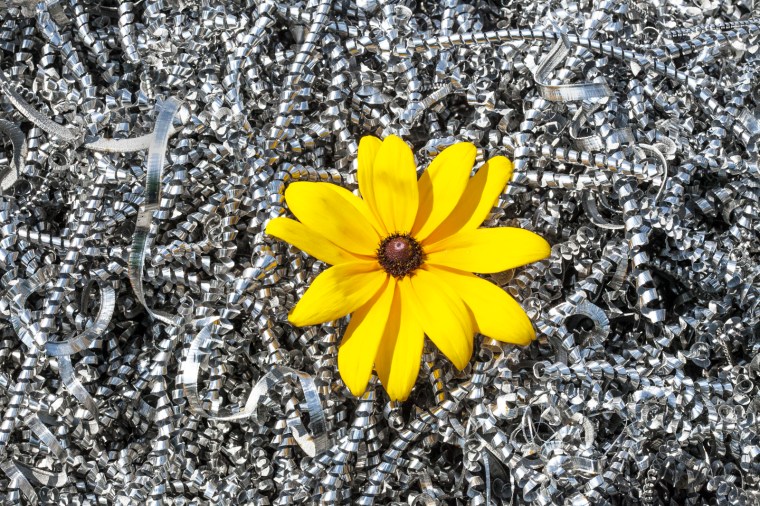
And there are degrees of emotion that an image will express. Here, the stark contrast of seeing an element emphasized over others that are completely out of place is jolting. It raises a lot of questions.

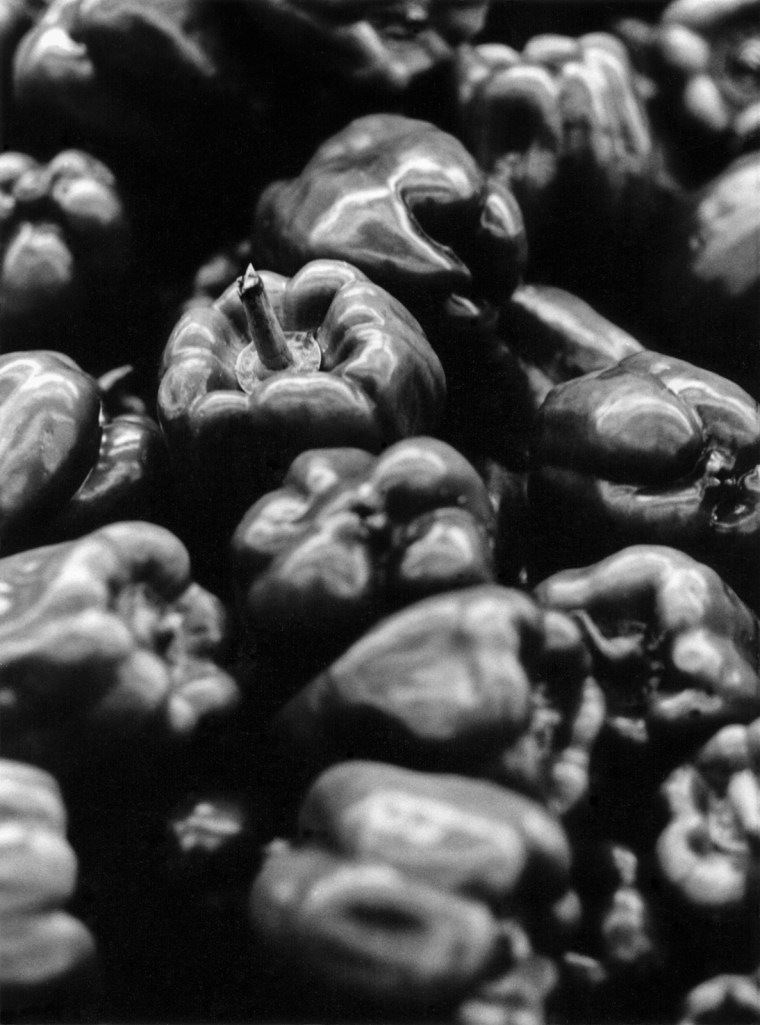
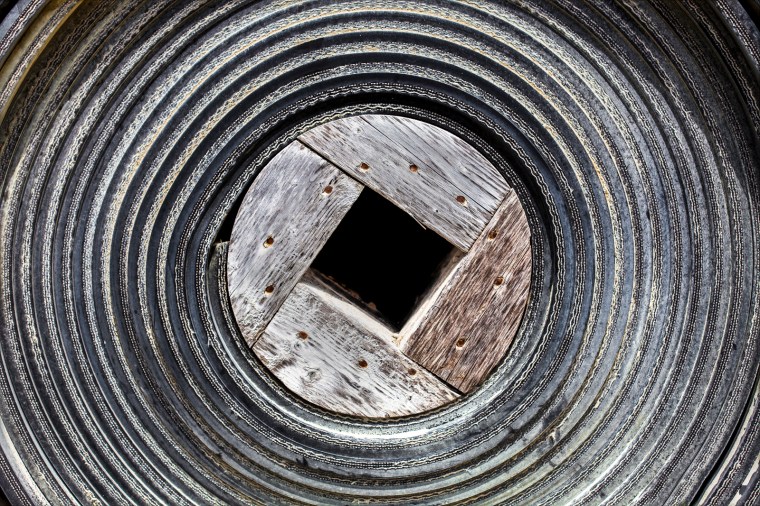
Emphasis can also be achieved technically, for instance by having many similar elements in the frame, but with only one in sharp focus. Here, the photographer is asking the viewer to make sense of the image. What’s going on here? It appears to be a story. What’s might it be?

Reflections On Personal & Social Emphasis

Artists emphasize an element in order to give it special importance. In our personal lives, we call that “prioritizing,” ranking things in order of importance, often to determine how we want to spend our time. It raises a challenging question: What is most important in my life? Is it what I think it is or would like it to be? Has it changed over the years? Am I spending my time on what I want it to be? Am I deceiving myself, saying I want it to be one thing but in practice, it’s something else? What would other people say is my highest priority? And are my priorities coming from my authentic self or outside myself? There are no right or wrong, good or bad answers to these questions. Their value is in nudging us to reconsider what we think is really important in our lives, especially what resides at the top of the list.

Meaning constellates around values. What we value has become a predictor of what we will buy, how much we will consume, how we will vote, who we will relate to and who not, and to almost every manifestation of private and social behavior and belief. 

Ervin Laszlo (Philosopher of science and systems theorist)

To complicate matters, we’re generally not aware that or how profoundly our priorities are socially prescribed. To begin with, being born in a certain place at a particular time we acculturate to an already specified set of values and expectations. For instance, most indigenous people, notably Native Americans, consider the great man to be the one who gives most of his possessions away, whereas most Americanized Europeans hold in highest esteem those who have amassed great wealth. And the perception of priorities shows up in stereotypes, general patterns of behavior that we ascribe to various groups and nations. “Nerds,” “Athletes,” “Businesspersons,” “Buddhists,” “Germans,” Haitians.” Erroneously or not, the names and labels themselves conjure images or judgments about their priorities, what they emphasize, what they value.  

The difference between whether an organization is mediocre or superb is determined by whether all its individual members are mediocre or superb. The difference between organizations that are mediocre and those that are great is the attitude within each of us — our values and our culture. An inspired organization is simply the sum of inspired souls. 

Lance Secretan (Leadership Theorist)

One of the most important lessons I learned in two years of anthropology classes (one that promoted tolerance and appreciation) was the fact that the basis of valuing across cultures, irrespective of how it manifested in ancient or modern times, was grounded in the need to survive. Consider any human trait, personal or social, the world around—it exists today because it had survival value in the past. It was emphasized and reinforced because it succeeded. For a culture, the memory of survival challenges is so ingrained, these traits or “institutions,” which often became ritualized and the subject of myths, are not easily transformed. Plants and animals, even the human animal, have evolved features that convey a survival advantage physically. In addition, we humans carry the memory of what it takes for our groups to survive and grow. It’s written in our history, and it’s in our DNA. 

If there are any doubts about how to value a 700-year-old tree, ask how much it would cost to make a new one. Or a new atmosphere, or a new culture. 

Amory Lovins (Physicist, Environmental Scientist)

Recent research has determined that the billions of organisms in our gut are constantly sending messages to the brain saying things like: “Eat more salt,” “Lay off the sugar!” and “I’m in the mood for a steak.” They’re emphasizing the elements the body needs in order to maintain a healthy balance. Just so, a photographer’s aesthetic urge emanates from the brain saying things like: “Notice the bark in that tree,” “Pack up the car and go looking for birds to photograph,” “Quick! Get a camera—the raindrops on the leaves are incredible!” We’re drawn to subject matter, and where we critically focus is what we want, perhaps need, to emphasize. Why? Because that’s the center of our attraction—and a clue to our method of prioritizing. For many of us, the exercise of our unique aesthetic is not a frivolous or luxurious activity. We’re compelled to create. For us, creative expression and beauty have survival value. I’m reminded of my artist friend, David Allen Koch, who said, “Somehow, every day, I find a way to experience beauty.” 


When Andrew Wyeth painted Helga he did not make the case that Helga was important; he made the case that Helga was important to him. The first is supposedly some objective statement of reality; the second is a totally subjective statement of personal value. By using his craft effectively, he hoped to make Helga important to us, and that is the purpose of his artwork. 

Brooks Jensen (Photographer, Publisher LensWork Magazine)

I welcome your feedback at <smithdl@fuse.net>

My portfolio site: DavidLSmithPhotography.com

My photo books: <www.blurb.com/search/site_search> Enter “David L. Smith” and “Bookstore” in “Search.”


Lifecycles

DF 753


When I was in high school, the authors of biology and chemistry textbooks considered independent motion as the defining characteristic of life. If it moved on its own accord, it was alive—organic. Viewed under a microscope, cells and bacteria move. Minerals do not. Water moves, but it was not considered to be “alive,” except that it contained living microbes. Now we know better. Everything moves. According to Einstein’s famous equation, motion is always in accord with and relative to the motion and condition of everything else. To be is to be related.

Because the movement of an object, substance, person, system or society is propagated by the larger system within which it moves and has its being, there is no such thing as independent movement. Nothing of substance moves on its own. Not even galaxies. The picture that emerges, of course, is that of nested systems within systems, wholes with wholes, holons within holons. The condition of life is cyclical interdependence. It’s why I chose the image of circles within circles as the masthead for this blog.

The image above prompted a consideration of seasons and how they constitute a cycle. Winter, marked by overcast skies, bare tree limbs, and snow, is one of the stations within a cycle of life on this planet, a period when we’re farther away from our radiating star. Motion begets change. At times the change can be random, but the pattern itself is constant and cyclical. Trees grow leaves in Spring and release them in the Fall.  Fish and birds migrate. People change jobs and the jobs themselves change. There are the rise and fall of rock stars and relationships, products and processes. Artists have preference phases and scientists alternate between breakdowns and breakthroughs. Effort and rest, the awake and sleeping states. Eating and digesting. Hearts beat and rest. Political parties, governments, and entire civilizations rise and fall. Likewise stars and galaxies. At every level, the cycling in and out of form or condition is a kind of breathing.

Practitioners of insight meditation focus on the breath to quiet the mind and direct attention to the present moment. The sound of a distant airplane, an itch, odor or thought is less a distraction than an opportunity to focus, accept and appreciate what is, and shift gears. Perhaps less noticed in this process, the awareness of breathing in and out carries the added benefit of attuning the meditator to the cyclical nature of his or her being—of all being and being itself, the quiet experience of life happening. Flow. Masters of this practice advise students to observe how it’s not just the breath that rises and falls, everything is rising and falling, just at different frequencies and rates. Diamonds, for instance, have value and symbolize “eternity” for us because on earth they are the hardest of minerals with the longest lifespan. Nonetheless, they are not eternal. They rise and fall like everything else.

One of the reasons for my attraction to native cultures has been their knowledge of and connection to nature. The ancients went to great, at times monumental, effort to observe the natural world and attune themselves to it through language, art, architecture, costuming and ritual. We moderns hear about the solstices but few of us understand that these calendar points mark the time in the yearly cycle when the sun does an “about face” when sighted along the early morning horizon. We have one word for “rain.” Rainforest dwellers the world around have many. To us, the chirping of chacalacas in the morning is just a sound, perhaps an annoying one. To the ancient Maya, it was an announcement that the sun god was making a new day—something they didn’t take for granted. Where we would cut down a vine that blocks our way, natives use the direction of its growth like a compass when the sun is not shining. NOTE: Greenpeace estimates that today there are approximately 150 million indigenous people living in ancient forests worldwide.

In an attempt to better understand and connect to nature I have a number of practices. Besides reading, I watch the sky and the birds associated with each season. I used to observe the planets, and stars through a telescope, but because city lights make it difficult, I do less of that. Still, I know when to look for certain constellations, planets and stars. And it’s always a delight to see them. One example is Sirius, a nearby binary star that’s twice the mass of our sun and the brightest star in the sky. Another is Betelgeuse in the Orion constellation, which is easy to spot in the winter months. I marvel at this red supergiant because its radius is a thousand times that of the Sun. If it were placed in the center of our solar system it would reach beyond the orbit of Jupiter!

One of the mind games I play to become more aware of nature’s cycles is to guess the lifespans of familiar objects. It’s not that I look at a doorknob, computer screen, political party or cultural conflict and think about when it arose and when it will succumb to entropy. Rather, I note in passing that these substances, systems, and events are instances along a continuum of change. That they, like me, are moving along a temporal trajectory. One of the benefits of these observations is a sense of being carried along on a gentle wave—a local experience of the universal ocean of motion—consciousness. It’s a perspective that evokes spiritual relaxation and confidence that all is well. I still struggle in some areas, so I’m not there yet. But I’ve reached the point where, as the commercial goes, I want to “spend less time getting there and more time being there.”

Our minds are just waves on the ocean of consciousness. As waves, they come and go. As ocean, they are infinite and eternal. These are all metaphors, of course; the reality is beyond description. You can know it only by being it.

Sri Nisargadatta Maharaj

ABOUT THIS IMAGE

Title: Winter Forest

File: DF753

I love to photograph in the snow. It’s one of the few environments that allows for simplicity. Also, it’s very quiet and there are fewer people out and about because of the cold. This image was made on a three-day visit to Amish country in mid-state Ohio. Unfortunately, I didn’t record the precise location. But it’s typical of the area where hills are unobstructed by telephone poles and electric wires.

In order for a camera to render snow as white—rather than the gray its electronics are designed to make of it, I changed the camera’s exposure compensation to plus 5. Shooting in RAW mode helps considerably, allowing control of more or less texture in the highlights. As you see, I made the sky slightly darker than the snow, not only to give some separation but also to maintain the sensibility of an overcast day.

Shifts In Perception

Scanned from negative


One of my long-standing pet peeves has been littering. I even won a speech contest by ranting and raving about it in my high school years. Linda and I were running errands recently and we saw several places strewn with litter. Two years ago when I contacted the person in charge of cleaning up litter in the city, he not only encouraged me to report areas of gross negligence, he followed through, even to the extent of notifying his counterparts in surrounding municipalities that were not in his jurisdiction. Gratefully, the areas I brought to his attention got cleaned up.

Around that same time I was picking up trash in the neighborhood on my too infrequent walks for exercise, when I picked up this beer can. Wearing my “waste management hat,” I saw it as garbage and the negative thoughts came pouring in. How many such cans are going into landfills or clogging up sewer drains? How much of the earth’s supply of aluminum is being used to deliver gazillions of beverages every month that take minutes to consume? And I wondered about people who litter—What are they thinking? Or are they not thinking at all about what they are doing? Also, how does a person get to the point where they have little or no regard for their neighborhood, community or planet, much less an aesthetic sensibility that makes them think twice about littering?

Some years back a young colleague observed a neighbor drop a bag of half-consumed fast food onto the yard of the apartment where they both lived. My friend knew this person well enough that he could ask about it. The man’s reply was “Why should I care? Nobody else cares. What has the world ever done for me?” That was insightful. Not everyone in this country grows up like I did—in a loving family, particularly one in which consideration for others and respect for property was strictly enforced—and modeled. And not all educational systems in the United States teach young people about the impact we’re having on the environment and that something—like recycling, not littering and cleanup initiatives—can be done about it.

Waste is a global challenge. Travelers to Germany report that their land and cityscapes are largely litterfree. In other countries littering and letting garbage collect is the only option. So how a society handles its waste is a complex issue, conditioned by historical, geographical, cultural, political and economic circumstances. As such, less developed countries deserve some understanding in this regard rather than judgment on my part. They just don’t have the resources to manage waste.

Closer to home and on a more scientific note, research by Keep America Beautiful has determined that people litter because they feel no sense of ownership, even though areas such as parks and beaches are public property. They believe that it’s the job of city, park maintenance or highway workers to pick up after them. Their other findings include:

  • People of all ages and social backgrounds have been observed littering, but individuals under 30 were more likely to litter than those who are older. In fact, age, and not gender, is a significant predictor of littering behavior.
  • 18% of all littered items end up in our streams and waterways as pollution.
  • 1. 9 billion tons of litter ends up in the ocean every year.
  • $11.5 billion is spent every year to clean up litter.
  • 50% of littered items are cigarette butts.

When I arrived home from my walk and separated out a bottle and this beer can for recycling, the dew on its surface forced me to put on my photographer’s hat. In its own way, this smashed can was an object of beauty, a common item that was now visually striking. And the negative thoughts it evoked in me made it, well, evocative. I’d considered this image for a posting, but put it off because I couldn’t decide on a theme. Then I saw a bumper-sticker that read, “Beer is proof that God loves us and wants us to be happy.”

I laughed. But it was just the impetus I needed. My perspective shifted! One moment saw this beer can as litter, evidence of someone’s not caring and not taking responsibility for the neighborhood or planet, and moments later considered it an object of beauty. And then a bumper-sticker—comically but nonetheless poignantly—pointed to its place in the broadest of contexts. The can didn’t change, but my way of seeing it did. One of the aesthetic terms among the Japanese is “wabi-sabi,” finding beauty in things that are dying or decaying. It’s an appreciation of impermanence, including that which is incomplete or imperfect.

So this contemplation reinforces for me, how even the smallest, seemingly innocuous and possibly annoying things in life can be seen in a different light. It’s not that I gained a greater appreciation for litter. I didn’t. It still offends my aesthetic sensibilities, but I’m more at peace with it now, trying to rest in wabi-sabi.

Ultimately the best way of teaching, whether the subject is mathematics, history, or philosophy, is to make the students aware of the beauties involved. We need to teach our children unitive perception, the Zen experience of being able to see the temporal and the eternal simultaneously, the sacred and the profane in the same object.

Zen Teaching

ABOUT THIS IMAGE

Title: Smashed Beer Can

File: 903-A1

I didn’t want the dew on the beer can to evaporate by bringing it inside, so I left it out in the cold while I made preparations to photograph it on my copy stand. Once the camera and the background were in place, I brought the can in, turned on the lights, quickly centered it in the frame and clicked the shutter. What you see is the actual dew that was on the can. No spritzing needed. In Photoshop I softened the contrast to keep from blowing out the highlights. And I darkened the bottom part of the can so it would match the top part in tonality. Oh, and I recycled the can.

Appreciating The Aesthetic Dimensions

A blog series featuring form, line, color, contrast, texture, gradation…

Television tower

This posting begins a series that will focus on the aesthetic tools that visual artists and others use, singly and in combination, to create still and moving images that accomplish specific communication objectives.

Knowing the purpose of an image before we pick up a camera can help us select the most appropriate visual tool—or combination—to maximize its effectiveness. While examples of the aesthetic dimensions are illustrated on web sites and discussed in “How-to” art books, they generally don’t make the connection to either expressive objectives or communication strategies. 

Photography provides a way of relating to the world in ways that are more conscious and engaging. In order to apply image-making to these ends and accomplish specific objectives, there are some fundamental questions to consider. Why am I photographing? What subject matter and locations interest or attract me? And what are my aesthetic preferences? It’s the latter question that prompts this series.

Being aware of what’s in the aesthetic toolkit as we photograph, and then analyze the results, clarifies our preferences. And that’s how we develop an “eye,” the ability to consistently produce images that successfully accomplish their objective. For me, in the process of wanting to make photographs that would feed my soul, I discovered that it was Simplicity, Exquisite  Light and Sacred Geometry that, singly or in combination, more often accomplished that objective.   

In studying healthy people, psychologist, Abraham Maslow, expanded his “hierarchy of needs” to include “Transcendence” and “Self-actualization” at the top of his pyramid. Just below these, he situated and described “Aesthetic needs, the appreciation and search for beauty, balance, and form.” Taken together, this series amounts to an abbreviated course in visual communication and aesthetics.

If you’re serious about developing an “eye,” you could list the titles for reference, perhaps even copy and paste the descriptions to have at hand. Then, as you experience these dimensions in your image-making, by noticing which of them holds the greatest appeal, you’ll be able to narrow and specify your preferences and work more consciously with them.

In addition to the information relating to the aesthetic tools and how best to use them toward accomplishing an objective, I will include contemplations or reflections on their personal and social significance.


The Aesthetic Of Abstraction

A way to rivet attention

Glass Candy Dish

Inverted candy dish

Anthropologists and sociologists consider thinking in abstractions to be one of the key traits in modern human behavior. It developed between 50,000 and 100,000 years ago. They believe it was closely connected with the development of language. For instance, the word “Happiness” is an abstraction, referencing a state of being. The word “community” is another abstraction, referencing a kind of social grouping.

The universe is constantly moving in the direction of higher evolutionary impulses, creativity, abstraction, and meaning. — Deepak Chopra, Indian-American author


Artists and visual communicators use abstraction as a way to capture and hold attention. Subject matter that’s abstracted may not be readily identified, so viewers sometimes have to linger a while with an image in order to understand what they are seeing and why the artist chose to present it in a frame. Is there some meaning here, or is it just a pleasing image?

Railroad Wheels

Railroad wheels

Abstract image-making is generally a process of inductive formulation, putting together particular elements to form a general statement or impression. Visual “elements” can be anything—objects, lines, patterns of light or darkness. Anything that attracts the eye.

'74 Javelin

1974 Javelin fender

When an image is unconcerned with literal depiction, it’s regarded as “abstract.” Whereas abstractions bear some resemblance to the real world, abstract works are free from it. I’m reminded of a Steve Martin movie where, confronted with a purely abstract sculpture, he says with a lilting voice, “What kinda deal is that?”

As an aesthetic dimension, abstraction tends to invite the viewer to make a connection to the real world—and thereby make generalizations. On the other hand, abstract images more often hide the artist’s intent and in the process create cognitive dissonance, challenging viewers to try and understand what they are seeing. The meaning of such images, if there is one, can be suggested by a title, explanation, or artist’s statement. 

Abstraction demands more from me than realism. Instead of reproducing something outside of me, now I go inward and use everything I’ve learned thus far in my life. — Susan Avishai, artist


Hull Reflections

Water reflecting on the hull of a boat

Artist’s Application

In photography, abstraction is is an excellent tool to use when the objective is to capture and hold the viewer’s attention longer than if the subject could easily be identified. This is particularly the case when the photographer wants to challenge viewers to work a little harder to identify the subject and its meaning or significance. Because abstraction is largely a matter of minimizing easily recognizable features, it’s not good at providing information. 

Reflection

Psychologist Carl Jung wrote about abstract thinking, feeling, sensation, and intuition. In each instance, he said the process is inductive, requiring the rational-logical mind to assimilate and process particulars in order to reach a more comprehensive understanding or feeling. In whole-systems terms, it’s the relating of parts within a whole, ordering them in ways that produce a concept, picture, or sensation of the whole. Inductive process is higher order thinking, because it synthesizes a whole greater than the sum of its parts. 

The same is true in social relations as an organizing principle. In Nation Formation: Towards a Theory of Abstract Community, Paul W. James argues that “A nation is an abstract community bringing together strangers who will never meet, resulting in real but abstracted and mediated relations—as opposed to personal relations.” At election time the American social climate becomes supersaturated with abstract labels such as “liberals,” “conservatives,” Democrats,” “Republicans,” “nationalism,” “democracy,” “socialism.” If asked, twenty people in separate rooms would provide twenty different opinions on what these abstract words mean.

Even the guiding principles of the United States Constitution are expressed in abstractions—purposefully, to allow for interpretation—which ensures vigorous debate. Generalities such as “liberty,” “freedom,” “justice,” “welfare,” “prosperity,” “militia” are polarizing because we don’t have a common understanding of their particular meanings. Politicians use abstract terms to gain votes and pass legislation. Words like “jobs,” “civility,” “great,” and “integrity” are never defined, leaving the context—and too often the attitude—for us to create meaning.

Consider the word “integrity.” Adolph Hitler could be regarded by some as a man of integrity. He was totally committed to his vision for Germany, and he remained true to that vision until the end. It matters greatly, what one has integrity to.

Considering the importance of communicating with a common understanding of meaning, one of the great contributions that journalists could make would be to require politicians and other interviewees to define their terms, be clear about what they mean—specifically. 

Pay attention to minute particulars. Take care of the little ones. Generalization and abstraction are the pleas of the hypocrite, scoundrel, and knave. — William Blake


U.S. Flag

Abstraction of an American flag

Systemically speaking, the whole organizes its parts. That’s what a Constitution does for a nation. With that in hand, it’s incumbent upon the parts—“members” in a living system—to function simultaneously on two levels: self and others. That is, to continuously maintain individual health and functionality, while supporting the health and functionality of the whole.

The purpose of abstraction is not to be vague, but to create a new semantic level in which one can be absolutely precise. — Edsger Dijkstra, artist


Email: smithdl@fuse.net

Portfolio: DavidLSmithPhotography.com

Photography Monographs. The pages can be turned in each book.

IV. Composition / Social Order

In pictorial art, composition relates to how visual elements are organized within a frame. Both Eastern and Western artists through the centuries developed insightful guidelines to help them maintain the viewer’s attention. Aspiring artists and many in the public appreciate that the organization of elements within a frame influences the viewer’s experience of an image. How does it work? How does composition contribute toward capturing and holding a viewer’s attention? Each of the aesthetic dimensions being treated in this series are contributing factors, but specifically related to composition are the principles of unity, balance, focus, and placement. Because these have been thoroughly confirmed as successful across cultures, adhering to the rules, while no guarantee of success, is believed to be pleasing to the eye. At the same time, the rules can and are often broken. My advice to students was generally to have a good reason for breaking a rule.

Visual Elements and Information Theory

An eye for composition develops more quickly by regarding subject matter as elements, the parts of an image that together make up the whole. By enclosing space within a frame of any sort, the message to viewers is, “Look here, I want you to see this.” Imagine a dot like this ( . ) anywhere on a white background that’s framed. That’s one “bit” of information. It simply “says” it exists. It conveys no meaning because meaning derives from relationship. Add another dot, and a relationship is established. The artist had something in mind, and the viewer’s challenge is to make sense of it—if that’s desirable. Add a third dot and the potential for meaning increases dramatically. Instead of a dyad with two elements, like two people talking, there are three. Because the dots are within a frame, the viewer assumes they have some significance, so he or she reaches to identify the subject, understand its meaning, why it’s being shown.

Being human, we tend to anthropomorphize, so the three stones above could be interpreted as parents and child. Which would be the father? Actually, any of them could be, but our preconceived notions assign “him” to the larger stone because men are generally larger than women and children. What might the differences in texture “say”?  When more elements are added, the relationships become more apparent. Each additional element—line, squiggle, circle, form or subject matter—irregardless of size, shape, texture, or color is another bit of information, and the more information there is, the more readily a viewer can create meaning, even perhaps the artist’s intention, mood or preferences. So what’s the story below? What relationship do you see? What does it mean?


Communication Objectives 

In practice, to more consciously create an image, consideration of composition should relate to the “communication objective.” What do I want to say to the viewer, or what do I want them to feel?  Is the intention to communicate or express? Or both? If it’s to communicate, the more visual  elements—information—the better. If it’s to express, to generate an emotion, the starkness of fewer elements—less information—does a better job. 

Unity (Clearwater Skyway)

In the visual sense, unity relates to appropriateness. Are the elements within the frame justified relative to the communication objective? Not one dot, line, surface, form or subject matter is in the frame that doesn’t belong. For instance, the photograph above would not be unified if there was a kite flying in the sky. Aesthetic unification usually requires getting in close, zooming in or changing the angle to exclude anything that doesn’t relate to the principle subject. Unity strengthens the communication objective.

Balance (South Dakota Telephone Poles)

An image is balanced within a frame when the elements are neither bold nor heavy in one area relative to the overall space. Art students are taught to think of the frame as having a fulcrum at the bottom and in the middle of the frame. A balanced composition feels good. An image that’s top or bottom heavy, or heavy right or left, feels “off.” It pulls the attention toward the bold or heavily weighted subject matter, making it challenging for the eye to freely move within the  frame. Of course, if the communication objective is to convey a feeling of instability or attract attention through imbalance, the elements can be purposefully unbalanced.

Focus (Raindrops On Pansy Petals) 

An image is compositionally focused when the subject matter is predominant and prominently placed within the frame. A lack of focus is confusing. What’s this image about? For instance, a seascape that puts the horizon in the middle of the frame top-to-bottom could be a picture of either the sky or the ocean. Which is it? In order for a video camera to be able to zoom-in on a subject and be tack sharp, the operator has to perform a “critical focus” at the point of maximum closeup before taking the shot. Likewise, in composing a still image the focal point is the place in the frame where we want the eye to go first—and return after wandering. It’s the primary subject matter, in that it accomplishes the communication objective. It “says” what the image is about. Again, this is accomplished by going in close, excluding as many secondary elements as possible. Maximizing compositional focus is why photographs taken close up are so powerful.   

Placement (Cincinnati Expressway Underside)

Arguably the most well-recognized aspect of composition has to do with where elements are placed within the frame, and how they are organized. It’s been said that the greatest compliment for an artist is the length of time a viewer attends to his or her work. The arrangement of elements in an enclosed space largely determines how long the viewer will stay with an image, and how their eye will move around the space. In this series of blogs, all the above and all the other “dimensions” to be considered, influence the placement of elements. Placement is an acquired skill, gained by studying the works of the masters, and analyzing our own creations to see what’s effective and what isn’t in terms of keeping the viewer’s eye within the frame. 

Because we read left-to-right and top-to-bottom in Western cultures, the eye is best directed within a frame by having the primary element, for instance a face or animal, situated on the right of the frame looking into the space, or placed at the bottom of the frame looking up. Otherwise, if the subject is situated on the left of the frame, the viewer’s eye enters the space at left and goes off the space to the right, out of the frame. I’ll have more to say about this on the topic of “Vectors.” Suffice to say here, that generally speaking, the rule is to keep the viewer’s attention engaged within the frame, the elements should be arranged so that no line, sight-line, or vector leads the eye out of it.  

(South Dakota prairie dog)
Rule Of Thirds

To situate subject matter within the frame in the most pleasing way, and to better control eye movement within it, artists devised a scheme where they divided an imaginary frame into thirds to create a grid. The “rule of thirds” advises us to not place the principle subject matter dead center in the frame, instead, to place it where the lines of the grid intersect. The illustrations would take too much space here, so I recommend a visit to an excellent site—Company Folders.

Sacred Geometry

Anciently, the world around, artists discovered ways of ordering elements within a frame such that they evoke a noumenous feeling, a sense of spiritual wholeness or grandeur. They found that certain geometric forms, those with specific mathematical properties, somehow set up a resonance within us. And it occurs universally. Here too, the subject is vast, so I recommend a visit to another well-illustrated page in Ancient Wisdom. Ignore the ads. Especially applicable for photographers is the “Golden Ratio,” illustrated by the spiral. It’s based on a 5:8 proportion. I’ve used it extensively for many years to format images and place primary subject matter on the imaginary “sweet spots.” I highly recommend a book, Sacred Geometry by Robert Lawlor. Its many illustrations allowed me to translate the philosophy into tools for everyday use. (Used copies are inexpensive).

Reflections On Personal and Social Order

Composition is all about organization—order, the ordering of visual elements. In painting and photography, the medium is a two-dimensional surface. In society, the medium is the three-dimensional world. In any given space, we observe that the elements within it are organized at one end of the continuum, or disordered, chaotic, at the other. Further, it makes a difference that we not only recognize order and chaos, we feel it. 

When objects—books, chairs & tables, houses, cars, buildings, neighborhoods are ordered, they establish and display a regular pattern or sequential arrangement that looks and feels complete, appropriate, managed. When all our “ducks” are in a row, they’re in a satisfying and assessable alignment. Order and disorder communicate, so we have to be careful in making judgments based on the composition of other people’s environments. For instance, there’s the backyard of a neighbor who has toys and tools scattered all over the place, left out in the rain with weeds growing over them. Then there’s the neighbor who has their toys and tools neatly stowed in a garage, leaving the grass open and well-trimmed. We may be tempted to think the former suggests an uneducated, uncaring person. Even reading these descriptions, it’s likely you formed an opinion. But the disorderly neighbor could have a Ph.D. in microbiology and sing in the church choir, and the orderly neighbor could be an ex-convict building a well-organized collection of handguns preparing for a terrorist attack. Admitedly, not very likely. 

A principle in the anthropology of visual communication holds that “everybody notices everything.” Another is, “What we see we evaluate relative to our history, experience and worldview.” Yet another, “We tend to see what we want to see, and find what we’re looking for.” On the positive side, judgments relating to order help us to place ourselves and others within a social context. On the other hand, if we let them, our judgments can build walls of separation and encourage stereotyping. The order-disorder continuum alone, is therefore not a good criteria for making judgments about people.

Expanding the context from personal to social order, Margaret Wheatley, noted systems theorist and management consultant, offered social principles relating to the subject of order and organizations—how we compose our lives.

  • The messiness that plunges you into chaos never feels good, but it is, in fact, the source of new order. Life is intent on finding what works, not what’s right.
  • Organizations and societies are living systems. We live in a universe that is alive, creative, and experimenting all the time to discover what’s possible.
  • It is the natural tendency of life to organize—to seek greater levels of complexity and diversity.
  • Life uses messes to get to well-ordered solutions.

Expanding the subject even further, to the nature of reality, theoretical physicist David Bohm  developed the concept of “implicate” and “explicate” orders. Using the analogy of a rolled-up carpet, he proposed that we should think of the objective or Absolute Reality as a “pattern” that already exists, complete and fully formed within the roll. The pattern is already there, but hidden. As the carpet unfolds with time, parts of that pattern becomes visible and that’s the reality we experience. Dr. Bohm was one of the first scientists, extrapolating from quantum theory, who theorized that reality and consciousness constitute a coherent whole that’s in a process of unfolding.     

Industrial Matting

Chaos is infinitely complex order.

David Bohm

I welcome your feedback at <smithdl@fuse.net>

My portfolio site: DavidLSmithPhotography.com

My photo books: <www.blurb.com/search/site_search> Enter “David L. Smith” and “Bookstore” in “Search.”



VI. Depth Of Field

Technically, “depth of field” (DOF) is the optical phenomenon of a lens that expresses the distance about the plane of focus where objects appear acceptably sharp in an image. Creatively speaking, it’s the relative degree of sharpness between objects that are close to or farther away from a lens. When both distances, near and far, are sharp the DOF is said to be “long” or “deep.” When only the point of critical focus is sharp with the background out of focus, the DOF is “narrow” or “shallow.” 

There are mathematical considerations that affect the DOF, but in practice, the features that concern the photographer are a) the lens’s aperture or f-stop, b) the focal length of the lens, and c) the camera-to-subject distance. Each is an independent variable, but they combine to produce the DOF.

Application
Aperture

At one extreme, long depth of field—where objects near and far are sharp—spreads the viewer’s attention over the entire image, encouraging the eye to explore all of the details within the frame. When a lens is “stopped down,” admitting little light, the f-stop numbers hover around f16, f22, f32. The higher the number, the longer the DOF. In this range, when “critically focusing” on a near subject, the background will also be sharp—sharper at f32 than at f16.

At the other extreme, narrow DOF compels the eye to stay focused on the point or in the area where the subject is sharpest. DOF is controlled by the choices of aperture, lens and distance from the subject. When the lens is “wide open,” admitting more light, the f-stop numbers hover around f1.4, f2.8, f 3.5, f4. The lower the number, the narrower the DOF. In this range, when critically focusing on a near-to-the-camera object, the background will be out of focus.

Focal Length of the Lens

The focal length of a lens determines the magnification at which it images distant objects. From a given position, a “wide angle” lens will show the sky, plaza, and fountain. (Fountain Square, downtown Cincinnati)

A “medium” or “normal” focal length lens will show a bit of sky, buildings, and details on the fountain.

And a telephoto lens will exclude everything except the fountain and what’s behind it. Here, the camera’s aperture was fairly wide open, rendering the building out of focus.

A very wide angle lens, even with the aperture wide open, will likely render both the foreground and background as sharp. Conversely, the aperture of a telephoto lens has to be “stopped down” considerably in order to keep the background sharp. This is one of the reasons why professionals carry many lenses—or a zoom lens where the focal length can be varied from wide to telephoto. (“The Genius of Water” atop the Tyler Davidson Fountain in Cincinnati). 

Camera-To-Subject Distance

As a camera comes closer to the primary subject, the foreground and background in the frame tend to go out of focus, necessitating a smaller aperture to make them sharp. As the distance is increased, objects, both near and far, tend to be in focus. The camera moving closer to a subject is equivalent to a person moving closer. It’s why in movies, directors prefer to use single focal length (“prime”) lenses rather than a zoom lens. They want the viewer to feel like they are in his or her personal space.  

Reflections On “Personal” Depth Of Field

Our eyes shift from wide to medium to closeup perspectives seemingly in an instant. In photography, we refer to these “fields” as if a setting, for instance, a landscape, consists of separate planes or areas. Of course, they don’t. They’re continuous in our experience. Where the camera is a single and objective “eye” that only records in two dimensions, we not only have two eyes that allow us to see in three dimensions, our perception is subjective—we make sense of what’s in front of us—or imagined. 

This observation is so obvious, it hides the significance of perception as a process of thoughts that make meaning, which in turn drive action. If we consider a field then, as a domain of thought, of consciousness, the question arises: What is my personal depth of field? Considering my thoughts, how deep do they go? Most of the time, when I’m not focused on everyday concerns, where do I place my focus? Certainly, like a zoom lens, we shift between close-in, self-oriented and short-term matters, and broader, more other-directed and long-term thinking. As with a camera, it’s under our control. 

As an organism starts to develop it begins to resonate to a certain field, and the more the organism follows that particular path the more it becomes habituated and goes on developing within that field to its final form.

Judy Cannato

Becoming habituated to a particular field is like viewing the world solely through a “normal” lens. But in every day living our personal DOF shifts continuously. Looked at analogously, it provides a framework for self-reflection. For instance, a camera’s aperture controls the amount of light that reaches the recording medium. So how much light—the light of awareness—am I letting in by exposing myself to diverse perspectives, higher consciousness, creative and inspirational sources? What is currently the depth of my thought-field?

Consider also the focal length of a lens that determines the extent of coverage. Am I taking advantage of opportunities to change lenses, to empathize, walk in other people’s shoes, to expand my field of thinking by observing people and circumstances close up, broadly, and farther away in order to supplement my “normal,” routinized ways of thinking?

And with regard to camera-to-subject distance, am I venturing out, exploring other fields of thought, ideas, and values? Of course, there are no right or wrong, better or worse, responses to these questions, but I believe they provide some interesting touchstones when considering where we are in the unfolding process of trying to live our lives more authentically. 

A person has not only perceptions but a will to perceive, not only a capacity to observe the world but a capacity to alter his or her observation of it — which, in the end, is the capacity to alter the world itself. Those people who recognize that imagination is reality’s master we call “sages,” and those who act upon it, we call “artists.”

Tom Robbins

I welcome your feedback at <smithdl@fuse.net>

My portfolio site: DavidLSmithPhotography.com

My photo books: <www.blurb.com/search/site_search> Enter “David L. Smith” in “Search.”


Order


In nature and in the world of man-made objects, geometric order evidences the interrelatedness of all things. Using the above image as a model, humanity may be said to consist of a single string within the spacetime continuum. Rather than forming a straight line—the way we experience time—the process of human evolution has been an ever unfolding and ordering spiral. For the most part we have not yet realized or accepted that order, novelty, expansion and complexity are ultimately unifying forces. But even conflicts over diversity can be seen as drivers, urging us to realize and accommodate to the reality that we are one, interrelated and interdependent species.

In the above image, if one of the segments of string represents a lifetime, we can see how it overlaps and aligns with many others. With a little consideration we can see the process of ordering at work. And we can see that an individual life is just a small segment of an unfathomably long string, one that’s shaped by an enfolded and fundamental order—the core—characterized by infinite potential, patterning and exquisite beauty. Notice how the mind’s eye sees a star in one place and then another. As in certain geometries considered “sacred,” the pattern in this ball of string is dynamic. It seems to move.

Socially we find examples of this dynamic in the messy domains of business and politics, where over time, conflicting perspectives, goals and methods eventually produce more ordered systems and solutions. A crowning example of this is the founding of the United States of America. Because the founders—and we today—differ in perception, values, goals and desires, there was and will always be conflict, argumentation and debate. In the messy process of sorting things out, an order emerges that overcomes psychic entropy—negative thoughts, ideas and ideologies that, if held long enough by a system’s members, leads to dis-integration and eventually the system’s demise. Order then, along with information, is negentropic. It overcomes entropy, at least temporarily.

As Mihaly Csikszentmihalyi writes, “Psychic negentropy refers to an ordered state of energy or knowledge, a state in which work can be carried out with the least waste and effort. A negentropic system, whether physical, informational, or mental, is one in which the parts function together in synergy, with minimal friction or disorder.” In his book, Being Adolescent: Conflict and Growth in the Teenage Years, co-authored with Reed Larson, Mihali identifies the specific traits that carry the highest negentropic potential. These include positive feelings toward self and others, happiness, friendliness, joy, meaning, a sense of energy, competence and intrinsic motivation to be involved with people moving toward constructive goals.

Projected to adults, I can easily see how these would be the forces, among others, that are urging us toward alignment and synergistic engagement. In this way, on each turn of the evolutionary spiral, the invisible hand of Nature winds the string around a core, albeit one that imposes a design that is in process. And one that we are not yet privileged to see.

Writing about traumatic events experienced by adults—such as occur in family life as well as in business and politics—Csikszentmihalyi goes further to say in Flow: The Psychology of Optimal Experience, that the ability to draw order from disorder is what transforms negative experience into meaningful challenges. Paul Cézanne famously said it was the artist’s task to become “concentric” with nature, to align with it. I see that happening in this image. I also see how the center—the core of an object or idea—determines the pattern that will emerge as time goes on.

For instance, if the string here pictured were wound around a cube or a triangle a very different pattern would result. The same with an idea or ideology. The core of a belief system shapes thinking, which produces patterns of behavior. It’s the reason for the biblical injunction “By their fruit you shall recognize them.” (Matthew 7:16). Others know us by what we do.

In the above photograph, the winding of a string around a round core results in a star pattern with concentric circles. Standing back, it resembles an eye. Computer scientist, Christopher Langton and others in the field of artificial life observe that the essence of living systems is in their organization, not the involved molecules. It couldn’t be otherwise, because at the atomic level it’s the organization of atoms that determines and discriminates one element from another.

At the heart of the most random or chaotic event lies order, pattern, and causality, if only we can learn to see it in large enough context.

Corinne McLaughlin

It is the natural tendency of life to organize — to seek greater levels of complexity and diversity.

Margaret Wheatley

When driven into far-from-equilibrium conditions, systems do not just break down, they generate new structures that pull higher forms of order out of the surrounding chaos. It is as if nature reaches into herself and draws forth structures that reflect the inherent potential of the system for higher orders of self-organization.

Duane Elgin

About This Image

Title: Ball Of String

I came upon this ball of string at the Cincinnati Zoo. About the size of a grapefruit, it sat on a table with a number of other items. I had a macro lens on the camera, but without a tripod and no direct sunlight I had to increase the ISO setting to 2000 so I could use a fast shutter speed to minimize the blur from camera movement. I was pleasantly surprised that the image was sharp and there was little detectable noise from the increase in sensitivity.

Trust

Seen from a distance, the colors of Autumn evidence the seasonal transition. The leaves turning brown, yellow or red and then falling from the trees at once signify death and the cyclical nature of life. Up close however, as this image reveals, it is also the time for the deposition of seeds, the first act in replacing the life that came before—and through mutation enhancing the species.

Observing the image of this mature grass with its “finger” of seeds, I think about its forebears, all of whom experienced and survived the vagaries of dramatic changes in soil and climate. Beyond the beauty of this blade of grass, enhanced by the backlight of late sun, the camera has captured the moment in its lifecycle when it’s about to disperse its seeds.

I marvel at how this living system, constituted of billions of individual cells, each of which is continually making decisions in its own best interest, knows when and how to manufacture seeds in the first place and then disperse them. I could be wrong, but I don’t imagine there’s much intercellular competition or squabbling going on at that level. In my readings on the life of cells I notice that there isn’t the divisiveness caused by leaders and followers, haves and have nots, liberals and conservatives. The primary differentiating factor for individual cells has everything to do with the choice of function and location. There’s no question that the priority and driving force is the construction of a viable whole system, one that can sustain in order to reproduce.

This particular plant’s existence alone is evidence that its member cells have responded appropriately to both internal and external changes, allowing the whole system to survive, grow and reproduce. Every living cell contains the plan (DNA) for constructing a whole system. And through electrochemical processes, each cell chooses to play a specific role to contribute to the fulfillment of the plan. This is true of all healthy cells.

At the level of the human individual, we have brain-nervous systems that function as the stimulus-responding mechanism to monitor and adjust the body to internal and external changes. What plants have that we lack is a plan for securing the health and well-being of the higher order bodies—the social and global bodies. Human beings are not naturally endowed with a drive to collaborate with other members of the species to construct a society—or world—that can survive, grow and evolve as a unit, a functioning whole system. As a species that is both conscious and social, humanity struggles to coordinate, largely through trial and error. Looked at over just several generations, barely a blip on the evolutionary timeline, it can appear that we are taking two steps forward and one step back. Civilizations, like all living systems, have lifecysles. Should we expect otherwise? The plant kingdom has had the advantage of 140 million years of evolution, compared to our mere 200,000 years.

Whether or not it’s appropriate to parallel our species with the plant kingdom, the fact that both are on  growth trajectories, cycling through internal and external changes is for me reason to trust that nature knows what she’s doing, that the life that’s living us is purposeful and patterned for complexity, expansion and increased consciousness—constructing who know what? As Buckminster Fuller often said, “We can’t learn less, we can only learn more.”  For the moment and from the perspective of evolving life, there’s every reason to trust that, although we as individuals and nations have much to learn about social, political and planetary management, progress is being made. Despite  personal ups and downs, trials and tribulations, all is well and on course. Through the  past winter and summer months—actually and metaphorically—we’ve been busy creating the seeds of our future—the values we hold dear. Now, it’s time to release them so the world can bring forth the next best thing.

I trust in nature for the stable laws of beauty and utility. Spring shall plant and autumn garner to the end of time.

Robert Browning

About This Image

Title: A Finger Of Grass

Ordinarily I would walk or drive past a patch of weeds and grass and not give them a thought. But by stalking that same patch with a camera I’m on heightened alert, looking for something that stands out—a pattern or a quality of light that enhances form and texture. Whatever the attraction, I’m compelled to compose the elements in the viewfinder. If it doesn’t work there I move on. If it does I enjoy the sound of the shutter and come away hopeful.

I was photographing in a local park two years ago and came across this blade of grass. What attracted me was the backlight, how against the dark background of forest it created a bright rim around the finger of seeds. Using a macro lens, I critically focused on the finger and opened the aperture wide enough so the background would be out of focus.

Linda’s Garden


(More images below)

Everything about a flower is meant to attract—its odor, color, shape, line, texture and geometry. These are its aesthetic dimensions. Flowers are the quintessential demonstration of how beauty ties to function and propagation in the natural world. My long-standing attraction to them as photographic subject matter has mostly to do with their color, texture, and geometry, features that combine to evoke the nature and sensibility of all living things, particularly process and change. Flowers may not last long, but the contribution they make to the environment and the human spirit is immense. I find that a flower’s aesthetic qualities are amplified when the camera is close up and the light is coming from behind to emphasize form, or from the side to reveal texture. Color is a given.

I’ve learned from watching Linda that maintaining and nurturing a flower garden is an integrating and humbling activity. The challenges require planning, creativity, knowledge of the subject, patience, management skills, discipline, and hard work, even knowing where and when to get the best quality items at the best price. And there’s a healthy dose of allowing due to fluctuations in the weather and invasions by unwanted pests and weeds to name a few. While I couldn’t do what Linda does, I’m so grateful that I get to share in the end result. Year round I have subject matter to photograph. More importantly, we’re surrounded by beauty every day. All of these photographs were made in her garden.

Gardening is the art that uses flowers and plants as paint, and the soil and sky as canvas.

Elizabeth Murray


Tulips: Diana


Maize

For me, one of the best things about summer in Ohio is corn! Considering my affinity toward Central America, I prefer the term “maize,” an Indian word meaning “sacred mother,” or “giver of life.” The ancient Maya creation story features the maize god—referred to as “First Father.” When the waters that covered the earth receded, the first mountain to appear contained enormous bounties within it. Having sacrificed himself to defeat certain flaws, the maize god descended into the Underworld. Chaak, a lightning and rain god, came along and with his mighty axe split open the earth, which was perceived as a great turtle or crocodile. The maize  god ascended through the crack, thereby defeating death and distributing the bounty, maize in particular. First Mother ground the maize into a dough and that became flesh for the first human beings. The ancient Maya were known as the “People of Maize” because they literally believed they were constituted of it. And ever after, the maize plant has been a primary metaphor for the human lifecycle.

First cultivated in Mexico, maize was developed by natives living in Central America—Olmec and Maya—at least 7,000 years ago. It was heavily traded throughout North, Central, and South America. Native Americans used sweet corn leaves as chewing gum. Columbus brought it back to Europe. The early settlers in the New World learned from the natives how to make various dishes including corn bread, corn pudding, corn soup, and fried corn cakes.

Maize is a domesticated grass. It does not exist in the wild. The tassel at the top of the stalk is the male part and the silk of the ear is the female part. The tassel releases millions of grains of pollen, and some of them are caught by the silk. There’s one strand of silk for each kernel on a cob. Depending upon the cultivated type, the crop may be ready for harvesting in 65-90 days. On average an ear of maize has 800 kernels in 16 rows, and there is always an even number of rows on every cob. Amazing!

The U.S. corn crop acreage, put together, would cover all of Germany. In the U.S., it takes 91 gallons of water to produce one pound of corn (European word). Maize is cholesterol free and a good source of vitamin C and A, potassium, thiamine and fiber. It’s very high in antioxidants, is 100% whole grain, and high in natural sugars/starches.

If you wish to make an impact for one year, plant corn; if you wish to make an impact for a generation, plant a tree; if you wish to make an impact for an eternity, educate a child.

Chinese Proverb