XVII. Shape / Geometry


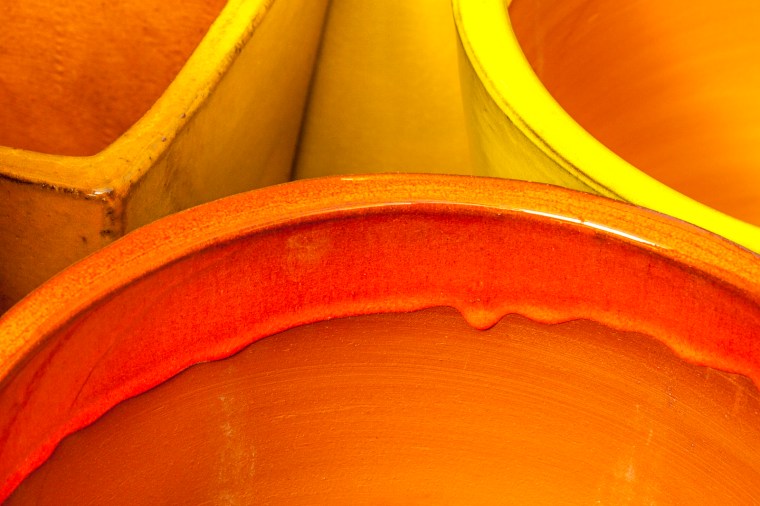
A shape is an enclosed space, a two-dimensional form that has length and width. In many instances in photographs, it’s the element that first catches the eye to reveal the subject’s identity. Students learning to draw begin with the fundamental shapes—circles, rectangles, triangles, and ovals. From these, all forms can be drawn by adding and then erasing lines that don’t belong to the subject.

In the early two decades of the twentieth century, single-image “modernist” photographers moved away from the soft focus, painting-like quality of “pictorialism,” preferring sharp focus, clean lines, an emphasis on shape, form and interesting viewpoints that better lenses made possible. Notable photographers in this movement, particularly for their images of objects that emphasize shape, are Ed Weston, Ruth Bernhard, and Paul Caponigro. 

Application

If the purpose of an image is to inform or to communicate quickly, an emphasis on shape is ideal, because it immediately suggests a subject’s size and importance relative to the environment and other visual elements. 

On the other hand, if the purpose is to express a feeling, an emphasis on shape is again warranted, but now with an emphasis on lighting in a way that makes the subject fascinating or unusual. And it’s important to pay attention to the background so it doesn’t compete with the subject. Expressive images need to have an impact, and that’s mainly accomplished by out-of-the-ordinary lighting—in many instances, just one light. 

There are three types of shapes: Organic, geometric, and abstract

Organic shapes are natural, generally consisting of ovals and curves. They’re rarely straight or hard lines, eliciting the sensibilities of order, flow, and beauty.

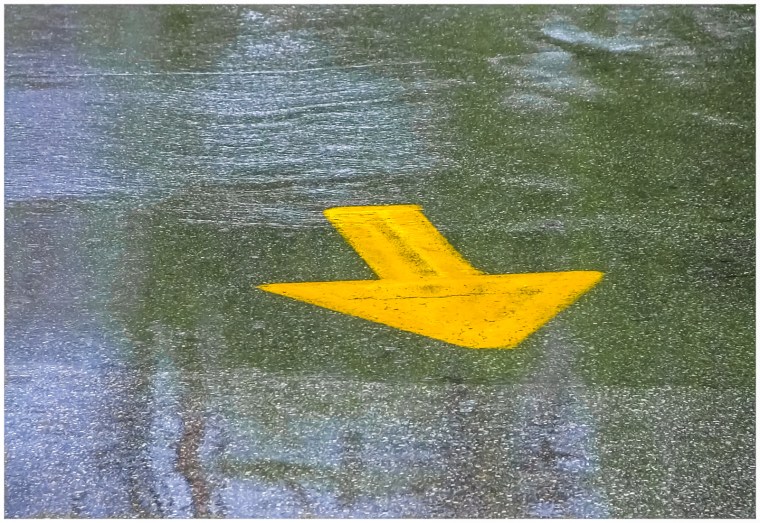
Geometric shapes often consist of straight lines, usually with clearly defined edges. Unlike organic shapes, they can even be symmetrical.

Abstract shapes are obvious creative constructions. The value of such images is the fascination they provide by being either unreal or a variation on the real.

Technique

In the few books I’ve read on drawing, one of the first lessons is an emphasis on learning to really see a subject, beyond looking at it. The advice to accomplish this is to observe the subject without naming it or even thinking of its function. Instead, to see it as a shape or a combination of shapes made up of lines with highlights and shadows. This is excellent advice for photographers because it strengthens the aesthetic “eye.”

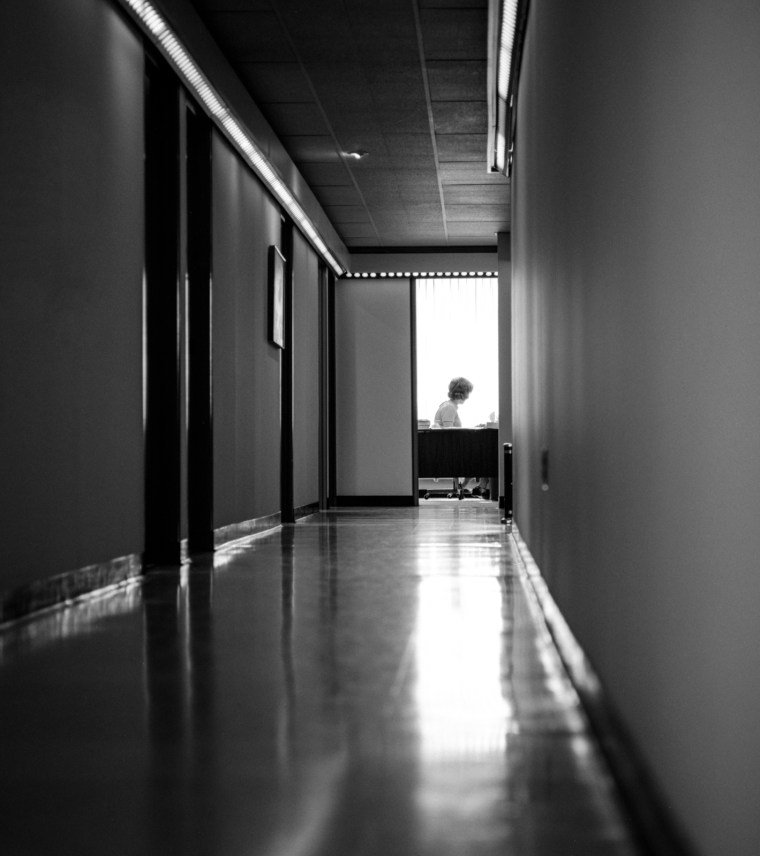
If the objective is to convey information, several shapes can work together with no problem—aesthetically speaking. But when the objective is to convey a feeling, if the situation can be controlled, it would be better to minimize the number of shapes.

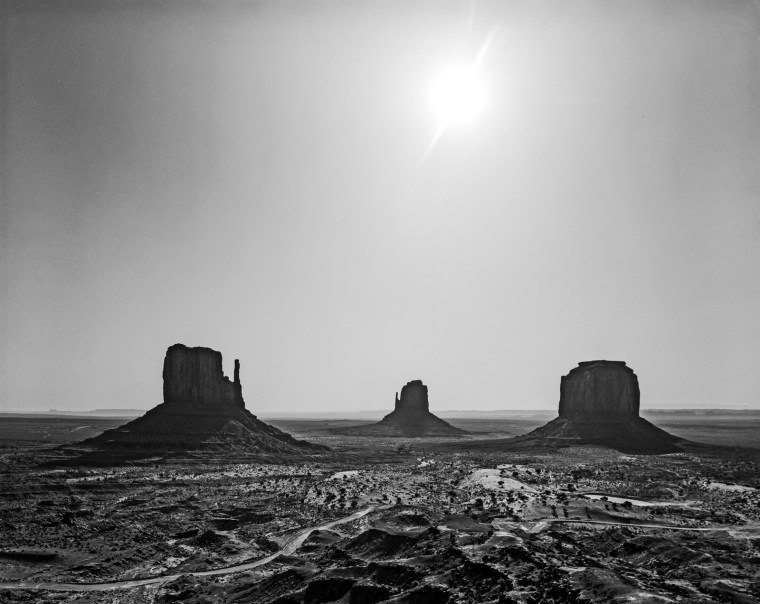
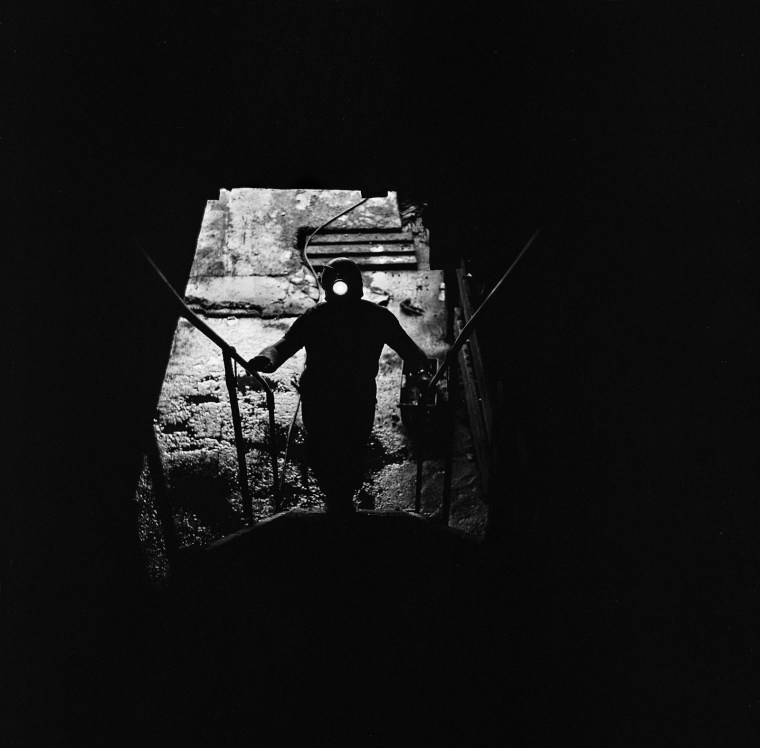
Silhouettes emphasize a subject’s shape by diminishing its detail, which is kept in the shadows. They also tend to separate the space into positive (subject) and negative (background), while contributing to a sense of depth.

A lesson learned from my watercolor painting books is that shapes running diagonally across the frame are more dynamic than those that run in a straight line. They may not make sense, but they capture the viewer’s attention.

Considering Shape in Personal and Social Contexts

According to the Merriam-Webster dictionary, the first definition of “shape” is “to give a particular form or shape to (something). Another is “to make fit for a particular use, purpose, etc.” The latter definition is curious when applied personally because it raises the question, “Am I fit, in good enough shape to accomplish what I’m here to be and do—physically, mentally, emotionally, and spiritually? It’s a good question for contemplation, not only to gain some perspective but also to consider our fitness relative to what appears to be on the horizon.

Socially, we can ask the same question—and even more questions. As a people, what shape are we in nationally? Is the social “body” physically, mentally, emotionally, and spiritually fit, able to perform and create forms that can respond appropriately to change given the possibilities of what lies ahead? Are we planning ahead or spending our time and capital managing real or perceived crises? Are we prioritizing properly? Are our speech and actions reflecting our true values? Are we keeping our “eye on the ball,” not letting ourselves become distracted by the voices of negativity, sensationalism, and hate? While at the personal level these questions appear to be unanswerable beyond opinion or speculation, I think they provide some food for thought.

I welcome your feedback at <smithdl@fuse.net>

My portfolio site: DavidLSmithPhotography.com

My photo books: <www.blurb.com/search/site_search> Enter “David L. Smith” and “Bookstore” in “Search.”


XV. Proportion

As an aesthetic dimension, proportion expresses the relationship of elements within a frame—to each other and to the whole image. Traditionally, paintings and photographs displayed logical proportion where everything within the frame conformed to observation. The part-whole relations made sense, so little to no interpretation was necessary. 

Then in the early ‘20s, Picasso and Salvador Dali among others advanced the “surrealism” movement that used illogical proportions as one of its techniques, for instance, showing a tree that grows out of a table with a pocket-watch the size of a quilt draped over a lone branch. Photographers caught on and adopted the movement, creating a wide variety of subject and image manipulations that were surreal. Here’s one of my own—early-on—atttempts.

Today, computers with image manipulating software have taken illogical proportions and other effects to a level where anything that can be imagined can be visualized. Under consideration here, is the singular topic of proportion, in particular, logical proportion. If illogical proportion is of interest, the best example I can provide in contemporary photography is the work of Jerry Uelsmann.   

Application

Proportion tells the viewer what’s important. If the purpose of a photograph is to communicate information, the primary subject should be critically sharp and generally occupy the most space. It creates a sense of balance and harmony.

However, if the purpose of a photograph is to express a feeling, the photographer needs to identify the element(s) that contribute to that feeling most vividly and compose the image to make it dominant.

Technique

Logical proportion is accomplished by maintaining the real world size relationships within the frame.

More dramatically, use space as a compositional element and place the dominant subject somewhere within it that breaks the rule of 3rds and “balanced” composition. The dissonance captures and holds the viewer’s attention longer.

Contemplating Proportion in Personal and Social Contexts

In the personal domain, proportionality expresses a relationship between two variables, for instance, right and wrong, true and false, good and evil. In the Catholic church, there’s a “principle of proportionality,” discussed by Thomas Aquinas (Summa Theologica II-II 47:8). Paraphrasing here, it says the moral value of an action is proportionate to the good it will do, over against its negative consequences. It’s this principle that gave rise to the Church’s injunction, “the end doesn’t justify the means.” 

To discern the difference between means and end, good acts and their not good consequences, Aquinas recommended prudence among the highest of virtues. Isidore of Seville, a 6th Century saint cited by Aquinas, said, “A prudent man is one who sees as it were from afar, for his sight is keen, and he foresees the event of uncertainties.” I have the quote in my database because it echoes the Native American philosophy of considering the consequences of human action seven generations into the future.   

In the social domain, proportion is expressed as the ratio of the difference between two social entities or conditions—for instance, gender, class, race, health, and the economic gaps that are studied by sociologists. My research on this latter situation turned up some eye-opening statistics that I present further on. 

Curiously, a psychological study by Shai Davidai and Thomas Gilovich indicated that the public is indifferent to economic inequality because of our distinctly American cultural optimism. “At the core of the American Dream is the belief that anyone who works hard can move up economically regardless of his or her social circumstances… Americans are willing to accept vast financial inequalities as long as they believe that with hard work and determination anyone can prosper and achieve success.” It’s the reason these investigators give for not concerning ourselves personally or politically with the fact that “the United States exhibits wider disparities of wealth between the rich and poor than any other major developed nation.” If you would like to research this topic further I recommend inequality.org. 

Historian James Truslow Adams coined the term “The American Dream” in 1931. He said, “It’s that dream of a land in which life should be better and richer and fuller for everyone, with opportunity for each according to ability or achievement. It is a difficult dream for the European upper classes to interpret adequately, and too many of us ourselves have grown weary and mistrustful of it. It is not a dream of motor cars and high wages merely, but a dream of social order in which each man and each woman shall be able to attain to the fullest stature of which they are innately capable, and be recognized by others for what they are, regardless of the fortuitous circumstances of birth or position.”

Today, a Lumen Learning course in sociology defines The American Dream as “the belief that with hard work, courage, and determination, anyone can prosper and achieve success. Their research into class structure indicates that “one’s membership in a particular social class is based on educational and career accomplishments.”

Here are the eye-opening statistics I found:

“Three Men (Bill Gates, Jeff Bezos, Warren Buffett) own as much as the bottom half of Americans.” (Forbes 400 Richest Americans, 2018) 

“Over the past three decades, America’s most affluent families have added to their net worth, while those on the bottom have dipped into “negative wealth,” meaning the value of their debts exceeds the value of their assets.” (National Bureau of Economic Research)

“The richest 5% of Americans own two-thirds of the wealth.” (National Bureau of Economic Research)

“The nation’s top 0.1% have income over 188 times the income of the bottom 90%.” (Emmanuel Saez, UC Berkeley)

“Paychecks at the top have spiked while flattening at the bottom.” (Economic Policy Institute)

“High levels of inequality… negatively affect the health of even the affluent, mainly because, researchers contend, inequality reduces social cohesion, a dynamic that leads to more stress, fear, and insecurity for everyone.” (Inequality.org)

“Families that have zero or even “negative” wealth (meaning the value of their debts exceeds the value of their assets) live on the edge, just one minor economic setback away from tragedy. Black and Latino families are much more likely to be in this precarious situation.” (Institute for Policy Studies)

“Men make up an overwhelming majority of top earners across the U.S. economy, even though women now represent almost half of the country’s workforce. Women are scarce at the top and overrepresented at the bottom.” (U.S. Department of Labor and Fortune) 

The reason they call it the American Dream is because you have to be asleep to believe it.

George Carlin

I welcome your feedback at <smithdl@fuse.net>

My portfolio site: DavidLSmithPhotography.com

My photo books: <www.blurb.com/search/site_search> Enter “David L. Smith” and “Bookstore” in “Search.”


XIV. Perspective

In art, perspective is used to create the illusion of three dimensions on a two-dimensional surface. It was the Renaissance artist Leon Battista Alberti and architect Filippo Brunelleschi in the fifteenth century who first started talking about “linear perspective,” the use of straight lines or lines created by light to understand the change from near to far from a particular point of view. Alberti’s “vanishing point,” the place where parallel lines converge, has been used by artists, architects, and designers ever since.

Application

Whatever the imaging objective might be, whether to inform, persuade, sell, or express a feeling, perspective will create depth to a scene and enhance its forms, giving the image an overall more natural and real-looking sensibility. It’s how we see the world. 

Technique

Perspective can enhance the illusion of depth by looking for and becoming aware of vanishing lines, considering the camera’s point-of-view (POV), placement of the horizon line, and location of subjects, particularly people, relative to the vanishing lines. 

If the point of the image is the convergence itself, a low camera angle can stretch the converging lines to make them more pronounced. If converging lines are only part of a broader image objective, a higher angle can reduce the amount of space devoted to them. It’s a matter of emphasis. Is the image “about” the converging lines? Or something else?

Vanishing Lines

Some converging lines are obvious.

Others are less obvious but still contribute to the feeling of depth. Here, the buildings and the diminishing size of people and vehicles consist of vanishing lines.

Point Of View

 A high point of view shows a lot of ground.

A medium point of view divides the frame in half—not a good strategy because it divides the viewer’s attention between the features on the ground and the sky.

The low point of view with the camera looking up makes the sky prominent.

  Horizon Line

The placement of a horizon line cues the viewer to the primary subject matter. 

Again, with the horizon in the middle of the frame, the elements are equally weighted and the “message” is unclear. Is this about the sky or the water? If both, the viewer’s attention shifts back and forth top to bottom. The composition is static and the message is diffused rather than focused.

Here, the image and its message are focused. It’s about the sky because more of it is showing.

Because more weight is given to the water, it’s clear that the image and its message is about the sunlight on the water.

Placement of People

The illusion of depth can also be established by the placement of people—or objects of known size—farther away on the vanishing line. Notice the engine in the back to the left. The large object shown small indicates great depth.

Contemplating Perspective in Personal and Social Contexts

One’s personal perspective involves two factors—where we stand and how we regard what we see or experience from that point of view. In the first instance, the human viewpoint or perspective, unlike a camera that has a single and objective “eye, is entirely subjective. We don’t see the objective world. Instead, the body experiences sensations of the physical world and the brain-nervous system interprets them according to a complex of inherited beliefs, perspectives, and opinions which continually evolve with experience and education. 

No two human beings stand in the same place, not even identical twins. Every point of view is unique. And it has been my observation and experience, that this is the fundamental challenge of communication—sharing our personal reality, what we think we know, believe, feel, and experience with others, and defending it when we want our way or need to be understood. It’s really difficult, in part, because words and how they’re expressed can carry a multitude of meanings. When communication works it’s grand, we say the person or group “gets” where we’re coming from, our point of view, even if they see things differently. When it doesn’t work, when our perspective is out of alignment with someone, it can be frustrating or discouraging, even have dire consequences—as when a doctor and parent have different perspectives on how to treat a child’s serious illness. 

The other component of personal perspective is how we regard what we see or experience from our point of view. We don’t just experience the world, we make judgments about it based on where we stand and how we feel about a situation. We’re comfortable as long as there’s social agreement, consensus on a particular reality. For instance, we all know what a knife is. But the word “knife” is not the thing, it’s a symbol of the thing. Someone in the deep past vocalized a sound to describe a sharp object used for cutting, and others adopted the sound—“knife”—to describe similar cutting tools. But while there’s agreement on what an object is, there can be great disparity relative to its use. For instance, a sous chef and a physicist differ in how they see the same kind of object. The chef regards his knife as an object that has dimensions, weight, balance, thickness, durability, and a very sharp cutting edge. The physicist, however, views a knife as an arrangement of compounded elements wherein every atom is 99.999999999999% space. Thus the adage on perspective: “If all you have is a hammer, everything looks like a nail.”

Given that perspectives are constituted of beliefs and experiences that differ, sometimes dramatically, how can we ever agree on a collective level? 

Researching this question, I found an article where Dee Hock, founder and former CEO of Visa credit cards, was interviewed, and it resonated. To my mind, his perspectives on business leadership easily applied to the governing of society as well. After saying “the heart and soul of every organization is purpose and principles,” he went on to define them.  

“A purpose is not an objective, it’s not a mission statement—a purpose is an unambiguous expression of that which people jointly wish to become. And a principle is not a platitude—it is a fundamental belief about how you intend to conduct yourself in pursuit of that purpose. You have to get very precise about these things. If the purpose and principles are constructive and healthy, then your organization… will release the human spirit and will be constructive of the biosphere.

I believe that purpose and principle, clearly understood and articulated, and commonly shared, are the genetic code of any healthy organization.  To the degree that you hold purpose and principle in common among you, you can dispense with command and control. People will know how to behave in accordance with them… and the organization will become a vital, living set of beliefs.

Once you get a group of people who really begin to understand this, then energy, excitement, and enthusiasm literally explode out of them—they know what to do.”

It’s Mr. Hock’s first sentence that hooked me: “A purpose is an unambiguous expression of that which people jointly wish to become.” I’m reminded of the American presidents—whom you can choose to name—who continuously called us to higher aspiration and identified us as champions of virtue. Applied to upcoming candidates for public office, it’d be wonderful to hear they articulate their vision of who we wish to become. Equally important, would be to see a candidate living the virtues they put forward. Good leaders, like good teachers, lead and teach best by modeling their purpose and principles, not just talking them. 

We each have a valid and important perspective on what is. And to the extent that we can acknowledge the partiality of this perspective, what we say stays clear and true.

Joanna Macy

I welcome your feedback at <smithdl@fuse.net>

My portfolio site: DavidLSmithPhotography.com

My photo books: <www.blurb.com/search/site_search> Enter “David L. Smith” and “Bookstore” in “Search.”


XII. Vectors

Vectors have different meanings and applications in mathematics, biology, psychology, computer science, and other fields. Because the application considered here is their use as an aesthetic tool,  a vector will be considered any visual element that guides the viewer’s eye within or around a frame. I think of them as lines of force that give direction. 

Vectors can point to other elements within the frame, lead the eye out of the frame, create a sense of motion in the two-dimensional space or all of these at once. A favorite pose of portrait photographers has been to position the arms and hands of the subject so they lead the eye to the subject’s face. For instance, this can be accomplished by having the chin resting on folded hands, or hands holding an object like eyeglasses below the chin. This is often seen in talent agency “head shots” where the face needs to dominate. And actors are taught to move or positions their hands so they keep directing the attention to the face. Vectors are all about managing the viewer’s attention. 

Here, the eye-line of the child directs the viewer to the man, his cigarette points to the lighter in his hand, which points to the woman’s cigarette, and then her leg points back toward the child, creating a circular motion to maintain the viewer’s attention in the frame. After that, the eye moves around the fame to see what else is there. 

Vectors can direct attention through the use of bright lines or lines of light. Above, the lines converge to the point of interest.

Here, the lines point to a mass and aid in the interpretation of the subject.

Vectors can be dark or black.

They can surround or encompass as well as point to the primary subject.

They can suggest depth an perspective.

Make a statement.

Or enhance a sense of motion.

Application

Vectors are put to good use when the objective is to hold the viewer’s attention within the frame. The trick is to compose the shot so the vectors move from one to another around the subject, without leading the eye out of the frame. 

Technique

As with many of the other aesthetic dimensions, the challenge is to become aware of the light or dark lines or shapes within the frame and then compose with vectors so they either point to or encompass the primary subject matter, the point of critical focus. This is easier to do when the camera is on a tripod. There’s more time to work the composition. Otherwise, the composing has to be done on the fly.

Contemplating Vectors in Personal and Social Contexts

The consideration of vectors as visual elements that direct attention within and around a frame, draws me to consider the elements—vectors—that direct our attention within and around our everyday lives. What are the forces that command our attention, and where do they want us to focus? 

Of course, the sources of influence vary by individual, time, place, circumstances, and culture. But generally, and for the sake of reflection, they include the “still small voice within,” the environment, people close to us, religious, medical, and educational institutions, political and business associations, artists, sports figures, special interest groups, the mass media (radio, television, movies), the internet, social media networks, and reading materials. It would take volumes to consider the nature of their influence, but in examining some of these sources I found it very enlightening to note the direction the vectors are pointing, and what they want me to focus on. Ranking them was even more insightful, allowing me to make some critical adjustments. It took only a couple of minutes. Whether you write down your sources of influence or not, I highly recommend a close look as a way to bolster the ability to discriminate, understand the sources that are most influential, and provide a defense against negative valuation.

I welcome your feedback at <smithdl@fuse.net>

My portfolio site: DavidLSmithPhotography.com

My photo books: <www.blurb.com/search/site_search> Enter “David L. Smith” and “Bookstore” in “Search.”

XI. Line

In geometry, a “point” is a single location. A “line” is an extension of a point, an elongated mark, a connection between two points or the edge of an object or situation. Artist Paul Klee said, “A line is a dot out for a walk.” Practically speaking, lines serve to define length, distance, and shape. And aesthetically, they indicate boundaries; they create separation. Below, the “line in the sand” marks a length, along which the visual element on one side differs from the other.

Application

Lines are delineated according to path, thickness, evenness, continuity, sharpness, contour, consistency, length, and direction. They make shapes, create visual variety and rhythm, simulate texture, separate colors, suggest movement, and create the illusion of depth.

Because the eye tends to follow lines, the artist can use one or more of them to direct the viewer’s attention, ideally to elements of interest. Note also the telephone lines, the railroad ties are lines, and the horizon is a line. 

Several lines together can create or reveal a pattern,. 

The sensibilities of structure, mass, and volume can be enhanced by framing architectural and other subjects so the lines, both vertical and horizontal, are dominant. 

“Organic lines,” those that are broken or vary in thickness, texture, shape, or color, help to describe edges, define a subject, or evoke a variety of sensibilities. Shadows are lines, so also are lines that make letters, for instance in italicized words that stand out from regular type to create emphasis. 

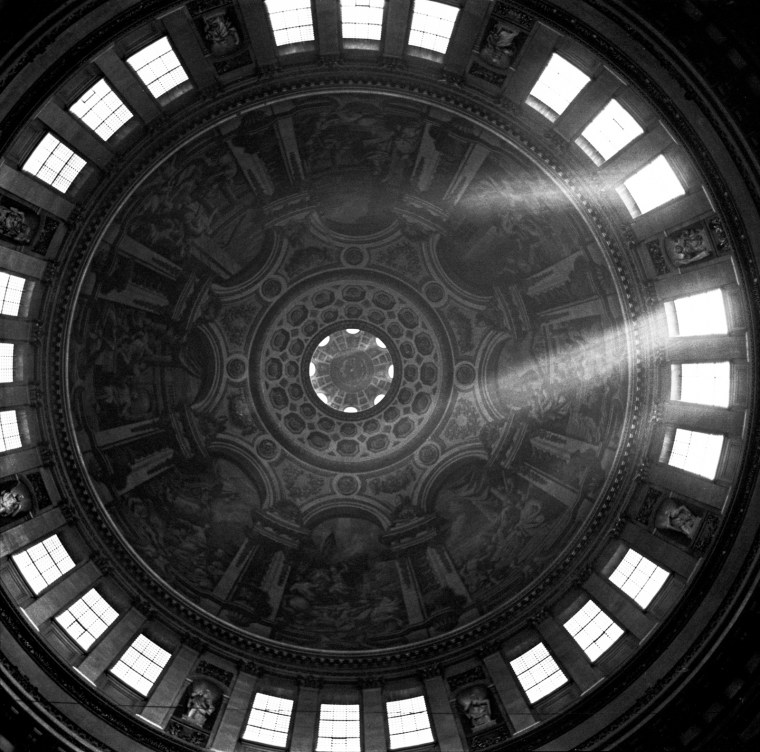
Lines can also be ephemeral, for instance, a ray of light, an airplane vapor trail, or a line of fog in a valley. In this instance, the sunlight streaking through windows at St. Paul’s Cathedral in London, England consists of lines. The dome itself displays a series of concentric lines.

Technique

Our everyday lives are visually permeated with lines: squares, rectangles, triangles, circles, and triangles. Putting such lines to aesthetic use in photography is mostly a matter of becoming aware of them in the environment—or arranging them in the studio—and then making them a dominant or important part of the image. In my own work, I go looking for “strong geometries.” Depending on the objective, the reason for making a photograph, lines can be framed to convey information, express an emotion, or both.  

Vertical lines are rigid, stable, and strong—trees in a forest, electric towers receding into the distance, statues, architectural columns, windmills, and mountain peaks.

Horizontal lines are restful, calm, and serene. They suggest gravity—converging railroad tracks, rolling hills, and meadows, a line of fences, a sprawling farm, a thin stream meandering through tall grass and weeds. 

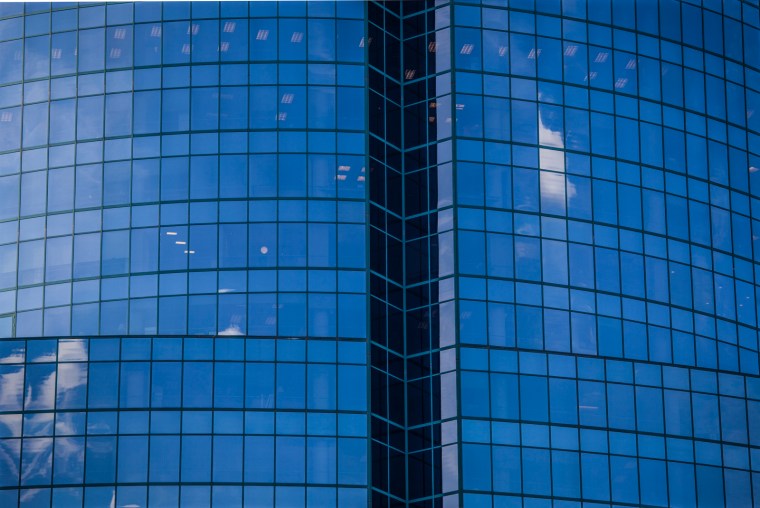
Vertical and horizontal lines that intersect suggest strength, equilibrium, and durability, as in the office building above.

Diagonal lines are dynamic. They express the energies of activity, restlessness, drama, and opposition—wind-blown trees, a severely tilted barn, an uplifted rock face, contemporary architectural features, and an ascending airplane. 

Thick and bold lines shout. Small and thin lines whisper. Squiggly and irregular lines are frenetic.

Lines of light are generally distinctive, especially against a dark or black background, as in this New York street scene. 

Straight, sharp and bold lines are assertive. Curved, thin, and continuous lines soften. It’s one reason why, aesthetically, straight lines are considered “masculine,” and curving lines “feminine,” particularly in architecture. 

And lines can be imaginary. Photographers are aware of “sight lines,” the direction people in the frame are looking. We generally don’t want a line of sight to lead the viewer out of the frame, and we prefer to have a person direct their gaze either toward the camera, another person or an important object. Film directors concern themselves with “looks,” (another name for sight lines) the direction an actor is looking because they want smooth transitions between edited shots. 

Contemplating Lines in Personal and Social Contexts

We all draw lines in life. How and where we draw them is an expression of our beliefs and values. And the lines we draw communicate these to others. Often, lines can trigger an emotional response—people stand in line, waiting for hours in the rain or cold for something to happen, putting patients and health “on the line” for a positive outcome. Sitting in a line of traffic for a long period tests the patience of drivers, at times to the brink of road rage. We’re “sold a line of goods” by Robo callers, encouraged to follow a “line of thinking,” and “fall in line” behind a leader. In these and other such linear situations, the choice is social alignment. And we often decide whether or not to follow a particular line of thought, conform to a request or behavior. We want to know if it’s in line with our values?

How and where society draws its lines reveals the perception of both itself and the world. In anthropology and sociology, the phenomenon of drawing lines around groups of human beings is referred to as “stratification.” Its how we position ourselves relative to the groups we identify with relative to other groups. We draw lines by kin, tribe, caste, race, geography, economic status, and intelligence to name just some of the larger groupings. These lines are actually circles. Psychological or physical, the purpose of such lines is to enclose and exclude, often as a matter of preferences or security. The intent is to keep “our people” in and “others” out.  

Photographers in the United States are severely restricted because every bit of land is enclosed by buildings or fences. Landscape photographers have to photograph in national parks or ask permission to access private property. Even then, the landscape is filled with fences, phone poles, electric towers and wires, microwave, and cell phone towers. What does that say about us? In rural England,  it’s very different. While the land is owned, fences in most areas have gates for the express purpose of allowing people the opportunity to walk the property without needing to ask permission. And, there’s strict regulation on where poles and towers can be placed. It’s a photographer’s dream. Remember I said that lines speak? So what does that say about British society? It seems to me it has everything to do with trust and how we perceive those around us. Perceptions are reflected in the lines we draw, and they have consequences. 

On a research trip to Guatemala, I followed a Maya guide on walking paths through hills and valleys where vegetables were being grown. One of the notable features was the lack of fences—anywhere, for miles. Individual plots were marked at the four corners by a pile of stones or a tree that only grows five feet tall. My guide explained that the walking paths through the fields were open to anyone, and were often used as shortcuts to various destinations. Geographically, the lines they drew were imperceptible, horizon to horizon. Where there is trust, there’s no need to draw a line. 

Given the current immigration situation, the real challenge is how to identify migrants who can be trusted as contributors to society as opposed to those who would threaten it. In my opinion, since migration is an information challenge, not a physical one. The solution then is a matter of re-envisioning the immigration process so systems, not fences, can be put in place to effectively and efficiently manage the borders. Systems failures require systems upgrades. In the current situation, information gathering, processing, and sharing should be a top priority. 

I welcome your feedback at <smithdl@fuse.net>

My portfolio site: DavidLSmithPhotography.com

My photo books: <www.blurb.com/search/site_search> Enter “David L. Smith” and “Bookstore” in “Search.”

X. Light

In considering light as an aesthetic tool, there are two common situations in photography: light that reveals subject matter in its natural condition and light that enhances the subject through management. The factors contributing to management relate to the manipulation of the source—the light’s color or “quality,” intensity, direction, and modifiers, how it’s made more or less specular. Because black and white photography eliminates color, it’s an ideal medium for developing an awareness of these properties. 

Training The Eye

Whatever the medium, I recommend frequent observation of a particular kind—paying attention to what light is “doing” within a frame. Is it enhancing form or texture? Creating vectors? Generating reflections? Softening or creating specular highlights?… I specify this kind of attention because the development of an aesthetic eye requires the framing of elements in order to include certain parts of a scene and exclude other parts.

For this purpose, I keep a framing card in my camera bags. They can easily be made: take an 8 x 10 black card stock and cut out a 3.5 x 5.5 rectangular opening in the center. When a framing card isn’t available, I revert to putting my fingers together (first and second fingers on both hands) to create a square frame, and adjust them to simulate the camera’s viewfinder format. At arm’s length these devices serve as a telephoto viewfinder; closer to the eye, they provide the wide-angle perspective. Movie directors and directors of photography (DP’s) do the same thing, but with very expensive optical viewfinders. Of course, it’s not always practical—or socially acceptable—to hold up frames in certain situations, but there’s nothing like it for cultivating an awareness of light and composition. 

When I find a location that has photographic potential, especially when I’m working with a large format camera, the first thing I do is walk around with a framing card as a way to quickly identify possible subject matter. And I don’t have to carry around the tripod-mounted camera to use its viewfinder or view screen. 

Application

Whatever the circumstance, from capturing a family photo with an iPhone to working with a professional camera, the five above mentioned features are always part of the image-making equation. They hold for existing light or the purposeful placement of lighting equipment. Even if the objective is to simply and quickly capture a moment without making it artful, awareness of light properties can enhance the image. If, on the other hand, the objective is to create an image that has some aesthetic appeal and captivate viewers, then some thought needs to be given to their management. 

Technique 
Source

The source of light determines the other four properties of light, so it’s of primary concern. In light that reveals, we just want to be aware of what it’s doing. Relative to the subject in its natural condition, what is the light source? What color is it? How bright is it? Is it soft or hard, diffuse or specular? If the purpose of taking a picture is simply to document the subject, these can be altered by changing the camera position—or not.

Here, the light basically “reveals” the subject matter. The source is cloud-covered sunlight.

If on the other hand, the objective is to maximize the impact of an image to take advantage of the available light, the same properties are considered, but now choices have to be made with respect to camera angle, composition, geometry, and the direction of light in order to enhance certain aspects of the subject.

Here, a more impactful image is created by a camera angle and composition that enhances the illusion of perspective, using the light to reveal patterns of light and shadow. 

Quality

When photographers talk about the “quality” of light, the reference is to its color. Normally, in daily living, the human perceptual system tends to interpret all light, indoors and out, as “normal” or “natural.” Only recently, when we began to see “daylight” bulbs being offered in stores, did many people realize that the incandescent bulbs in home fixtures were and are decidedly yellow, compared to daylight which is blue. Every light source emits a specific wavelength or color of light. Sunlight varies dramatically in color depending on geography and atmospheric conditions, but generally, it’s blue or “cold” relative to the bulbs just mentioned, specular when the sky is clear and diffuse when it’s overcast. 

The quality of light that a camera records can be altered by changing the “white balance” feature on a digital camera, or by putting a filter over the lens. In both cases the color of the image is affected overall—everything takes on that color. The alternative is to put a “gel” over a light fixture, so only the light coming from that source is affected. In this way, three lights with different colored gels will result in three colors of light in the same frame.

Carnival ride

Intensity

Shooting in bright sunlight yields sharp, very distinct, hard-edged shadows and high contrast—excellent for deepening color saturation and creating depth. As brightness diminishes, these qualities gray-down to darkness where only the brightest highlights are rendered. To accomplish this with lights, they’re placed at some distance from the subject. The intensity of such a light is determined by its wattage.  

Bright sunlight

Moments later, clouds obscured the sun.  

Direction

Whatever the source, inside or out, light coming from the side enhances texture—the more to the side the greater the texture. Light falling on the front of a subject illuminates its features but is considered “flat,” lacking in depth. It’s fine, just ordinary. The opposite is true of light coming from behind the subject. Backlighting is dramatic because it creates a halo or rim around the subject, enhancing its form. Generally, the brighter the backlight, the more dramatic the image, and then a decision has to be made: Is there enough light on the front of the subject to resolve some degree of detail? If not, a “fill light” is needed to lighten the shadows. 

Amish shocks lit from the front.

The same field shot early in the morning with strong side-lighting.

Modifications    

A light modifier is any medium that diffuses the light coming from its source. For instance, clouds modify bright sunlight on a clear day by softening it. At one extreme is “specular” light—a source that’s tiny and bright, like the distant sun on a clear day, or a small 500-watt bare quartz bulb. Better jewelry stores have several specular lights mounted in the ceiling, and even rotate them in some cases to make the facets in precious stones sparkle—give off specular highlights. The more specular the source, the sharper the shadows it creates. And as a source becomes more diffuse, the shadows spread out until they diminish altogether. 

Snow drifts in bright specular sunlight.

Clouds modified the sunlight, making it diffuse—flat, lacing contrast.

Rule of thumb: photograph men in specular light to emphasize skin features and hair texture; photograph women in diffuse light to soften those same features.

Camera stores have a wide variety of light modifying materials and equipment, but professionals also use inexpensive white foam-core sheets to soften skin tone by using them as reflectors. Another way to create diffuse lighting is to bounce lights off a white wall or ceiling.

Contemplating Light In Another Context

“Light” is a common metaphor for awareness. We picture a lightbulb and say we had a “bright idea.” And when Indian sages attain realization they speak of it as “illumination.” Basically, the metaphor expresses a new or heightened state of awareness or consciousness. Considering the above recommendation to pay attention to what the light within a frame is doing in order to create an image, a question comes to mind regarding the place of light in everyday experiences—our frames of reference. Whatever is attracting my attention, what is consciousness (the light) doing? Along what lines are my thoughts being directed? Where am I “pointing” my attention (the camera equivalent)? And what am I creating as a result of my attention? Simply put, what are the consequences of what I think about most? Whatever we attend to we make more of, so whatever it is, that’s what I’m creating in my life and contributing to the world.

There’s a significant difference between “taking pictures” and “making photographs.” The former is largely mechanical, requiring little thought. The latter is a creative act, requiring greater consideration and a heightened level of observation—awareness. Creative activity then requires more awareness and results in increased awareness, as when we observe and share what we’ve created—be it a photograph, business transaction, or garden. And this raises another question for me: Am I creating the reality I want—by purposefully managing my attention? Or am I allowing it to be directed by outside influences? It’s the difference between directing and reacting, living authentically, consistent with one’s purpose, or on auto-drive.

I welcome your feedback at <smithdl@fuse.net>

My portfolio site: DavidLSmithPhotography.com

My photo books: <www.blurb.com/search/site_search> Enter “David L. Smith” and “Bookstore” in “Search.”


III. Color / It’s Social Significance

Double Rainbow

This is the third of 26 postings in the series, “The Aesthetic Dimensions.” The first, posted January 6, 2019, explains the series and deals with “Abstraction.” To follow, go to <davidlsmithcontemplativephotography.com> and click on “Follow” (bottom right corner of the Home page). The postings will show up in your mailbox every Sunday morning.

Objectively speaking, the world is colorless. So is the sun. Our brains construct the sensation of color from various radiating wavelengths of photons, depending on how they are absorbed in and reflected by surfaces. Visible light occupies just a tiny sliver of the electromagnetic spectrum, constituted of wavelengths that stimulate our brains to interpret them as colors—for the sake of discussion here, the primaries of red, green, yellow and blue. We see a leaf as green because it absorbs the primary wavelengths except for green, which it reflects. 

Light has three properties that affect the sensation of color: “hue” specifies the wavelength and the name we assign to a particular color (red, yellow, pink), “saturation refers to a color’s richness (bland or intense), and “brightness” refers to its intensity.

I  want you to understand that there are no colors in the real world. There are no textures in the real world. There are no fragrances in the real world. There is no beauty. There is no ugliness. Nothing of the sort. Out there is a chaos of energy soup and energy fields. Literally. We take all that and somewhere inside ourselves we create a world. Somewhere inside ourselves, it all happens. The journey of our life.

Sir John Eccles

Aesthetically speaking, there are two phenomena that provide artists with opportunities to maximize color use in order to achieve a communication objective. They are “evocation” and “mixing.” Both have emotional and informational consequences. 

Color Evocation

To evoke is to arouse a feeling. Different hues evoke different emotional responses. Below is a listing of some of the emotions associated with common colors. Several websites go into further detail, describing the colors and the emotions they evoke. Television and video graphic designers are adept in using these correlations to creating emotionally effective commercials and political ads. With regard to evocation, the key question is: What do I want the audience (viewers) to feel?

Red Passion, aggression, importance

Orange Playfulness, energy or vitality, health, vibrancy

Yellow Happiness, friendliness. And negatively: anxiety and caution

Green Nature, stability, prosperity, financial safety

Blue Calm, serenity, security, safety. It’s trustworthy and inviting

Purple Mystery, luxury, romance, elegance, sensual

Violet Calm, spirituality, essence, stillness

Pink Femininity, youth, innocence

Brown Earthiness, outdoors, sturdiness, classy (in light tones)

Black Mystery, power, sophistication, elegance, edginess

White Clarity, cleanliness, virtue, health, comforting, purity

Gray Neutrality, formality, gloom, professional

Beige Calmness. It enhances colors surrounding it   

Color Mixing

Emotional responses to color are also affected by how colors are combined. And here, there’s a spectrum of choices ranging from color “harmony” at one extreme to color “discordance” at the other.

Color Harmony

'71 Corvette  Fern And Window Suspension Bridge

An image displays “harmony” when the colors within a physical or electronic frame are predominantly the same hue. There can be several or few elements within the frame, but most of them will be the same hue. And that hue can vary widely in saturation and brightness. With even a cursory glance at such an image, a viewer will readily say it’s “red,” or “blue.” 

Color harmony is used when the communication objective is to attract attention or evoke a mood. It accomplishes this by being unusual. In our everyday experience of the world, indoors and out, and without a frame, there are so many objects of different colors, it’s rare to find harmony. More often, it’s created. And because it stands out from the norm, it catches and holds our attention. Color harmony is a pleasing sensation.  

Out in the world with a camera, it’s a matter of shooting close and framing the shot to exclude elements with hues different from the primary subject matter. In the studio, it’s a matter of choosing a background, foreground, and other elements that are the same hue as the primary subject, irrespective of saturation and brightness. 

Color Discordance

Rusting Hull Spools Of Thread Clouds

Discordance in this context is the opposite of harmony, a matter of including many different hues within the frame. It’s much less challenging because that’s the visual norm in everyday life. Used deliberately, color discordance works best when the objective is to convey information rather than express or elicit an emotion. It accomplishes this by making each color a distinct and separate visual element. The more elements within a frame, the more information potential it contains—to be extracted or interpreted. Discordance can, however, evoke a sense of clutter, frenzy, or confusion, if any of those are desirable communication objectives. 

Contemplation: The Social Significance Of Color

There isn’t an object or experience I can think of that isn’t influenced or enriched by color. Color is a factor in the food we eat, the automobiles and appliances we purchase, the vacations we take, the creative activities we perform. We use it symbolically to distinguish differing political views, moods, traffic signals, and road signs. Color can trigger an identification, as in products and their logos. Colors are associated with groups according to the clothing and insignia. Astronomers use color to distinguish cosmic features and to measure the distance and composition of stars. Flowers and many birds rely on color for reproduction. It’s central to the seasonal life cycle of trees. And animals use it as camouflage. The list goes on.

American Flag

Colors can unite—an indication of harmony and unity—as when we respect the colors of a flag. And they can divide—an indication of discordance and division—as when we negatively judge or stereotype people according to skin color.

Back Of A Negro Man  Man on Beach

In this regard, I’m reminded of several lessons we learned in our physical anthropology class. For one, skin pigmentation evolved as a process of natural selection, an evolutionary feature that protected against the strong ultraviolet radiation for those living on or near the equator, and the equally important need for those closer to the poles to produce Vitamin D in the skin under conditions of low ultraviolet radiation. In the intermediate zones, human bodies developed the ability to gain and lose pigmentation from season-to-season through tanning. 

Another important lesson relating to skin color is that genetically, no human being alive has pure enough blood to be considered a “race.” The closest in 1974 was a dying group of Australian Aborigines, but even their blood was a mixture of many varieties of human and pre-human species. Now, because of advances in paleontology, we know that there were dozens of branches of hominids interbreeding that led up to “modern man,” some 30,000 years ago.

In  Living Color: The Biological and Social Meaning of Skin Color, anthropologist, Dr. Nina Jablonski, writes that in ancient Egypt and other societies where there was dark to light skin pigmentation, “there were inequities of resources, trade imbalances and various kinds of disagreements, but the idea of calling another group ‘other’ because of skin color did not exist.” She cites Carolus Linnaeus as the man who, in 1757, classified human skin varieties as red Americans, white Europeans, brown Asians, and black Africans. A year later, he added categories that described their behaviors—Cholericus Europeans, Sanguineous Europeans, Melancholicus Asians, and Phlegmanticus Africans—based on ancient philosophers who erroneously wrote about human temperament being formed by the intensity of the sun.

Especially enlightening for me, Dr. Jablonski cites Immanuel Kant (1724-1804) as the  philosopher who coined the term “race.” He grouped people into four groups—whites, Negros, Mongolians, and Hindus — “according to their potential for civilization, their potential for developing higher thought, able to use reasoning. And these categories were immutable.” It was a rigid and hierarchical perspective that put the white race on top. Significantly, “he never left his living room.” All his conclusions regarding race were based on stories told to him by friends, colleagues, and explorers whose books he’d read. 

One of his philosopher friends, David Hume, wrote in 1748 that “…there was never a civilization or nation of any complexion other than white.” Yipes! Bad information, worse scholarship and philosophy, an expanding slave trade, corrupt and tragic alliances, and greedy commercial interests combined to indicate the inferiority of black people. Dr. Jablonski calls it “An imperfect storm of philosophy, economics, and quasi-theological forces (there’s nothing in the Bible that talks about discrimination according to skin color). All this contributed to the perspective that Negros, by virtue of biology, were inferior, fit only for servitude.”

Her book was amazing, a real eye-opener. And it validated my professor’s lesson, that “race” was entirely a social construct. There is no gene or group of genes common to any group of human beings—anywhere. 

I talk about color-coded memes (culturally transmitted ideas that act like a genetic trait). Color-coded race concepts become color memes that are stereotypes. And this lays the clear psychosocial template for racism. By the 19th century, color-based racism is the new reality in the United States and in many other countries.

Nina Jablonski 

I welcome your feedback at <smithdl@fuse.net>

My portfolio site: DavidLSmithPhotography.com

My photo books: <www.blurb.com/search/site_search> Enter “David L. Smith” and “Bookstore” in “Search.”

 

VIII. Gradation

Aesthetically speaking, “gradation” refers to a gradual or graded change. Artists refer to it as a grading of “values.” In color photography, gradiation can be a transition from one hue to another or to a different saturation or brightness. In black and white, it’s a transition from light to dark or from one texture to another. The width of the transition can take up a lot of space—

Or very little.  And there can be multiple areas showing gradations within the same image—as in the taillight above and the architectural feature below.

Application

The experience of gradation is soft and graceful. As the eye moves across a plane of graded colors or tones there’s a slowing down of the aesthetic sensibility. Whereas areas of stark contrast are abrupt changes, gradation elicits a slower, more pensive and flowing experience for the eye. Especially, it enhances roundness in a subject or parts of a subject. For this reason, it’s best used in communication objectives intended to express roundness and softer sensibilities.   

Technique

Outdoors in sunlight, gradation occurs naturally wherever there are textures, curves or rounded surfaces. It’s just a matter of choosing an angle and framing the subject to get the desired amount of grading from light to dark.

Inside or in the studio, lighting for gradation is a matter of positioning the subject in relation to the light so the brightness falls off gradually. Before he passed, Fr. Ted Tepe S.J.—who taught photography at Xavier University for many years—lived in a small apartment. Without the use of incandescent lights, he created gorgeous color images of flowers by setting them in his window at different seasons and various times of day, adding some detail in the shadows with pieces of white cardboard to provide “fill” light. When I first saw his photographs, the lighting was so exquisite, so controlled, I thought he’d shot the flowers in a studio. The lesson here, you don’t need specialized lighting equipment to create fine images.

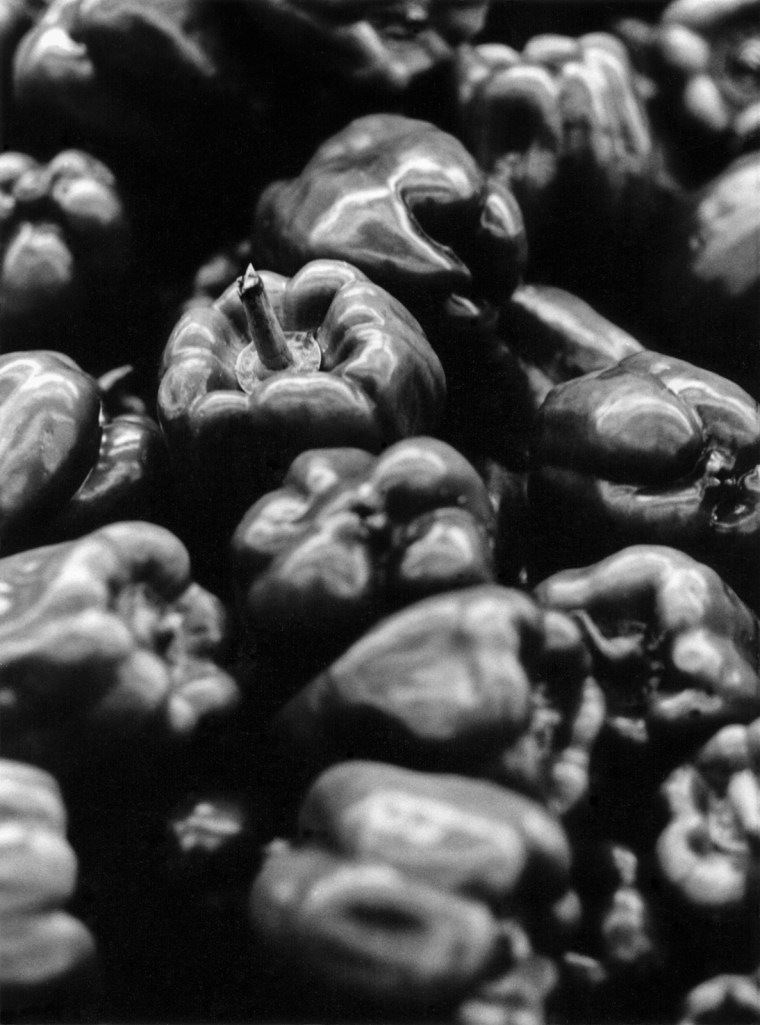
(Above) To maximize gradation, situate one light well above, below or to the side of a subject so the shadow side is left completely dark, without detail. 

To shorten the gradation, add some fill light in the shadow areas using a reflective surface or another light placed at a distance, “feathered off,” to control the amount of desirable detail in the shadows. Note the detail in the shadow above on the left side of the pepper.

In this image, there are multiple gradations, some short, others long. Notice the smoothness of the longer gradations, and the flow of the shorter ones as in the ripples—middle right.

Reflections On Personal & Social Gradation    

Gradation equates with changes that are gradual and graceful, not stark and abrupt. It’s calm and quiet; it doesn’t excite or shout. Personal change that’s graded is gradual, it takes time and consideration. At times it may not even be perceptible, as when an idea or offhanded word gestates in the dark subconscious for a time before it becomes adopted in the light of consciousness. Just so, the “graded” aspects of life are long-term and gradual—activities that improve our awareness and identity, help us to become more creative, realize more of our potential, build competencies, develop moral and ethical guidelines, enhance our quality of life, help us realize our dreams and contribute to spiritual growth. 

If I love the world as it is, I’m already changing it: a first fragment of the world has been changed, and that is my own heart. 

Peter Dumitriu (Novelist)

Socially, gradation is more evolutionary than revolutionary, more considered and less reactionary. We see it in dialogues rather than debates, questioning rather than pronouncing, inviting rather than excluding, listening rather than speaking and flexibility rather than rigidity. Although we’re sometimes frustrated that positive change in the area of social development takes so long, our faith in the future is grounded in the belief that eventually common sense, decency, intelligence, wisdom, and truth, will outshine ignorance and greed. As in our personal lives, the challenge—and lesson—of social development is patience. Although gradual change takes longer, it’s more likely to sustain.

Every time we invest attention in an idea, a written word, a spectacle; every time we purchase a product; every time we act on a belief, the texture of the future is changed… The world in which our children and their children will live is built, minute by minute, through the choices we endorse with our psychic energy.

Mihaly Csikszenthihalyi (Psychologist)

I welcome your feedback at <smithdl@fuse.net>

My portfolio site: DavidLSmithPhotography.com

My photo books: <www.blurb.com/search/site_search> Enter “David L. Smith” and “Bookstore” in “Search.”
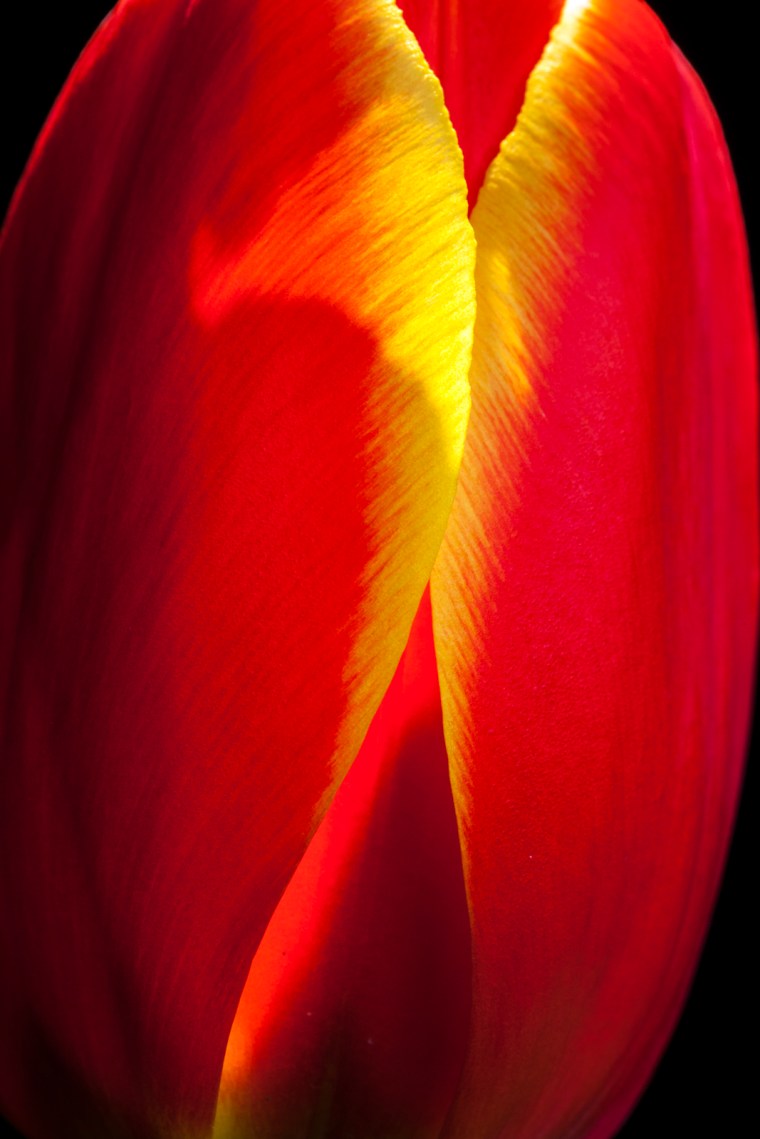
Winter Solstice — Renewal

Sun On Horizon


As December 21st approaches, I reflect on the significance that the winter solstice held for indigenous peoples and mark it in my own life as a way to attune, as they did, to the order and rhythms of nature and the cosmos. Having studied Mesoamerican cultures, particularly the ancient Maya, for forty-five years, I use them as my general reference here. But all indigenous cultures the world around, from Egypt to Indonesia, had rituals based on the summer and winter solstices.

Without instrumentation, the ancients developed their understanding of the world by observing the movements of the sun, moon, planets and other celestial bodies. The sun was viewed as the creator because it was known to be the source and sustainer of all life—an observation that is, of course, accurate, whatever name we attach to the sun.

For the Maya, Ajaw K’in, “Lord Sun” and his movements were therefore of primary concern. His risings and descendings made the day, and his journeys made the seasons. They didn’t take continuance for granted. Were the sun not to rise—perhaps from not being fed properly with prayer, incense and blood (considered the sacred sap of life; without it, there is death) the world would end. Every day, the sun’s ascension from the underworld was considered a rebirth. His dying, indicated by his descent at dusk, was seen as the necessary precursor for his rising or rebirth. The cyclical pattern established the model for everything that lives.

Every morning, for hundreds of years, generations of sun priests got up well before dawn and stood on the steps of a temple facing due east to observe and mark the position of the sun, sighted initially to distant poles on the horizon, and temple rooftops later on. From June to December the markers showed the sun moving in a southerly direction. Then, on December 21st or 22nd, the winter solstice, something astonishing happened. (The exact date can vary by a day depending on the location and year). The sun “rested.” It stood still. The next day the journey began again, now in the opposite direction. Continuing their observation, on the summer solstice, June 21st or 22nd, the sun paused again and began “his” journey southward.
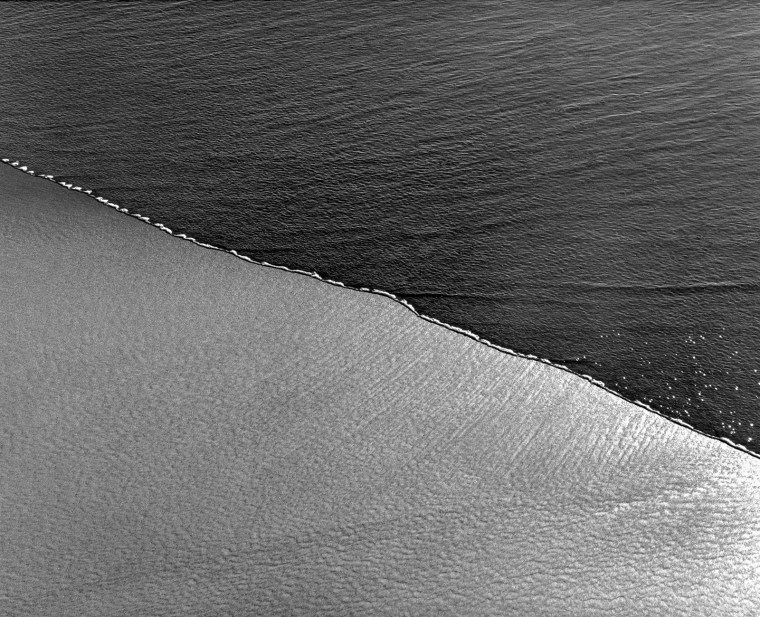

The significance of this “turnabout” for the ancients was that it indicated a time of rest and changing direction. It was a time for renewal, new beginnings, and rebirth. Logically, since the sun and the other celestial bodies (all perceived as gods) were so orderly in their journeys, the way to honor them and encourage their continuance was to emulate them. As a consequence, ritual practices derived from the notion “As above, so below.” One of the reasons why I was attracted to the Maya was that they, more than any other culture, to a remarkable extent, modeled every aspect of their lives on the order, patterns and processes they observed in the sky and in nature. And they sustained that perspective and rituals for millennia.

For me, the winter solstice serves as a reminder to appreciate and align with the order of the universe, and pause to reassess my life’s journey. Is what I’m doing on purpose? What can I eliminate in order to better focus on what truly matters? Are my priorities consistent with my authentic values and goals? Am I doing at least one thing every day to realize my potentials, goals or dream? And might this be the time to prepare for or take a new direction?

The first peace, which is the most important, is that which comes within the souls of people when they realize their relationship, their oneness with the universe and all its powers, and when they realize that at the center of the universe dwells the Great Spirit and that this center is really everywhere, it is within each of us.

Black Elk

About This Image

Title: Sunset Over The Gulf Of Mexico

Theme: Winter Solstice and Renewal

File #: DC1444

Location: Indian Rocks Beach, FL

Just being at the right place at the right time with a camera.