A “Divine” Sandwich

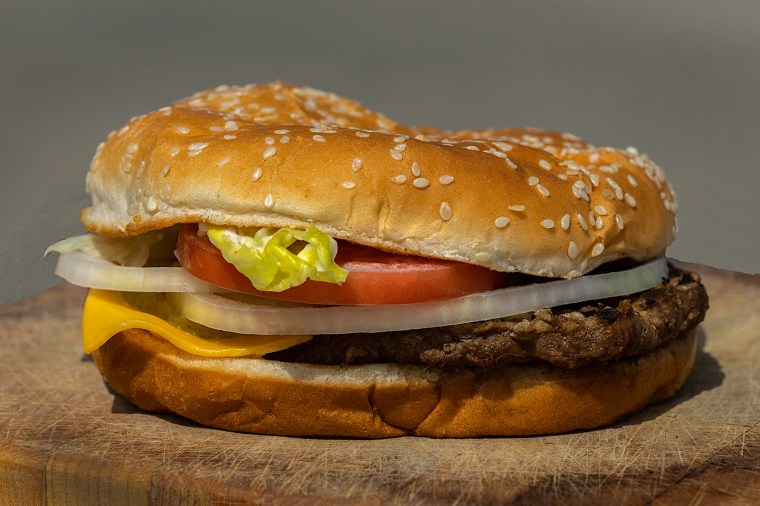
One of my favorite fast-food sandwiches is the Burger King Wopper. (Shown here as I ordered it). I hadn’t had one since before the pandemic, so when I drove through to get one recently I couldn’t help but express my gratitude, which turned into a contemplation where I traced each of the parts back to their source.

More often I use a short formed gratitude that goes: “This (system) is so (fine, beautiful, useful…) I’m grateful for this opportunity to (use, enjoy, consider…) it. God bless its components and all those who had a hand in bringing it to me.” You can see that that usually includes many plants, animals, thousands of people and all of evolution. My usual question is “What had to happen for this to exist?”

Not knowing the exact sources and history of the parts of this sandwich, I traced them to a general location and then referenced those to the basis of all life—earth, water and sunlight. From there, another, even quicker leap in appreciative contemplation led me to consider the eons of cosmic collisions that produced the sandwich’s elements. The step before that was the Big Bang, and before that came the unimaginable mystery that’s beyond all imagining. The reason for the word “Divine” in the title of this posting, is to suggest that the divine creative process can be evidenced in a simple sandwich. 

To enhance future gratitudes that involve sandwiches, I did some research on the computer to learn more about their components.

Sesame Seed BunFlour comes from grains such as wheat, rye, barley, rice, etc. Machines collect the seeds from the head of the grass and dump it into trucks that deliver it to storage bins or a flour mill. At the mill, the grains are passed through a separator to take out foreign objects. The grains are then cleaned, washed, dried and passed between rollers to separate the bran from the germ. Once the flour has been milled to the right grade, it’s bagged and shipped to distribution warehouses. Restaurants create buns by combining yeast—a tiny microorganism, classified in the plant kingdom of fungi that feeds on natural sugars found in grains, fruits and vegetables. the seeds of canola, corn, palm, soybean or sunflower plants are crushed and the resulting oil is purified and refined. Sugar comes from sugar cane grown in warm, often tropical climates. And salt, sodium chloride, comes from seawater that’s allowed to evaporate. The crystals are collected, washed, screened and packaged, a process that takes about five years. Water is added and then vegetable oil.

Mayonnaise: This is a mix of oil, egg yolk and an acid, usually vinegar or lemon juice. A hint of spices such as garlic creates a variety of flavors.

Iceberg Lettuce: For American markets, most of it is grown in California and Arizona.

Tomatoes: These are mostly grown in California, Florida, Indiana, Ohio, Michigan and Tennessee.

Pickles: The seeds of a special strain of cucumbers are grown to produce pickles for sandwiches. These are pickled in brine, vinegar or other solution and left to ferment.

Onions: The largest producers in the United States are Washington State, California and Oregon.

Burger: Most of the cattle raised for beef in the United States come from Texas, Nebraska, Kansas, California, Oklahoma, Missouri, Iowa and South Dakota.

American Cheese: This product is made from a blend of milk, milk fats and solids combined with other fats and whey protein concentrate. As a blended food, it can’t be called “cheese,” so it’s labeled as “processed cheese.” 

I offer this description of elements not to promote any restaurant or sandwich, but to show how any object or system, food or otherwise, can be more fully appreciated by tracing their component parts to the source—ultimately, The Source. While the model above is generalized, the process of reverse engineering only takes about thirty seconds to a minute or two. I don’t think the universe minds if we overlook details in the evolutionary process beyond our reckoning. What matters is the gratitude, appreciating that—and how—an object or system came into our lives by virtue of its origin and history. This kind of contemplation gives us a taste of the divine, and reminds us of our deepest roots.

If you wish to make an apple pie from scratch, you must first invent the universe.

Carl Sagan

_____________________________

I welcome your comments at <smithdl@fuse.net>

My portfolio site: DavidLSmithPhotography.com

My photo books: <www.blurb.com/search/site_search> 

(Enter “David L. Smith” and “Bookstore” in “Search)

Crisis / Transformation

All being, inanimate and living, without exception, follows the cycle of life. What comes into existence sustains for a time then succumbs to entropy. Knowing this and that the important factor for human beings is time, we can look within the process of change to find opportunities to slow the process of entropy as much as possible—physically and socially.

Breakdowns are an indication that the old is losing its vitality and viability. The parts in mechanical and electronic systems can be repaired or replaced by their owner. Human beings and nations, however, have to make a host of decisions to sustain their functioning. And it matters greatly how those decisions are made, especially the nature of the response.

Our response results in either peace or suffering. Life provides the stimulus, but we provide the response—acceptance of what is brings peace; resistance, which we learned as a way to feel safe and avoid pain, more often brings suffering because the desire is for something other than what is. In social systems, a compounding of crises is a clear indication that the status quo is dysfunctional. Rather than resist, we can appreciate that what looks and feels like chaos and collapse is actually life calling for us to assess, reorganize and evolve. For any response to be appropriate and sustaining personally and socially, the assessment needs to begin with an examination of how we think. 

What is breaking down and why is it happening? The answer points to the area where attention is needed. In human systems, because thought precedes action, attention must above all be paid to the thinking that caused and sustains the breakdown. Civilizations have died because their responses were based upon traditional thinking. According to Albert Einstein, “No problem can be solved from the same consciousness that created it.” He also said, “The world as we have created it is a process of our thinking. It cannot be changed without changing our thinking.”

When people are suffering the consequences of breakdowns, their dissatisfaction with the status quo moves them to “think outside the box,” to discover a more viable, life-enhancing way to live. As a social system becomes increasingly dysfunctional, “emergents”—social innovators and activists—provide the direction and become a model for what works. In the realm of governance worldwide, the pendulum of change tends to swing between extremes in leadership, philosophies and policies. Ultimately though, no matter the form of government, because the quality of life is at stake the power to affect positive change lies with individuals at the bottom of the social pyramid. What it takes is an emergent leader willing to risk everything and lead by example. Mahatma Gandhi, Martin Luther King and John Lewis were such leaders.  

In the moment of rejection of domination lies the seeds of transformation and liberation.

Seth Kreisberg

What can we do socially? Witnessing social breakdowns, we can look for and lend our support to the emergents—individuals who put service above personal gain, who associate and collaborate with experienced and intelligent experts and whose actions point the way toward making a better life for all. Where there is separation, they plant seeds of unification. Where there’s conflict, they facilitate communication to find common ground. Where there’s ignorance, they foster increased education and experience. Where there are unreasonable and destructive gaps, they work to close them. Where there are walls, they build bridges. Where there’s prejudice they facilitate and encourage shared experiences between adversaries. Where there’s hate, they work to disarm it with compassion and love. And when other nations attempt to undermine a nation’s core values, they shore up their defenses and assert their values ever more strongly—by example. 

Locally, we can bring our lives into balance and live what we preach. In class, I sometimes advised students to do something every day, however small, to realize their dream—if even to just think about it. In this context, we could pick the crisis that concerns us most and decide to do something about it—if even to pray or think about what ought to be done. Importantly, we can vote our conscience and encourage others to vote.  

When just one person takes on the challenges of becoming more accepting, allowing, and strong, a ripple effect is created. Everyone in that person’s sphere is now touched with the new possibility. Even if the reasons are unclear, anyone who plays by new rules will be noticed by others. Individuals functioning from this level of transformation are the pioneers of the new community, planting new seeds of the future.

George Land

_____________________________

I welcome your comments below.

My email: <smithdl@fuse.net>

My portfolio site: DavidLSmithPhotography.com

My photo books: <www.blurb.com/search/site_search> 

(Enter “David L. Smith” and “Bookstore” in “Search)

Coherence

In whole-systems parlance, ordering specifies the arrangement of parts. Coherence is the adhering property of those parts, the quality that forms a unified whole. In mechanical systems, their design creates functional relationships that unify the parts. In living systems, the “glue” holding their members together is the desire or intention to connect, to unite. When architect, systems theorist, inventor and futurist Buckminster Fuller noted that “Love is metaphysical gravity,” he postulated that love is the universal cohering agent, attracting and holding everything together. 

When the above image was made, I could see the force of attraction operating within and between the spheres of oil as they sought to establish their proper size, shape and location in relation to the spheres around them on the surface of a jar water. Working out their shape and relationships was dynamic, a continuous process of adapting to change among the cells as the surface moved. In time, the system reached homeostasis. Rest. In living systems, the quest for identity, right relationships and making appropriate adjustments to change never ends; homeostasis is equivalent to death. Instead, the urge toward coherence—as the song says: “Finding love in all the right places…”—diminishes the urgency and intensity of conflict, and promotes a level of comfort, confidence, balance and peace. So it is with all living systems—cells, plants, animals, persons, nations and the earth. Fragmentation is incoherence. 

Coherence is in evidence everywhere. In medical science, it’s viewed as a highly efficient physical state in which the body’s nervous system, cardiovascular, hormonal and immune systems are all working efficiently and harmoniously as one—considered by physicians as the highest level of physical functioning. 

When the body is coherent, its immune system is strong and resistant to disease. Everything we do either promotes or counters coherence and thus our and our environment’s evolution and development; it is either healthy or unhealthy, and is either constructive or destructive.

Ervin Laszlo

In physics, coherence describes properties of correlation between physical quantities of a single wave, several waves or wave packets. For instance, two wave sources are said to be perfectly “coherent”—resonant, lined up—when their frequency and waveforms are in step. In literature, writers of fiction and non-fiction aspire to coherence, the harmonizing of a story or message that unifies a piece through the use of theme or organization. When the writing is coherent, there’s integrity, everything holds together. It makes sense as a whole. 

In psychology, coherence occurs when aspects of personality are in tune through increased awareness. Coherence represents the extent of unity and wholeness within the individual.

When our emotions and mind are brought into coherent alignment with the heart, our brain and heart are operating in a synergetic way. We then experience a deeper intuitive inner guidance. In other words, heart intelligence can be defined as the ability of our heart to sync all of the systems of our body to bring a higher state of awareness, and to bring more clarity and focus to our lives. 

HeartMath Institute,


The HeartMath Institute considers the heart to be “Our inner guide and the key to help us find our purpose in life.” 

In religion, faith is the agent that binds followers to a particular tradition. In Catholicism it’s codified in a set of beliefs professed in the “Apostle’s Creed.” Judaism’s fundamental beliefs are contained in the Torah, which prescribes 613 commandments codified in Rambam’s 13 Principles of Jewish Faith. Buddhists find moral cohesion in the practice of compassion and mind-disciplining precepts and the Buddha’s “The Eightfold Path.” For many years, His Holiness The Dalai Lama has been a leader in building coherence between science and spirituality. In the Sufi tradition, coherence is considered an aspect of the Divine Reality. As an aspiration the members intend to embody, it offers specific practices and ceremonies of coherence that include meditation. 

Love is the ultimate state of coherence because it unifies the individual with the ultimate reality of the field of existence. Negative states such as fear, resentment, arrogance, and selfishness represent a disordering of the field. These negative states lead to disharmony in our relationships and, finally, leave us at war with ourselves. Coherence is disturbed by egoistic self-assertion. The humility that love engenders is a divine attribute, erasing the distorting forces of egoism. Practically speaking, love is a magnetism of the heart that engenders a coherent ordering of all our human faculties.

Shaikh Kabir Edmund Helminski (Co-founder, The Threshold Society) 

In her book, Coherent Self, Coherent World, Diana Durham notes that a profoundly negative belief about one’s self can easily turn a person into an addict—“Someone who abuses something in order to try to ease an addiction. In the case of the gunman, the addiction has to do with power. He feels powerless, and to make up for it, tries to control others through violence and the power of the gun… The problem is the more he fishes (acts out), the more wounded he becomes. The more an alcoholic reaches for a drink to make him feel good, the more he needs it. The more we need other people to validate us, the more violent we will become in our attempts to control them.” Money, fame, drugs, friends. They can easily become distractions. “The more we need them, the greater the risks we will take to achieve our ambitions. When we disconnect from our inner self we feel partial, empty, powerless. To compensate, we go fishing to try and fill the void… We pinch ourselves off from the force of love when we harbour beliefs that are discordant to its frequency.” The remedy then is to transform negative beliefs into positive with the realization that, by virtue of the soul, we are all made in the image and likeness of Love. Turning within, we become coherent with others and the world. 

Love, the affinity of being for being, is indeed a magnetic and mysterious force. Like oxygen, it’s only known through experience—a tender stirring in the heart and the deep knowing of the soul.  The quality of experience within all living systems above the individual  ,depends on the relative coherence of the person’s body, mind and soul—how well they are attuned, integrated as a whole toward realizing ones purpose. The Coronavirus has us all living in a bubble—literally. But like the multitude of bubbles in the image above, the drive to cohere—within us and beyond us—calls for adjustment, reassessing our personal and social identity, creating new ways to relate, reexamining our values and resetting our priorities. 

Underlying the stresses of the current era, whether from medical, economic, social or political sources we can take to heart what John F. Kennedy proclaimed before the Canadian Parliament, “What unites us is far greater than what divides us.” Irrespective of time and culture, what unites us, the glue that holds us together, whether we know it or not, is the love that we are—and are compelled to share. Viewed as part of the evolutionary process, we’re in an era characterized by formidable rapids. Again, referencing the photograph, the sooner we each take responsibility—appropriate action—for the stresses, the sooner we’ll enter the calmer water. And be whole.

_____________________________________

I welcome your comments at <smithdl@fuse.net>

My portfolio site: DavidLSmithPhotography.com

My photo books: <www.blurb.com/search/site_search> 

(Enter “David L. Smith” and “Bookstore” in “Search)

Kenōsis: Recipe For Inner Abundance

In 2018, when His Holiness The Dalai Lama requested the Mind and Life Institute to organize a weeklong dialogue with top scientists and scholars to discuss our ecological situation and offer ways to move forward constructively, one of the participants was Sallie McFague, a Distinguished Theologian at the Vancouver School of Theology in British Columbia, Canada. She died in 2019. Her writings analyzed how metaphor lies at the heart of how we speak about God, and she applied it to ecology—caring for the earth as if it were God’s body. I was inspired by the book that resulted from that dialogue: Ecology, Ethics, And Interdependence (1). In particular, Sallie introduced me to an expanded meaning of the word “Kenosis,” a term I hadn’t heard in many years but was so moved by I wrote Love—Period!, a screenplay that revolves around  the concept. 

Kenōsis derives from kenoun, a Greek word meaning “to empty out” or “purge.” Eary Christian theologians used it to refer to Jesus’ act of “self-emptying”—relinquishing divine attributes (and some say His personal will)—in order to experience human suffering and death. In Blessed Are The Consumers: Climate Change and the Practice of Restraint (2) Sallie elaborates her thesis: “We are not called to love God or the world. Rather, we are called to love God in the world. We love God by loving the world. We love God through and with the world. And this turns out to be  kenōtic, a sacrificial love.” In the dialogue with His Holiness The Dalai Lama and invited guests she said “Real abundance in life doesn’t come from getting more and more things, it comes from giving up those things when others need them—and living differently.” 

The first of Buddhism’s eight paramitas (perfections) for enlightened action is dama, or mutual generosity—if we have something, anything that could benefit another who needs it, then to give it away benefits all. 

The idea of “giving up” and words like “self-emptying,” “restraint” and “sacrifice” go against the cultural grain, but most religions and spiritual philosophies have from the outset proclaimed that happiness is found more in relationships than in things, and that simple living can lead to a fuller life. Sallie says “The abundant  life, at both personal and public levels, is not found by satisfying one’s ego in a market-oriented, individualistic culture, but is found by losing one’s self in service to others.” Further, noting that every breath we take and every mouthful we eat depends on others, she says “Abundant life for all (my emphasis) is only possible if some of us restrain our desires.” 

As I write, the current world population is approaching 8 billion souls. Scientists generally agree that the earth’s carrying capacity is 10 billion. It’s a hopeful sign that, in the wake of Covid-19, climate catastrophes, social confrontations and political ignorance more of us are becoming aware of how deeply we are interconnected and interdependent with all other forms of life, and we’re appreciating the planet’s vulnerability. Sallie wrote that the “Vocabulary of self-limitation, egolessness, sharing, giving space to others and limiting our energy use no longer sounds like a special language for the saints, but rather, as an ethic for all of us.” Meaning those of us who enjoy the privilege of abundance. 

My mother sometimes admonished my sister and me to eat everything on our plate, offering the perspective that “People are starving in China.” Now, people are starving everywhere. A BBC journalist recently posted a television story on the likelihood of enormous mass migrations  given the increase in deforestation, drought and other climate catastrophes. Considering the challenges that lie ahead, the practice of kenōsis or restraint may seem like a small thing, but it’s something we all can do. And as Sallie noted, “real abundance” is making some space in our lives so others may flourish. It’s a gift we can give to the world, right here and now.

In Ecology, Ethics, and Interdependence, editor John Dunne said “We need practical guidance on what we can do.” Sallie responded to him by offering her “planetary house rules”—“Take only your share. Clean up after yourself. And keep the house in good repair for others.” Wanting to be more specific, I created the following list of guidelines. Full disclosure—some of them I can’t or don’t do for one reason or another right now, but I hold them as an ideal. They’re the kinds of activity that contribute to the practice kenōsis.

  • Satisfy wants less frequently than needs
  • Refrain from buying or replacing a vehicle that runs on fossil fuel
  • Limit the purchase of shoes, clothes or other wearing apparel
  • Leave the lights off until necessary
  • Use existing materials of any kind before buying new
  • Borrow books and videos from the library rather than purchase them
  • For short distances, ride a bicycle
  • Pick up litter so it doesn’t get flushed down the sewer system
  • Offer charitable contributions to ecology-focused nonprofit initiatives
  • Drive the shortest distance between two points
  • Turn off electronic devices when not needed for long periods
  • Don’t leave a car or truck motor running when not in use
  • Cut back on meat
  • Buy organic produce as much as possible
  • Use fewer devices that require disposable batteries
  • Use existing office supplies before buying more
  • Recycle everything possible
  • Use hand rather than power tools, especially those that burn fossil fuel
  • Ask for paper rather than plastic cups at restaurants
  • Borrow or rent tools rather than purchase them
  • Take shorter and fewer hot showers
  • Reduce the use of plastic containers
  • Take reusable cloth bags to the grocery store

In my postings, I often refer to the principle that decisions made by the members of a living  system maintain and improve the functionality and sustainability of the whole by taking responsibility for the health and well-being of both themselves and the greater systems in which they live. The practice of kenōsis—restraint—is one of the ways we can directly impact our communities, nations and planet. And in doing so, our inner life is nourished and enriched. One of Sallie McFague’s great contributions to the world is material kenōsis, the idea that by emptying our lives of certain comforts and stuff, our souls are filled up. 

REFERENCES

1. John Dunne and Daniel Goleman Editors. (2018). Ecology, Ethics, and Interdependence: The Dalai Lama in Conversation with Leading Thinkers on Climate Change. Somerville, MA: Wisdom Publications.

2. McFague, Sallie. (2013) Blessed Are The Consumers: Climate Change and the Practice of Restraint. Minneapolis, MN: Fortress Press.

3. Mind And Life Institute: In my opinion, an exceptional organization that’s changing the world for the better. The language on their Mission page is values-rich. Here’s the link: “Who We Are—Mission.”


I welcome your comments at <smithdl@fuse.net>

My portfolio site: DavidLSmithPhotography.com

My photo books: <www.blurb.com/search/site_search> 

(Enter “David L. Smith” and “Bookstore” in “Search)

Crisis—Transformation

All being, inanimate and living, without exception, follow the cycle of life. What comes into existence sustains for a time then succumbs to entropy. Knowing this and that the important factor for human beings is time, we can look within the process of change to find opportunities to slow the process of entropy as much as possible—physically and socially.

Breakdowns are an indication that the old is losing its vitality and viability. The parts in mechanical and electronic systems can be repaired or replaced by their owner. Human beings and nations, however, have to make a host of decisions to sustain their functioning. And it matters greatly how those decisions are made, especially the nature of the response. Personally, it’is our response that gives us either peace or suffering. Life provides the stimulus, but we provide the response—acceptance of what is brings peace; resistance, which we learned as a way to feel safe and avoid pain, more often brings suffering because the desire is for something other than what is. In social systems, a compounding of crises is a clear indication that the status quo is dysfunctional. Rather than resist, we can appreciate that what looks and feels like chaos and collapse is actually life calling for us to assess, reorganize and evolve. For any response to be appropriate and sustaining personally and socially, the assessment needs to begin with examination. 

What is breaking down and why is it happening? The answer points to the area where attention is needed. In human systems, because thought precedes action, attention must above all be paid to the thinking that caused the breakdown. Civilizations have died because their responses were based upon traditional thinking. According to Albert Einstein, “No problem can be solved from the same consciousness that created it.” He also said, “The world as we have created it is a process of our thinking. It cannot be changed without changing our thinking.”

When people are suffering the consequences of breakdowns, their dissatisfaction with the status quo moves them to “think outside the box,” to discover a more viable, life-enhancing way to live. As the system becomes increasingly dysfunctional, the “emergents” provide the direction and become a model for what works. In the realm of governance worldwide, the pendulum of change tends to swing between extremes in leadership, philosophies and policies. Ultimately though, no matter the form of government, because the quality of life is at stake the power to affect positive change lies with the individuals at the bottom of the social pyramid. What it takes is an emergent who’s willing to die for the more aware and evolved state—and leading by example. Mahatma Gandhi, Martin Luther King and John Lewis come to mind.  

In the moment of rejection of domination lies the seeds of transformation and liberation.

Seth Kreisberg

Socially what can we do? Witnessing social breakdowns, we can look for and lend our support to the emergents—individuals who put service above personal gain, who associate and collaborate with experienced and intelligent experts and whose actions point the way toward making a better life for all. Where there is separation they plant seeds of unification. Where there’s conflict, they facilitate communication to find common ground. Where there’s ignorance, they foster increased education and experience. Where there are unreasonable and destructive gaps they work to close them. Where there are walls, they build bridges. Where there’s prejudice they facilitate and encourage shared experiences between adversaries. Where there’s hate, they work to disarm it with compassion and love. And when other nations attempt to undermine a nation’s core values, they shore up their defenses and assert their values ever more strongly—by example. 

Locally, we can bring our lives into balance and live what we preach. In class, I sometimes advised students to do something every day, however small, to realize their dream—if even to just think about it. In this context, we could pick the crisis that concerns us most and decide to do something about it—if even to think about what ought to be done.  

When just one person takes on the challenges of becoming more accepting, allowing, and strong, a ripple effect is created. Everyone in that person’s sphere is now touched with the new possibility. Even if the reasons are unclear, anyone who plays by new rules will be noticed by others. Individuals functioning from this level of transformation are the pioneers of the new community, planting new seeds of the future.

George Land

_____________________________

I welcome your comments below.

My email: <smithdl@fuse.net>

My portfolio site: DavidLSmithPhotography.com

My photo books: <www.blurb.com/search/site_search> 

(Enter “David L. Smith” and “Bookstore” in “Search)

Servant Leadership

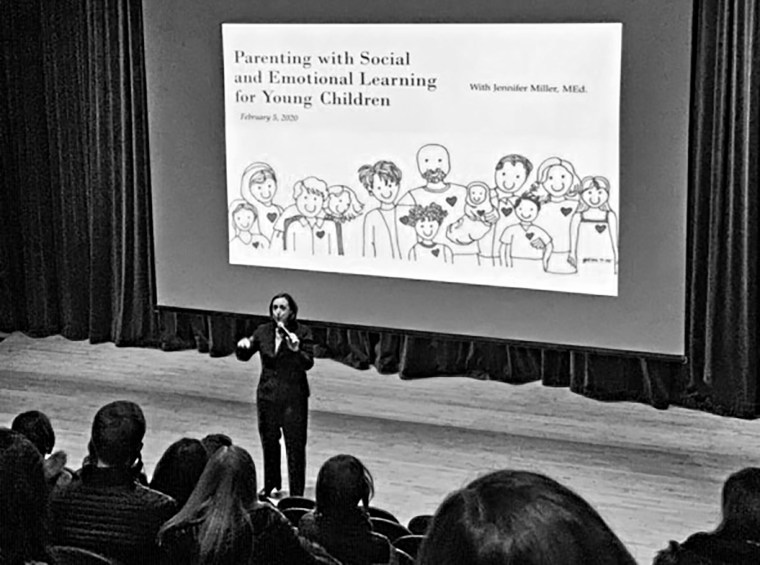
At this time in American history, in addition to a treatment and a vaccine to effectively manage the Covid-19 pandemic, I would argue that what we need most is courageous and moral leadership in the government, corporations, mass media and institutions. My daughter, Jennifer Smith Miller, is a leader in the field of Social and Emotional Learning (SEL). Above, she addressed an audience of leaders in childhood education. I’m biased of course, but those who work with her would readily agree that she could be the poster child for one who lives the values of Servant Leadership because she continuously emphasizes, “It’s all about the kids.”

It’s not realistic to hope or expect that our leaders will adopt the characteristics of the servant leader specified by Robert Greenleaf in 1970, but his criteria can provide us with insight into the qualities that optimize a leader’s effectiveness, particularly when assessing current and emerging leaders across the board. 

The deeper territory of leadership is in collectively ‘listening’ to what is wanting to emerge in the world, and then having the courage to do what is required.”

Joseph Jaworski

The defining characteristic of a servant leader is the desire to serve, managing with humility and empathy on behalf of those at the bottom as well as the top of the social pyramid. He or she listens with full attention to understand other people’s ideas and perspectives, will put aside his viewpoint temporarily to keep an open mind and use the power of persuasion rather than authority to encourage people to take action. While traditional managers strive to “get it right,” the servant-leader consistently can be counted upon to “do the right thing.” In such a climate, members of the team raise one another to higher levels of motivation and morality in the pursuit of their goals. 

Do those served grow as persons? Do they, while being served, become healthier, wiser, freer, more autonomous, more likely themselves to become servants? And what is the effect on the least privileged in society? Will they benefit, or at least, not be further deprived?

Robert Greenleaf

The servant-leader leads to learn, not win. She engages the team in considering options based on experience, factual information and intuition, examining the consequences of proposed actions, involves them in decisions where appropriate, builds a sense of community and operates ethically with transparency. The result is higher engagement, more trust, increased innovation and stronger relationships.

(Management is) “the act of relationship building in order to achieve mutual objectives for mutual gain.” 

John Nirenberg

From the perspective of living systems, servant leadership is ideal because the focus is on maintaining and promoting the full functioning of the system’s parts—members. It follows the systems principle: “When the parts of a system are in functional relationship to one another, the whole takes care of itself.” 

I write this on the day that the body of John Robert Lewis lies in state at the U.S. Capitol. We are grateful for his example of servant leadership. May it be a model for all who choose public service.

REFERENCES

Greenleaf, Robert. Servant Leadership: A Journey into the Nature of Legitimate Power & Greatness. Mahwah, NJ: Paulist Press, 2002. 

Greenleaf, Robert. The servant as leader. Indianapolis, IN: The Robert K. Greenleaf Center, 1991.

Miller, Jennifer S. Confident Parents, Confident Kids: Raising Emotional Intelligence in Ourselves and Our Kids—From Toddlers to Teenagers. Beverly, MA: Quarto Publishing Group,  2020.

_____________________________

I welcome your comments below

My email: <smithdl@fuse.net>

My portfolio site: DavidLSmithPhotography.com

My photo books: <www.blurb.com/search/site_search> 

(Enter “David L. Smith” and “Bookstore” in “Search)
Patience

Before we have an effective vaccine, the sooner we do what it takes to prevent the Covid-19 virus from spreading, the sooner we can fill the seats of performance and sports venues, restaurants and personal grooming facilities, open more businesses and get back to work.    

Until then, in addition to wearing face coverings, practicing social distancing and washing hands, we can safeguard our mental, emotional and social health by practicing patience, bearing annoyances and difficulties without complaint, anger or irritation, and resting the mind and emotions when confronted with delays. Patience, the quality of ease under pressure, has two levels of attainment based on cause. The first is the simple choice to keep ones “cool” so not to be frustrated. Lasting and sustainable patience, however, occurs as a consequence of trust based on the deep belief that everything happens for a good reason and all is well.

When we dwell in the now, unattached to outcomes, irritation and blaming naturally fall away. By surrendering to what is and allowing life to unfold without concern to what will be, we take our foot off the gas peddle and watch as reality unfolds. By aligning with Source and relinquishing the pressure of time, we gain the confidence to accept circumstances that are beyond our control. And that frees us to focus on realizing our purpose and doing what we can to reach the intended goal, whether it be waiting for a computer to boot, Congress to pass a bill or being able to shake hands.

By staying in the moment and allowing what is, patience is strengthened. Resistance and controlling just make us miserable. Wisdom teachers from a variety of traditions agree: The journey is more important than reaching the destination. 


I have just three things to teach: simplicity, patience, and compassion. These three are your greatest treasures.

Lao Tzu

_____________________________

I welcome your comments at <smithdl@fuse.net>

My portfolio site: DavidLSmithPhotography.com

My photo books: <www.blurb.com/search/site_search> 

(Enter “David L. Smith” and “Bookstore” in “Search)

Spirit Lives On

Downtown on a playground

A little girl saw a white man

With a camera

And she ran to him.

Take my pitcher!

Take my pitcher!

Take my pitcher!

She shouted.

When photographing in other cultures

The pointing of my camera

Caused children to turn away

And adults to turn their backs.

What’s the difference I wonder?

Was it the camera?

The man being tall and white?

Or how their image might be used?

What I know for sure,

The photograph of the playground girl

Makes my heart grin

Every time I encounter her smile.


Dear Follower:

Thank you for following! As has happened several times, in order to keep the material (and me) fresh I’m adding another dimension to Contemplative Photography. From the outset, my purpose was to share and generate appreciation for the subject matter. That will continue, but now the focus will be less on “things” and more on ideas and insights that contribute to meaning and enhanced living. The  pacing and format will be the same as when I started—one photograph each week, usually B&W, with contemplations kept as short as possible. The categories will include:

          • Anthropology
          • Art
          • Climate
          • Consciousness
          • Cosmology
          • Ecology
          • Evolutionary Process
          • Media (Function, influence, potential)
          • Nature (Appreciation)
          • Personal Growth
          • Philosophy (Eastern and Western)
          • Photography (As medium for personal growth)
          • Social Development
          • Spirituality (Not religion)
          • Transformation
          • Whole Systems Thinking

As always, I invite you to share your thoughts on both the content and photographs. 


I welcome your comments at <smithdl@fuse.net>

My portfolio site: DavidLSmithPhotography.com

My photo books: <www.blurb.com/search/site_search> 

(Enter “David L. Smith” and “Bookstore” in “Search)

Scottish Pine: Symbol Of Responsibility

In 1753 Carl Linnaeus classified pine trees in the Pinus genus. Until then, they were called “fir” based on the Germanic word  fyr, which meant fire, light and the rising sun. The word “pine” derives from the Latin word pinus and the Sanskrit word pituh meaning “sap, juice or resin.” Their evolutionary story begins in the early Jurassic Period about 130—200 million years ago when they were abundant in the Northern Hemisphere. 

Scottish Pine, the most widely distributed conifer in the world, is Scotland’s national tree. (They  call it Scots Pine). The trees can grow to 50 feet or more and have greyish-brown scales at the base.  Unlike many other pine trees, the Scots pine has an irregular shape when young that expands into upright spreading arms as an adult. In the upper story, they have thin, flaky orange scales. 

Scots Pine trees have two blue-to-green leaves—needlesper bundle. They grow in pairs and take on a yellowish tinge in winter. The shape of the needles reduces the number of pores and helps the snow slide off the branches so they don’t break. Each needle is coated with cutin, a waxy substance that prevents water from evaporating, and keeps the cells from freezing. As true evergreens, they retain their needles for at least two growing seasons. 

Scots Pines have thick scaly barks, and their branches are arranged in whorls around the barks. To protect the trees from fungal infections and invading insects they secrete a sap or resin that seals their wounds. 

The cones grow up to three inches long and are either solitary or cluster in groups of two or three. Dry cones make good kindling for fires.

Scots Pine was one of the first trees to colonize Ireland after the melting of ice sheets around 12,000 years ago. The trees disappeared from the country until the 17th century but were reintroduced from Scotland. Before Stonehenge, pine trees were used to build megalithic “wood hedges” as early as 8500 BCE. In Germany, the Goseck Henge, which dates to 4900 BCE,  had a large outer circle of pine poles that surrounded one in the center aligned to the North Star, thus creating a sundial, clock and calendar to mark summer & winter solstices and spring & fall equinoxes. Expanding from Scotland, it wasn’t long before pine trees inhabited most of Europe, as far as the Arctic Circle. Pine forests surrounded ancient Scottish castles and villages, and because the wood was durable and water-repellent it was widely used for shipbuilding in Scotland and England.

Brought to North America during the Colonial days, the trees became widespread throughout the United States and southern Canada. Today, the Scotch Pine is favored as a Christmas tree because it retains it needles and will keep fresh for 3-4 weeks. Throughout Europe and several Asian countries, Scots Pine forests are managed to produce pulpwood and timber for veneers and plywoods.

Pine trees grown for lumber on plantations mature in about 30 years. The wood is used in the manufacture of paneling, window frames, floors, roofing and furniture. Some species produce pine nuts, used in cooking and baking, which are a major source of amino acids and proteins making them highly nutritious. The resin is distilled to make Turpentine, and when processed as synthetic pine oil, Scots Pine in particular, makes a fragrant cleaning agent. When vapor emitted by pine needles reacts with oxygen in the air, clouds form that block the sunlight and reflect the rays back into space, thus helping to reduce the rise in temperature and slow global warming.

For Native Americans, pine trees represented wisdom and longevity. Certain tribes in the Southwest regarded pine trees as sacred. The Nez Perce believed that the tree carries the secret of fire. They used the needles, sap, bark and nuts for medicinal purposes, traditional handicrafts and ingredients in recipes. It was a staple for tribes in the Great Basin area of the Western United States, including the Shoshones, Paiutes and Hopis. The nuts, usually harvested in late summer and fall, also played a role in some of their Creation stories. Pine-needle baskets are still being made. 

Because the trees are evergreen and point upward to Heaven, certain Christian sects considered them to represent God’s everlasting love for humanity and eternal life. The trees were often planted in cemeteries because they represented eternal life. The pine cones specifically represented continuity and renewal.

In the East, a Taoist legend says that pine resin, absorbed into the subsoil after a thousand years will produce fu-ling, a mushroom that gives eternal life. In Japan, pinewood is used to build Shinto temples and ritual tools. Used in wedding ceremonies, it represents the constancy of conjugal love. And during Japan’s New Year, they situate pine trees on both sides of doors to honor the Kami, the Shinto deities that live inside the pines. In Chinese art, pine trees stand at the doors to immortality. Romans ate pine nuts to increase their strength and physical vigor.

For the Celts, the Scots Pine was a symbol of immortality, so much so, they used the resin to purify, sterilize and embalm objects that one wanted to preserve over time. It was also used in censers to purify sacred spaces. Druids used to light large bonfires of Scots Pine at the winter solstice to celebrate the passing of the seasons and to turn back the sun. For the Maya, both ancient and modern, offerings to the gods are enhanced by burning them on a bed of pine needles. And in Scottish folklore, the trees were used in the Highlands to mark the burial places of warriors, heroes and chieftains. Further south, they marked ancient cairns and crossroads. In England as well, Scots Pine was used to mark certain roadways. 

Various cultures associate the Scots Pine tree with aspects of time, seasons and immortality advising us to take responsibility for achieving our goals and dreams now, rather than putting them off. The message comes to me just days after I learned that a lifelong friend had died, and when the Coronavirus is spiking higher than before in the U.S. because many people have not been taking responsibility for protecting themselves and their neighbors. 

The word “responsible” derives from the Latin responsabilis, meaning to be “answerable” to another for something, to promise in return. I taught my students that in business, a responsible employee does what they say they will do—they follow through. My advice was to not say you’re going to do something unless you actually can and will do it, not just hope or intend to follow up. 

To say you will do something and then not do it risks being branded as being irresponsible, not trustworthy or reliable, especially if it becomes a pattern. In my experience, many in the Gen X generation have unwittingly adopted the practice of not following through as a social norm—perhaps because they’re too busy to do so?    

On the societal level to be “responsible” is to be accountable for one’s actions. In particular, civic responsibility refers to actions that are not required by law but are helpful to the community and involve citizens working for the common good. Acting on behalf of the health and well-being of ourselves and others is an implicit obligation we bear as citizens, members of larger living bodies—family, business, community, church, institution, nation and planet. 

According to Learning To Give, an organization that promotes civic responsibility, a citizen is “a person owing loyalty to and entitled by birth or naturalization to the protection of a state or union.” And citizenship means a “productive, responsible, caring and contributing member of society.” Whatever the reason, motivation or justification to not act responsibly in society effectively renounces citizenship in the greater whole systems that make our lives meaningful. Of course, that is a choice we are free to make, but like all choices, it has consequences. 

Every right implies a responsibility; every opportunity, an obligation; every possession, a duty.”

John D.Rockefeller Jr

There can be a high that comes from feeling like a “rebel,” acting contrary to the social good. But at a deep level, in quiet and alone moments of reflection, after the dust has settled, there comes a recognition that acting against rather than acting for the social good is self-destructive. Because acting against it is often loud and visible, the energy expended ends up being counterproductive. Nothing is accomplished, aside from the violator gaining a negative reputation and a deepening sense of separation and alienation. People of goodwill don’t want to associate with people who are irresponsible. 

A hero is someone who understands the responsibility that comes with his freedom.

Bob Dylan

Some people argue that requirements made by politicians are an infringement on freedom. The Collins Dictionary defines freedom as “The state of being allowed to do what you want to do.” And specifically democratic freedom as “The idea that everyone should have equal rights and should be involved in making important decisions.” We are free and so is everyone else. So it is morally wrong to violate the freedom of others, for instance in a pandemic when the freedom at risk is their health. In a democracy we are free to shout FIRE! in a crowded theater, but to do so would deny the freedom of the audience to remain healthy during the performance. And by any standard, putting the health of others at rist is morally wrong. I’m writing this on the day after civil rights advocate and longtime Congressman, John Lewis, died. 

Freedom is not a state; it is an act.

John Lewis

The spirit of the Scots Pine tree calls us to act responsibly on behalf of all living systems, in the first place to seek and maintain their health and well-being. And to remind us that, personal goals and dreams can only be realized in association with others, and those associations are best nurtured by acting responsibly in personal relationships and society.

Freedom makes a huge requirement of every human being. With freedom comes responsibility.

Eleanor Roosevelt


I welcome your feedback at <smithdl@fuse.net>

My portfolio site: DavidLSmithPhotography.com

My photo books: <www.blurb.com/search/site_search> 

(Enter “David L. Smith” and “Bookstore” in “Search)

Water Lily: Symbol of Constancy

Water lilies are freshwater plants in the Nymphaeaceae family. The name derives from Greek legends where “nymphs” protected springs and streams. There are about 70 different species of water lilies, divided into eight different genre commonly found in garden ponds and landscape features. The roots dig deep into the ground underwater, while the leaves or “pads” float on the surface. The petals of the flower fan out and can be found in many colors. The lotus is similar in appearance, but it belongs to the Nelumbonaceae family. 

Recently, scientists announced the discovery of the fossilized remains of the earliest flowering plant. Found in northeast China, it’s at least 125 million years old and possibly the ancestor of all flowering plants in the world today. Its closest living relative may turn out to be the water lily, as the ancient plant lived in clear shallow water with its flower and seeds extending above the surface. Drawings in European pre-ice-age cave drawings have the same basic form as water lilies that exist today. 

Early in the last century, white men discovered the large and fragrant flower in the freshwater lagoons of South American jungles. The natives called them Yrupe, meaning “water platter,” observing that they were resting places for frogs. The white men were amazed as they watched the flowers change color almost daily. Water lilies first came to public attention in England in the early 1800s, where water lilies flourished in the ponds and gardens of noblemen. Eduard Ortgies, caretaker to Joseph Paxton—gardener to the Duke of Devonshire—created the first water lily hybrid called Nymphaea ortgiesiano-rubra. In the United States, the first hybrids were developed by Edmund Sturtevant in 1876.

The white water lily common to North America is the fragrant Nymphaea odorata. The flower blooms in the daylight and gently close at night. Its commercial appeal has made it an “invader” that multiplies so quickly it can destabilize underwater ecosystems—natural ponds, rivers, lakes—posing a risk to native species.

Tropical varieties bloom during any time of the day or night, and the blossoms stay open until they fade, although some will open only in the morning or evening to attract pollinators. These  lilies can be pink, yellow, red, or blue and there are many kinds that are hybrids. Water lilies only live in shallow and still water where the stalks can extend their fleshy rhizome tubers into the soil to take in and store nutrients. 

The pads are heart-shaped and rounded. The upper side is water repellant and green, while the underside is purplish-red. The world’s largest water lily is the Victoria amazonica, native to the Amazon River basin. The first night it opens the flower is white, the second night it becomes pink, and the pads can be 10 feet in diameter with stalks as long as 26 feet. 

The metal girders around London’s Crystal Palace during the 1851 Great Exhibition were said to be inspired by  water lily’s rib-like cross-ridges.

In their art, architecture and hieroglyphs the ancient Maya depicted a water lily monster that  linked the underworld with the surface of the water. It has been suggested that, because the presence of water lilies indicates the absence of toxic substances, their shallow reservoirs may have contained potable water. I was shown a pond in Belize about a half-mile wide that was covered with water lilies.

The water lily symbolized Upper Egypt. When combined with the papyrus flower, the symbol of Lower Egypt, they represented the unified country. With blooms opening in the morning and closing at night, waterlilies were associated with the rising and setting of the sun.

Specifically, the blue water lily was considered sacred. It’s depicted on Egyptian temples as a representation of the sun and rebirth. To ensure their resurrection, priests and rulers were often buried with necklaces made of these water lily blossoms.

In Buddhism, the water lily blossom is associated with enlightenment. Different colors have different representations. For instance, red connotes love and passion, the purple lily represents mystic power, white signifies mental purity and blue is associated with knowledge. Relative to enlightenment, the pink blossom is the highest. In the Hindu religion, the water lily is a symbol of resurrection. As with the Egyptians, they reference it to the flower’s opening and closing the day. Because the plant grows in mud but is free from blemishes, it’s also a symbol of purity. The white water lily is the national flower of Bangladesh and the state flower for Andhra Pradesh, India. In Sri Lanka, the blue water lily is the national flower. In the West, some contemporary brides choose waterlilies to adorn their bridal bouquets because they represents chastity and purity of the heart and soul. They can also symbolize eloquence or gracefulness.

The most popular use for water lilies is as an ornamental in garden ponds. Other uses include  lotions that make the skin soft and smooth and reduce redness and swelling, an herbal extract to regulate insulin levels, promote liver health and regeneration and reduce pain from swelling. A poultice made from water lily roots can reduce painful swellings, boils, ulcers, wounds and cuts. A tea made from the roots can heal gums and is used as a gargle to reduce inflammation in the mouth and throat. And the same solution has been used as an eyewash. Native Americans used the tea to treat coughs, tuberculosis, inflamed glands, mouth sores and to stop bleeding. And a folk tradition suggests a mixture of water lily root and lemon juice removes freckles and pimples. 

There is a caution, however. Scientists warn that water lily supplements should not be used by those who are taking  medications or pain relievers of any kind used in the treatment of dementia, Alzheimer’s or Parkinson’s disease and disorders relating to the central nervous system. Further, because of the lack of research about the plant, those who are pregnant or breastfeeding should not take water lily in any form.

French Impressionist painter Claude Monet (1840–1926) imported water lilies for his Giverny garden from Egypt and South America. The city council demanded that he uproot the plants before they poisoned the area’s water, but he ignored them and they became the main focus of his painting during the last thirty years of his life. Many were done while he suffered from cataracts.

According to one source, the water lily is a symbol of courage, of rising above struggles, being of great hope, aligning to our highest aspects including the beauty that emanates from within receiving guidance from above. Another says the flower represents purity of the heart. While these are excellent qualities, I’m drawn to the symbolism the ancients derived from the flower’s characteristic of opening at sunrise and closing at sunset. It calls to mind the paradox that  although everything changes, there is a constancy in many of nature’s fluctuating systems. For instance cosmically, the length of the day determined by the earth’s spin, the length of a year based on its rotation around the sun and the seasonal changes that occur due to the tilt of its axis relative to the sun. Currently, cosmologists are reviving Einstein’s term, “Cosmological Constant,” because it improves the agreement between the theory of general relativity and observation that the expansion of the universe is speeding up and it contains mysterious dark matter and dark energy, neither of which are influenced by gravity.

Constancy is also evident in the interdependencies of all living systems, now referred to as the web of life—no longer “the food chain,” which ignores the interdependencies of ecosystems. From bottom to top—diatoms which are microalgae found in oceans, waterways and soils around the world, to the enormous honey fungus that covers nearly four square miles of the Malheur National Forest in Oregon—a balance is maintained in the process of all life forms consuming other life forms. But now, due to human interference within the web of life, the constancy of the whole system (planet and life) is in jeopardy.

In order for living systems (organisms) to function normally, they need to maintain internal constancy or homeostasis. In humans, this involves the regulation of blood sugar via insulin, the regulation of body temperature by the hypothalamus, constant vigilance by the immune system, regulation of blood pressure, balancing the pH level in the lungs and so on, all this despite fluctuations in every cell and in the external environment. In Science and the Reenchantment of the Cosmos: The rise of the Integral Vision of Reality, Ervin Laszlo illuminates the paradox—

The human body consists of a million billion cells, far more than the number of stars in the Milky Way galaxy. Of this cell population 600 billion are dying and the same number are regenerating every day—over 10 million cells per second. The average skin cell lives only for about two weeks; bone cells are renewed every three months. Every 90 seconds millions of antibodies are synthesized, each from about 1,200 amino acids, and every hour 200 erythrocytes are regenerated. In the span of a year, 98 percent of the atoms that make up the body are replaced as well. No substance in the body is constant, though the heart and brain cells endure longer than most. Yet the substances that coexist at a given time produce thousands of biochemical reactions in the body each and every second, and they are all precisely and almost instantly coordinated so that they maintain the dynamic order of the whole organism.

Considering the interacting masses of matter and gasses such as stars, planets and galaxies going on overhead, and the tiny-to-enormous life forms that live in the relatively thin biosphere of the Earth, there is reason to acknowledge and celebrate the fact that we are here, sustained by and engaged in the living planet as members of its body. And to really understand and respond appropriately to the message that ecologists have been preaching for years—and which for me is now displayed in the beauty of water lilies—that what each of us does to the Earth we do to ourselves. 

The intelligence of life is constantly keeping us on course.

Jacob Israel Liberman


I welcome your feedback at <smithdl@fuse.net>

My portfolio site: DavidLSmithPhotography.com

My photo books: <www.blurb.com/search/site_search> 

(Enter “David L. Smith” and “Bookstore” in “Search)