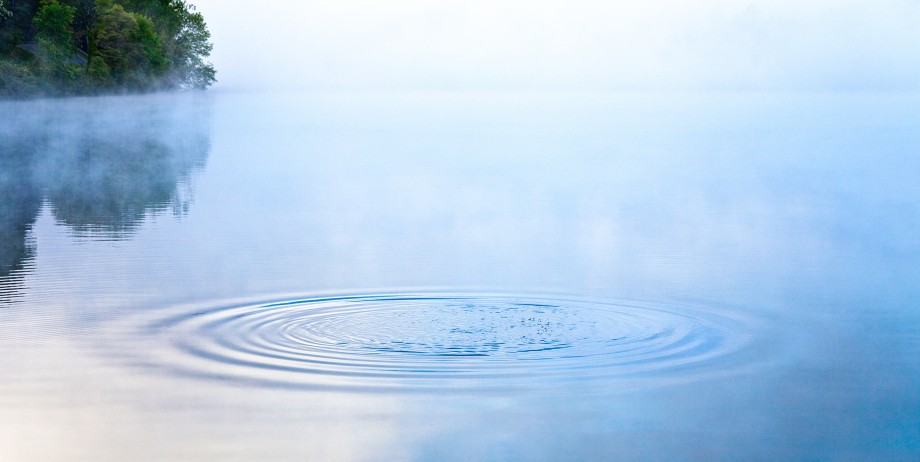
The Soul of Photography

Chapter 8: Seeing the Divine Spark in People

The apparent value of an old timepiece displayed on a table at an antique fair is increased by isolating it on a velvet cloth rather than placing it in a box with lots of other watches. Artists mat and frame their best works, and museums separate their most valuable paintings so viewers can focus on one piece at a time without distraction. The lesson for photographing people, aside from favoring individuals rather than crowds, has everything to do with the photographer’s perception. What do we see in them?

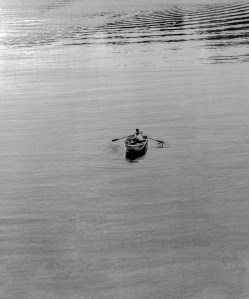
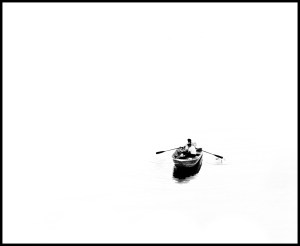
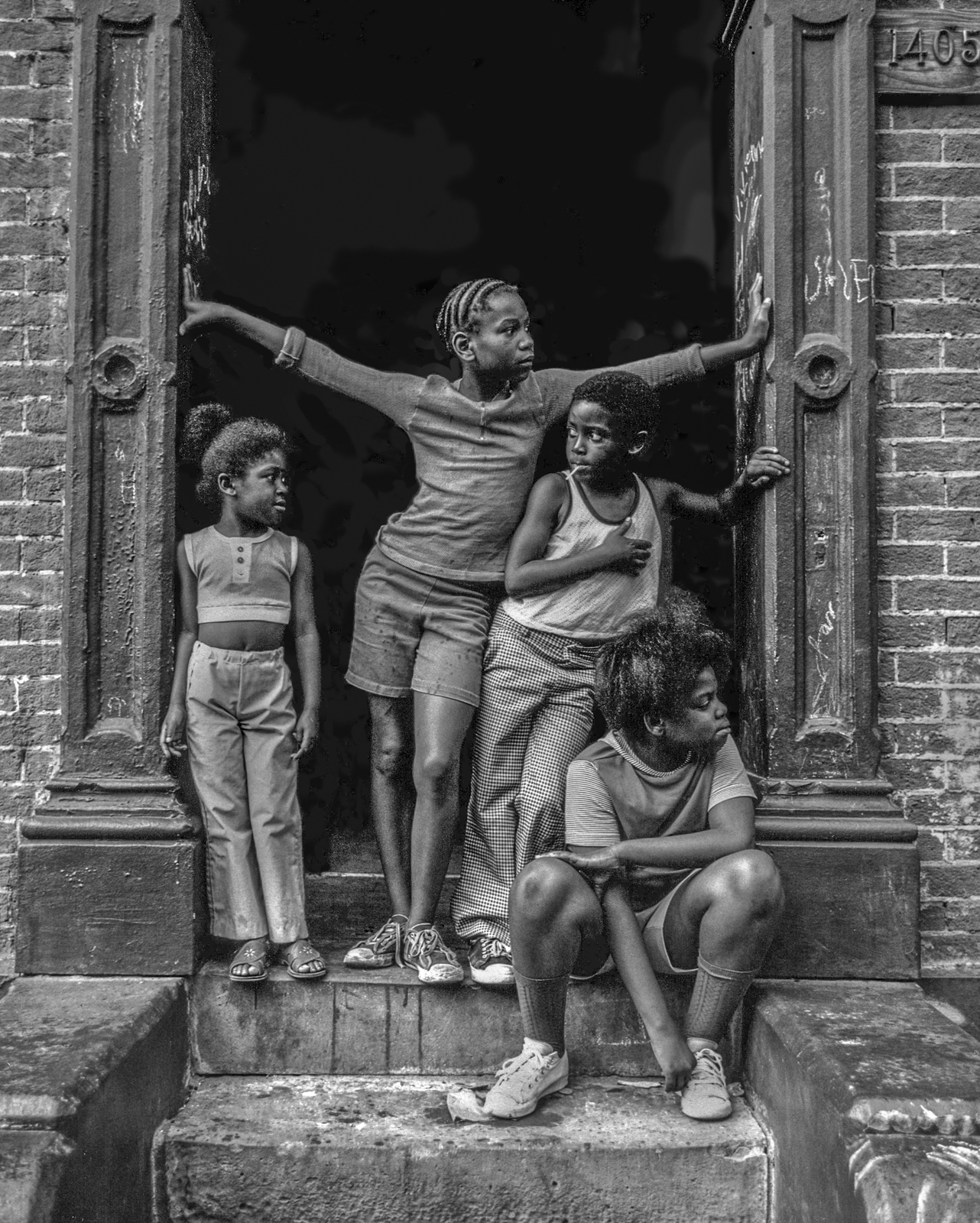
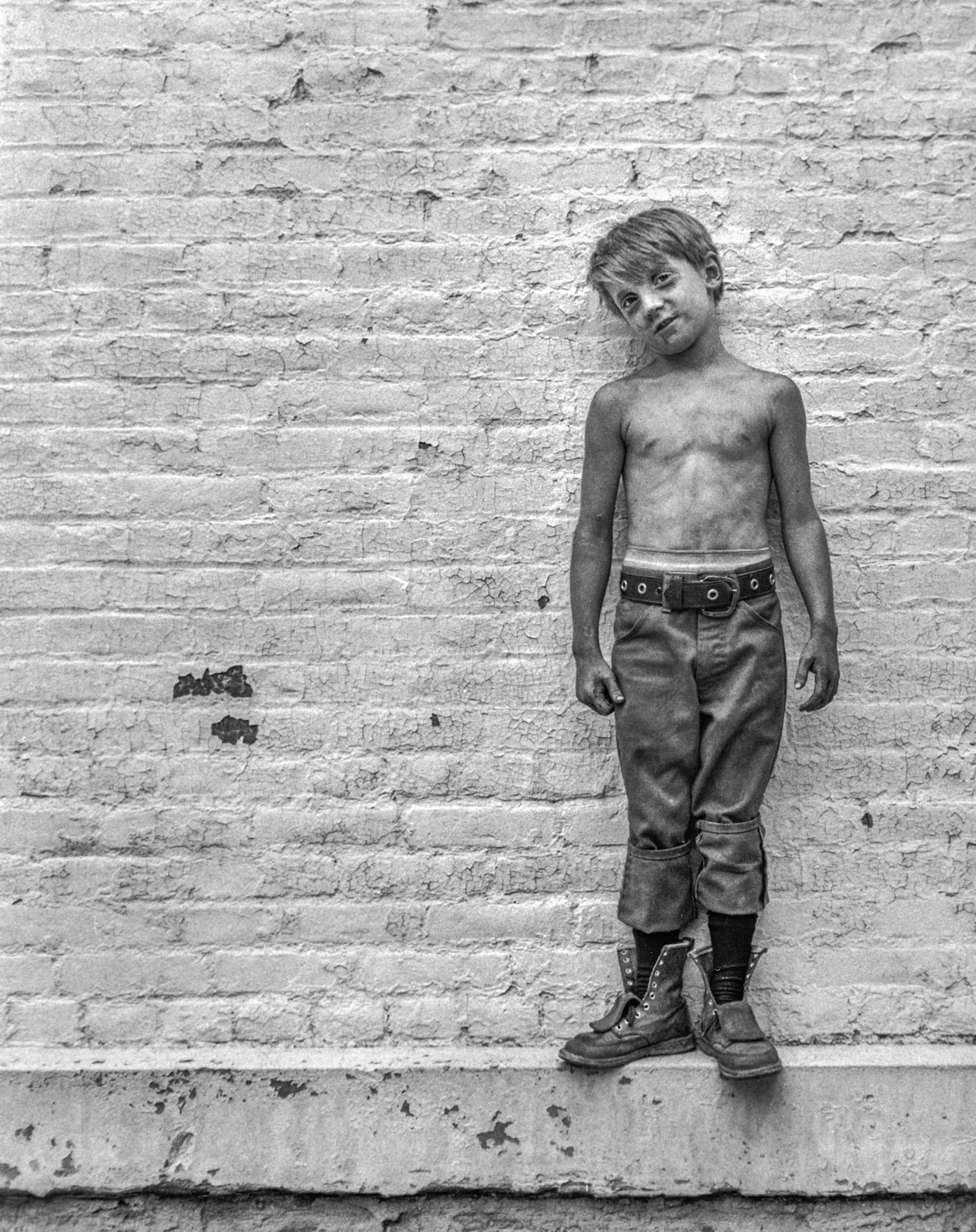
When I started out in expressive photography, I often took lunch hours to walk or drive around a depressed area of town to photograph people. The above image is an example of spirit guiding me to the right place at the right moment; a second earlier or later the dynamic would have been lost. Early on, from paging through National Geographic magazines and books on photography, I’d made a conscious decision to think of diverse people as beautiful. The more unusual and different looking from me the greater the potential for a compelling photograph.

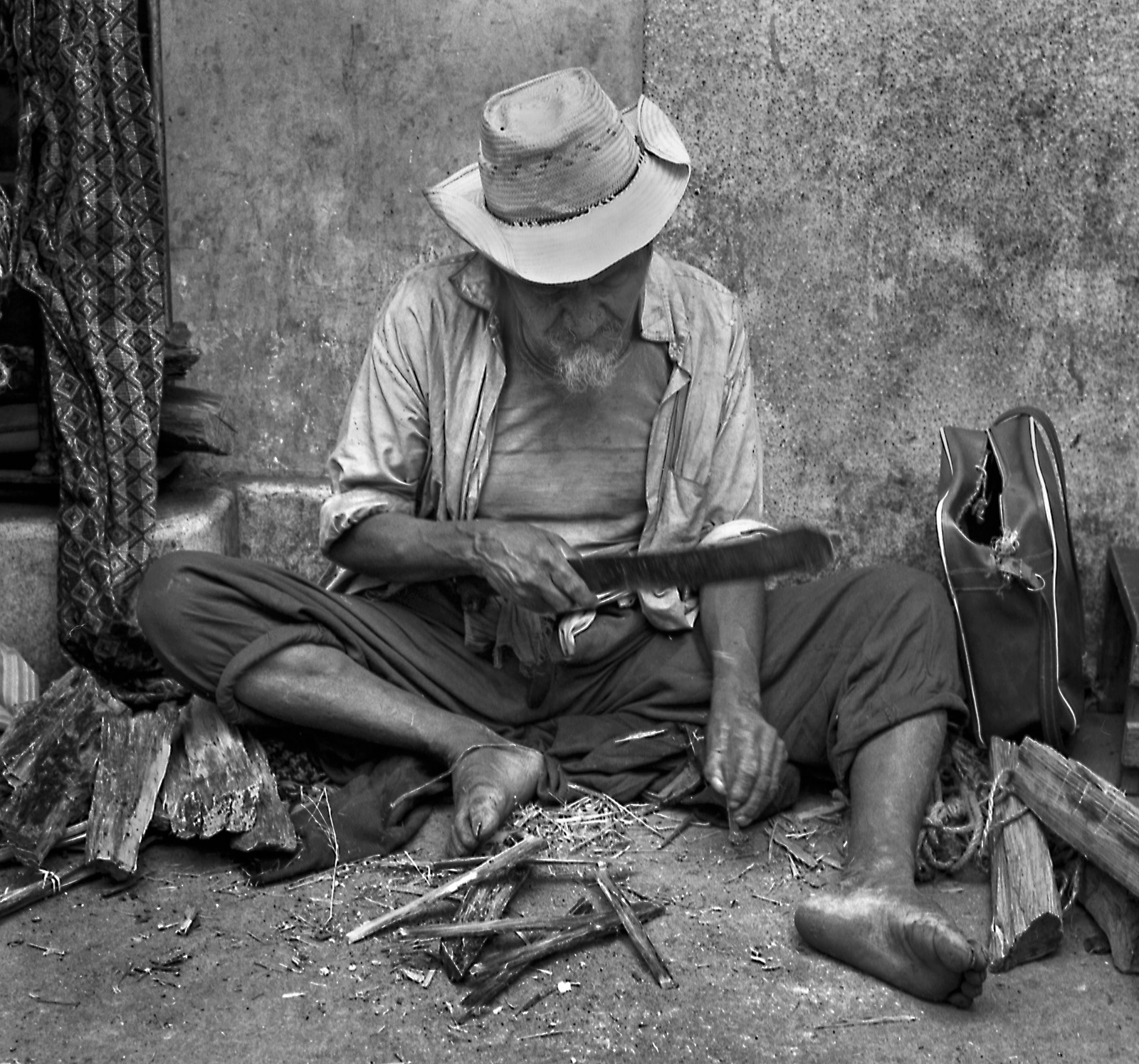
For many years, especially when traveling to other countries, that’s how spirit moved me. I came away with many fine photographs, but with a great deal of maturing I realized that by photographing people without talking to them and asking permission I was objectifying them. Not content with simply capturing a person’s appearance, preferring instead to tap into the spirit (soul) within, I had to shift my perspective. After long practice and reviewing my work, I realized that seeing the divine spark in people was less a function of eye-brain-nervous system stimulation, far more a matter of heart and choice.

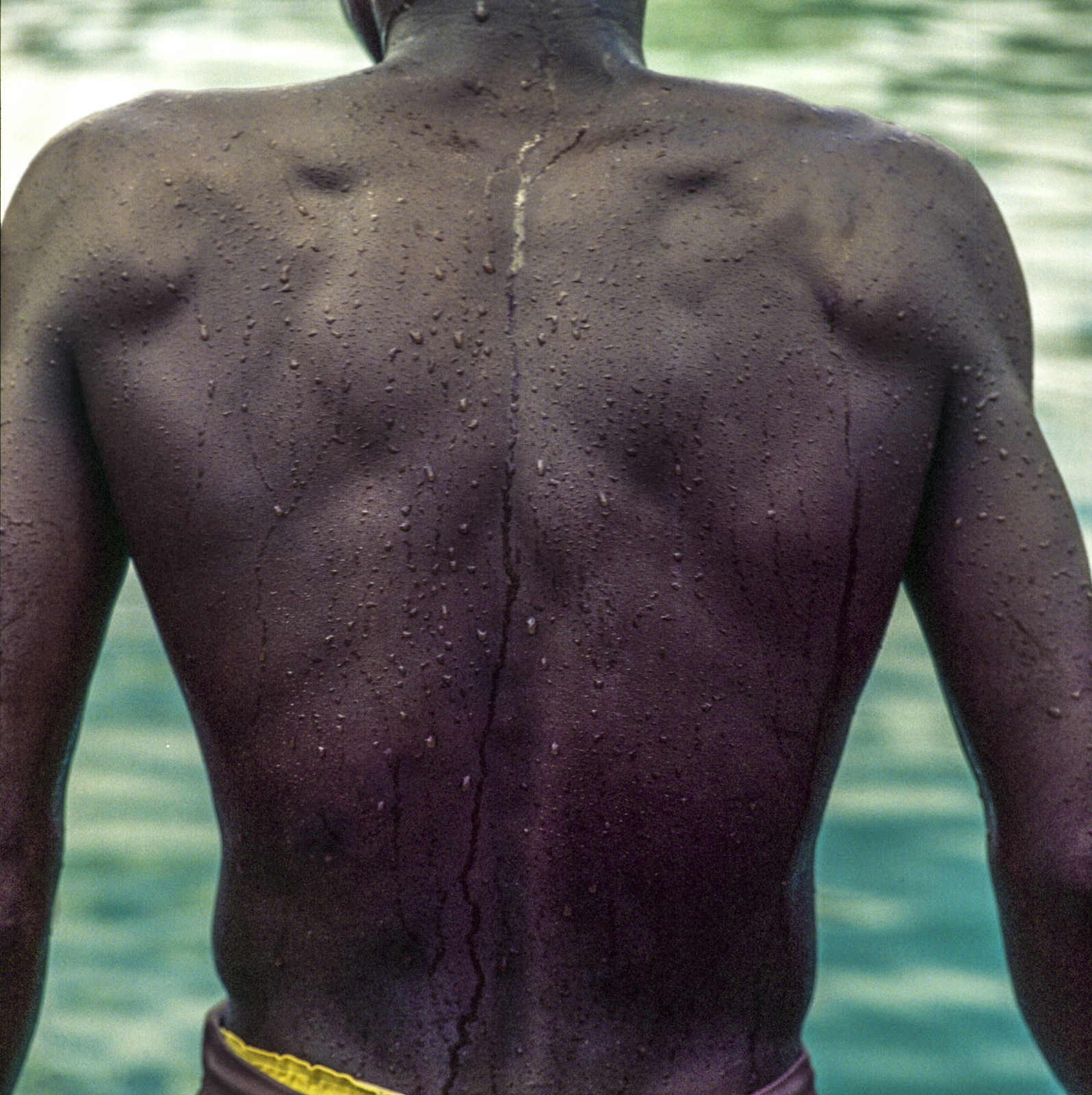
Legally, we can photography people we don’t know without having them sign a “release form” as long as we do not direct them. When we do, as soon as we say “Look here,” or “Stand over there” the form is necessary. And payment of at least one dollar makes it legal. The boy below was throwing stones against the wall when I struck up a conversation with him. Eventually, I asked him to stand on the ledge and he was happy to do so. I gave him some money, but didn’t have a release form with me. That prohibited me from publishing this image in any form where I would be paid. I mention this for your information, but also, not having this young man’s name and address, I wasn’t able to send him a print—which I would have readily done.

Working from and with the energies of love—appreciation, attraction, affinity, compassion, respect— significantly boosted my ability to see beyond looking and photograph both the within of things and the divine spark in people. This insight took some time to develop, but once it did, I switched from characterizing my work as “fine art,” to the more accurate term, “contemplative photography.”

Connecting the dots from personal experience and readings in biology, systems science, quantum physics and reports of near death experiences (NDEs)[1] and after death experiences (ADEs)[2], I believe the soul makes a plan prior to incarnation, selecting the specific contexts of physiology, people, places, relationships, situations and major events—experiences—needed to take the next step in consciousness toward realizing its divine nature. The Indian greeting and salutation “Namaste,” which basically says, “I bow to the divine in you and recognize that it’s the same in both of us” acknowledges this. Considering that souls decide and plan for the lessons they need to learn in coming incarnations, I began to see people—and those in my former photographs—in a new light. These individuals weren’t just interesting faces, they were souls with a purpose in life. Of course, great photographs have been and are made without this kind of consideration and perspective. It expanded my awareness and made my work more meaningful. As noted, the lesson for photographing people has everything to do with the photographer’s perception. What do we see?

I want to introduce you to a master of the contemplative approach, particularly when it comes to photographing people. Lee Jeffries of Manchester UK takes black and white portraits of homeless people here and abroad. Seeing him and his work profiled on the CBS Sunday Morning program gave me chills. Typically, he walks a street lined with homeless people, tacks a black cloth to a building and sets his camera on a tripod. After some long discussions with these people, explaining what he does and delving into their stories, he asks to take their picture. In selecting his subjects, he says, “Emotion is in the eyes.” He uses his stunning portraits to help raise funds for the homeless.

I feel their loneliness, despair and pain. More often than not, and whilst it may sound pretentious, I will find myself in tears for them. My images represent my final goodbye to a relationship built on authenticity.

           Lee Jeffries

[1] Laszlo, E., & Peake, A. (2014). The Immortal Mind: Science and the continuity of consciousness beyond the brain. Rochester, VT: Inner Traditions.

[2] Giesemann, S. (2019). The Awakened Way: A guide to your true self. Carefree, AZ: Sanaya’s Light Publishing.

Recommended Practice

CANDIDS

Take your camera to an outdoor venue where people are being active. Workplaces are ideal. Photograph individuals there, doing whatever they are doing. You can hide behind something or not. The key here is not to direct anyone. Do not pose them, move them, tell them where to look or to smile. No direction whatsoever. You don’t need permission or a release form to publish these kinds of “candid” images.

DIRECTED

Photograph in the same kind of environment, but now direct them in some way. Ask for permission and have the person(s) you photograph sign a release form BEFOREHAND. If you give them one dollar, the release form becomes a legal document protecting you from liability due to publication in a for-pay situation. Create your own “Release Form” using the following as a guideline. It’s always a good idea to give or send models a copy of the form. Ideally, send one of the best photos as well.

________________________________________________________________________________

Your Name                                                                                             Model Release Form

Address

For consideration of $________ I hereby give (photographer)___________, his heirs, legal representatives and assigns, the absolute and irrevocable right and permission to publish and use the photograph of me (the undersigned) that he took on (Date)_________________ at (Location)_______________________________

  1. a) The photographer has my permission to copyright this photograph in his name or any other name he may choose, without restriction. (Photo Description)________________________________________
  1. b) The photographer has my permission to use, re-use, publish and re-publish the photograph individually or in conjunction with other photographs, in any medium whatsoever.
  1. c) The photographer may use my name in connection with the photographs he has chosen.
  1. d) I hereby release and discharge (photographer)_________________ from any and all claims and demands arising out of or in connection with the use of the photograph. This authorization and release are binding upon myself (model), my heirs, legal representatives, and assigns.

I hereby affirm that I am of full and lawful age and have the right to enter into this contract in my own name. I have read the foregoing and fully understand its intent and meaning.

Model’s Name (Please Print): ________________________________

Model’s Signature: _______________________________________________________

Address:_______________________________________________________________

City/State/Zip/Country:___________________________________________________

Email:_________________________________________________________________

Phone:_________________________________________________________________

Witness:___________________________ Phone:______________________________

__________________________________________________________________________________

The Soul of Photography

Chapter 7: The Transcendent Approach


I asked ChatGPT (AI) to introduce this subject with a short poetic reflection on photography as an ideal medium for seeing beyond the senses.

A Photographic Invocation

Light is the oldest language.
Before words, before memory—there was light falling on form.

The camera does not invent beauty; it recognizes it,
waits for it, bows to it.

In the stillness of a shutter, time opens.
In the shadows between objects, spirit breathes.

These images are not just windows, but mirrors.
Not just moments, but meditations.

To see is to remember that we are made of light,
and that the ordinary world is full of miracles
waiting to be seen.


Most of us are familiar with artists working in a transcendental mode. Russian painter Wassily Kandinsky (1866–1944) believed that abstract art could directly connect to the soul. Georgia O’Keeffe (1887–1986) attempted to capture the spirit in everyday landscapes and flowers. Salvador Dali (1904-1989) considered reality to be flexible and fluid, full of hidden meanings. And Alex Grey‘s paintings attempt to reveal the universe and the divine within the human body.

Less familiar are photographers who sought to reveal spirit within form. Minor White (1908-1976) taught his students to photograph things “for what they are and for what else they are.” Jerry Uelsmann (1934-2022) created dreamlike photo montages, expertly crafted, to express his subconscious, symbolic and spiritual realities. And Rinko Kawauchi (Japan) produces images that express the divine in the ordinary. He says, “I want to show something invisible—things we are not conscious of.”

As a viewer I realize that the depth of a photographer’s intention is not always apparent in his or her work. We can discern this by what they have written. Another way is through resonance, a gut level vibration that comes from simply viewing a work of art. We understand that there’s something  beyond what’s being depicted.

Why this quest to reveal spirit or the divine in the ordinary? What’s going on here? From my experience, I think it relates to the fundamental tenants of perception theory in psychology.* “We see what we want to see.” It follows then, that spiritually oriented artists look beyond and within physical forms to deepen their perception, expand their consciousness and feed their souls in a quest to see what they’re looking for, in this case the spirit (essence, soul) or Spirit (the hand of God) within forms. Also, it exercises their unique aesthetic to help them become better at expressing themselves through their art.

I include the transcendent approach in this series to show that the many ways of seeing and creatively expressing what we’re thinking or feeling—or want to see—are part of a spectrum of options, none of which are better or lesser than any others. What matters is that the endeavor be authentic relative to one’s deepest sense of self.

Because photography is a medium of light—a primary symbol of the divine—the camera can be seen as an eye that captures and absorbs that energy and essence. Consistent with the purpose of this blog, with intention, the images it records can evoke contemplations, imaginary steps back or forward in time, that touch the transcendent nerve. Although its subject matter is real, sometimes mundane, when a photographer applies her or his unique perception and aesthetic preferences to it, the ordinary can elicit an aha! And very practically, the act of making expressive images requires the photographer to be aware and present.
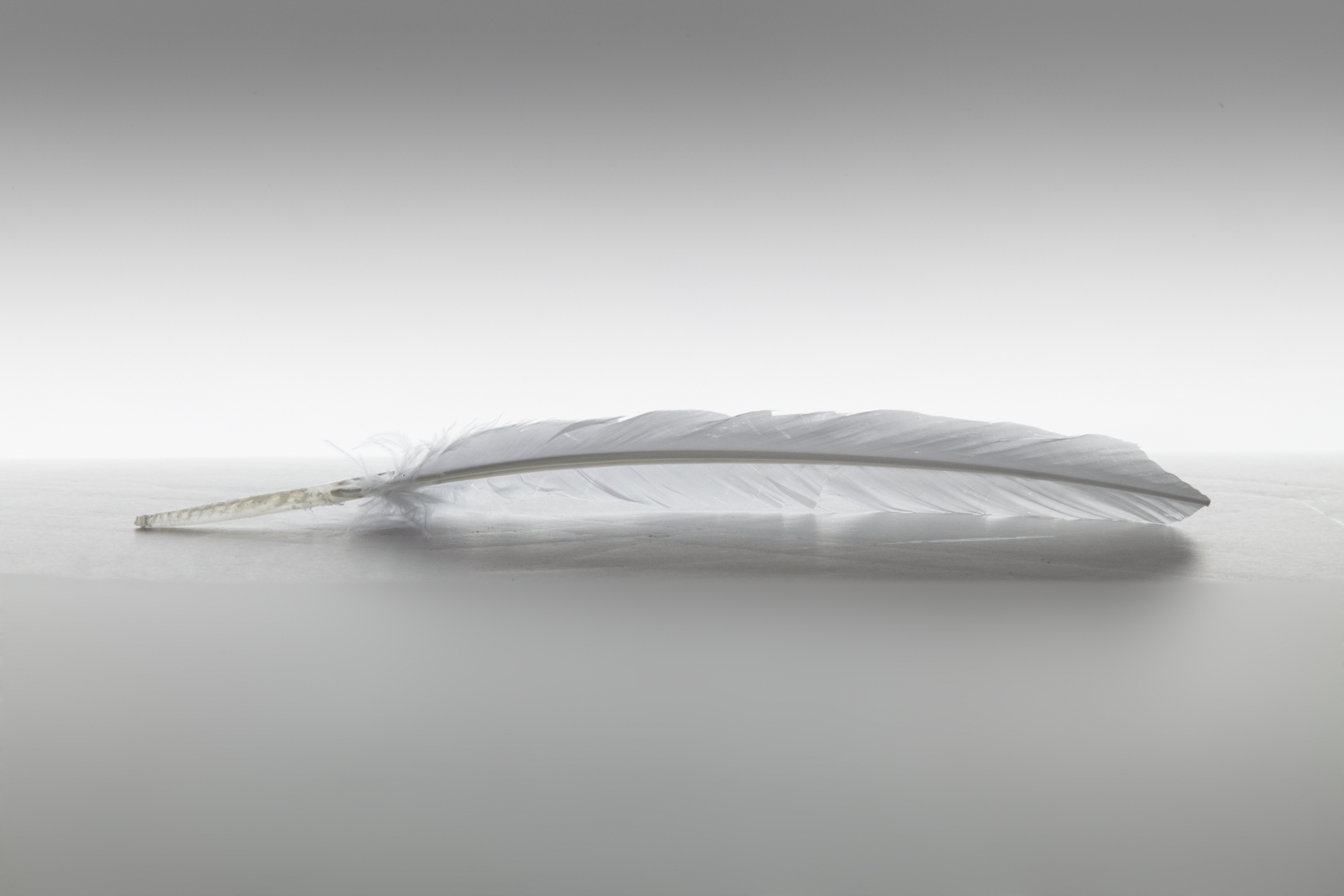
I also asked ChatGPT: Briefly, when does photography become transcendent? “Photography becomes transcendent when it moves beyond mere documentation and into revelation—when the image becomes a doorway, a mirror, or a breath held between worlds. It invites the viewer not just to look, but to see—and through seeing, to awaken.” Indeed, as “a breath held between worlds,” photography can reveal far more than the eye can behold.

While AI does an amazing job of consolidating information and wisdom, I benefit so much more from the voices of experience—photographers.

If you look closely enough, everything is spiritual.
            Rinko Kawauchi

Beauty is not in the subject, but in the way the photographer sees it.
            Saul Leiter

Photography brings what is not visible to the surface. I continue on my way seeking my own truth ever affirming today. When I photograph, I make love. Photography is my passion; the search for truth my obsession.

Alfred Stieglitz

Photography for me is a way to touch the mystery, to find grace in the ordinary.
            Emmet Gowin

Light is to photography what spirit is to the soul.
            Alex Webb

The mission of photography is to explain man to man and each man to himself.

Edward Steichen 

Light makes photography. Embrace light. Admire it. Love it… and you will know the key to photography.

George Eastman

The camera is an instrument that teaches people how to see without a camera.
Dorothea Lange

To me, photography is an art of observation. It’s about finding something interesting in an ordinary place. It has little to do with the things you see and everything to do with the way you see them.
            Elliott Erwitt

In a photograph, the soul is neither inside nor outside the body. It is between the light and the lens.
            Jean-Luc Nancy

When you look at my pictures, you are looking at my thoughts.
Duane Michals

Photography is a way of feeling, of touching, of loving. What you have caught on film is captured forever… it remembers little things, long after you have forgotten everything.
            Aaron Siskind


*  Bruner and Goodman (1947) – Value and Need as Organizing Factors in Perception. The study supports the idea that perception is shaped by desires, needs, and values, not just raw sensory input.

The Soul of Photography

Chapter 6: Wabi Sabi — The Japanese Aesthetic of Impermanence

We tend to think of entropy as something “bad,” the inevitable tendency of matter to disintegrate, for all living things to die. As embodied creatures, we naturally would prefer to avoid this downward spiral—for ourselves, loved ones, pets, creations, cherished objects and the systems we’ve developed in order to function. Because death is so mysterious, it’s not surprising that it has been and continues to be primary subject matter for storytellers across all time, cultures and media.

The Japanese people, artists in particular, have another way of looking at entropy. For them, “wabi sabi” is both a worldview and an aesthetic perspective based on the acceptance and appreciation of impermanence and imperfection. I so much respect the shift in consciousness that this requires. When entropy is viewed as impermanence, a natural and cosmic principle, disintegration and aging processes can expand our perspective and perceptions, resulting in some beautiful, even important works of art. It’s all about what we choose to see in the world.

In Wabi Sabi For Artists, Designers, Poets And Philosophers, American artist Leonard Koren points out that the Japanese hesitate to explain wabi sabi, but most will claim to understand how it feels. According to Wikipedia, “wabi connotes rustic simplicity, freshness or quietness and can be applied to both natural and human-made objects, or understated elegance… It refers to the creation of beauty through the inclusion of imperfection, focusing on subject matter that is asymmetrical, austere, simple, quiet and modest. Also, it appreciates the randomness of nature and natural processes…” And “sabi is beauty or serenity that comes with age, when the life of the object and its impermanence are evidenced in its patina and wear, or in any visible repairs.”

Wabi Sabi regards the signs of dissipation or decay as beautiful—peeling paint, a wilting flower, rusting or pitted metal. According to Mr. Koren, it’s “the most conspicuous and characteristic feature of traditional Japanese beauty.”

Author Andrew Juniper, owner of the Wabi Sabi Design Company in the UK, observes that “If an object of expression can bring about, within us, a sense of serene melancholy and a spiritual longing, then that object could be said to be wabi sabi. It’s for this reason that the bowls used in Japanese tea ceremonies are rustic, simple, sometimes pitted and not quite symmetrical.”

It’s also why fine art and contemplative photographers are drawn to areas where entropy is well underway, including junk yards, abandoned structures, neglected neighborhoods and construction sites. When composed and lit well, textures born of age and weathering can be beautiful and interesting, at times dramatic.

Always, these kinds of environments present an opportunity to practice composition and explore one’s aesthetic. Images made in such places can evoke the sensibilities of aging, abuse and neglect. And for some, they can encourage contemplation. What does this image say to you? By adopting a wabi sabi mindset, the artist can become more attuned to a subject’s characteristic energies—asymmetry, simplicity, quietness or imperfection, how the elements in a composition feel rather than look. In simplicity especially, we appreciate the essence or spirit of things.

Wabi sabi is neither smooth nor complex. It’s the bark of a tree and broken branches, cracks in a vase or concrete wall, creases in a tablecloth, peeling paint or the random spill of oil on a blacktop surface. It’s not the smooth skin or perky expression of the young. Rather, it’s the character lines and calm demeanor that come with age.

Young and aspiring photographers get the impression they have to travel in order to find appealing subject matter. If the intent is to produce “calendar art” that may be so. But for those more interested in exploring and exercising their unique personal aesthetic, I recommend the practice of wabi sabi. It’s also good to work at or or close to home, because it presents more of a challenge to see with fresh eyes and activate the inner eye of understanding a subject’s essence and history beyond surface appearances. For instance, what does an expressive wabi sabi image evoke or reveal? What does it say about the object’s owner or user? Where did it come from? What’s its history? How was it made; what materials?

As perception expands and awareness deepens, we better appreciate that entropy is a natural and cosmic process. Images of impermanence present the artist with a world of opportunities to explore his or her perceptual capabilities and connect to this awesome and beautiful force.

Our souls are all made of the same paper; our uniqueness, though, comes from the creases in that paper from the folding and unfolding of our experiences.

Jiddu Krishnamurti, Indian philosopher, speaker and writer

Rendering subjects in black and white is particularly conducive to wabi sabi, because the emotional appeal of color doesn’t overpower the characteristics of form, texture and simplicity in the aging process. One of the challenges for the visual artist then, is to see all things and all people as beautiful.

Pare down to the essence, but don’t remove the poetry.

Leonard Koren, American artist, aesthetics expert and writer


Recommended Practice

WABI SABI

Create a series of photographs based on the theme, “Entropy Can Be Beautiful.”

The Soul of Photography

Chapter 5: Particularity

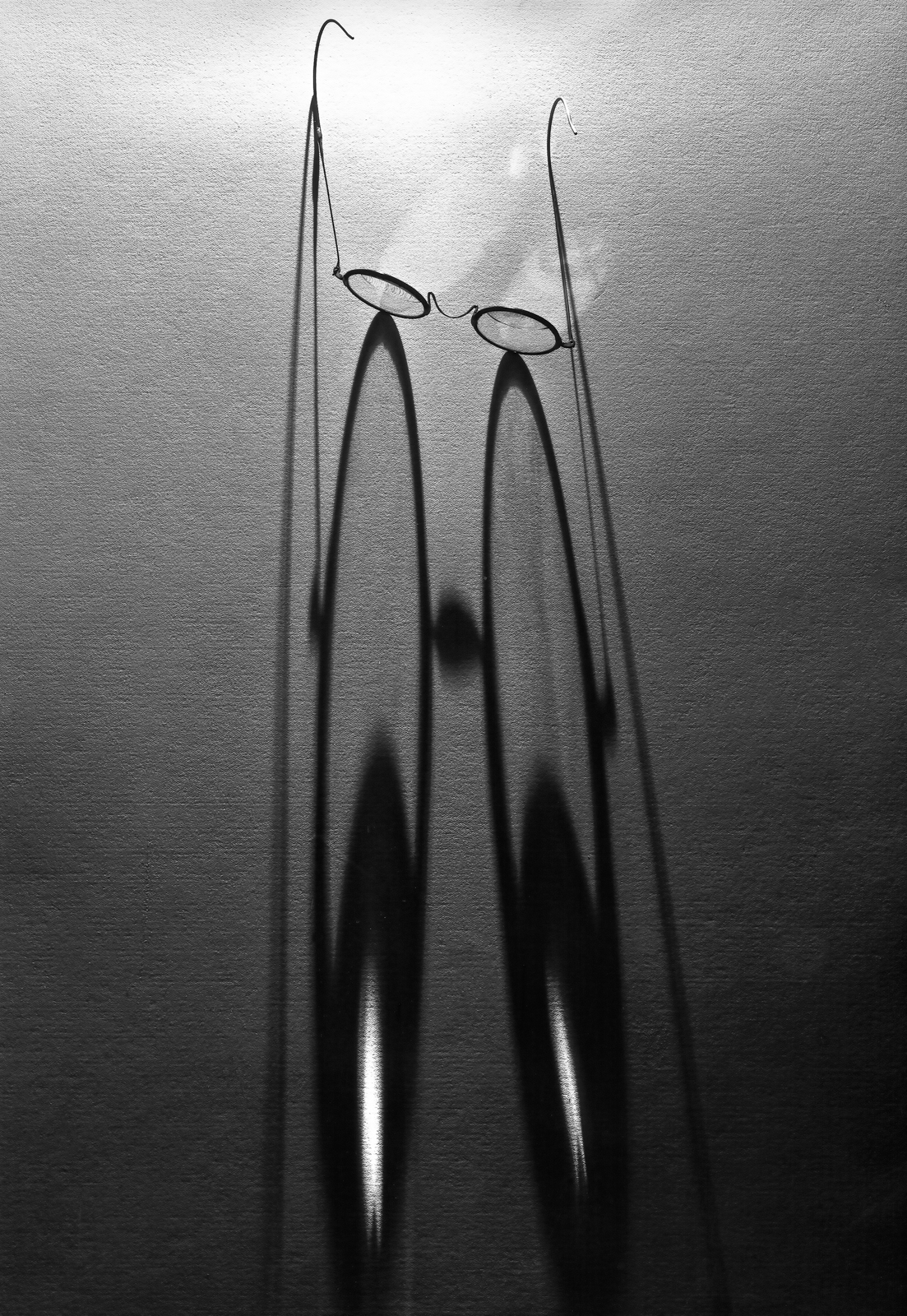
My wife and I occasionally visit antique stores and fairs. I walk up and down the many rows of vendors, looking for objects that might attract me, especially a quality of light and one or more of my aesthetic preferences. In the above image I found three of them—exquisite light, simplicity and gradation. And the subject “spoke” eloquently of women’s vintage apparel, making the finished print an excellent prospect for contemplation.
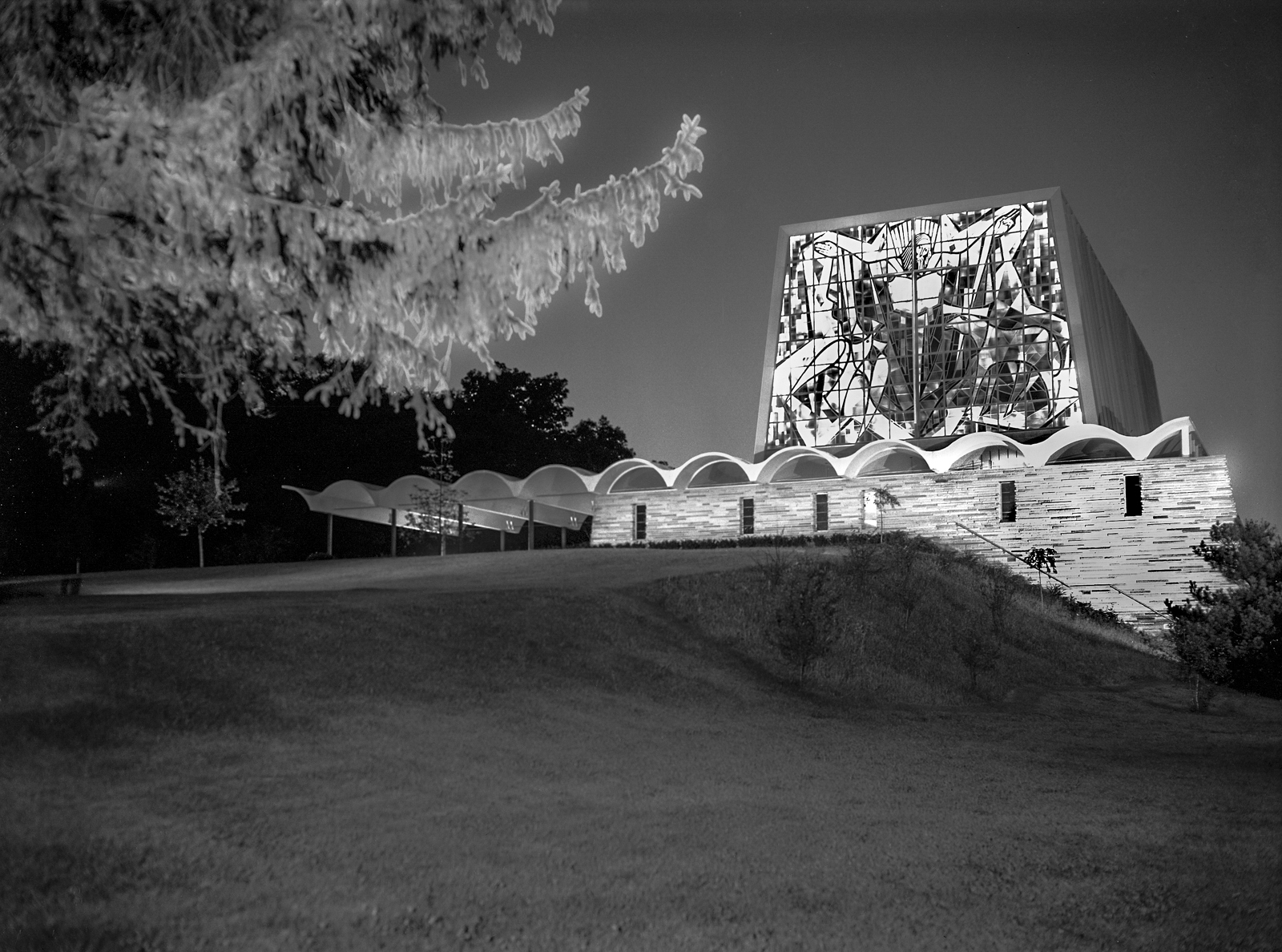
After many visits, I noticed a pattern in the places where I was more likely to find something to photograph. These were the booths that were less cluttered. The objects on display were separated by some space; the more the better. When the items were all clumped together on a table or in a display, nothing seemed important. Visually, the experience was chaos, and it reflected the vendor’s consciousness, suggesting that they cared little about their offerings.

When one object was singled out for display, isolated, my eye went right to it. If someone doesn’t care enough about their goods, it’s not likely that I will either. Conversely, when I see an object separated  and displayed on a clean surface or cloth where the sunlight enhances its form, color or texture I’m drawn to it.

Our minds are visually impatient. When presented with a rose bush we look from one blossom to another. When we’ve seen the ones that stand out we move on. Whether it’s cars, food, furniture, seashells or paintings in a museum we scan, want to see as much as possible. That’s natural and appropriate. But by taking it all in—the wide view—we can miss the deeper experience that comes from focusing on just one thing and staying with it for a time. I’m reminded that the greatest compliment we can pay an artist is spending more time with his or her creation.

Novelists use the word “particularity” to describe a character, setting or situation to make them special. High value. Take this description of a movie scene: “Sam pounded the bar, insulted the bartender and threw a beer bottle on the floor.” We get the idea, but particularity makes it sparkle: “Sam’s eyes lit with rage. He pounded his hairy fist on the bar and grabbed his Budweiser by the throat. Cursing, he hurled it the floor where thick shards of glass, beer and foam scattered the peanut shells.” In writer-speak, particularity amounts to “showing” rather than “telling” what happened. Since “God is in the details,” wherever there’s a multiple of anything, appreciation is heightened by going in close. Vintage car enthusiasts don’t buy a “Corvette.” They buy a 1962 Roman Red Corvette with a 3-speed synchro-mesh transmission.

Particularity is a well-known strategy among jewelers. Diamond rings and necklaces surrounded by greater space suggests greater value. (And the overhead specular lights make everything sparkle). That’s why museums and galleries give as much space as possible to their important holdings. Artists choose a wide cover mat within a frame to surround their artwork with blank space. Bloggers know the value of including lots of white space on a page or electronic screen. And filmmakers hold on a wide or “establishing” shot, so viewers have time to examine and appreciate the elements within the frame before going to closeup. The message of space surrounding an item or image is clear: “This is worthy of your undivided and sustained attention.” Expressive photographs “say” just one thing. The shell in this image is very common. Ordinary. But when it’s displayed alone within a framing element and lit to enhance its features, it becomes expressive.

Out in nature, we tend to scan the whole before identifying the particulars. On not. Landscape photographers want to stay wide. When our interest is more on the particulars, we move quickly from wide to closeup. It’s a “deductive” approach.

The “inductive” approach to photographing begins with attention to a particular subject, before—if at all—showing the wide perspective. The wide shot suggests a line of elements, suggesting perhaps a religious procession. Because there are more visual elements, it contains more information. The closeup, with fewer elements displaying textured detail, has greater impact. The field evoked a “Wow” in me, so I stopped and set up the 4×5 view camera on a tripod. My head was under a focusing cloth, when an Amish man stopped his horse and buggy and approached. “Do you like those shocks?” he asked. I said I did, and we talked a bit. Then he said, “There are other and quicker ways to dry the wheat, but we do it this way because it’s beautiful.” I love the image of that field and cherish the memory of what he said. The photograph of the single shock evoked a “Wow” in me when I saw it come to life in the developing tray. It spoke to me of “shockness,” the essence—spirit—shared by all such bundles of wheat everywhere. There’s no right or wrong, better or worse approach. There’s a lesson from system’s science in this—the more visual elements there are within a frame, the greater its complexity and the information, the fewer the elements, the simpler the image and the greater its impact. Approaching any subject, consider your objective—information or impact?

Of course, we can frame things to incorporate information and still have impact, as in this image where a particular shock is sharp and the background slightly out of focus. What do you think? Does that diffuse either of those qualities?

In environments where there’s a lot to see, the mind moves on once it has recognized something and named it. That’s everyday experience. But the soul is better served by not naming potential subjects, instead seeing them as particular forms having dimension, texture and color. When out with a camera, I quickly move away from areas where there’s visual “noise”—complexity or chaos—and gravitate toward places where there’s evidence of simplicity, order and caring. Especially, because light itself is my preferred subject matter and I prefer visual impact over information, I look for situations where light is illuminating, literally and figuratively, a particular object. That’s where I’m likely to find something worth photographing.

Always to see the general in the particular is the very foundation of genius.

                        Arthur Schopenhauer, German philosopher

Recommended Practice

Take your camera out in the country, away from the city. Find a wide open vista, perhaps with a barn, a wandering stream or cultivated rows.

DEDUCTIVE APPROACH

Establish a wide shot and then move in to closeups, the particulars, by framing only the essential elements necessary for identification.

INDUCTIVE APPROACH

At another wide open location, shoot closeups, framing only the essential elements as in the deductive approach. Then set up for wide shots at different angles.

AT HOME

Select the best of everything you shot and evaluate. Which approach worked best for you? Which appeals most to you, the wide shots or the closeups? Which does a better job of expressing your feeling about these places? Or do they work together? If you were going to arrange an exhibit, how would you sequence them?

The Soul of Photography

Chapter 4: Everyday Beauty

Searching for opportunities to compose elements within a frame in ways that fed my aesthetic hunger, I frequented scrap yards, construction sites, abandoned buildings, empty fairgrounds, railroad graveyards and antique shops. As a consequence of creating order out of visual chaos, I was experiencing beauty in unconventional places and subjects. It taught me that I didn’t need to go to the beaches, national parks or anywhere else to find beautiful subject matter. All I had to do to transform an ordinary object into a beautiful one was to decide to see it that way—with or without my camera. Beauty is a choice we make.

My curiosity about this has been an evolution. As a child, I thought certain people, places and things were intrinsically beautiful and others were not. Through readings and formal education I learned that beauty is subjective and it varies widely between individuals. In particular, camerawork taught me that beauty can be manufactured, as when we light or arrange a subject in a more pleasing way. The following images—from my Blurb monograph, Weeds: God by the Side of the Road—illustrate the benefit of being able to control the lighting. I gathered a lot of weeds by the side of several roads over a three-week period, set them against a black background in my basement studio and lit them with one light and a reflector.

As subjective experience, beauty (along with goodness and truth) evades description. Nonetheless, each of us can, through contemplation, find some words to better understand the place of beauty in our lives. For me, it often comes when I encounter nature’s design principles—patterns in nature and in man-made objects. Beauty isn’t just something to search for, it’s something to be open to—and created. It may be in the “eye” of the beholder, but it’s also in the heart touched by an appreciation of what’s in front of us every day. One way to better see it indoors is to turn out all but one light. And outside, we can let the lights at night attract our attention to a variety of subjects.

It’s not what you look at that matters, it’s what you see.

Henry David Thoreau, American naturalist, philosopher

One of the teachings in Zen Buddhism is “unitive perception,” being able to see the present and eternal simultaneously, the sacred and the profane in the same object. By stopping, paying attention to details and refraining from naming things, that can happen. The beauty of going in close is one of the reasons why, when people ask about the equipment I recommend, a prime (not zoom) macro lens tops the list.

With an expressive photograph in hand, we can ask ourselves what it’s saying about the universe, our world, culture, humanity and us. By contemplating the subject’s essence, its spirit in this way, we broaden our perspective and appreciation. We know better where we stand in the scheme of things. And all that makes us better prepared to make more photographs (beyond “taking pictures”) that feed the soul.

A person has not only perceptions but a will to perceive, not only a capacity to observe the world but a capacity to alter his or her observation of it—which, in the end, is the capacity to alter the world itself. Those people who recognize that imagination is reality’s master we call “sages,” and those who act upon it, we call “artists.” 

Tom Robbins, Novelist

Recommended Practice

To find beauty in everyday, commonplace things—

SUNLIGHT

Pay attention in the mornings, to see where bright specular sunlight, not diffused by clouds, comes through your windows. Notice that it enhances textures and reflections and makes bright things like glassware sparkle. I prepare for this the night before by having my camera ready to pick up in the morning. I work fast, because the light changes quickly. The key here is to capture what the light is doing. Later, examining your images, you’ll see how the quality and intensity of the light makes most things beautiful.

PHOTOGRAPH AT NIGHT

The same thing applies here. In this instance, the light is artificial. Go where the light is the strongest—streetlights, store windows, car headlights. Let the light direct you to whatever it’s illuminating. And shoot the light source itself. Do time exposures of moving lights. Play!

GO IN CLOSE—AT HOME

Use a closeup lens to shoot textured items and geometric forms around the house, in the garage, basement, attic and yard. Especially, consider the places that are lit. Turn on lights during the day and shoot at night with all the lights one turned off but one. To emphasize texture even more, change the lightbulb in a lamp from frosted to clear, and remove the lampshade. I use a 200 watt clear bulb for this. You’ll be amazed at the difference it makes.

The Soul of Photography

Chapter 3: Fine Art, Expression, Contemplation

In the early 1950s, when I was introduced to photography, the debate was raging as to whether or not photography could be considered an art form. In January 1955 Edward Steichen launched an exhibition at The Museum of Modern Art in New York City entitled, The Family of Man. While it was touring the United States, he published Family of Man: The Photographic Exhibition. Together, they demonstrated that not “anyone with a camera” could produce “art.”

Highly skilled painters re-present what they are observing. Whether on a wall or canvas, the work occurs within a fixed frame. Those skilled in the chemistry and optics of photography move the camera’s frame around to focus on a subject within it, excluding the distracting elements. Both mediums involve focused attention, an informed aesthetic and craftsmanship. Cameras today, even smartphones, can produce high quality photographs. But is it art? Certainly, it can be. That’s for each of us to decide, but a contributing factor is “value.” I don’t mean price. The value I’m talking about has to do with the significance a photograph has for the photographer.

Frames speak. They say, “Pay attention to what’s enclosed here. It matters to me. It interested or attracted me.” They do this by enclosing or “formalizing” the space within the frame and excluding everything else. From the viewer’s perspective, it commands our attention. Due to the rapid increase in the number and varieties of electronic devices, the opportunities to frame images, words, events, ads and entertainments of all sorts have grown exponentially in just a few decades, creating what some have called an “attention economy.” It’s nearly impossible to count the number of “frames” we encounter in just one hour.

A photograph can be considered to be “art”—an artifact of creative experience—when its creator thinks of it that way. Whether or not others recognize it as such is up to them. At the very least, putting something in a frame gives it value. A quality photo of my family in a 5×7 frame sits on my bookshelf. It’s a keepsake, not art. If I were to mount that print on a 16×20 museum board with a cover mat showing lots of white space, enclosed in a wood frame and hang it on a gallery wall, its value to me would instantly be recognized by others; it would likely attract their attention and they’d ask about it, curious about its significance. But they wouldn’t consider it an object of art. The intent of the person taking the picture was to capture a moment, not to make art. And there was little if any evidence of that person’s skill with a camera or concern about aesthetics.

Serious photographers consider an electronic file an image, a potential photograph. It’s not a photograph until it’s printed. It’s also why they only show their best works, mat and frame them, whether or not they will be exhibited publicly or offered for sale. It’s the photographer’s intention to create something new, the application of certain aesthetic preferences and skill in execution that constitute a “fine art” photograph. Another term used to characterize an artistic approach to photography is “expressive.” It’s where the maker invests more thought or feeling in the process, with the intent to convey one or the other.

An approach to photography that includes expression, is “contemplation.” Here, throughout the process, the intention is to use make and use photographs as vehicles for reflection and self-discovery. When considering a print, questions are asked about the subject and its representation. And they’re ideally written in a journal. What was the attraction? Why did I photograph this? If an object, what was its history? What does it say about humanity, society, the culture, our times and me? Which of the aesthetic dimensions were operating in me when I shot this? What can I learn from this? Does the photograph capture the spirit, the essence of this object or person?

The motivation for capturing the “spirit,” the essence of a subject, is personal growth and spiritual development, beyond recognition of monetary gain. Whether on location or in the studio, key to this approach is being open to guidance—intuition—and paying attention to the energies of attraction. Once a setting or subject has been identified, the “pull” of the mind’s eye—ideally the heart—triggers thoughts about how to frame the elements involved and decide the physical and aesthetic preferences that would best reveal its essence. Black and white works far better for this because it emphasizes form, composition and texture. Color too often dominates, making itself the principal feature of a photograph.

Philosophers find a basis for the law of attraction in the idea that “like attracts like.” To my knowledge this hasn’t been scientifically tested, but because I’ve become sensitive to the feeling of “resonance” and the reality of interconnectedness when I’m out with a camera, I pay close attention to what attracts me.

Early on, I went looking for subjects that would make a good photograph. But after years of analyzing my collection to understand what worked, what made a print “numinous”—expressive of spirit—I realized that I’d been guided to certain locations and subject matter, and that my aesthetic preferences were a significant contributing factor. For instance, after an outing where I’d been shooting landscapes, I got in my wife’s car to go grocery shopping. I hadn’t intended to shoot anything in the store (many don’t allow cameras inside), but I didn’t want to leave the camera in the car. Browsing the produce section, I was drawn to this particular onion among hundreds of others because of its geometry, gradation and simplicity—three of my aesthetic preferences.

The act of photographing with creative intention is mindful. However briefly, framing and focusing a camera requires us to be present and attend to a momentary attraction. From a spiritual point of view, the value of any creative pursuit isn’t only the final product. It’s the insight, appreciation and the expansion of consciousness that occurs throughout the creative process. Those are the qualities of what lasts, because ultimately what’s under construction on this planet is love and the expansion of consciousness, not the acquisition of more stuff or more thrilling experiences. The energy of attraction—love actually—is one of the ways the soul directs our attention to what matters in the trajectory of our personal growth and spiritual development. Considering this, the proper response to all creative expression, whatever the medium, is gratitude.


We are not alone here. Something is watching. Something is listening. I would say that the ‘something’ that is listening is everything: earth, sky, water, air, rocks, trees, animals, plants… along with beings we do not see and that have no name (in English anyway). Matter is sentient, watching, listening; God, you might say, is in all things, and nothing is not God.

                        Charles Eisenstein, American public speaker, teacher, author

Recommended Practice

STEP 1: Take your camera to a park with the intention of creating a “fine art” photograph. Take many shots. Make a large print of the one that you think worthy of being displayed.

STEP 2: Take your camera to a busy street intersection with the intention of creating a photograph that says something about people, the culture, our times or the world. It can be an idea or feeling, perhaps both.

STEP 3: Considering the images you gathered, make a large print of the one you like “best.” Alone, where you won’t be distracted, write your responses to these questions as you observe the print. Ask the questions:

  • What attracted me to this?
  • What was the history here? How did this come to be or happen?
  • What does this say about humanity, society, the culture or our times?
  • What does this say about me?
  • Which of the aesthetic dimensions are operating here?
  • Does this capture the spirit, the essence of (whatever it is)?

The Soul of Photography

Chapter 2: The Aesthetic Dimensions

Artists working in visual media train themselves to perceive beyond looking by continuously imagining or creating actual frames around everything they see. After a while a pattern emerges in the subjects they choose and the materials and techniques that work best. Along with these, they develop certain aesthetic preferences—choices relating to the arrangement and nature of visual elements, the ones they consistently find beautiful, pleasurable or interesting. Seeking them out and working with them, the artist develops a unique “style.”

So too, expressive photographers develop an “eye” by identifying their aesthetic preferences. For me, in the process of wanting to make photographs that fed my soul, I discovered that my favorites were exquisite light, simplicity, gradation and geometry. Whether I found these or constructed them singly or in combination, I could count on the resulting images to have the intended effect. Not always, but often. With the completion of this series, I’ll elaborate and provide examples of the following aesthetic dimensions.

WHAT ARE YOUR AESTHETIC PREFERENCES?

Abstraction

Abstracted subject matter is not readily identified, so it rivets and holds the viewer’s attention. They wonder, is there some meaning here, or is it just a pleasing image?

Atmosphere

This generally refers to weather conditions playing a role as a visual element. It takes the form of condensation, precipitation, or particulate matter such as steam, smoke, fog or smog. Mist and fog diffuse the light, softening the scene. Elements close to the camera are sharp. With distance, color saturation diminishes and blurring increases to produce a veiled or muted effect.

Color Harmony

A photograph is harmonious when the colors within the frame are predominantly the same hue. There can be few or many elements within the frame, but they will all be the same relative color on the spectrum—yellows, reds, greens— even if they vary in saturation and brightness. They stand out from the everyday norm, so they catch and holds our attention. They’re pleasing to the eye.

Color Discordance

Here, many different hues, opposites, are included in a frame. It can evoke a sense of clutter, frenzy, or confusion. Because they’re the norm, once the viewer identifies the subject matter the tendency is to look away. It works best when the objective is to convey information rather than express or elicit an emotion.

Contrast

In image formation, “contrast” is the ratio between the darkest dark and the lightest light within a frame. Contrast is said to be “soft” when there’s very little difference between the lights and darks. “Medium” is what we regard as normal. And a “high contrast” print has deep blacks alongside bright whites or highlights.

Composition

Pictorial composition is the arrangement of visual elements within a frame. Once the established rules and guidelines are understood, an artist can “break them beautifully.”

Unity relates to appropriateness. Not one dot, line, surface, form or subject matter is in the frame that doesn’t belong.

Balance occurs when the elements are neither bold nor heavy in one area relative to the overall space. The elements are not heavy top to bottom or right to left. The usage feels right.

Rule of Thirds advises us to imagine the frame segmented into thirds horizontally and vertically. Avoid placing principle subject matter dead center. Instead, place it where the lines of the grid intersect.

Dynamic Center refers to the point of critical focus within a frame. It is best placed according to the rule of thirds, not in the center of the frame.

Vectors or “Leading Lines” are lines along which the eye travels within a frame—bright highlights on telephone pole wires, a pointing finger, a tree branch or cast shadow.

Perspective is the artist’s point of view. Normal POV is eyelevel. Photographers and filmmakers prefer to situate the frame at angles above or below, left or right or tilted relative to the subject.

Depth of Field

Technically, “depth of field” (DOF) is the optical property of a lens that expresses the distance about the plane of focus where objects appear acceptably sharp in an image. Creatively speaking, it’s the relative degree of sharpness between objects that are close to or farther away from a lens. In practice, the features that concern the photographer are a) the lens’s aperture or f-stop, b) the focal length of the lens, and c) the camera-to-subject distance. Each is an independent variable, but they combine to produce the depth of field.

Form

Forms are three-dimensional. They are best represented in a photograph through depth or roundness. In black and white, without color dominating, gradations and shadows across rounded surfaces and shapes convey a sense of volume.

Geometry

Shapes, circles, squares and triangles can create structure, perspective and balance within a frame. The shape of an object immediately suggests its size and importance. “Sacred Geometry” is the ordering of elements in a way that they evoke a numinous feeling, a sense of spiritual wholeness or grandeur. Certain geometric forms, those with specific mathematical properties, somehow set up a resonance within us. I recommend a visit to Ancient Wisdom.

Gradation

This is the gradual or graded change of tones across a subject’s surface. In black and white, it’s a transition from light to dark or from one texture to another. In color it’s the transition from one hue to another or to a different saturation or brightness. As the eye moves across graded tones there’s a slowing of the aesthetic sensibility, a more pensive and flowing experience.

Key

“Key” refers to the overall brightness or darkness within the full frame. “High Key” images are predominately bright and white—a white cat sitting on a white background. “Low Key” is dark and somber—a black cat laying on a black background.

Line

Lines serve to define length, distance and shape. They indicate boundaries and create separation of forms, textures and colors. They can have thickness, evenness, brightness, length and direction. They make shapes, create visual variety and rhythm, simulate texture, separate colors, suggest movement and create the illusion of depth—railroad tracks to the horizon.

Light

Photography is literally, “Writing with light.” Awareness of its properties and behavior is a critical requirement for all artists, especially photographers. Black and white photography is the better learning medium; color can easily be converted. Rule #1: Consider the light source, it’s intensity, quality (color), direction and modifiers (how it’s being shaped; specular? diffuse?)

Pattern

Through repetition, patterns set up a rhythm that suggests order. We see them in the most fundamental energy fields within the atom, in the immensity of the cosmos, and the way we function, behave and spend our time. Artists in every field look for patterns and incorporate them into their works, in part because they evidence and reflect universal patterns and evolution.

Shadow

Shadows contribute greatly to the illusion of three dimensions and “normal” everyday reality by providing evidence of depth and contrast. They turn an ordinary subject into an image that pops—backlit people casting shadows on concrete, shadows of beach chairs on a deck.

Simplicity / Complexity

An image gains in simplicity when it has fewer elements. It becomes complex as more elements are added. The former is largely absent from our everyday environments—and lives—because we’re surrounded with so much “stuff.” Artistically, the latter requires the reduction or elimination of visual elements. One is not better than the other; they have different communication objectives. Generally speaking, simple images have greater emotional impact and tend to hold a viewer’s attention longer. Complex photographs carry more information, simply because there are more elements. Both can have compelling outcomes.

Texture

The tactile sense is so acute and pervasive, subjects that are textured and lit appropriately are enough to elicit the sensibilities of smooth, rough, coarse and soft. Texture is minimized on a surface or object when the light is diffused and coming from above. It’s enhanced when the light is more specular (pointed without diffusion) and rakes across the subject from the side.

Recommended Practice

Carry a list of these in your kit. Consult it before going out—either to have these in mind or as “targets” to shoot for. For instance, determine ahead of time that you’ll go out looking for “textures” or “gradation.” This sharpens your perception as you walk around with a camera. The long-term goal is to identify the few aesthetic dimensions that consistently appeal.

As a regular pursuit, try to find or create a situation where you can create a “simple” rather than complex image.

The Soul of Photography

The Aesthetic Experience

Philosophers since Plato have sought to define and describe the aesthetic experience. Among them there’s agreement that it’s a capacity unique to human beings, a contributor to well-being and different for each individual, but there’s no consensus on what it is in essence.

This is understandable because the word “aesthetic” is an abstraction that refers to something ineffable, a non-physical phenomenon like “beauty,” “truth” and “goodness.” We only know it through cognitive and emotional experience. But just as we don’t need to say how a computer works to use it effectively, we can discover and utilize our aesthetic preferences without knowing what it is exactly. 

One thing for certain, aesthetic experience has to do with how something looks and feels; it relates to beauty and taste, and is a central feature in creative expression, especially in considering or producing works of art.

Philosopher Immanuel Kant argued that, because aesthetics is a matter of judgment, only rational beings can experience it. “Rational beings need aesthetic experience, are significantly incomplete without it…” It “stands in fundamental proximity to moral judgment and is integral to our nature as moral beings.” After years of studying well-balanced and thriving individuals, psychologist Abraham Maslow ranked “aesthetics” high on his hierarchical pyramid of human needs — above physiological, safety, belonging, self-esteem and cognitive needs. In his scheme, “higher” needs don’t generally become active until the lower ones are being met. 

Humans need beautiful imagery or something new and aesthetically pleasing to continue up towards Self-Actualization. Humans need to refresh themselves in the presence and beauty of nature while carefully absorbing and observing their surroundings to extract the beauty that the world has to offer. This need is a higher level need to relate in a beautiful way with the environment, and leads to the beautiful feeling of intimacy with nature and everything beautiful.

Abraham Maslow

Eric Booth, author of The Everyday Work of Art: Awakening the Extraordinary in Your Daily Life  wrote that aesthetic experience consists in

  • Noticing well
  • Attunement to what attracts you so you find relevance everywhere
  • Authentic response
  • Making strong & flexible personal connections
  • Attention to impulses
  • The feeling of natural curiosity
  • Asking good questions
  • Making informed choices & seeing the consequences

To this list I would add “believing ourselves to be creative,” owning it as a natural and unique inheritance, free from the opinions or expectations of others. I would also emphasize Booth’s second item—“attunement”—because, along with joy, it’s how the soul informs us about its needs. In my experience, when an aesthetic hunger is satisfied, feelings of joy, awe, reverence or peace of mind, even the feeling of being able to breathe better, accompany it. In effect, the soul is saying, “Thanks, I needed that! More please.” 

Some people say they aren’t creative. Others say “I’m logical, not artistic.” And we’ve heard the excuses: “I took an art class but didn’t keep it up.” “I used to draw but… (life happened).” Most young people emerge from high school thinking that art—creative activity—is something to do on the side, perhaps later in life, because the career opportunities are few and low-paying. It’s the unique school that stresses creativity and integrates it in the curriculum. 

I see “artistic expression” and “being creative” as subsets of the aesthetic experience—how we see each other, the world and the cosmos. Understandably, not everyone can or wants to produce works of art. But everyone has an aesthetic. According to Szabolcs Keri of the National Institute of Psychiatry and Addictions in Budapest, we are born with the capacity to make judgments about how things look, and have preferences in the way they are arranged or displayed.

Creativity is related to the connectivity of large-scale brain networks. How brain areas talk to each other is critical when it comes to originality, fluency and flexibility. In highly creative individuals this connectivity is thought to be especially widespread in the brain, which may be down to genes that play a role in the development of pathways between different areas.

Szabolcs Keri, Professor of Cognitive Science 

“Highly” creative people tend to express themselves through some art form, but everyone with an intact brain continuously exercises their aesthetic preferences. The music we make and choose, the foods we prepare, furniture we arrange and objects we purchase all require judgments based on preferences. This dress for the photograph, not that one. A wood desk for my office, not a glass and chrome one. Most everything, including our lives, are acts of creation. We are all, self-creators and co-creators. 

Culture itself is an ongoing creative process, as are the many components that give it substance and character. I think of the Japanese who centuries ago turned the commonplace act of making tea into a high art. It’s an example of how special treatment, focused attention and contemplation beyond utility, can transform the ordinary into the extraordinary.

The Zen aesthetic shows us that all things are perfectly complete, just as they are. Nothing is lacking. Each one of us is already an artist, whether are we realize it or not. In fact, it doesn’t matter whether we realize it—this truth of perfection is still there. Engaging the creative process is a way of getting in touch with this truth, and to let it function in all areas of our lives.

 John Daido Loori, author The Zen of Creativity: Cultivating Your Artistic Life

For me, the aesthetic experience is an energy, an impulse or urge, that both seeks and finds resonance in and attunement to the expression of Source, which in part is the physical universe. Said another way, it’s a “pull” of the heart to understand the Divine manifesting in the world, as the world.

It took some time to see, but when my photographs revealed the pattern of my aesthetic preferences—simplicity, exquisite light, geometry, gradation—I began to look for them and their combination in the natural world, to focus on them. I continued to work with other dimensions, including color, composition, form, contrast and texture, but was always on the lookout for the dominant four. Because that’s where the joy was in the final print. Finding it challenging to find them with some frequency out in the world, I created setups at home where I could optimize my preferences. 

Whatever your creative context, whether making a house a home, constructing a music playlist, a Zoom party, reading, writing, cooking, painting or photographing notice the pattern of your preferences, the elements that give you the most joy. Write them down. It’s your soul asking for more. Continuing, acting authentically in this way, we not only make a difference for ourselves, we make a contribution to the world—which doesn’t need another work of art. What it does need  is individuals acting authentically from soul, expressing their unique figts.

To look at a thing is very different from seeing a thing. One does not see anything until one sees its beauty.

Oscar Wilde

Recommended Practice

COMPOSITION

  • To develop your aesthetic “eye,” (seeing as if through new eyes) I can’t overestimate the value of continuously looking at the world—wide and close up—through a frame, any frame, a camera, smartphone or putting the forefingers of both hands together to make a frame. Get in the habit of composing. I recommend a tripod, but that’s not necessary. You’re not making good images here, just using a frame to organize visual elements within it. Don’t consider subject matter at all. Distracted from watching television or waiting in a line? Look away and compose. A stapler? Someone’s shoes? A cloud? Stop sign? Don’t name things. Move the frame up and down and all around to organize the lines, shapes, forms, brightnesses and shadows so they’re pleasing to your eye. When you’re satisfied, snap the picture if you like. Analyze them before you delete them. Does the composition work? Why? Why not? Are there elements that distract from the “dynamic center,” the point of critical focus—wherever it’s located? The more often you do this, the quicker you’ll develop your ability to compose elements within a frame that matter to you.
  • Also I recommend the book: Pictorial Composition (Composition in Art) (Dover Art Instruction) by Henri Rankin Poore. You might find it in your public library. He uses the works of painting masters (Cézanne, Hopper, etc.) to illustrate some of the aesthetic dimensions that that painters used.

AESTHETIC DEVELOPMENT

Begin to notice the consistent patterns in your work, especially the aesthetic qualities that trigger a “Nice” or “Wow!” in you.


Chapter 10 Posted by Mistake

Dear Subscriber,

You received Chapter 10 in “The Soul of Photograph”y series today. That happened by mistake. The series was just launched with Chapter 1 yesterday (February 17).

Sorry for the confusion. You can do with you want with Chapter 10, read it or delete it. It will be posted again, at the end of the series on April 27.

Thank you,

David L. Smith

The Soul of Photography

Introduction to a 10-Part Series

No matter how slow the film, Spirit always stands still long enough for the photographer it has chosen.

                        Minor White, fine art photographer, educator

Today I’m beginning a series that describes my spiritual approach to photography. The title of the blog itself, “Contemplative Photography,” can mean different things to different people. For me, the emphasis is on contemplation. With intention, the act of framing with a camera, irrespective of what’s in front of it, can be an exercise in “presenting” and “mindfulness.” Even at its simplest, when we “capture” images of people, places or objects there’s a level of affinity or caring involved. Those inclined to use a camera often are lovers in a sense. Some love the creative process and the technologies involved. Others love what’s in front of the camera, and there are those who love to share memories through pictures. Love urges us to create, share and express. In this series I describe and illustrate how a camera can be used to appreciate and evoke, in some instances reveal the Divine Artist within His creation—basically “to see God in all things.”

Since the Divine Artist has chosen to create, we cannot love the Artist without giving our best attention to the artwork. Things made must resemble their maker in some deep way.

Beatrice Bruteau, philosopher

Used consciously, photography can increase our awareness and feed the soul by helping us to see deeply, beyond mere looking. More importantly, in this series you’ll be guided to create images that are authentic to your purpose in life. What these weekly offerings have in common is an appreciation of the material world viewed as an expression of the Creator. I’ll share my thoughts and the techniques I use to optimize the effectiveness of this approach, provide guidance on how to discover your unique aesthetic and show through examples how understanding and insight can be gained by reflecting on the images you produce.

I’m not asking you to think, believe or photograph as I do. After more than 60 years of practicing expressive photography as a medium for personal growth and spiritual development, I’m simply offering some of my perspectives and experiences. Hopefully, they will aid in making your photographic journey more satisfying and meaningful. Throughout, I capitalize the word “Spirit” to reference God, the Creator or Divine Intelligence. Lower case versions signify the within of things, the characteristic essence of a material form, which I regard as an aspect of universal consciousness.

Along with indigenous people everywhere I believe that everything in nature, including plants, animals, rocks, weather systems and the earth itself possess a spiritual essence and have agency. For instance, the dense forms that we recognize as granite and iron are outer expressions of the primal consciousness within their atoms, each consisting of dynamic energy fields—protons, neutrons and electrons—that are constantly making decisions about their place, intensity, organization and relationships. Atoms never stand alone and they’re constantly in motion.

Also, from experience, I acknowledge the presence and activity of “spirit guides,” entities  that, among other things, have directed my creative activity since I began to use a camera. From this perspective, I consider matter, mind and spirit to be different frequencies along one grand vibrational spectrum—universal consciousness. The word “spiritual” generally refers to the recognition that there’s something greater than oneself, something more to being human than sensory experience. For me, a spiritual experience occurs when I connect with that grander something. Joy, appreciation, awe, beauty and wonder are telltale signs of that connection. In whole systems parlance, a spiritual experience occurs when a system’s member catches sight of the whole within which it functions—and is lifted up. For some that whole can be a field of interest, nation, humanity, planet or cosmos. For me it’s the Creator.

My journey in contemplative photography has been spiritually driven in four ways: 1) striving to see the Creator in all things, 2) allowing spirit to guide me in creative decision making, 3) attempting to reveal the spirit or essence within objects and people and 4) tracing subject matter to Source. The photographs in The Soul of Photography series were chosen because the subjects depicted are mostly commonplace, ideal for showing how matter can become “spiritualized,” sort of redeemed, through the agency of consciousness.

Matter is a form of Spirit, a habitation of Spirit, and here in Matter itself there can be a realization of Spirit.

Sri Aurobindo, Indian philosopher, yogi, poet

All matter is subject to entropy; it has a lifespan. When you can, with this idea in mind, go outside and pick a mid-sized stone out of the dirt or lodged in a rock wall—not a decorative stone. Clean it and sit with it, alone and quiet. Hold it in your hand and realize that it’s present incarnation began in a galactic explosion, and since then it has journeyed immense distances and been subjected to dramatic changes over billions of years. It has had a tremendous history that alternated between dramatic moments and long periods of relative calm. Eventually, it will disintegrate completely.

If your stone has jagged edges, it’s likely much older than a smooth one that had been shaped by eons of wind and water erosion on this planet. Also, it’s likely to be an “aggregate,” consisting of several minerals bonded together with uncountable atomic cloud-like “fields” continuously making decisions about their electric charge, energy fluctuations, relationships and position. Like us, your stone isn’t just one thing; it changes.

And consider, within your stone there’s far more “space” than there is matter in each of its atoms. The distance from the nucleus to the closest electron in a hydrogen atom is equivalent to a lemon sitting in the middle of the world’s largest football stadium. Your stone feels solid because the atoms are tightly packed together and held by strong electromagnetic forces between their electrons. This means your hand is basically interacting with the electron clouds within the stone’s atoms, not the empty space within them. (The more we learn from science, the greater our appreciation of creation).

Atoms in the laboratory are weird stuff, behaving like active agents rather than inert substances. They make unpredictable choices between alternative possibilities according to the laws of quantum mechanics. It appears that mind, as manifested by the capacity to make choices, is to some extent inherent in every atom.

Freeman Dyson, Physicist

If your experience with the stone elicits a sense of wonder, awe or appreciation you will have had a “spiritual” experience. You will have touched the place in you that recognizes a whole greater and more mysterious than yourself, and appreciated it. The atoms in the stone were “spiritualized” by your consciousness, redeemed in a sense, made significant by contributing to your expanded awareness and appreciation. You haven’t changed the stone, but it will have evoked a change in you. This is what a camera can do. Used consciously, beyond simply recording, it can produce images that aid us in paying close attention to a subject, going deep with it, engaging and reflecting our innermost thoughts and feelings in a process of self/Self-discovery.

Cleave  a piece of wood (the) I Am is there; lift up a stone, you will find me there also.

Jesus The Christ, Gospel of Thomas (Saying 77:2-3)

Recommended Practice

As you did with a stone, sit with image above. Beyond identifying the subject as wood with some nails in it, what can you say about its history? What was the source—and earlier than that? What feelings arise in you? Images used in this way boost your sensitivity to the realm of spirit, of essences.