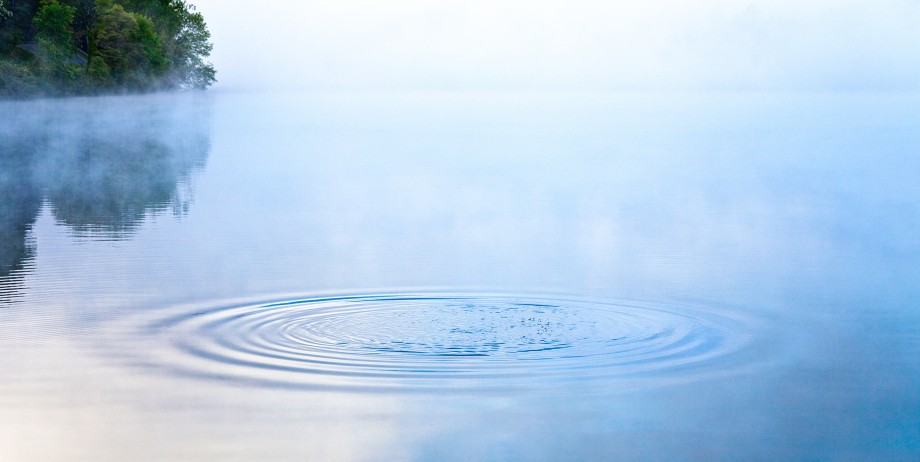
VIII. Gradation

Aesthetically speaking, “gradation” refers to a gradual or graded change. Artists refer to it as a grading of “values.” In color photography, gradiation can be a transition from one hue to another or to a different saturation or brightness. In black and white, it’s a transition from light to dark or from one texture to […]

Winter Solstice — Renewal

  As December 21st approaches, I reflect on the significance that the winter solstice held for indigenous peoples and mark it in my own life as a way to attune, as they did, to the order and rhythms of nature and the cosmos. Having studied Mesoamerican cultures, particularly the ancient Maya, for forty-five years, I […]

VII. Emphasis

As an aesthetic tool, “emphasis” shows one element standing out or apart from others. It can differ from them in subject matter, color, size, shape or placement within the frame. Whatever the difference, the exceptional element stands out as the center of interest. It’s the most important element and key to the image’s meaning. The […]

Lifecycles

  When I was in high school, the authors of biology and chemistry textbooks considered independent motion as the defining characteristic of life. If it moved on its own accord, it was alive—organic. Viewed under a microscope, cells and bacteria move. Minerals do not. Water moves, but it was not considered to be “alive,” except […]

Shifts In Perception

  One of my long-standing pet peeves has been littering. I even won a speech contest by ranting and raving about it in my high school years. Linda and I were running errands recently and we saw several places strewn with litter. Two years ago when I contacted the person in charge of cleaning up […]

Appreciating The Aesthetic Dimensions

A blog series featuring form, line, color, contrast, texture, gradation… Television tower This posting begins a series that will focus on the aesthetic tools that visual artists and others use, singly and in combination, to create still and moving images that accomplish specific communication objectives. Knowing the purpose of an image before we pick up […]

IV. Composition / Social Order

In pictorial art, composition relates to how visual elements are organized within a frame. Both Eastern and Western artists through the centuries developed insightful guidelines to help them maintain the viewer’s attention. Aspiring artists and many in the public appreciate that the organization of elements within a frame influences the viewer’s experience of an image. […]

VI. Depth Of Field

Technically, “depth of field” (DOF) is the optical phenomenon of a lens that expresses the distance about the plane of focus where objects appear acceptably sharp in an image. Creatively speaking, it’s the relative degree of sharpness between objects that are close to or farther away from a lens. When both distances, near and far, […]

Order

  In nature and in the world of man-made objects, geometric order evidences the interrelatedness of all things. Using the above image as a model, humanity may be said to consist of a single string within the spacetime continuum. Rather than forming a straight line—the way we experience time—the process of human evolution has been […]

Trust

Seen from a distance, the colors of Autumn evidence the seasonal transition. The leaves turning brown, yellow or red and then falling from the trees at once signify death and the cyclical nature of life. Up close however, as this image reveals, it is also the time for the deposition of seeds, the first act in replacing the […]