
What the Butterfly Reveals About Humanity’s Painful Transformation
My contemplations tend to focus on the present.
They’re usually prompted by one of my photographs, the social climate, or patterns in current events—what people are talking about online or in person. For these I generally write with a “closeup” or “normal” lens.
This topic requires something much wider.
The idea came to me because of the growing buzz surrounding the birth metaphor. While the analogy has circulated for decades—perhaps even longer—it now seems to be gaining traction globally among ecologists, futurists, philosophers, systems thinkers and spiritual visionaries.
In part, I suspect, it’s because so many people now feel the instability personally.
Environmental disruption.
Political polarization.
Economic anxiety.
Information overload.
The erosion of truth.
Loneliness.
Confusion.
A growing sense that something fundamental is breaking down.
Fear and helplessness seem to be rising everywhere. People increasingly ask:
“What’s going on? Exactly, what’s happening? Everything’s breaking down.”
Have you felt this? Have you found yourself sensing that the world has become louder, less safe, dumber, more fragmented and more emotionally exhausting than it once was?
Does it seem like humanity is unraveling?
Or becoming something new? The perspective that we’re experiencing the pains of birth works for me because it reframes the meta-crisis in a way that’s both meaningful and hopeful.
Not easy.
Not painless.
But purposeful.
Like an expectant father trying to calm his wife during labor:
“Hold on, honey. You’ll get through this.”
Both understand:
something difficult is happening,
but also something extraordinary.
Something wonderful is coming.
Meta-Crisis
Many thinkers now use the term meta-crisis to describe the convergence of multiple global breakdowns occurring simultaneously.
Climate disruption.
Political instability.
Mental health struggles.
Weaponization of technology.
Social fragmentation.
Economic inequality.
Declining trust in institutions.
Discredited media.
The erosion of shared meaning.
These crises are not isolated problems.
They interact.
Amplify one another.
Feed one another.
Each appears to be unsolvable. Yet at the same time, something else is happening.
Around the world, people are joining their talents to envision and co-create more humane ways of living. New movements emphasizing ecology, compassion, collaboration, trauma awareness, restorative justice, mindfulness, systems thinking, social engineering, sustainable economics and global responsibility are on the rise almost everywhere.
Beneath the noise, higher consciousness is on the ascendency.
Philosopher Beatrice Bruteau described it as a movement from a “domination paradigm” toward a “communion paradigm.”
Domination systems are organized around hierarchy, control, separation and competition.
Communion systems recognize interdependence, caring relationships, co-creation, mutual flourishing and shared creativity.
In domination cultures, power flows downward.
In communion cultures, power circulates.
Bruteau believed evolution itself gradually moves toward greater interiority, relationship and wholeness—not merely toward greater technological complexity. Humanity, in her view, is slowly awakening to the reality that we belong to one another; we “indwell” one another.
What if much of today’s instability reflects the painful tension of a worldview dying while another is struggling to be born?
Does that change how you feel?
Does it soften the anxiety even slightly?
What Is Trying to Be Born?
Different thinkers describe humanity’s possible future in different ways, yet many point toward remarkably similar qualities:
expansion of love,
greater compassion,
increased awareness,
co-creative partnerships,
creative expression,
deeper relationships,
heightened intuition,
and a growing recognition of our interdependence—with one another and the Earth.
Many also share another striking conviction: evolution moves toward greater complexity, coherence, freedom, order, awareness and beauty.
Jesuit philosopher Pierre Teilhard de Chardin believed the universe evolves toward increasing consciousness and unity—a movement culminating not merely in intellectual advancement, but in what he called Christogenesis: the gradual emergence of humanity into higher expressions of love, communion and spiritual awareness modeled for him most fully by Jesus the Christ.
Similarly, Barbara Marx Hubbard wrote of “the birth of the universal human”—a stage of development characterized by expanded capacities for empathy, creativity, intuitive knowing and conscious co-creation.
Indian mystic Sri Aurobindo envisioned evolution moving beyond the rational ego into what he called “supramental consciousness”—a more integrated mode of being grounded in unity, spiritual awareness and direct experience of the sacred within all life.
Philosopher Beatrice Bruteau similarly believed humanity is evolving toward greater participation in divine creativity itself.
Christian monk Thomas Merton wrote that humanity’s deepest crisis is one of identity: forgetting our essential connectedness to God, one another and creation.
Teacher Thich Nhat Hanh used the word “interbeing” to describe the reality that nothing exists independently. Compassion naturally arises when we experience this directly.
Ecological historian Thomas Berry believed humanity is transitioning from a human-centered worldview toward an Earth-centered consciousness—grounded and resulting in mutual flourishing.
Systems theorist Ervin Laszlo argues that humanity is developing toward greater planetary coherence, resulting from the integration of science, spirituality and systems awareness.
And social theorist Riane Eisler sees history gradually moving away from domination systems toward “partnership cultures” rooted in cooperation rather than competition and control.
Not all perspectives, however, are equally hopeful. Some technologists envision humanity’s next stage primarily through artificial intelligence, genetic engineering or cybernetic enhancement—an evolution of capability more than consciousness.
Others fear civilizational collapse altogether.
And still others suggest evolution has no direction beyond adaptation and survival.
Yet despite these differences, many thinkers across philosophy, spirituality, ecology and systems science share a striking intuition:
humanity may be growing toward a wider identity.
From isolated self
to relational self.
From competition
to communion.
From fragmentation
to wholeness.
From domination
to participation.
From fear
to love.
Expanded Inner Capacities
Some thinkers envision humanity’s next evolutionary stage primarily through advances in technology.
Others suggest that humanity’s deeper evolution may involve the unfolding of latent inner capacities already present within consciousness itself.
Paramahansa Yogananda wrote extensively about expanded human potentials traditionally regarded as extraordinary or even miraculous:
heightened intuition,
telepathy,
clairvoyance,
states of unity consciousness,
and profound experiences of spiritual perception. In Autobiography of a Yogi, he described such capacities not as supernatural exceptions, but as glimpses of possibilities latent within human consciousness.
Similarly, Barbara Marx Hubbard believed humanity may be developing capacities that today seem extraordinary but could eventually become natural expressions of a more evolved human being.
Research organizations such as HeartMath Institute and the Institute of Noetic Sciences have explored phenomena involving intuition, interconnected consciousness and the deeper potentials of the human mind.
Viewed together, these perspectives suggest two parallel dimensions of evolution:
the outer evolution of technology,
and the inner evolution of consciousness.
One expands what humanity can do. The other transforms what humanity can become.
For many spiritual visionaries—including Pierre Teilhard de Chardin, Sri Aurobindo and Barbara Marx Hubbard—the highest possibilities of human evolution are ultimately expressed not through power or machinery, but through expanded consciousness, deeper compassion, conscious co-creation, awakened creativity and greater expressions and expansions of love.
Seeing with a wider lens
Contemplative photography has taught me that, what appears chaotic often reveals inner coherence when viewed from a shift in perception.
A tangle of branches becomes graceful.
Shadows become dimensional, creating geometry.
An oil wrench evokes its elemental beginning.
A giant oak tree latent within a single acorn.
Broken surfaces reveal texture, depth and reflection.
A spark of the divine in a homeless person.
Even violent storms possess strange beauty when viewed from a distance.
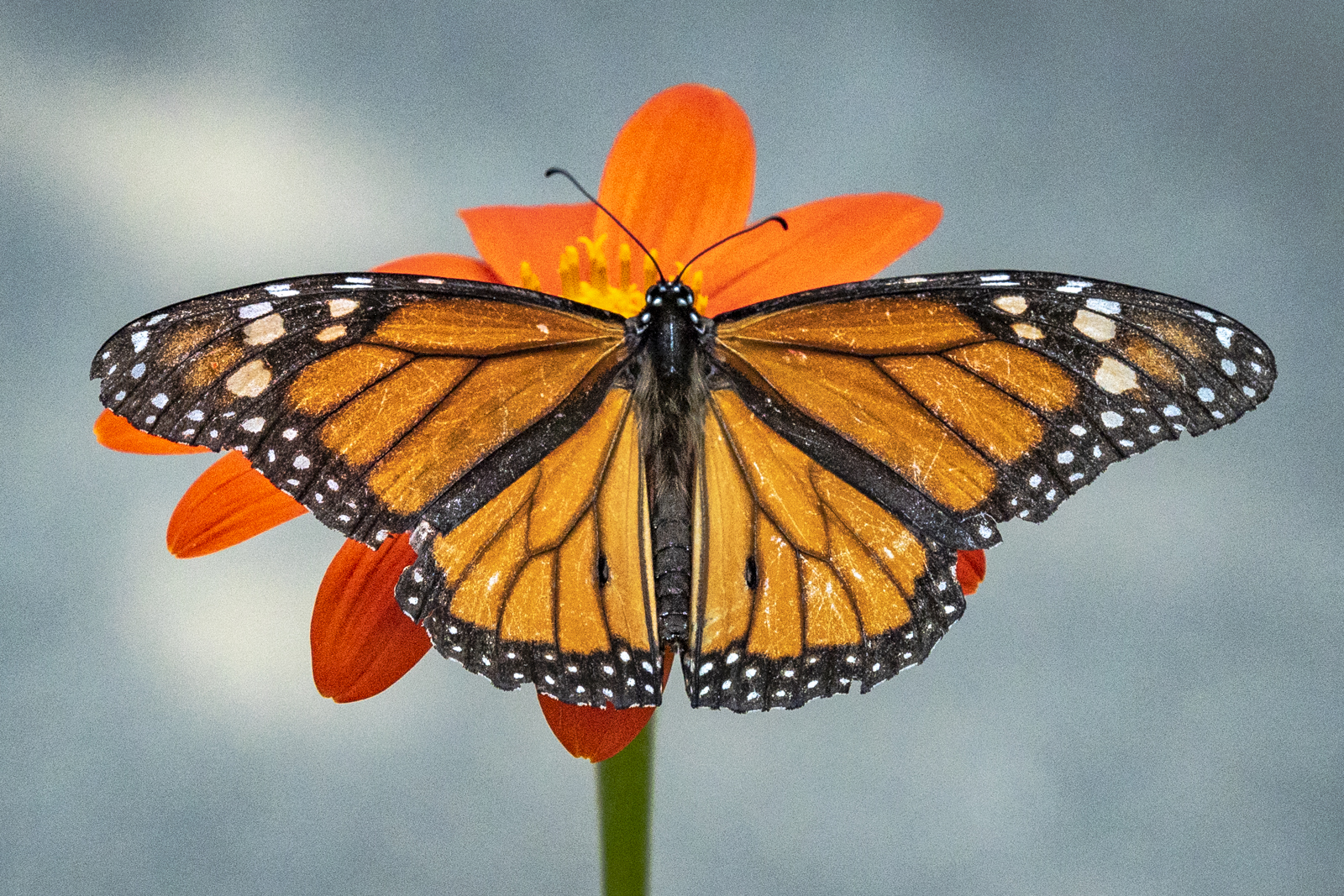
Perhaps evolution works this way too. “Unraveling” can be seen as laboring for something higher to emerge. The butterfly image accompanying this essay expresses this beautifully.
Inside the cocoon, transformation appears hidden, disordered and uncertain. One form dissolves before another can fully emerge. From the insect’s point of view, the struggle of transition is normal, simply a natural process of being present and letting go. It doesn’t know what’s ahead, it trusts that nature knows what it’s doing.
Letting go of the past is difficult. But when something in life is ending it’s for a good reason. And it’s a sign—the possibility of transformation.
The current era is filled with the signs of passing through such a threshold—moving painfully from one state of being to another. Many evolutionary thinkers suggest that nothing essential is ever truly lost in the evolutionary process. Each stage of development carries forward and integrates the most life-promoting energies of what came before it.
Matter becomes life, life becomes mind, mind becomes self-aware consciousness. As Pierre Teilhard de Chardin observed, evolution appears to move toward increasing complexity and consciousness—toward greater wholeness, integration and interiority. In this view, humanity’s future does not abandon the past but transforms and includes it within a larger expression of life.
evolution has direction,
growth is cumulative,
and the deeper achievements of humanity are not meaningless or discarded.
Evolutionary movement is always forward,
not merely cyclical repetition.
What increases is depth of being—
Toward greater wholeness.
Greater consciousness.
Greater compassion.
Greater freedom.
Greater participation in one another’s well-being.
When my wife was in labor, about to deliver our daughter, uppermost in our minds—along with the struggle of the moment—was the (long standing) anticipation of what was to come. Perhaps humanity too, will one day look back and acknowledge that the struggle was WELL WORTH IT.
___________________________________________________
My other sites:
David L. Smith Photography Portfolio.com
Ancient Maya Cultural Traits.com: Weekly blog featuring the traits that made this civilization unique
Spiritual Visionaries.com: Access to 81 free videos on YouTube featuring thought leaders and events of the 1980s.

