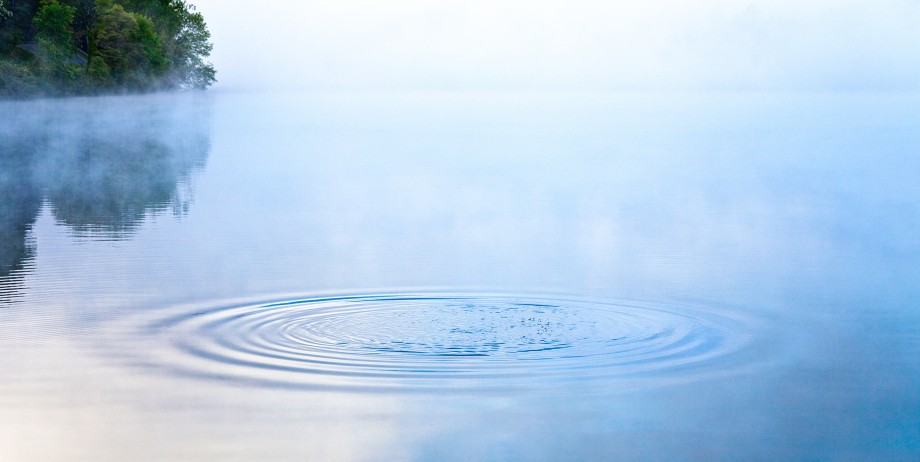
Transition

781-C1


It’s the first day of Spring, but it’s still cold, overcast and windy. A typical March for Cincinnati. I selected this image because it accurately reflects my emotional circumstances. February here was cold and snowy, but no where near the severities experienced by those to the south and northeast, so that was a blessing. However, the gloomy don’t-want-to-go-out-or-do-anything weather combined with a head cold that took three weeks to overcome had me in the dark—at the bottom of the staircase.

The stairway risers still looks a bit challenging, but the light of Spring at the top urges me forward, to rekindle the zest that lurks inside. By the time I get to the top of the stairs I will have made good progress on indoor projects, so when I open the door questions both practical and creative will be revealed.

Step by step, one at a time—the crocuses and daffodils are coming up. Blades of greed grass are pushing through the yellow lawn. The geese are returning to the golf course pond behind us and we’ll be making trips to the garden store. I’ve already started wearing a lighter jacket. Approaching the door at the top of the steps, I’ll be changing out my winter clothes for short sleeve shirts and shorts. And it’ll be time to go outside again with a camera. Isn’t it wonderful to see light at the end of the—stairway?

Spring is God’s way of saying, ‘One more time!’

Robert Orben

About This Image

Title: Light At The End Of The Stairway

Theme: Transition

File #: 781-C1

Location: Shakertown, Pleasant Hill, Kentucky

I’ve long been attracted to Shaker simplicity and textures. Their architecture, both interior and exterior, reflects a strong tendency toward symmetry, convergence and the use of window light. They were also keen to center a room using a grandfather clock or a chalkboard—in this case, a window, which is itself symmetrical. Although the handrail breaks the symmetry with the opposing wall in this image, it creates an equally powerful vector that points to the window. The banister, stairway and wall moulding create a convergence that draws our attention. And that was no accident. Certainly, the architect pre-visualized it. I imagine he or she also saw its statement as a metaphor for life as an ascent.

This was a challenging exposure situation for me. Fortunately, I had a Spot Meter with me, so I took the reading off the white wall at the top of the stairs. That would render the walls near the window as middle gray. The other values, from black to bright white fell into place accordingly. I’ve printed this with more detail in the shadows, but I prefer this version so the eye leads up the stairs. The solid, rather than detailed black areas provide a nice frame.

Hope

Beach


While this image calls me to contemplate the subject of “hope,” one of the experiences I hope for this summer is only somewhat represented here. Eliminate 99.9% of the people and everything else on the sand, and that would be more like the place in Florida where my family has vacationed for the past forty years. At this time of year, this image rekindles that hope.

In the late 80’s, after years of research to formulate a vision for a cable television channel that would serve the authentic needs, wants, interests and aspirations of all segments of society—while improving profitability, I prepared a manuscript entitled Media Of Hope: A Quest For Television That Matters. Due to limited audience appeal it was not published, but one of the many benefits of the research was learning to appreciate the dimensions and significance of hope.

One group of researchers characterized hope as “a multidimensional dynamic life force characterized by a confident yet uncertain expectation of achieving a future good which, to the hoping person, is realistically possible and personally significant.”1 Another group saw it as a “fundamental element of being, influenced by cultural, experiential and biological factors, which motivates human behavior in response to desired future outcomes.”2

Like so many qualities of the human spirit, hope varies along a continuum of lower to higher vibrations. We generally think of hope as positive, but in the realm of esoteric psychology it is considered to be an obstacle to action because it can create a resistance to what’s happening at the moment, promoting an escape from what is. Also on the lower vibrational side, are hopes that are negative or destructive—hoping someone loses so we can win it. These are misguided and “false hopes” because, by disregarding the reality of interconnectedness, the attempt to diminish the other’s good always results in a constriction of our own good. As with forgiveness, the sender participates in whatever is transmitted. Just as a cell that transmits a diseased intention threatens the entire body and therefore itself as a member of that body, so also a cell that transmits a healing message helps heal the entire body including itself. Thus the whole system’s adage, “What we put out we get back.”

Vibrationally higher are hopes which are said to be “flights of fancy” and “wishful thinking.” These can be specific or vague as when we hope to win the lottery or start a business “someday.” The hope is genuine and constructive as far as we can tell, but at the moment there is neither a basis for the hope nor a motivation to move toward what is hoped for, beyond perhaps purchasing a lottery ticket or sharing the business concept with a friend. Above hopeful thinking are “realistic hopes,” those which have some basis in fact or reality. These include hopes to meet an achievable challenge, to find a solution to a problem, to go the distance in a competition or meet a goal by a certain deadline. These hopes may or may not come to fruition, but throughout the process of hoping, there exists a solid reason to expect that they could. Higher yet are what C.R. Snyder calls “mature hopes.” These are action oriented, they have a realistic basis and are goal oriented, involving both the mental “willpower” and “waypower” toward their realization. The will is the driver, thoughts that determine us upon a course of action, and the way consists of thoughts about strategy, where we map out the steps required to accomplish the goal.3 The likelihood of realization is excellent.

Dr. Shlomo Breznitz, a leading clinical psychologist who specializes in hope, identified two hormones, cortisol and prolactin, which “are strongly affected by an attitude of hope.” His research showed that the moment a person makes an internal commitment by deciding “I will make it,” or “I’ll give it a shot,” there’s a secretion of endorphins that immediately alters the person’s physical capacity to realize their hope. What’s more, simultaneously, the challenging situation becomes less painful. His findings show that serious and long term hope “leads to physiological changes that can improve the body’s resistance,” that “the healthiest attitude is a hope that is based on a realistic evaluation of the situation,” and that “thoughts, expectations and hopes affect the body’s stress reactions more than the stressful experience itself.” Mature hope, he emphasizes, “dwells on what is positive about life, but also what’s realistic.”

Oncologist Carl Simonton who worked with cancer patients found that “feelings of hope can restore balance and revitalize the immune system.” Related and more recent developments in the field of psychoneuroimmunology show that “the two emotions most associated with physical health are the capacity for love, which prompts feelings of security and intimacy, and hope or faith which leads to a sense of meaning and resilience.”5 Another study found that “emotions that encourage more connectedness and awareness appear to be healthy, while those that prompt separation and alienation are unhealthy.”6 Yet another finding was that, compared to low-hope people, “high-hope persons have a greater number of goals, have more difficult goals, have more success at achieving their goals, have greater happiness and less distress, have superior coping skills, recover better from injury, and report less burnout at work.”7

A variety of studies indicate that hope is contagious. What gives us hope as individuals is, in part, observing how others are taking responsibility for solving problems, seeing them transform crisis into opportunity, watching them take charge of their lives and work, and witnessing the constructive or productive results of their initiatives. This is one reason why positive information and inspirational stories in books, movies and on television are so powerful—they give us hope that we too can get through our problems and come out, not only okay, but better for the experience. The potential for hope being realized is especially powerful when the people we see succeeding are like ourselves. The logic works: If they can make fresh decisions and transcend their limited thinking or doing, so can we.

Hope is also contagious at social and national levels. The prime example is the American economy, which fluctuates in tandem with public confidence—a barometer of how realistic  our hope is for the immediate future. What makes our hope for the species realistic was, I think, best articulated in a speech given by visionary-futurist Barbara Marx Hubbard. “Nature,” she said, “has an irresistible tendency to form whole systems. There’s no reason to assume that the force that has been operating on planet Earth for fifteen billion years will stop with us. The miracle of our past is witness to Nature’s incredible capacity to transform and form more complex whole systems with the characteristics of higher consciousness, greater freedom, and greater order.”

The best counter that a person has to images of violence or notions of violence out in the world, of disease, of despair, is being able to conjure images of a better world, of a different world, of a world that’s filled with hope. 

Michael McLeod

About This Image

Title: Clearwater Beach

Theme: Hope

File #: DC1138

Location: Clearwater, Florida

References

1.   Dufault, Karin, and Martocchio, Benita C., “Hope: Its Spheres and Dimensions,” in Aspects Of  Hope: The Proceedings of a Seminar on Hope, Edited by Lamar Carter, Ann Mische and David R. Schwartz. New York: ICIS Center For A Science Of Hope, 1993, p.100.

2.   ICIS Center For A Science Of Hope: The Hope Project.

3.   Snyder, C.R.. The Psychology of Hope: You Can Get There From Here. New York: The Free Press, 1994.

4.   Snyder, C.R.. The Psychology of Hope: You Can Get There From Here. New York: The Free Press, 1994.

5.  “Hopewatch,” Newsletter of the Center For A Science of Hope. Summer, 1996, #5, p.1.

6.   Schwartz, Tony. What Really Matters: A Search For Wisdom In America. 1996, p.199.

7.   Snyder, C.R.. The Psychology of Hope: You Can Get There From Here. New York: The Free Press, 1994. p.24.

8.  Hubbard, Barbara Marx. “Toward A Graceful Planetary Transformation.” Speech presented to The Planetary Initiative For The World We Choose, Toronto, Canada, 1983.
Order And Coherence

Sphere 754


Initially, this image evoked in me an appreciation of the organizing principles that underlie manifested reality, from sub-atomic particles to the universe. The consistent spherical shapes, irrespective of size, and the way the light raked across them suggesting mass and texture led to considerations of order. Upon further reflection, my appreciation widened to include the forces of coherence that are displayed between and among the spheres.

I tend to think of ordering as the arrangement of parts within a system, coherence being the adhering property of those parts. Combined, the result is a balanced dynamic, a whole system that functions according to its design. In this image I observe the subtle forces, the dance of pushing and pulling that maintains the shape and integrity of each sphere of oil as it seeks a comfortable place on the surface of a hostile environment—a graduate filled with water. What this image captures is a moment of adaptation. In a sense, the cells (oil drops) are “learning” about their identity and place, how to “live” in relation to the other cells given the reality of this environment.

Coherence in us means health: the optimum functioning of the body. When the body is coherent, its immune system is strong and resistant to disease. Everything we do either promotes or counters coherence and thus our and our environment’s evolution and development; it is either healthy or unhealthy, and is either constructive or destructive.

Ervin Laszlo


Perhaps because the larger sphere in the center of the image contains texture, I’m reminded of the processes of ordering and coherence that took place when the Earth was forming, trying to  take shape and establish coherence in an environment so violent we can barely imagine it. We marvel at the improbability of that happening. And yet, out of the chaos came order and coherence, the combination allowing the development of higher organisms and intelligent life.

The probability of life evolving through random genetic variation is about the same as the probability of a hurricane blowing through a scrap yard assembling a working airplane.

  Fred Hoyle


For atoms to bounce together haphazardly to form a single molecule of amino acid would require more time than has existed since the beginning, even a hundred times more than 13.7 billion years.

Mary Coelho


The chance that a livable universe like ours would be created is less than the chance of randomly picking a particular single atom out of all the atoms in the universe.

    Bruce Rosenblum & Fred Kuttner


About This Image

Sphere 754

Theme: Order And Coherence

Studio

April 5, 1997

I positioned a 4×5 camera over a light table. I filled a tall, one-quart photographic graduate with filtered water and set it on the table. Using an eyedropper, I deposited drops of vegetable oil on the surface to form a two-inch “cell.” After some experimentation with lighting, I cut a hole in a sheet of black paper so it was a little larger than the circumference of the graduate and set it on the light table with the graduate in the middle. Immediately, this created the contrast between the light and dark bands.

The out-of-focus edge of the cardboard resulted in the gradations, giving a sense of depth to the spheres. With a little manipulation of the cardboard, and by adding more drops of oil, the image took on an organic as well as cosmic sensibility. But there were problems. The oil cells kept drifting to the side of the graduate and out of the frame. Worse, dust particles kept settling on the surface. I dismantled the setup and started again from scratch after creating nearly clean-room conditions—including working in my underwear.

To gain control over the composition and the dust I substituted an electronic flash for the incandescent bulbs in the light box. Still there was dust, and it was visible on the surface because that was the point of critical focus. The solution was to work quickly, to cover the graduate with a piece of clear glass in between exposures. With cable release in hand and the shutter cocked, I removed the glass, made the exposure and quickly covered the graduate to prepare for the next shot.

After several exposures, I experimented with a variety of substances to see how they would interact with the large pool of oil in the middle of the frame. I dumped the water and reconstituted the oil drops maybe fifty times to get it right. In the end, it was a single drop of lighter fluid deposited in the center of the pool that created the texture. And it was dramatic! Within the sphere it looked like a cauldron of swirling lines and craters. Whereas oil and water do not mix, oil and lighter fluid actually do battle with each other. Eventually, the oil wins. It  sustains as the lighter fluid evaporates.

I shot over 100 sheets of 4×5 film to get about 40 very different images—by using different vessels, types of oil and lighting setups. I did this in two week-long sessions separated by about four months, the second one taking advantage of what was learned in the first. What prompted this project was my insatiable desire to make images that exhibit varying degrees of gradation.

A full description of this process and more of the spherical images can be found in LensWork Magazine #39 February-March, 2002. For readers who approach photography as a medium of creative expression, I can’t say enough about LensWork Magazine and it’s many initiatives. I consider it to be the Rolls Royce of photography magazines. It deals with technique a bit, equipment not at all. Instead, the focus is on the creative process. The magazine is only available in select bookstores, so I recommend a subscription.


Welcome

Welcome to Contemplative Photography, a weekly offering of photographic images with accompanying contemplations intended to demonstrate an approach to photography that contributes to appreciation, awareness, perception and the development of a personal aesthetic.

Although the act of making photographs of any kind can be cause for appreciation and reflection, the practitioner of contemplative photography is generally more concerned about intrinsic rather than extrinsic rewards. The challenge is not only to make photographs that are compelling and technically excellent, it’s also to make them evocative—catalysts for reflection.

As a practice, both the act of photographing and the resulting images can feed the soul by stimulating thoughts, feelings, metaphors and imaginings that in some way touch on the nature of being and becoming. While the subject matter of such photographs may be commonplace, its mindful representation is intended to trigger feelings and insights that have deeper meaning and significance.

Oil Tank Stairway

The image of a stairway winding around a commercial oil tank can evoke a metaphor for cosmic and human evolution.

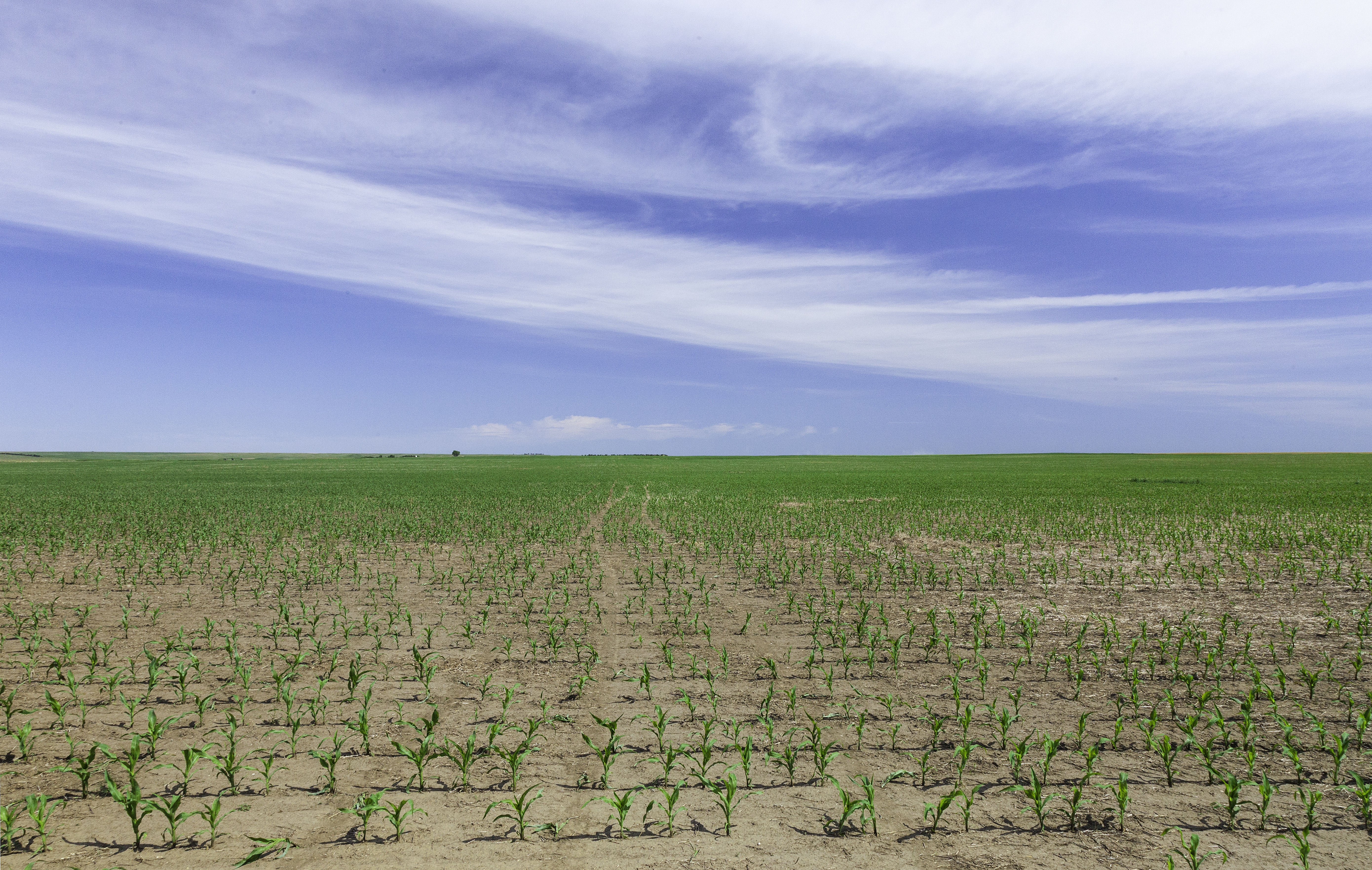
Corn Field

A corn field, demonstrating what a farmer has cultivated, can prompt questions about what we are cultivating—individually and socially.

Having practiced in this way since 1963 I can confidently report that among other benefits, this kind of reflection promotes personal growth and enrichment beyond expectation. In particular, it leads to expanded awareness and an opening of perception which fosters a deepening of appreciation for all that is—as it is.

Every week (Saturdays) I will  post a single original image with an accompanying contemplation. My photographs were and are for me, expressions of love and catalysts for reflection. As such I’ve kept them private. But now I’m pleased to share them with you, perhaps to inspire you to use  your camera as a tool for personal growth and spiritual enrichment. I invite you to check this site for future entries or follow it weekly by going to “About this blog” and clicking on the “Follow” button in the right-hand margin.