The Aesthetic Dimensions in Art and Society

Chapter 6: Contrast In photography, “contrast” is the ratio between the darkest dark and the lightest light within a frame. It’s said to be “soft” when there’s very little difference between the lights and darks,  “medium” in what we regard as normal, and “high” when an image has both maximum blacks and brightest whites.” Contrast […]

The Aesthetic Dimensions in Art and Society

Chapter 5: Elements of Composition In pictorial art, composition relates to how visual elements are organized within a frame. Through the centuries, both Eastern and Western artists developed guidelines to help them maintain a viewer’s attention. Aspiring artists and many in the public appreciate that the organization of elements within a frame influences the viewer’s […]

The Aesthetic Dimensions in Art and Society

Chapter 3: Color as Subject Objectively speaking, the world is colorless. So is the sun. Our brains construct the sensation of color from various radiating wavelengths of photons, depending on how they’re absorbed in and reflected from various surfaces. Visible light occupies just a tiny sliver of the electromagnetic spectrum, constituted of wavelengths that stimulate […]

The Aesthetic Dimensions in Art and Society

Chapter 3: Light and Lighting Regarding the mystery that light is, physicist Arthur M. Young wrote in The Reflexive Universe: Evolution Of Consciousness, “Light, itself without mass, can create protons and electrons which have mass. Light has no charge, yet the particles it creates do. Since light is without mass, it is nonphysical, of a […]

The Aesthetic Dimensions in Art and Society

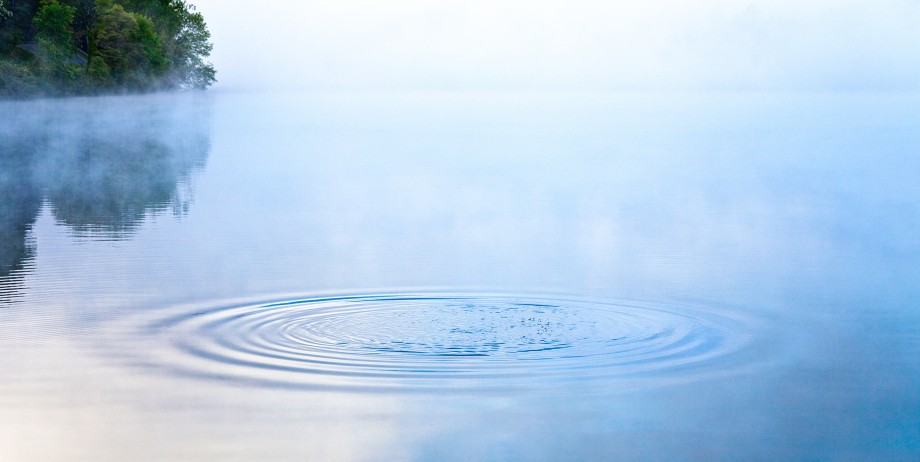
Chapter 2: Atmosphere Atmos is a Greek word meaning “vapor.” Sphaira means “sphere.” Combined, scientists use the word “atmosphere” to describe the layer of gases surrounding a planet, held in place by gravity. Artists have long understood that atmospheric effects contribute to the emotional tone of a painting or photograph. Misty variations in light and […]

The Aesthetic Dimensions in Art and Society

Chapter 1: “Abstract” and “Abstraction” Introduction to the 13-part series The Soul of Photography chapters provided insight and guidance about the function of the aesthetic dimensions relative to creative expression. This begins a series that elaborates those features (“atmosphere,” “contrast,” “gradation,” etc.) with an emphasis on application and technique. Also, I’ll show how the terms […]

The Soul of Photography

Invitations This is the final posting in The Soul of Photography series. Next week begins the follow-on practical series, The Aesthetic Dimensions in Art and Society, which for 13 weeks characterizes the many dimensions—abstraction, atmosphere, contrast, form, key, geometry and so on—with an emphasis on technique. The series is intended to increase one’s aesthetic awareness […]

The Soul of Photography

Chapter 8: Seeing the Divine Spark in People The apparent value of an old timepiece displayed on a table at an antique fair is increased by isolating it on a velvet cloth rather than placing it in a box with lots of other watches. Artists mat and frame their best works, and museums separate their […]

The Soul of Photography

Chapter 7: The Transcendent Approach   I asked ChatGPT (AI) to introduce this subject with a short poetic reflection on photography as an ideal medium for seeing beyond the senses. A Photographic Invocation Light is the oldest language. Before words, before memory—there was light falling on form. The camera does not invent beauty; it recognizes […]

The Soul of Photography

Chapter 6: Wabi Sabi — The Japanese Aesthetic of Impermanence We tend to think of entropy as something “bad,” the inevitable tendency of matter to disintegrate, for all living things to die. As embodied creatures, we naturally would prefer to avoid this downward spiral—for ourselves, loved ones, pets, creations, cherished objects and the systems we’ve […]