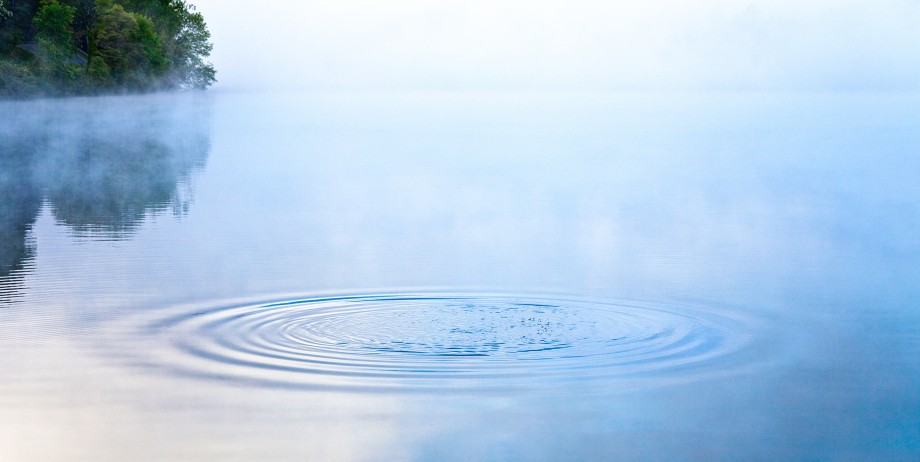
One Individual’s Expression Matters
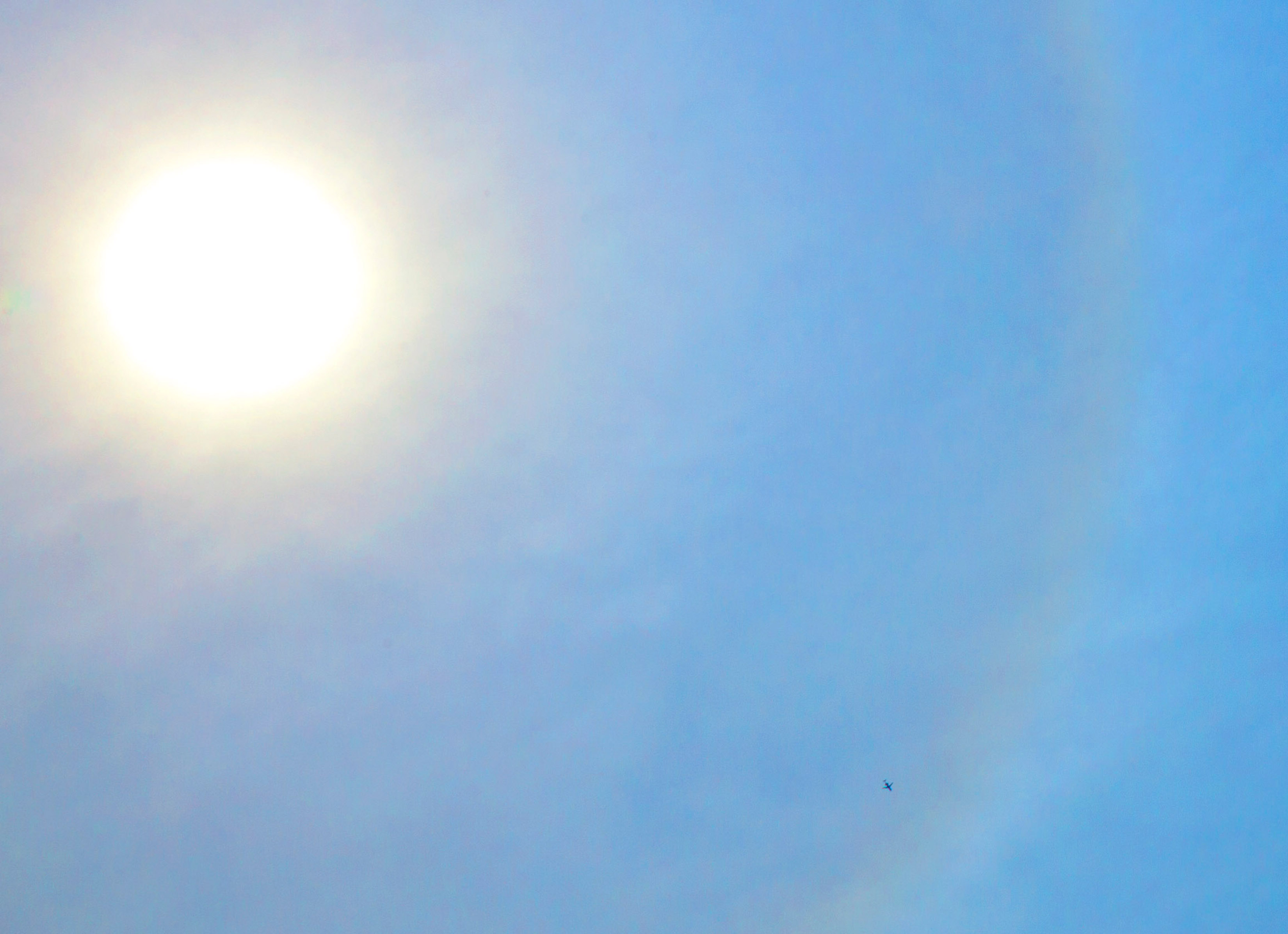
Do you see the jetliner? Remove any one of the pixels in the above image and there would be a hole in the whole (photograph). It wouldn’t be complete. It wouldn’t be the same photograph. Some might say it would have a flaw.
The universe presents itself to us as a system composed of parts-within-wholes, of systems within systems, organized through time and evolution as interdependent levels of complexity. Each part, including you and me, is integral to the whole; and, in some holographic sense, each part is a microcosm of the greater macrocosm. Each part contains within itself the seed or template of the whole.
— Christian de Quincey, Philosopher and author
Each and every individual pixel within a digital image is a necessary part of the whole picture—if it’s to be complete. Because pixels have unique characteristics such as size, color, luminance and value they are also individuals by virtue of their boundaries. Each bears a strong relationship to those in close proximity, less so for those farther away. Even the myriad of individual pixels so distant they appear to be unrelated are present and contributing to the whole picture.
Sounds like life, doesn’t it?
Had the above scene been photographed on film, the parts would have consisted of grains of silver halide which are “fixed” entities. They couldn’t be changed. On the other hand, because digital pixels are “virtual,” consisting of units of electron excitations, they can quite easily be manipulated—for instance, made lighter or darker with changes in color and saturation. Whether the image substrate happens to be paper or a computer screen, photographic images are mechanical systems, constituted of parts that can be manipulated—in the developing and printing processes or using software applications such as Photoshop in the case of digital images.
Not so with living systems.
They’re composed of other living systems, each of whom continuously makes choices regarding their function and relationships. At every level, a living system is referred to as a “holon” because the uniqueness and integrity of the whole depends upon the integrity of its parts. And because each individual holon—cell, organism or person—makes decisions for itself relative to its condition, purpose, function, environment and host of dynamic considerations, such systems are said to be constituted of “members” rather than parts. When parts are interchanged within a mechanical system it returns to its functional design. But when members are replaced within a living system it becomes newly constituted.
At every level, as change occurs—within a living system or its environment—the holons (systems above and below) change. They become new by adapting, or they die. (Thus the expression relating to human beings, “Grow or die.”) And when a human holon dies, the system within which it was a member—family, business, organizations—have to adapt to the change.
System scientists refer to the decision-making capability of a holon as autopoiesis “self-making.”
By our choices we constantly make ourselves new, not just our experiences in life. Philosopher of science, Beatrice Bruteau, wrote that “In all living systems it’s the interactive union of the members, the sharing of their being, their energies, that constitutes the new whole.” I emphasize: The sharing of their being. Atoms unite to form molecules, molecules unite to make cells, cells unite to form organisms, that in turn unite to make organs, that unite to make… You get the picture.
Whether we share, what we share and how we share our beingness, beyond but including what we do, how we do it and how we behave and talk makes a profound difference for the whole systems (holons) within which we are members. This is especially so for those in our close circle. But it’s also the case, by extension and facilitated by the electronic media, for those beyond it—the larger holons within which we function as members—family, community, church, business, industry, nation, species.
As members of a church, community and political systems, we remake these larger systems by the quality of our presence and everyday choices. For instance, one of the lessons we’re learning on this turn of the evolutionary spiral is that the person or persons we elect to public office—or allow to lead us, directly impacts the reality of a nation.
Considered broadly, in the above image I’m reminded that every human being (pixel in the analogy), regardless of circumstances, is an integral member in the emerging picture of the human family. Every day, the quality and manner of our character, choosing and relating contributes to the making of that picture. Our interrelatedness makes us interdependent.
What happens in and to one of the system’s parts also happens in and to all its other parts, and hence it happens in and to the system as a whole.
— Ervin Laszlo, Systems scientist, philosopher

This is a greatly enlarged section from the lower right corner of the sky image above, here to demonstrate how individual holons (pixels in this case) contribute to and constitute the larger image.
_____________________________
My other sites:
David L. Smith Photography Portfolio.com
Ancient Maya Cultural Traits.com: Weekly blog featuring the traits that made this civilization unique
Spiritual Visionaries.com: Access to 81 free videos on YouTube featuring thought leaders and events of the 1980s.

