
The Intersection of Nature and Technology

Through the many decades that I’ve been photographing landscapes, utility poles of all kinds, sizes and wires have been a nuisance. Their placement often interfered with rural settings, and in cities the lines tended to be a mess. I don’t like being critical, but when I see these, the reptile part of my brain gets a ping.

Are those who wire and maintain utility poles trained to consider aesthetics? Is all that jumble necessary?
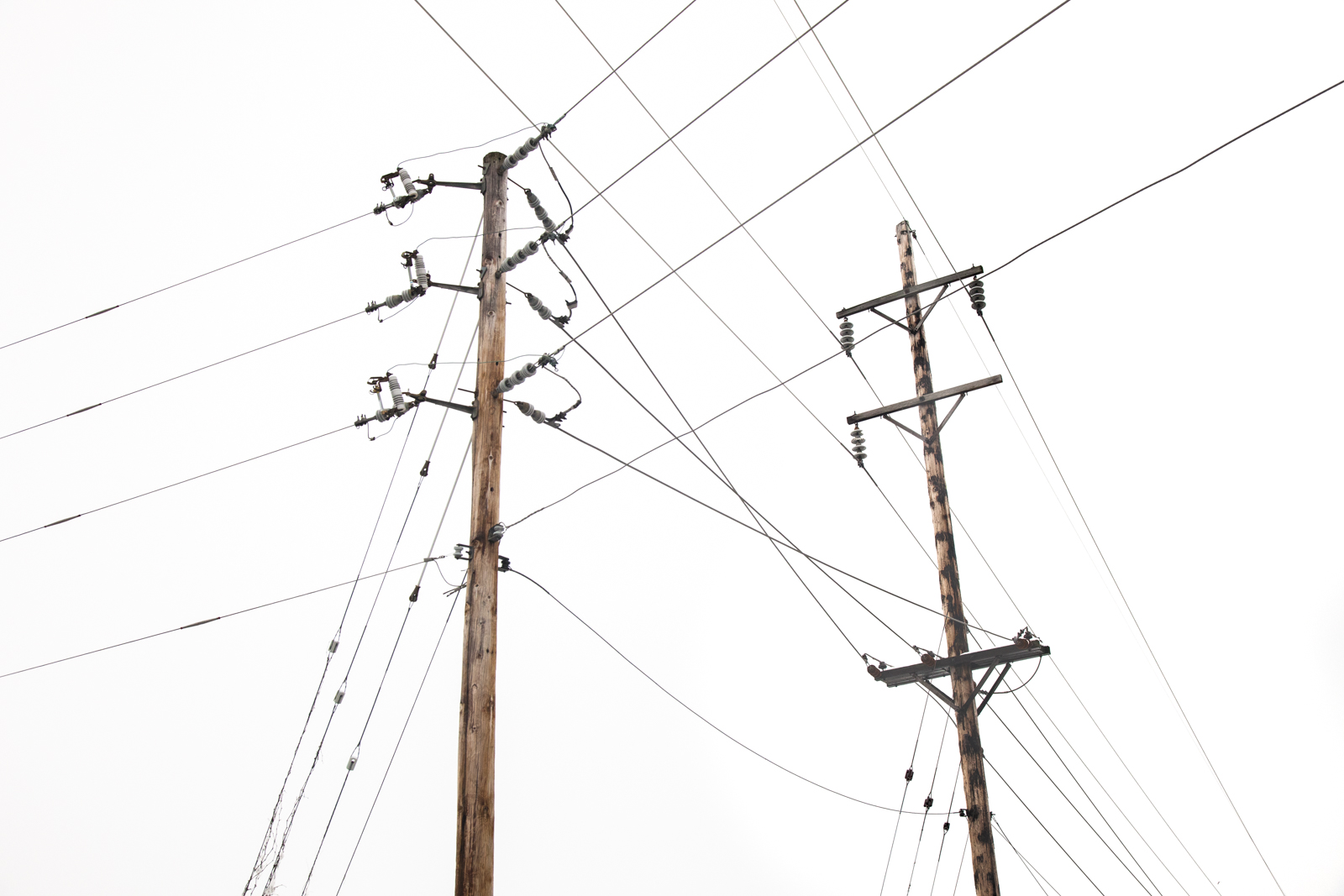
Of course, there are exceptions. In an attempt to balance, hopefully shift my negative gut reaction to utility poles, I thought I’d delve into the subject to see what some facts and a contemplation might awaken. After all, the point of this blog is appreciation.
History
The story begins around 1836 in the UK where telegraph lines were strung on wooden poles by private companies and railways. In 1843 The Electric Telegraph Company deployed them 24 miles along the Great Western Railway between London and Slough. Wikipedia+1. According to a 1933-paper on telegraph poles for the British Post Office, “Scots pine was the ideal timber, obtained from Sweden, Norway and Finland.” britishtelephones.com+1. It was readily available in quantity and reliable with moderate strength and weight. britishtelephones.com.
In 1844 Samuel Morse received a Congressional grant to build a 40-mile telegraph line from Washington, D.C. to Baltimore. He originally attempted to lay underground cable, but after problems switched to overhead wiring on poles. Atlas Obscura+3Oak Ridge National Laboratory+3California Public Utilities Commission+3. On May 24 his team successfully transmitted the words “What hath God wrought?” through a line carried on hundreds of wooden poles. designyoutrust.com+1. He’d ordered “700 straight and sound chestnut posts with the bark on. Each post must not be less than eight inches in diameter at the butt and tapering to five or six inches at the top.” Wikipedia+1. Chestnut proved to be too hard, so he switched to pine, which was softer, straighter and taller with moderate weight.
Today—North America
Southern yellow pine (including longleaf, slash, loblolly and shortleaf pines) account for roughly 80% of treated poles in the U.S.. Forest Products Laboratory+2Bridgewell Resources+2. Douglas fir is often used for longer poles. Forest Products Laboratory. Western red cedar is used in the west and northwestern regions. stella-jones.com+1. Other species may include red pine, lodgepole pine and ponderosa pine depending on the region. Bridgewell Resources+1.
In Ohio
The dominant forest‐type groups in Ohio are hardwoods. The oak and hickory group covers more than half of Ohio’s forests—about 4.1 million acres. National Resource Inventory+2US Forest Service+2. Softwood (conifers) amount to less than 5 % of Ohio’s commercial forest area. US Forest Service+2Woodland Stewardship Association+2. These poles mostly come from southeastern pine plantations where species and growth conditions favor long, straight poles.

Ohio has about 8 million acres of forest land, representing about 31 % of the state’s land base. Cloudinary+3Ohio Ag Net | Ohio’s Country Journal+3US Forest Service+3. Most of that land is private, about 86 % owned by “family farms.” Ohio Ag Net | Ohio’s Country Journal+2US Forest Service+2. About 94% of commercial forests are located in the southeastern part of the state and are privately owned. US Forest Service+1. Many of the poles in Cincinnati come from privately held woodlots, not state or national forests.
Trees and Harvesting
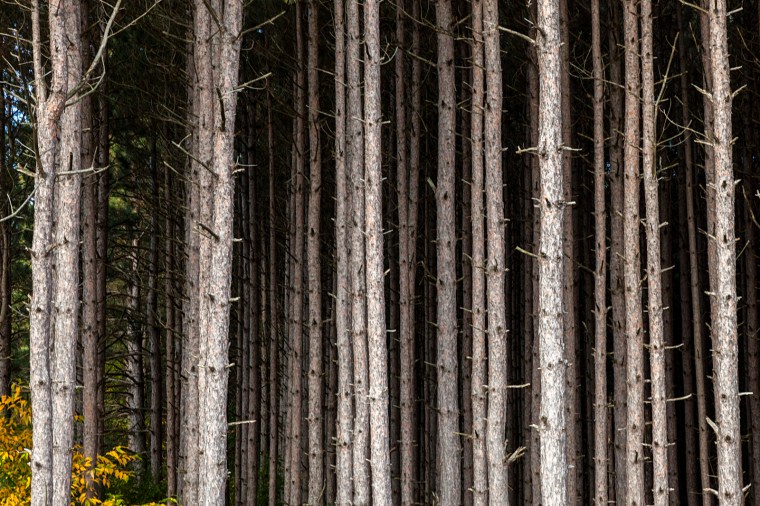
Pole trees must meet strict form, straightness, minimal defects, and size specifications. woodpoles.org+1. “Those grown for pole use are ready for harvest around 30 years of age or older, sometimes as early as 25 years.” Timber Update. So when I’m looking at a pole in Cincinnati, it likely began life as an oak or hickory tree in a local or regional, privately owned forest. It grew under management to achieve its straight form with minimal defects for about 25-40 years, was harvested, treated with a preservative, tagged, delivered and then installed by the city’s electric company. It’s “service life” afterward could be 50-70 years or more. woodpoles.org+1.
Who owns them
The tree-to-pole process is owned by a forestry/processing company until delivered. After installation, most poles are owned by the utility, the electric distribution company or a telephone/telecom company. According to general standards, poles are “joint-use” in most places, meaning the utility owns the pole and others lease attachment rights. Wikipedia+1.

There’s no charge to staple notices on them, but wherever wires or civic signage are involved there’s a charge.
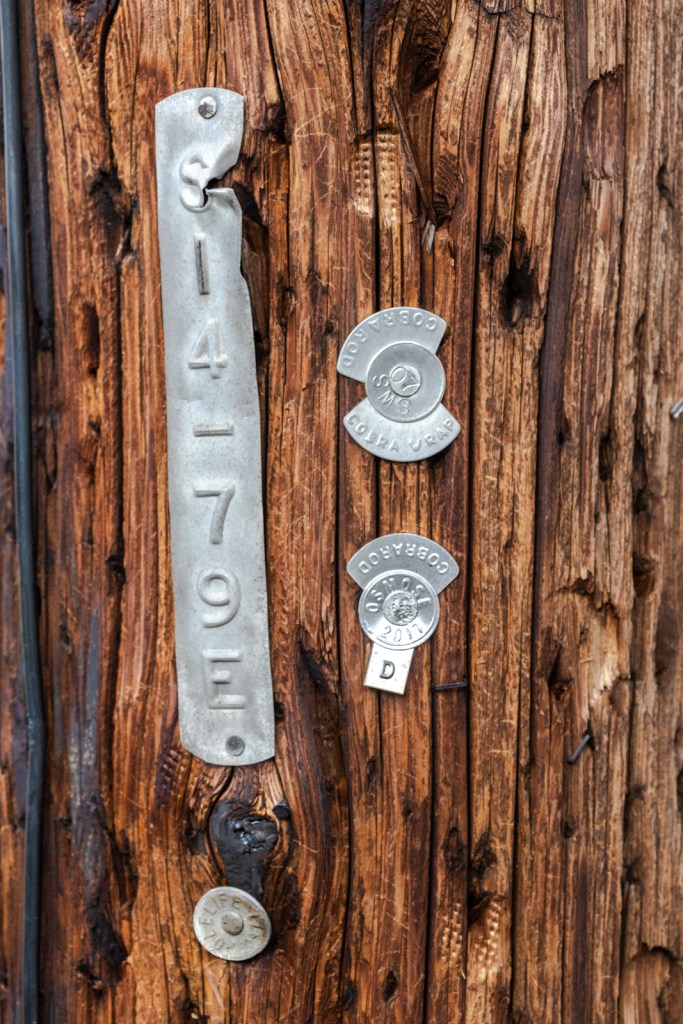
Many poles are branded with a species code that marks the year of treatment and manufacture, class number etc. These “birth-marks” can be traced. Wikipedia+1.
Recycling
Specialized companies (For example Blackwood Solutions) manage transportation, storage and recycling of retired utility poles. Blackwood Solutions. In Ohio and Cincinnati in particular, FirstEnergy Corporation has a “Wood Pole Diversion Program” whereby poles no longer fit for service are redistributed to interested parties for reuse rather than sent to a landfill. The company offers retired poles at no cost to parties willing to accept full loads and comply with logistics. FirstEnergy Corp. Old poles are used for fencing, trail linings, parking bollards, guide-rail posts, and landscaping features. Because poles are often treated (creosote, CCA, etc.), safe handling and appropriate reuse/disposal matter. Environmental Quality Department+1. According to a technical bulletin compiled by the North American Wood Pole Council (NAWPC), utilities in the U.S. and Canada remove more than 3 million wood poles from service every year. EPRI Rest Service+1.
Contemplation
This was one of those occasions where I saw something on a walk (a telephone pole) and wondered if it might be an appropriate topic for this blog. Immediately I dismissed it, because, although I’ve been photographing utility poles for years, I viewed them as obstacles, intrusions into otherwise beautiful land and cityscapes. A recent story on television about phobias, facing fears in order to eliminate them, prompted me to wonder if I could transform my negative view of these objects into a positive one.
Service
As often happens, well into the research, one sentence prompted my turnaround. “A pole’s service life is 50-70 years.” Instead of seeing utility poles simply as “trees chopped down,” I saw that—as gobblers of carbon dioxide and providers of oxygen for up to 40 years—they continued “life” in service to humanity by extending lines of power and communication, which symbolized the continuity of life. Similarly, when we humans can no longer contribute physically, we can extend our “lines” of power and communication by leading and modeling exemplary lives.
Quality
Only certain species of trees are suitable to become poles, and those have to conform to standards of straightness, constitution, height, sensitivity to treatment and durability under stresses such as insects and climate change. Considering the higher qualities that characterize human beings (love, compassion, kindness, generosity, forgiveness, etc.) how do we stand up?
Afterlife
The tree-turned-pole eventually becomes recycled, part of something else (fence, sculpture, landscaping) rather than simply disappearing. This invites my reflection both on impermanence due to entropy, and retirement from the world of work. I’ve often heard men say they’re just “Puttin’ one foot in front of another,” or “Takin’ it a day at a time.” There’s so much need in the world. Just as a tree continues to serve by being transformed, so we can shift from “have-to-do” to “want-to-do” by applying our gifts (knowledge and skills) to extend our service to humanity.
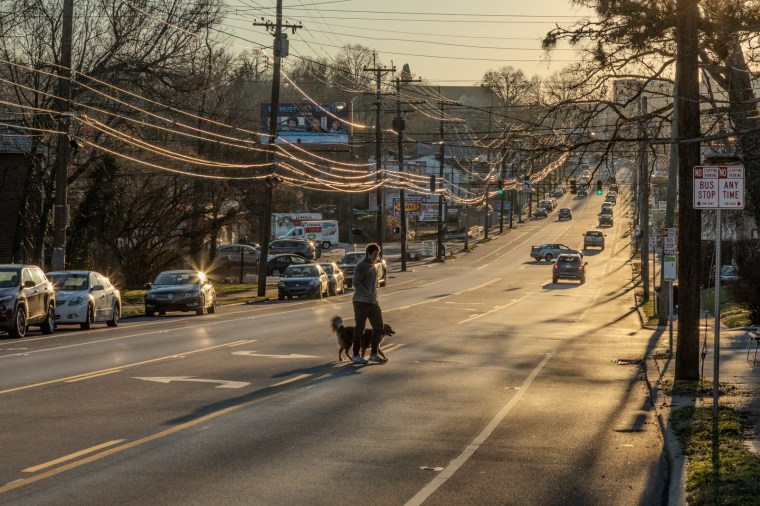
Seeing utility poles standing tall and silent reminds me of an equally (arguably more) valuable contribution we can silently make, one that requires no physical exertion. One at a time, we can hold in mind the places where people are suffering—war, famine, abuse, flooding, crime, terminal illness and encompass them in a cocoon or field of divine love and light and pray: “May they…” always concluding, “Thy (God’s) will be done.” For thousands of years, worldwide, this has been and continues to be a normal, everyday contribution of men and women of every sect who live in religious communities. Without the religious context, the same can be done by encompassing those who suffer in a field of caring goodwill.
Utility poles are trees transformed. Rooted in the ground, they stand still and hold aloft the lines of power and communication. In a sense, they’re technological sculptures, a fusion of nature and technology that represent the current phase of human evolution. Given the rate of technological change, this composite somehow feels on the cusp of a broader transformation, a time when trees will no longer be harvested for this purpose, when on the next turn of the spiral, power and communication will be distributed without the need for “lines.” I can’t imagine what that might be like, but then the Internet, AI, 5G smartphones, quantum computing, sustainable nanotechnology, gene splicing and synthetic biology weren’t even dreamed about by most of us just 20 years ago.
_________________________________________
My other sites:
David L. Smith Photography Portfolio.com
Ancient Maya Cultural Traits.com: Weekly blog featuring the traits that made this civilization unique
Spiritual Visionaries.com: Access to 81 free videos on YouTube featuring thought leaders and events of the 1980s.
 Contemplative Photography