
Science, Ecology, Art; Spiritual Insight
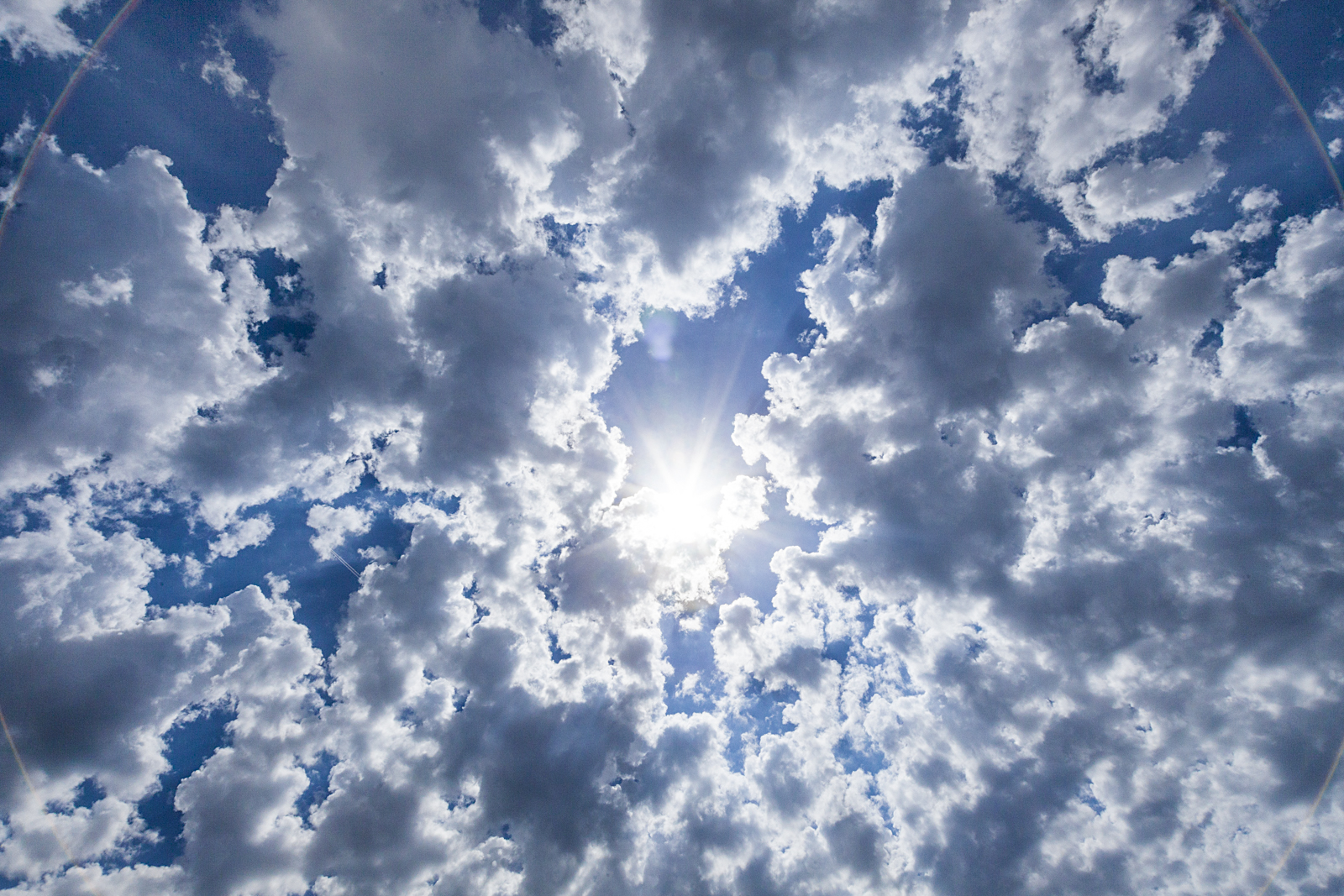
I’ve always appreciated clouds. Often, they evoke an out loud “Wow!” If Linda’s nearby I can’t help commenting on them. In the early years of elementary school, the nuns always seated me in the back of the room, probably because I was paying more attention to what was going on out the windows, rather than what they were saying. Besides their fluffy and graded beauty, I think my attraction to clouds had a lot to do with the expansiveness of the sky interrupted only by the sun and those soft white, untextured and floating forms that, unlike the earth’s surface, had no natural or artificial boundaries. Whenever I see a cloud-filled sky, it evokes in me a sense of both freedom and awe.
Science
Simply put, clouds form when warm, moist air rises into the sky and cools down. As that happens, the water vapor turns into tiny droplets or ice crystals that gather together. As the droplets bump into each other and stick together, they grow bigger and heavier. And when they become too heavy to stay in place, gravity pulls them down as raindrops or snowflakes.
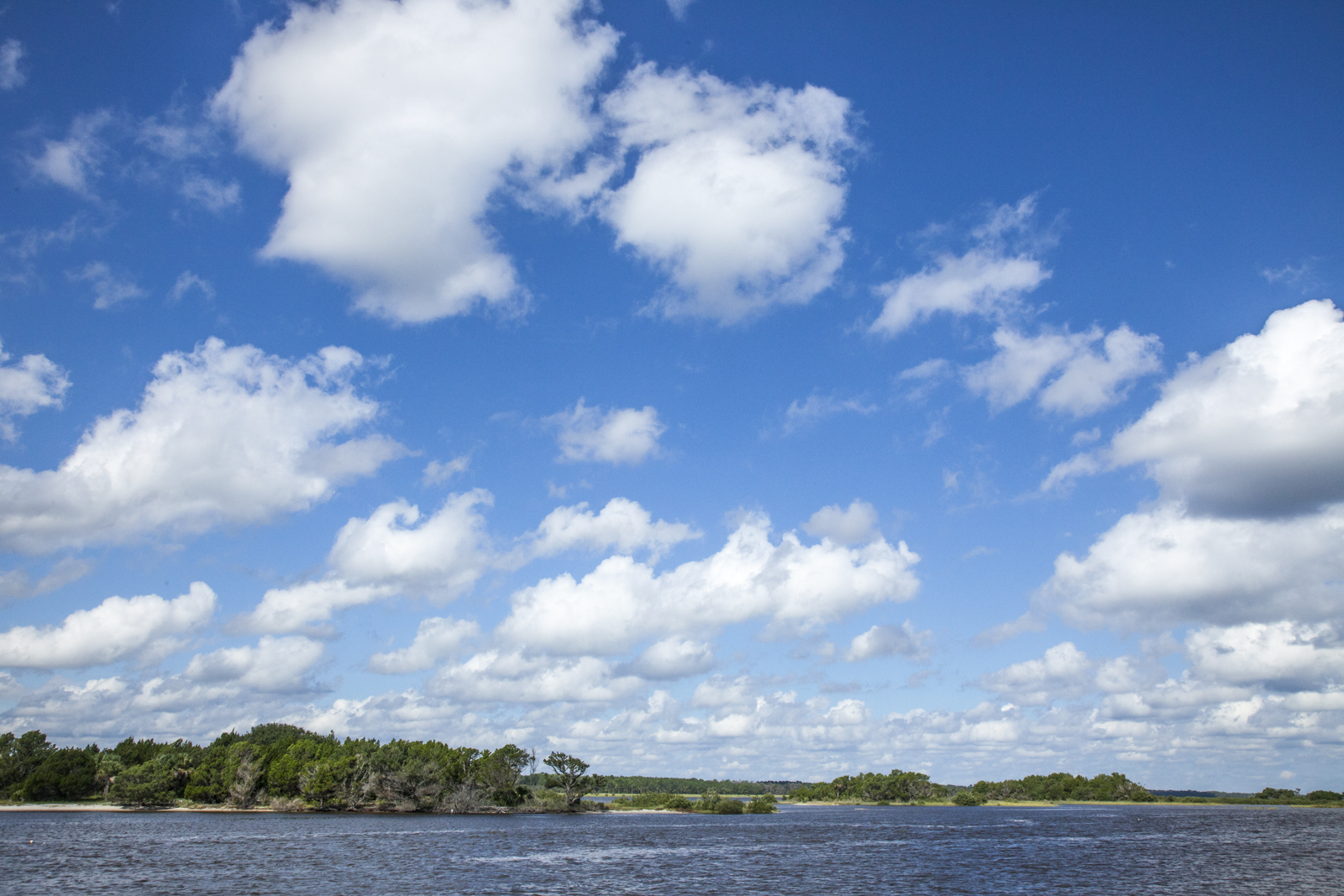
Cumulus
In the early 19th century, meteorologist Luke Howard classified clouds as cumulus, stratus and cirrus, laying a foundation for their study. He also personified them, suggesting they were atmospheric indications of nature’s up and down moods. In 1887, Scottish Ralph Abercromby saw clouds as dynamic storytellers, “the message of which is opaque and threatening, but always true…and difficult to read.” American meteorologist John A. Day, known affectionately as “The Cloud Man,” combined scientific rigor with metaphysics and photography to show how clouds bridge empirical study and human wonder. And a team headed by Lubna Dada, a CERN atmospheric scientist, has shown that trees emit organic compounds—sesquiterpenes—that significantly influence cloud formation, sometimes doubling it. The study shows how biological systems and atmospheric science are interrelated.
Ecology
Ecologist-philosopher David Abram urges us to see ourselves as part of a living, breathing Earth—not above it—which includes air, sky, and clouds as vital, sentient threads in the whole tapestry of life. His perspective on clouds in particular, is that they reflect the dynamism, flow and interconnectedness of the living world. “They shape themselves and go.” Environmental writer Gavin Pretor-Pinney writes extensively about clouds in The Cloudspotter’s Guide. “Having your head in the clouds, even for just a few minutes each day, is good for your mind, good for your body, and good for your soul.” And “Life would be dull if we had to look up at cloudless monotony day after day.” In The Cloud Book: How to Understand the Skies, historian Richard Hamblyn offers insight into how clouds are both natural phenomena and carriers of cultural meaning. And famed priest-ecologist Thomas Berry added a poetic voice to his call for conservation and right-relationship to the planet. “Without the soaring birds, the great forests, the sounds and coloration of the insects, the free-flowing streams, the flowering fields, the sight of clouds by day and the stars at night, we become impoverished in all that makes us human.”

Stratus
Art
One of Georgia O’Keeffe’s monumental paintings, titled “Sky Above Clouds IV,” depicts a field of clouds seen from above in an airplane. Many of her works featuring clouds as subjects reflect her appreciation of a common theme—grandeur and transcendence. Geoffrey Hendricks, known as a “cloudsmith,” depicted skies and clouds in a variety of media—painting them on objects, vehicles, textiles and more. He wanted to blur the line between earth-bound objects and the limitless sky. And musician-vocalist Joni Mitchell’s iconic song “Both Sides, Now” captures clouds as metaphors of life’s ambiguity, change and perspective. Her inspiration for the song came from seeing clouds from above and below, pondering how that dual perspective reflected broader complexities in life.
Clouds are the sky’s way of expressing laughter. Pablo Picasso
Each day brings a new canvas, waiting for clouds. Vincent van Gogh
Spiritual
Vietnamese Zen Buddhist Monk Thich Nhat Hanh wrote, “If you are a poet, you will see clearly that there is a cloud floating in this sheet of paper…” It was an invitation to see and appreciate a piece of paper’s source, beginning with sunlight, the clouds that provided rain, the tree it was made from and the people involved in its creation and distribution. He used this perspective to illustrate the Buddhist concept of “interbeing” where all things are interconnected because they/we ultimately derived from a common and single source. awakin.org. “Every day,” he said, “we are engaged in a miracle which we don’t even recognize: a blue sky, white clouds… All is a miracle.” Transcendentalist Ralph Waldo Emerson expressed both constancy and impermanence when he wrote “Nature is a mutable cloud which is always and never the same.” Paul F. Davis, an inspirational author, wrote “The sun always rises above the clouds”—a metaphor suggesting that clarity, warmth and light prevail even when dark clouds obscure the sky.
In the novel The Book of Mirdad, author Mikhail Nuayman uses clouds as a symbol for the self, a distinct form that’s inseparable from the divine. “The Word is the ocean; you, the clouds…Except it lose itself, it cannot find itself. Except it die and vanish as a cloud, it cannot find the ocean in itself which is its only self.” For him, “The Word” represents the divine or cosmic source—pure, boundless plenitude. And clouds, formed of the ocean yet distant from it, symbolize us: beings made of divine substance but still detached from full realization. Extending the metaphor, he asks the reader if a cloud is but the ocean it contains. It’s a reminder that clouds, though separate in form, are not distinct from the ocean—they originate from it and will eventually return to it. The moral of this passage in the book is clear: Why would a cloud “waste away its life striving to pin itself in space so as to keep its shape and its identity forever?” This amazing little novel, written in mystical-diction in 1948, is an invitation to see ourselves as both cloud and ocean—distinct in awareness, yet fundamentally one. It urges the letting go of false identities to rediscover our divine unity.
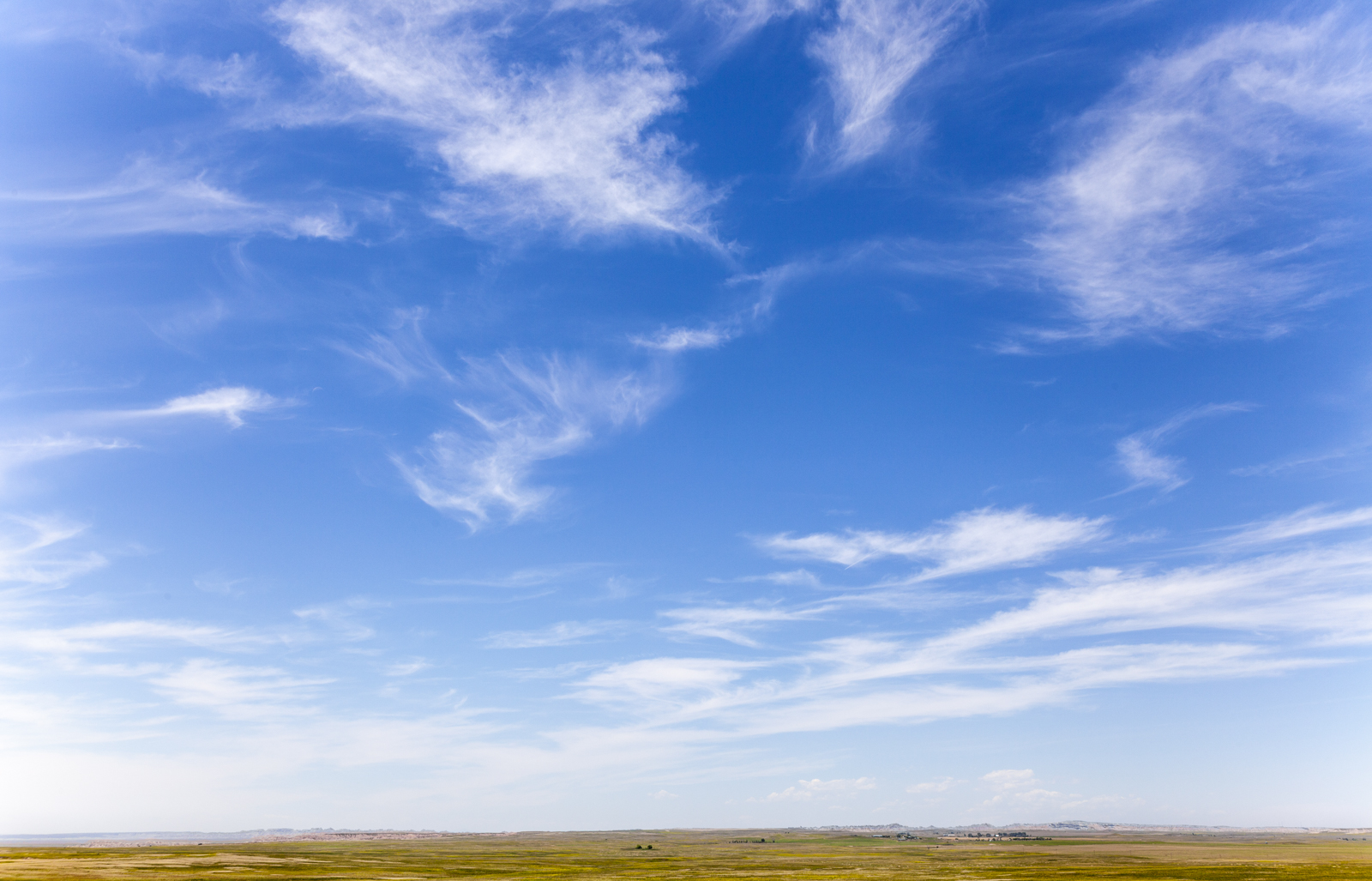
Cirrus
Analogies aid understanding, but there’s nothing like direct experience. For me, that occurs on days when clouds are prominent. I pause to absorb their light bedazzled beauty, then look between them to the clear blue sky, because there lies the spectacle of uncountable stars and galaxies—the universe. Although the eye can’t see it, the knowing of what’s there provides a perspective, a taste of what matters here below.
For reasons I’ve never quite understood, the act of just looking up, day or night, has since childhood evoked in me a sense of amazement and gratitude for the privilege of dwelling on the surface of a planet—rather than living underground. It’s like, in previous incarnations I’d never been exposed to sunlight or seen the stars. As noted, turning my attention back to the reality in front of me, the mental-emotional weight of what’s going on in the world seems almost trivial by comparison—passing clouds against the immeasurable evolution of the earth and human consciousness.
God is the light beyond all clouds, yet the clouds themselves are part of His garment.
Meister Eckhart, Christian mystic
The clouds are but a veil between us and the infinite.
Henry David Thoreau, American essayist, philosopher
(Can you see the jet trail in the first photograph, the cluster of clouds?)
___________________________
My other sites:
David L. Smith Photography Portfolio.com
Ancient Maya Cultural Traits.com: Weekly blog featuring the traits that made this civilization unique
Spiritual Visionaries.com: Access to 81 free videos on YouTube featuring thought leaders and events of the 1980s.


“The clouds are but a veil between us and the infinite.” Your quote of Thoreau reminded me of many business-travel experiences when the aircraft in which I was flying would leave a dull, grey day behind and break through the clouds into a dazzling brightness, a new dimension.
LikeLike