
Chapter 12: Light

“Photography” literally means writing with light. Awareness of light’s properties and behavior is a critical requirement for all artists, especially photographers. Paying attention to what light is doing contributes to an awareness of how profoundly it qualifies everything we arrange within a frame. Lit in a certain way, a cracked eggshell pulled out of a garbage pail can be rendered special and beautiful, perhaps even evoke a sense of impermanence.
What does light do? Technically, it “illuminates” through transmission and reflection. Your electronic display is transmitting light directly to your eyes right now. Your hand, however, is reflecting “ambient” light from a lamp or the sun. On the aesthetic side, light generates shadows, directs focus through vectors and contributes to the qualification of form, shape, size and texture all of which influence mood and meaning. The quality (color) of light and its relative degree of brightness can communicate a wide spectrum of emotions and create atmosphere. Its modification through reflecting devices and diffusion materials can create a sense of a subject’s hardness or softness. And there’s a quality of light that symbolically represents divine presence, truth and revelation.

George Eastman House, Rochester, New York
In 1888, when George Eastman introduced the first commercially available camera—a “Kodak” box pre-loaded with enough film for 100 exposures—the instructions simply read “keep the sun at your back.” That avoided dark shadows under people’s eyes and noses. It worked great, except when intense sunlight made everyone squint. Today, we take that into consideration. Given improvements in image-capturing technologies, subjects are more often placed in softened shadow area to avoid that discomfort. If the intent is to create photographs that will have some aesthetic appeal and captivate viewers, consideration needs to be given to the light source and its management. I made this image with a minutes-long exposure, walking around with the shutter open, “painting” the structure with bursts from an electronic flash.
APPLICATION
Photographically, light can reveal subject matter as it appears to the eye normally or enhance it by managing the four primary aspects of the source: 1) quality, 2) intensity, 3) direction, 4) modification (how it’s made more or less diffuse).

QUALITY
When photographers talk about the “quality” of light, the reference is generally to its color. Normally, in daily living, the human perceptual system tends to interpret all light, indoors and out, as “natural.” When LED “daylight” bulbs became more commonly offered online and in hardware stores, people realized that the incandescent bulbs they used in home fixtures were decidedly yellow compared to daylight bulbs, which are blue by comparison. Every light source emits specific wavelengths or color of light, so films and digital cameras have to be “balanced” according to the shooting conditions.

Sunlight varies dramatically depending on geography, atmospheric conditions and the time of day.
The quality of light that a camera will record can be altered by changing the “white balance” feature on digital cameras, or by putting a filter over the lens. In both cases the color of the image is affected overall. Everything takes on that color. To apply only a portion of color to an image, an acetate “colored gel” can be placed in front of a light fixture, so the subject will take on its color. Yellow gel produces yellow light. Three lights with different colored gels will result in three different colors of light on the subject.
INTENSITY

Shooting in bright sunlight yields sharp, very distinct, hard-edged shadows and high contrast—excellent for deepening color saturation and creating depth.

As brightness diminishes, these qualities gray-down, softening the shadows and emphasizing highlights.
DIRECTION

Whatever the source, inside or out, light coming from the side enhances texture. The more to the side the greater the texture.

Light falling on the front of a subject illuminates its features but is considered “flat,” lacking in depth. It’s fine, just ordinary.

The opposite is true of light coming from behind the subject. Backlighting is dramatic because it creates a halo or rim around the subject, enhancing its form and creating depth. Generally, the brighter the backlight the more dramatic the image, but there’s a decision to be made: Is there enough light on the front of the subject to resolve some detail in the shadows? To ensure this, expose for the darkest shadow. Compensations can then be made in the software.
MODIFICATION
A light “modifier” is any medium that diffuses light coming from its source. Clouds soften bright sunlight and various types of diffusion devices or translucent material in front of an artificial source will accomplish the same thing.

At one extreme is “specular” light. It comes from a source that’s tiny and bright, like the sun on a clear day, or a tiny 500-watt clear quartz bulb. The more specular the source, the sharper the edges of the shadows. Jewelry stores have several of these kinds of lights mounted in the ceiling and even rotate them in cases to make the facets in precious gems sparkle.

As a source becomes more diffuse, the shadows spread out until they nearly diminish altogether.

When photographing people, specular light tends to increase contrast, sharpen shadows and emphasize skin features and textures. It can be harsh.

Diffuse light softens those same features. Sheets of foam core are often used to fill in shadows created with a specular light. And large areas can be lit with diffuse light by bouncing one or more lights off white walls or ceilings. If a wall is colored, the subject will display that tint.
PERSONAL AND SOCIAL REFLECTION
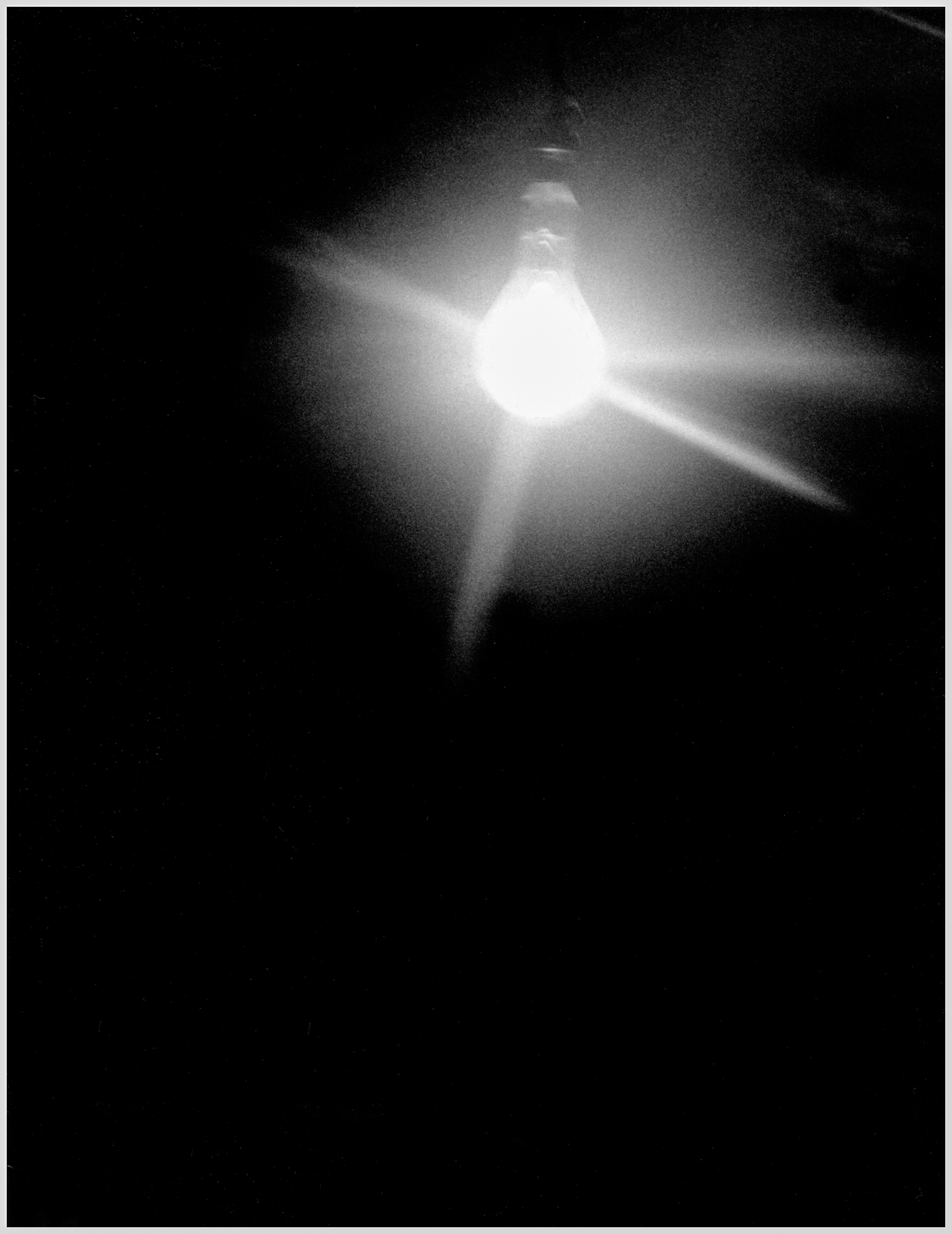
“Light” is a metaphor for awareness. That’s why a light bulb was often used in comic strips and animated movies to symbolizes a bright idea. We “shed light” on a problem, and when spiritual seekers attain realization, they speak of it as “illumination.”
Awareness clarifies our experiences so we can respond appropriately rather than impulsively. It keeps us grounded in the present and cultivates greater empathy, patience and kindness toward others. Because we make more of whatever we attend to, it’s good to be aware of how and where we’re spending our “attention capital.” What am I thinking about most often? Do those thoughts serve me, brighten or darken my day? Above all, what is the illuminating source in my life, the “voice” I can completely trust?
Socially, our collective awareness—consciousness—has profound implications for the shaping, functioning and evolution of social systems from communities to nations; ultimately, the world. Viewed through an extremely wide angle “lens,” human evolution is fundamentally the story of its evolving consciousness, a process of increasing understanding and appreciation of who we are, where we are and why we’re here. With the first glimmer of light from a family campfire somewhere in East Africa around 160,000 years ago—the time when homo sapiens became self-aware—we began to construct and experiment with systems of organization that would meet the needs and desires of individuals in a context that would be sustainable.
Today, through eons of experience we’re learning what does not work for a population that’s exceeded the world’s sustainable limit. That’s important and apparently necessary, because the experience is a greatest teacher. Newscasts are showing us the breakdowns, the social consequences of citizens and leaders activating the dark side of human nature. The breakdowns and tragedies being reported can be viewed as opportunities to change direction, to move away from dysfunction and toward the light. Components of the shift are obvious, but an AI chart makes them specific.
| Darkness | Light |
| Discrimination | Inclusion |
| Injustice | Justice or Fairness |
| Lies | Truth |
| Greed | Generosity or Selflessness |
| Self-centeredness | Altruism or Empathy |
|
Hate / Fear |
Love |
| Prejudice | Acceptance or Open-mindedness |
| Lawlessness | Lawfulness or Order |
| Disorder | Harmony |
| Disease | Health or Well-being |
| War | Peace |
| Nationalism | Globalism |
| Separation | Unity |

Futurist Barbara Marx Hubbard often observed that “Our story is a birth.” She said humanity is currently experiencing the pangs of being born. “We’re only beginning to open our eyes, just catching a glimpse of how intelligent technology combined with our urge to join together can co-create a positive future for all. It’s a real possibility.” Her vision is fully articulated in a series of videos online at SpiritualVisionaries.com. I recommend Videos>Barbara Marx Hubbard>Navigating Evolutionary Change (52:00). Chapter 2 in that title is shorter. (14:56)
My mission is to tell the story of the birth of ourselves as a universal humanity, awakening all of us to our unique opportunity to participate through our own conscious evolution.
Barbara Marx Hubbard
____________________________________________
My other sites:
David L. Smith Photography Portfolio.com
Ancient Maya Cultural Traits.com: Weekly blog featuring the traits that made this civilization unique
Spiritual Visionaries.com: A library of 81 free videos on YouTube featuring visionaries and events of the 1980s.
 Contemplative Photography
The personal and social reflections towards the end of your post reminded me of writings by the French Jesuit paleontologist, priest and mystic, Pierre deChardin, whose work I came across in the 1960’s and whom I have always admired.
LikeLike