Chapter 8: Seeing the Divine Spark in People
The apparent value of an old timepiece displayed on a table at an antique fair is increased by isolating it on a velvet cloth rather than placing it in a box with lots of other watches. Artists mat and frame their best works, and museums separate their most valuable paintings so viewers can focus on one piece at a time without distraction. The lesson for photographing people, aside from favoring individuals rather than crowds, has everything to do with the photographer’s perception. What do we see in them?
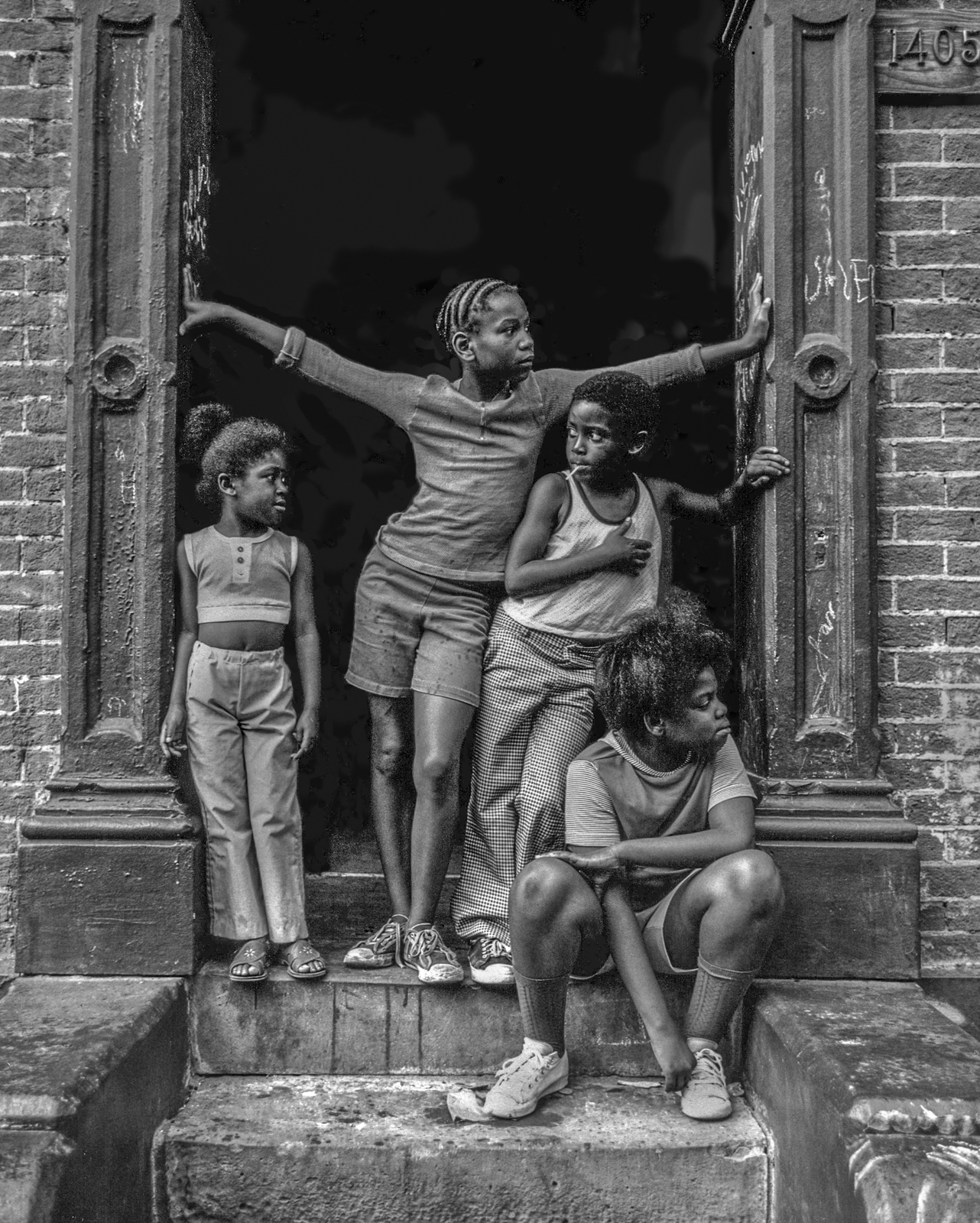
When I started out in expressive photography, I often took lunch hours to walk or drive around a depressed area of town to photograph people. The above image is an example of spirit guiding me to the right place at the right moment; a second earlier or later the dynamic would have been lost. Early on, from paging through National Geographic magazines and books on photography, I’d made a conscious decision to think of diverse people as beautiful. The more unusual and different looking from me the greater the potential for a compelling photograph.
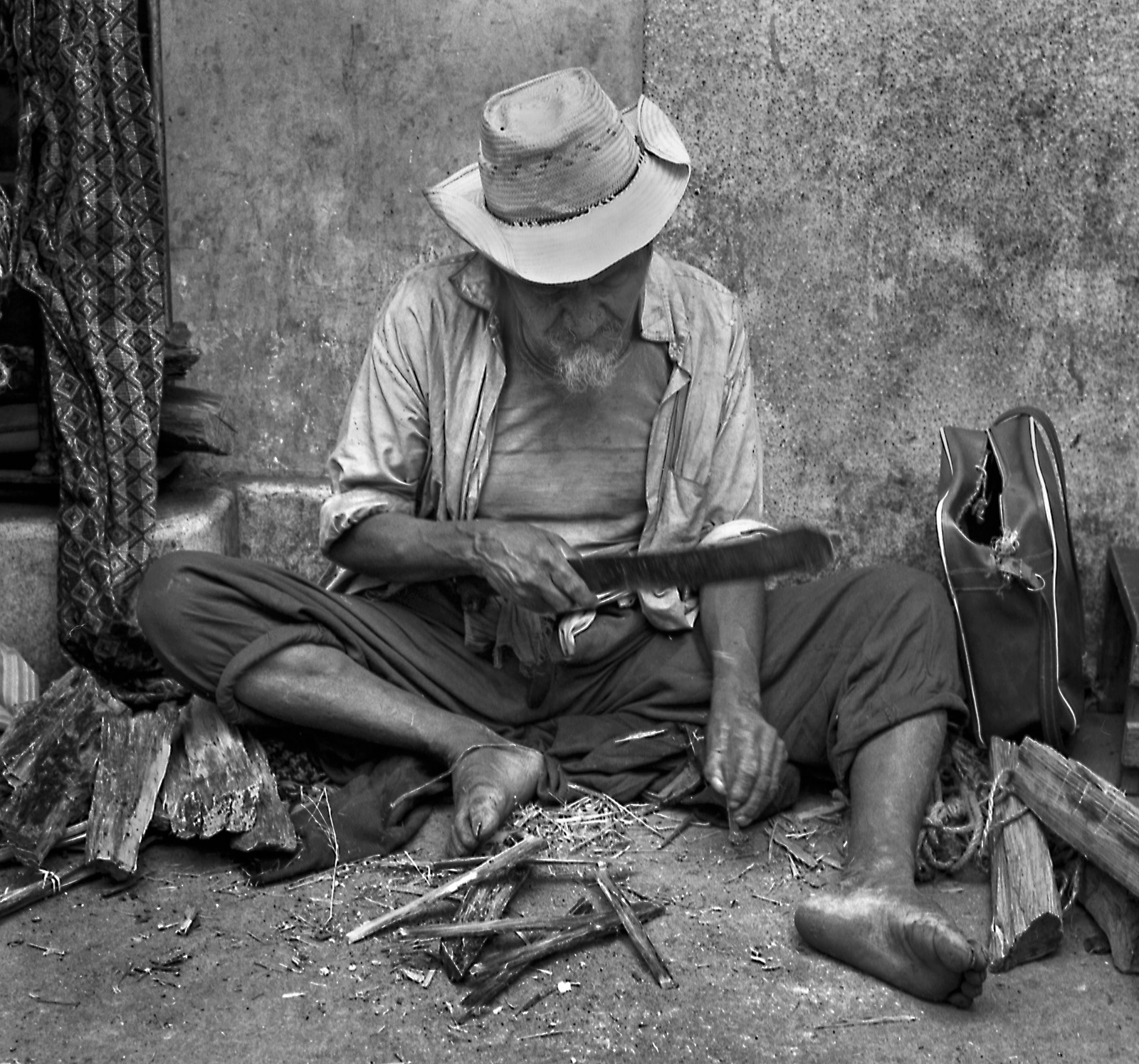
For many years, especially when traveling to other countries, that’s how spirit moved me. I came away with many fine photographs, but with a great deal of maturing I realized that by photographing people without talking to them and asking permission I was objectifying them. Not content with simply capturing a person’s appearance, preferring instead to tap into the spirit (soul) within, I had to shift my perspective. After long practice and reviewing my work, I realized that seeing the divine spark in people was less a function of eye-brain-nervous system stimulation, far more a matter of heart and choice.
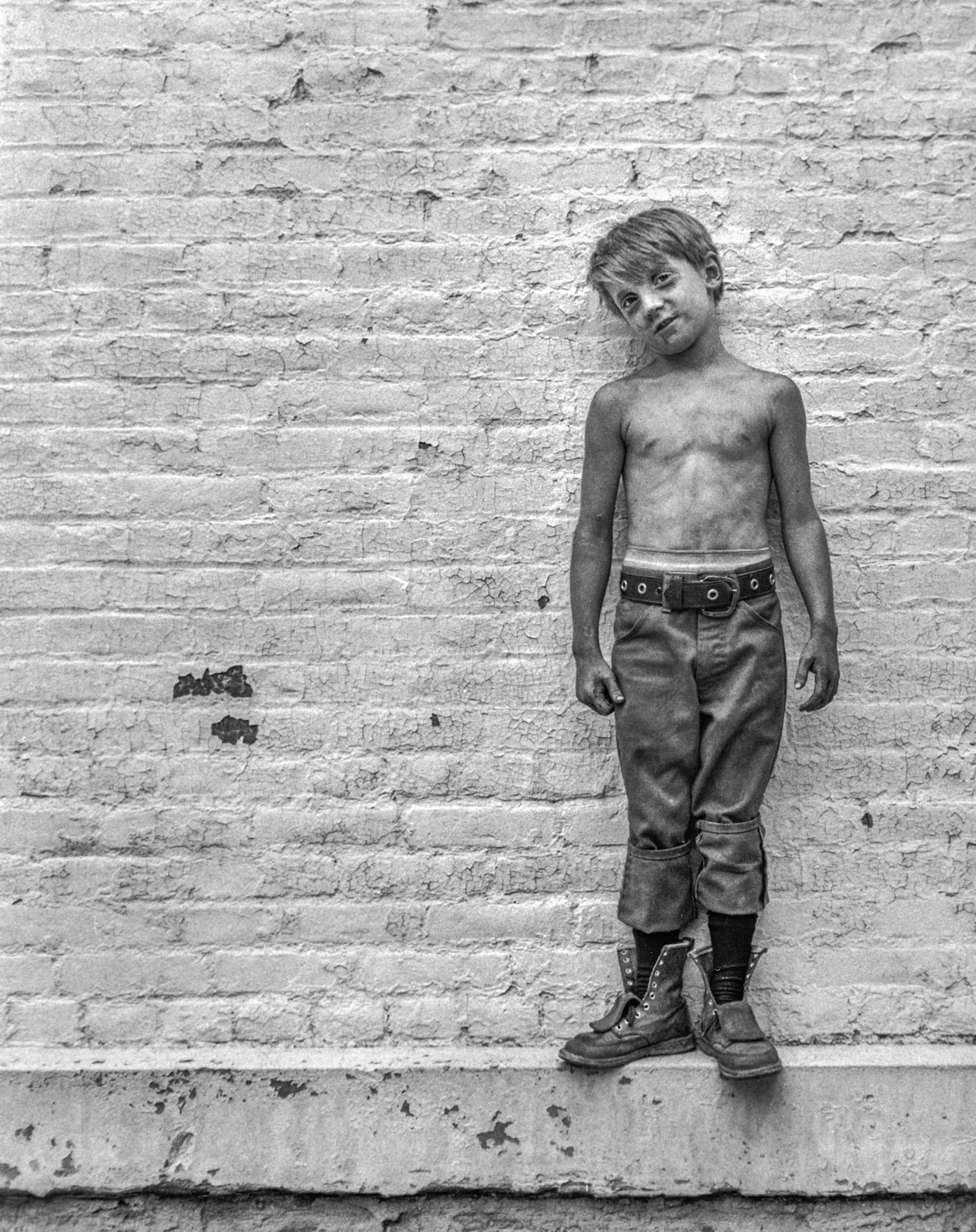
Legally, we can photography people we don’t know without having them sign a “release form” as long as we do not direct them. When we do, as soon as we say “Look here,” or “Stand over there” the form is necessary. And payment of at least one dollar makes it legal. The boy below was throwing stones against the wall when I struck up a conversation with him. Eventually, I asked him to stand on the ledge and he was happy to do so. I gave him some money, but didn’t have a release form with me. That prohibited me from publishing this image in any form where I would be paid. I mention this for your information, but also, not having this young man’s name and address, I wasn’t able to send him a print—which I would have readily done.
Working from and with the energies of love—appreciation, attraction, affinity, compassion, respect— significantly boosted my ability to see beyond looking and photograph both the within of things and the divine spark in people. This insight took some time to develop, but once it did, I switched from characterizing my work as “fine art,” to the more accurate term, “contemplative photography.”

Connecting the dots from personal experience and readings in biology, systems science, quantum physics and reports of near death experiences (NDEs)[1] and after death experiences (ADEs)[2], I believe the soul makes a plan prior to incarnation, selecting the specific contexts of physiology, people, places, relationships, situations and major events—experiences—needed to take the next step in consciousness toward realizing its divine nature. The Indian greeting and salutation “Namaste,” which basically says, “I bow to the divine in you and recognize that it’s the same in both of us” acknowledges this. Considering that souls decide and plan for the lessons they need to learn in coming incarnations, I began to see people—and those in my former photographs—in a new light. These individuals weren’t just interesting faces, they were souls with a purpose in life. Of course, great photographs have been and are made without this kind of consideration and perspective. It expanded my awareness and made my work more meaningful. As noted, the lesson for photographing people has everything to do with the photographer’s perception. What do we see?
I want to introduce you to a master of the contemplative approach, particularly when it comes to photographing people. Lee Jeffries of Manchester UK takes black and white portraits of homeless people here and abroad. Seeing him and his work profiled on the CBS Sunday Morning program gave me chills. Typically, he walks a street lined with homeless people, tacks a black cloth to a building and sets his camera on a tripod. After some long discussions with these people, explaining what he does and delving into their stories, he asks to take their picture. In selecting his subjects, he says, “Emotion is in the eyes.” He uses his stunning portraits to help raise funds for the homeless.
I feel their loneliness, despair and pain. More often than not, and whilst it may sound pretentious, I will find myself in tears for them. My images represent my final goodbye to a relationship built on authenticity.
Lee Jeffries
[1] Laszlo, E., & Peake, A. (2014). The Immortal Mind: Science and the continuity of consciousness beyond the brain. Rochester, VT: Inner Traditions.
[2] Giesemann, S. (2019). The Awakened Way: A guide to your true self. Carefree, AZ: Sanaya’s Light Publishing.
Recommended Practice
CANDIDS
Take your camera to an outdoor venue where people are being active. Workplaces are ideal. Photograph individuals there, doing whatever they are doing. You can hide behind something or not. The key here is not to direct anyone. Do not pose them, move them, tell them where to look or to smile. No direction whatsoever. You don’t need permission or a release form to publish these kinds of “candid” images.
DIRECTED
Photograph in the same kind of environment, but now direct them in some way. Ask for permission and have the person(s) you photograph sign a release form BEFOREHAND. If you give them one dollar, the release form becomes a legal document protecting you from liability due to publication in a for-pay situation. Create your own “Release Form” using the following as a guideline. It’s always a good idea to give or send models a copy of the form. Ideally, send one of the best photos as well.
________________________________________________________________________________
Your Name Model Release Form
Address
For consideration of $________ I hereby give (photographer)___________, his heirs, legal representatives and assigns, the absolute and irrevocable right and permission to publish and use the photograph of me (the undersigned) that he took on (Date)_________________ at (Location)_______________________________
- a) The photographer has my permission to copyright this photograph in his name or any other name he may choose, without restriction. (Photo Description)________________________________________
- b) The photographer has my permission to use, re-use, publish and re-publish the photograph individually or in conjunction with other photographs, in any medium whatsoever.
- c) The photographer may use my name in connection with the photographs he has chosen.
- d) I hereby release and discharge (photographer)_________________ from any and all claims and demands arising out of or in connection with the use of the photograph. This authorization and release are binding upon myself (model), my heirs, legal representatives, and assigns.
I hereby affirm that I am of full and lawful age and have the right to enter into this contract in my own name. I have read the foregoing and fully understand its intent and meaning.
Model’s Name (Please Print): ________________________________
Model’s Signature: _______________________________________________________
Address:_______________________________________________________________
City/State/Zip/Country:___________________________________________________
Email:_________________________________________________________________
Phone:_________________________________________________________________
Witness:___________________________ Phone:______________________________
__________________________________________________________________________________
 Contemplative Photography