
By our works we are known
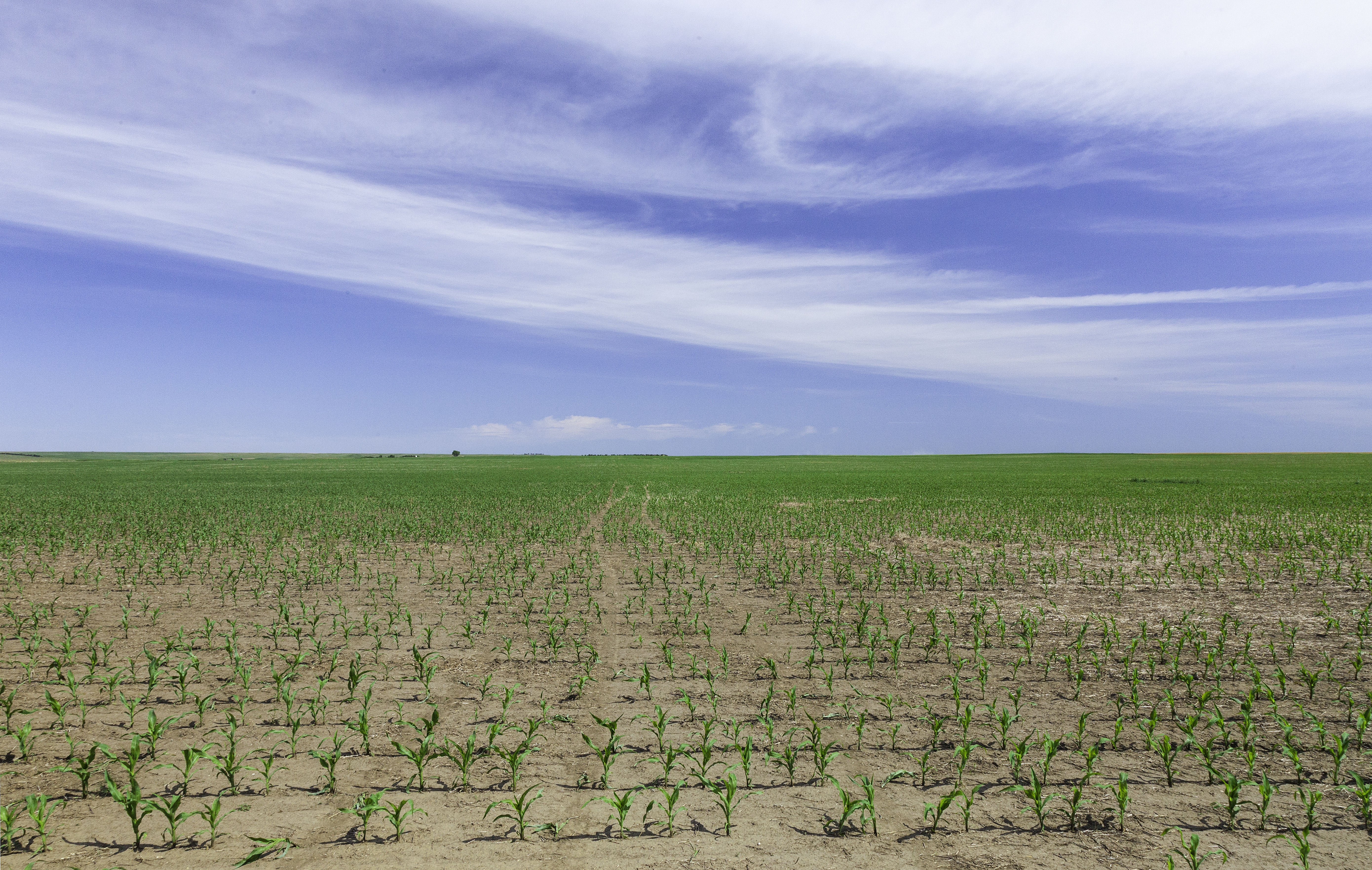
Blunt, South Dakota
When I photographed these orderly rows of young corn extending to the horizon, I was thinking about the farmer and his work, evidenced by the tractor tracks and the amount of time, money and energy it took to plant this enormous field. Reflecting on the image now, I appreciate the contribution of all growers and marvel at the process of cultivation, from conceptualization and planning to planting and harvesting. Having had no experience with farming, I hadn’t given much thought to cultivation. But now, I realize that it’s a sacred process of deciding what’s wanted or needed, planting seeds and following through to realization.
Tracing this field back, I imagine that the farmer’s decision to plant a certain kind and amount of corn was motivated by a variety of factors among them family, economics, climate, soil conditions, insects, impact on the local community and politics. Even at this early stage, the field in this image provides evidence of the choices that were made made, including the thinking, caring and persistent hard work of the farmer. And doesn’t that hold true for individuals, families, communities, schools, businesses, corporations, states and nations as well? A close examination of these social and corporate entities—their “fields”—provide evidence of their collective consciousness, including their worldview, values, choices and actions. Every creation reflects its creator.
So what am I planting? What am I cultivating? And collectively, what are we causing to grow at work and in society? Especially I ask this of the fields that are most formative in our children’s lives—education, movies, television, advertising and social media. And what are we creating in the fields of energy, environment, health and health care, food production and national security? As individuals and as a nation, what are the values, behaviors, manners and speech customs that we are planting in our national fields—and consciousness?
It’s an important question, for “as we sow, so shall we reap.” The consequences of our thinking and choosing today, show up tomorrow. The fields of our lives, where we live and work and come together to collaborate, provide the context and opportunity to plant new, more hearty, robust and nutritious thinking, valuing and processes for ourselves and our children.
And what about the quality of what we’re planting? Does it contribute to growth? Mentally and physically, by absorbing the product of our planting, will we be stronger and more resilient against diseases of the social/global mind, heart or body?
Another consideration, is the field that I tend and the labor I put into it, giving me joy? Just as a good cook becomes so by cooking with love, so we can become good stewards of the earth by doing what we do with love—and loving intention.
I like the analogy of soil cultivation and what we’re sowing in our families, occupations and society, not only because it encourages reflection and assessment of the present, but because it also provides the opportunity to start over and plant that which we truly value.
By their works they shall be known.
Matthew 7:15-20
_________________________
My other sites—
Love And Light greetings.com: A twice-weekly blog featuring wisdom quotes and perspectives in science and spirituality intended to inspire and empower
David L. Smith Photography Portfolio.com: Black and white and color photography
Ancient Maya Cultural Traits.com: Weekly blog featuring the traits that made this civilization unique
 Contemplative Photography
Beautiful! Thanks for the tip, Vanessa!
LikeLike