Whole Systems Management

Introduction

This begins a series of posts on the subject of whole systems thinking. After the topic is introduced, I’ll offer a contemplation that relates to the headline photograph and text.

Historically, patterns observed in nature were discussed and documented in China five thousand years ago, before they were articulated by Lao Tzu (Gia-fu Feng, 1968) in the 6th Century B.C.E. In 1968, Ludwig von Bertalanffy, regarded as the father of systems science, published General Systems Science, which quickly came to the attention of engineers and physical scientists.

      A decade later, James Grier Miller (1978) elaborated Bertalanffy’s principles and applied them to living systems in his seminal book entitled Living Systems. Since then, scholars, scientists, engineers, information theorists, artists and philosophers have drawn on these sources and created a gestalt, a way of thinking about complex whole systems from the wristwatch to the universe, in order to better understand, appreciate and especially manage part-whole relationships. The story is told that, after President Kennedy committed the nation to the moon mission, NASA scientists drew heavily upon general systems science as a guiding principle to ensure a successful outcome.

      Simply put, whole systems theory involves the consideration and management of part-whole relationships as a way to better understand and manage complexity. It’s about getting relationships right and sustaining them. As a thought process, this way of thinking is not a panacea, but it has tremendous practical value when it comes to keeping things going, particularly in the areas of human-machine interfaces, team building, organizational development, business protocols, political and social cohesion and creative endeavors.

      The benefits are many, not the least of which is understanding the interrelations of mechanical and living systems, including the observation that living systems are constituted of smaller sub-systems and at the same time nested within larger whole systems, all of which are interconnected and interdependent. It’s this observation that is detailed in the books “Web Of Life” and “The Systems View of Life.” I highly recommend both publications. In scientific and technical circles, this framework is referred to as “General Systems Science.” In other settings, it’s simply spoken of as “Systems Thinking.” Because it has nearly universal application, and because I have been a long term student, practitioner and frequent beneficiary of systems thinking, I wanted to share it with you. I hope you’ll find this series both interesting and useful.

What Is A System?

According to Bertalanffy: “A system can be defined as a set of elements standing in interrelation among themselves and with the environment.”

Closed and Open

In “closed” systems, no material enters or leaves. All mechanical systems—watches, vehicles, electronic devices and appliances—are closed systems.

“Open” systems exchange matter with their environment, inputting and outputting, building-up and breaking-down its material components. All living systems are open. They evolve. Bertalanffy says: “Life is not comfortable setting down in pre-ordained grooves of being; at its best, it is élan vital, inexorably driven towards higher forms of existence.” Mechanical systems perform a function according to their design, and that’s all they can do—the movie “Transformers” to the contrary. The function of living systems, on the other hand, is to stay alive and continually make itself more, thereby contribute to the development of higher orders of complexity in an evolutionary process.

Simple And Complex

Within open and closed systems, we can discriminate between simple-systems that have few parts and complex-systems that have many. The more parts an assemblage has, the more complex the relations between them. And the more complex the relations, the greater the need for management in order to overcome a systems worst nightmare—entropy.
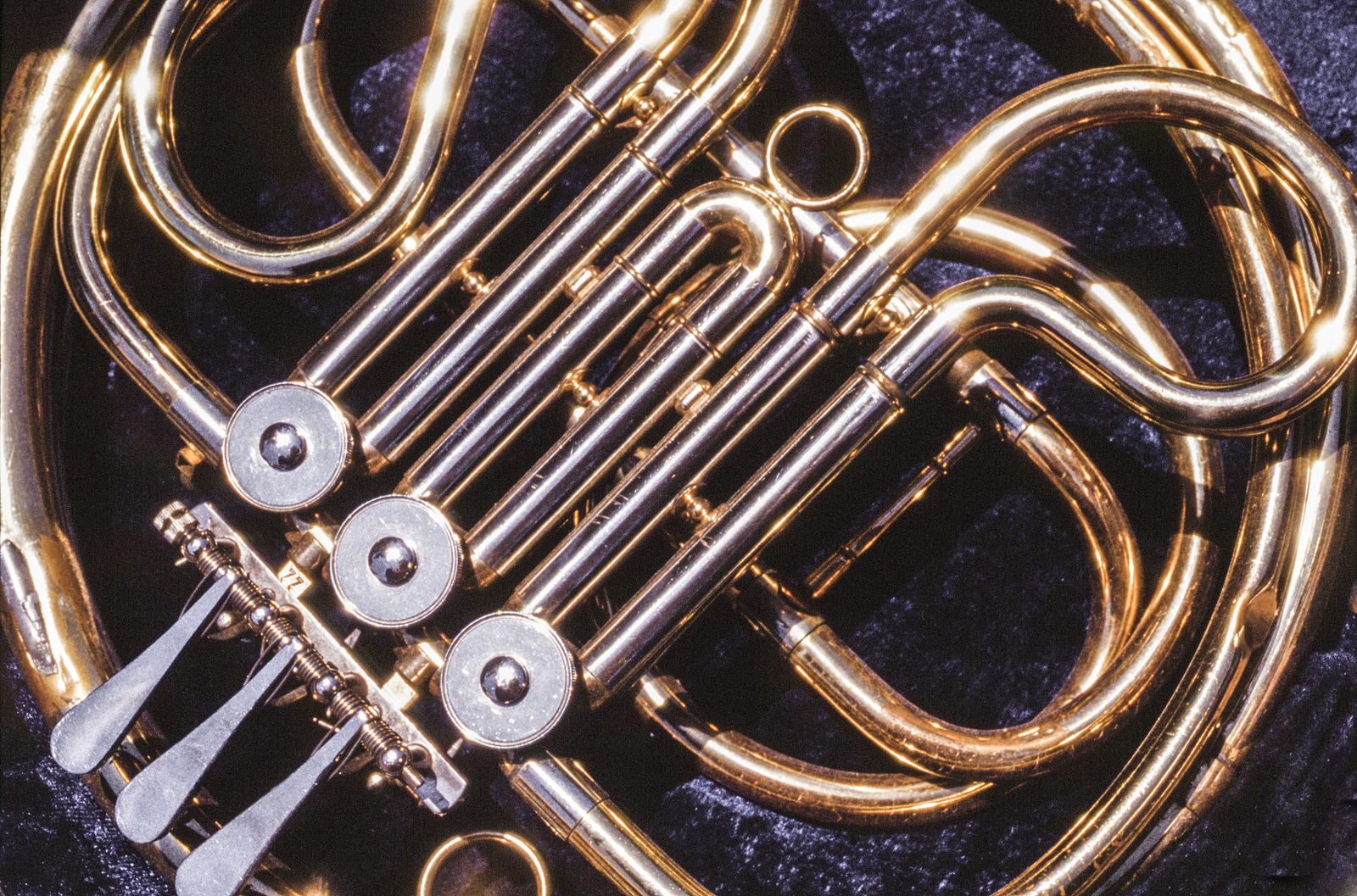
A relatively simple system.

A much more complex system, requiring significant management, constant maintenance and upgrading.

Entropy

According to the Second Law of Thermodynamics, matter dissipates. Given time, it diffuses and eventually reverts back to heat energy. It’s in a constant state of disintegration. Dust to dust.  Iron rusts; bones break; computers fail; noise disrupts communication; relationships and businesses fail; nations and civilizations come to an end. Nothing material, at any scale, endures forever. But there is a counterbalance to the forces of entropy.

Syntropy

Any energy, work, force or action that retards deterioration or disintegration is considered “syntropic.” Oiling a metallic surface prevents it from rusting. Putting fresh batteries in an electronic device keeps it running. Good dental hygiene prevents gum disease and promotes overall health. Feeding, complementing and rewarding a work crew encourages continued performance. Frequent communication improves relationships. Higher values and shared vision enhance social coherence and growth.

Contributors to Syntropy

  • Information: The more and the higher the quality of information input, the more entropy is overcome.
  • Order: Acts of ordering within living systems contribute to their survival and growth because they maintain the parts (members) in right relationship. We may need an electron microscope to see the infinitesimal order in atoms and space-based telescopes to it in the cosmos, but what we find at both extremes is exquisite order. Biologists understand that it’s the arrangement of atoms, molecules and cells that determine morphology, what a living expresses—is.
  • Communication: More and better communication promotes knowledge, understanding and the desire to do what’s necessary to keep a living system alive and functioning. “Desire” to move, interrelate and express is innate in lower order systems, such as atoms and cells. In humans, it dominates consciousness.
  • Positive or Constructive Fields. Calm, life-enhancing environments promotes cooperation, collaboration and intelligent creativity, realizing potentials that will contribute rather than retard growth.
  • Affinity. When there is a connection between individuals or entities that is beneficial, respectful and harmonious they are in “right relationship.” In living systems it promotes sustainability and growth.
Contemplating Our Political System

Our political systems are in crisis because we citizens have inherited and sustain dysfunctional thinking. “Polarization,” for example, is not the problem. It’s a consequence of the erroneous perception that human beings are separate from each other, nature and the planet. This assumption, combined with capitalism which says, in effect, that you are free to own property, start businesses and make economic decisions without excessive government control has resulted in mass self-centeredness where many citizens feel free to disadvantage their neighbor, lie, cheat or steal to get what they want. It breaks down trust, which leads to increased separation and division into ethnic and ideological camps.

In a democracy, differing points of view are normal. As political systems grow and become more complex, the challenge for its members is to quantify and analyze growth within the system in the context of its changing environment. The “me, my, mine” perspectives of the past, when maintained, lead to increasingly severe breakdowns and dysfunction. The healing of a nation, which is a conscious living system, requires its citizens to adjust their thinking about how they relate to one another and the whole. Systems thinking helps them do this. I’ll elaborate on the “how-to’s” of managing personal, social and national complexity in postings to come.

Looking back, blaming and criticizing is a waste of time and energy. What’s needed is widespread education at all levels, directed to the realization that, although we see ourselves as separate individuals, we are interrelated and interdependent co-creators of the whole system, and that the nation is also an interdependent sub-system of a greater whole—humanity, which is a subsystem of the planet. And so on. Running parallel to this is the need to understand that the actions of each citizen, positive and negative, ripple a complex of influences into the environment and the whole within which they are a part.

Small changes in one part of the system can have profound implications for all else in the system… When we make choices about how we live our lives, we are having an impact far beyond our own immediate circumstances. Those impacts can extend not only to the rest of the planet but also to future generations.

                                    John Donne, co-editor: Ecology, Ethics, and Interdependence)

It bears repeating: human beings are interconnected and interdependent. I am responsible for myself and the integrity of the wholes within which I participate as a member. The deep understanding of how living systems work should come from parents and educators at all levels. It can and should also come from television and advertisers, business mission statements and directives and churches.

A shift in thinking at the bottom of the social pyramid is the way to co-create positive change. A rapid shift, the kind that climate scientists are urging, requires it—and responsible action at the political level in every nation. Because citizens in a democracy suffer the consciousness of their elected leaders, it’s important to elect individuals who understand and appreciate the dynamic of whole systems thinking. Climate scientists from all nations have sent the message loud and clear: either we learn the hard way, through trial and error, or shift our thinking from “me first,” to “planet first.”

A human being is part of the Whole… He experiences himself, his thoughts and feelings, as something separated from the rest… a kind of optical delusion of his consciousness. This delusion is a kind of prison for us, restricting us to our personal desires and to affection for a few persons nearest us. Our task must be to free ourselves from this prison by widening our circle of compassion to embrace all living creatures and the whole of nature in its beauty. Nobody is able to achieve this completely, but the striving for such achievement is, in itself, a part of the liberation and a foundation for inner security.

               Albert Einstein

I welcome your feedback at <smithdl@fuse.net>

My portfolio site: DavidLSmithPhotography.com

My photo books: <www.blurb.com/search/site_search> Enter “David L. Smith” and “Bookstore” in “Search.”


 

True Dialogue

Thinking together to learn and make sound judgments on behalf of a whole system

The Free Dictionary defines dialogue as “An exchange of ideas or opinions on a particular issue, especially with a view to reaching an amicable agreement.” In the image of these spheres, diverse in size, tonality and texture I can imagine the exchange of electrochemical information that resulted in harmonious interaction within this dynamic system where drops of oil sought to maintain their integrity within a vessel of water.

The order and pattern of the spheres provides evidence that, although the water and oil molecules are diametrically opposed to one another, they continuously strive for, and in this instant, reached an “amicable agreement” where the whole system, enhanced by diversity, contains more information and complexity. Aesthetically speaking, there’s balance and harmony among opposites. It’s a picture of individual elements engaging each other in the context of a common purpose within a shared environment—”culture” we might say.

Individual integrity (read dignity as well) is maintained, and from our point of view the system displays stability and organization. The molecules of oil didn’t ask to be deposited in the vessel of water, but once together the interaction and exchange of information within the system became more of dance than a battle. Accommodation rather than destruction. Indeed, true dialogue is a kind of discursive dance.

Human dialogue is unique. It involves discussion, but “discussion” is just an exchange that tries to sort things out. The emphasis is on back and forth inquiry and analysis where there may be many points of view. Discussions can be amicable or heated. Either way, participants generally aim to win an argument, score points or have their viewpoint prevail. “Debate” is another kind of discourse. Here, the individuals do battle with one another by offering proofs and counter arguments so their points of view will win. The context is purposefully polarized so there’s a winner and a loser. Having been on a college debate team, I can attest to the occasional glory of winning and the more frequent agony of defeat.

“True dialogue” on the other hand is a process that flows from a base of commonalities and allows conflicting views to court each other so a fuller perspective can emerge from spirited and respectful interaction. It occurs when the participants follow their hearts and souls, when they are allowed to have their full say, are heard and taken seriously—within an atmosphere of trust and discovery—where there is open mindedness, respect and a mutual desire for achieving a common goal. Finding the best way forward or discovering the truth. Simply put, dialogue is how we think things through together so we can individually learn and make sound judgements on behalf of a whole system.

One of the primary purposes of dialogue is to affect a transformation in collective consciousness… it asks us to suspend our attachments to a particular point of view (opinion) so that deeper levels of listening, synthesis and meaning can evolve within a group.

Glenna Gerard & Linda Teurfs, Business and organizational consultants

Whether in a small informal group or a large formal setting, the practice of dialogue is not easy. First, it requires a clear and commonly held picture of the whole, its fundamental purpose and goal—what the system needs in order to function and evolve. With a goal agreed upon, points of agreement need to be identified before differences in perspectives and approach are specified and argued.

Throughout, broader truths, those relating to the well-being and development of the whole system must be allowed to emerge. According to Habermas’s Theory of Communicative Action, the goal of dialogue is to allow us “To comprehend each other well enough so that common goals and understanding is possible.” True dialogue builds and maintains good relations among the participants as it builds consensus among them regarding the good of the whole system.

Psychologists observe that, as individuals, we tend to think we know what’s best for ourselves and the larger systems within which we participate. We believe our perspectives are not only right, they’re better; others just don’t understand or know what we know. And so there’s a strong tendency to champion our perspectives and methods above all. But where there’s an openness to discover what is actually in the best interest of the whole system, that tendency can be tempered by structuring interaction as a formal (true) dialogue, and making sure that everyone knows the Multicultural Ground Rules For Dialogue beforehand.

I have observed evidence of true dialogue in families, special interest groups, religious organizations, universities, corporations and non-profit entities. That we humans have evolved the capacity to rationally and respectfully think through and transcend our differences while safeguarding our relationships and seeking the common good is reason to hope.

Dialogue is the art of thinking together. It involves listening and thinking beyond my position for something that goes beyond you and me.

 William Isaacs, Founder, Dialogos consulting firm, Cambridge, Massachusetts

None of us knows the truth, but together we can come closer to it.

Anonymous

Intelligence requires that you don’t defend an assumption. The proper structure of an assumption or of an opinion is that it is open to evidence that it may not be right.

David Bohm, Physicist

______________________________________________

My other sites:

David L. Smith Photography Portfolio.com

Ancient Maya Cultural Traits.com: Weekly blog featuring the traits that made this civilization unique

Spiritual Visionaries.com: Access to 81 free videos on YouTube featuring thought leaders and events of the 1980s.

Entropy And Syntropy

Consciously or not, every day we choose between breakdown and transformation

Rust Running From Stairway

Because the rust is so prominent in this image, giving the appearance of a “bleeding” or disintegrating stairway, I see it as an excellent illustration of entropy—matter in the process of dissipation, reverting back to heat energy. According to the Third Law of Thermodynamics, matter disintegrates. Everything transforms. Dust to dust. Iron rusts, computers fail, bones break, noise disrupts communication, relationships fail, businesses reach the end of their lifecycle and civilizations collapse. Without exception, all forms of matter eventually return to their component elements and energies.

I observed to my video production students, “The natural tendency is for cameras and production crews not to work. Parts, relationships and communication break down. So if you want things to work, every element needs attention—maintenance. Constantly. Periodically. Metal needs to be oiled. Connections need to be maintained. People need to be on the same page, fairly compensated and encouraged.” From a human perspective, the forces of entropy are put off for a time by caring, maintenance and increased information.

This stairway would not have been bleeding had it been properly cared for, perhaps with periodic painting or applying a retardant at the first sign of rust. Without maintenance, entropy speeds up and culminates in dis-integration. The steps break and need to be replaced. One of life’s principle lessons for me is that in every domain, maintaining a system is better in the long run than shoring up the consequences of entropy.

In this image I also find it metaphorically suggestive that “steps” are disintegrating. In the course of our lives we take the steps we believe are necessary to reach our goals. We start out feeling secure because the steps have a proven track record of stability and success for other people. But with experience we sometimes find those steps to be unreliable in our situation.

Even when we feel we’re on the right stairway, we may not care enough or give proper attention to certain steps and we falter. Minimally, security and trust are at risk, particularly when someone else’s course of action doesn’t resonate with our temperament, values or beliefs. Worse, is continuing to follow a path that has already been shown to be entropic. Instead of bemoaning breakdowns, the more appropriate response is adaptation by analyzing the situation objectively, paying close attention to the location of the breakdown, and if warranted, taking appropriate action to retard the forces of disintegration.

Consider this in terms of a social system that are experiencing breakdowns. Where are the points of disintegration? Where is entropy in evidence? What can I do about it—personally, within the context of my family, friends and colleagues? What can we do together? Syntropic acts, those that reduce entropy, can be as simple as a smile, saying “yes” to good ideas and doing the right thing. Then too, realistically it can take some time, effort and possibly some expense to keep our personal and professional “steps”—desires, projects, businesses— from disintegrating. Entropy is a dragon that cannot be tamed. But it can be managed effectively.

Syntropic management involves a process of “remaking.” Businesses and other organizations, including nations, characteristically follow the standard bell curve: birth, growth, peak experience, decline and death. It’s the lifecycle of all systems, living and inanimate. When a system recognizes that it’s facing decline there’s a choice to me made. Do nothing, that is, continue doing what it’s doing. Or create a new identity, purpose, mission and vision based on the new, currently threatening circumstances.

Die a slow death? Or engage in a process of rebirth by shifting to an identity, purpose, mission and vision that functions well, even thrives in the new environment. Living systems are what they are today because at some level the organisms or organizations chose to change themselves, to adapt. The scientific term for this process is “evolution.”

Entropy is the occasion less for cosmic pessimism than for hope that the universe is always open to new creation.

John Haught


Presence and the Present Moment

Being in the “Now” evokes an appreciation of “Being” itself

Footprints & Tire Tracks in Sand

In this image I observe and celebrate impermanence and the aesthetic of the present moment, happenings that are will never be seen again. Capturing them is one of the unique features of photography. In this instance, the patterns and textures lasted perhaps a day at most before being lost to the incoming tide. Impermanence is the story of risings and fallings, comings and goings, syntropy and entropy, processes that urge us to appreciate what’s given as it was given. What is.

As a document, there’s an abundance of information in this image. It tells a story of two-footed creatures who’ve evolved sufficiently to create a highly patterned, well organized mechanism capable of making a linear imprint in sand. Geologists could derive information about the planet and the time the photograph was made, just from the material, the pattern and the shadows. We can imagine the significance of this image by considering our response if it came from another planet.

Aesthetically, the elements of patterned light and shadow evoke in me a sense of beingness. A person walked or stood there long enough to make an impression in the sand. And a vehicle came along, leaving its imprint as well. Although this is obvious, it’s not the information that moved me to make the photograph. It was an attraction to the quality of light that interrupted my walk on the beach—how it was creating textures and illuminating the pattern of the tire juxtaposed with the footprints. Human and machine. Animate and inanimate. It was only later, when I spent time thinking about the image, that I began to catch the sensibility of being— the wonder of presence and the fleeting precious moment.

And an enigma— the foot impressions don’t conform to a normal human being. How could they have been made? One foot faces the opposite direction of the other.

By letting go of our conceptual beliefs and judgments, by letting go of rules and just being present in the moment, we perhaps gain our true humanity. We see.

George DeWolfe, Fine art photographer


Order And Coherence

Forces that characterize the universe from the beginning

Sphere 754

Initially, this image evoked in me an appreciation of the organizing principles that underlie manifested reality, from sub-atomic particles to the universe. The consistent spherical shapes, irrespective of size, and the way the light raked across them suggesting mass and texture, and that led to considerations of order. Upon further reflection, my appreciation widened to include the forces of coherence that are displayed between and among the spheres.

I tend to think of ordering as the arrangement of parts within a system, and coherence the adhering property of those parts. Combined, the result is a balanced dynamic, a whole system that functions according to its design. Here, I observe subtle forces, a dance of pushing and pulling that maintains the shape and integrity of each sphere of oil as it seeks a comfortable place on the surface of a hostile environment—a graduate filled with water. This image captured a moment of adaptation in a turbulent situation. In a sense, the cells (oil drops) are “learning” about their identity and place, how to “live” in relation to the other cells given the repulsive environment.

Coherence in us means health: the optimum functioning of the body. When the body is coherent, its immune system is strong and resistant to disease. Everything we do either promotes or counters coherence and thus our and our environment’s evolution and development; it is either healthy or unhealthy, and is either constructive or destructive.

Ervin Laszlo, Systems scientist

Perhaps because the larger sphere in the center of the image contains texture, I’m reminded of the processes of ordering and coherence that took place when the Earth was forming, struggling to  take shape and establish coherence at a time in the planet’s history that was so violent we can barely imagine it. I marvel at the improbability of that happening. And yet, out of the chaos came order and coherence, the combination allowing the development of higher organisms and intelligent life.

The probability of life evolving through random genetic variation is about the same as the probability of a hurricane blowing through a scrap yard assembling a working airplane.

  Fred Hoyle, Astronomer

For atoms to bounce together haphazardly to form a single molecule of amino acid would require more time than has existed since the beginning, even a hundred times more than 13.7 billion years.

Mary Coelho, Author, “Awakening Universe.”

The chance that a livable universe like ours would be created is less than the chance of randomly picking a particular single atom out of all the atoms in the universe.

Bruce Rosenblum & Fred Kuttner, Authors, “Quantum Enigma


Liberal Arts Education

A value-added ingredient for success  however  it’s  defined

In classical Western antiquity the study of the liberating arts consisted of subjects considered essential for a person to be whole, well-rounded and take an active part in civic life. Today these include history, literature, ancient and modern languages, ethics, theology, mathematics, fine art, musicology and more. Today, these are considered the “humanities” as distinguished from the empirical sciences, professional, and vocational subjects.

I chose this theme because of an article I read entitled Science Is Not Enough: Politicians Trying To Dump Humanities Will Hobble Our Economy. (Scientific American. October, 2016. p. 12) It’s a critique by the editors of a U.S. governor and senator who don’t want to subsidize subjects in the liberal arts. The senator, a candidate aspiring to the office of president, “put it bluntly last year by calling for more welders and fewer philosophers.” I understand that this man wanted to promote jobs. But in looking so hard at numbers, he overlooked the fact that forests are constituted of diverse and differentiated trees, each with a unique and necessary contribution to the ecosystem. All work is needed and important toward making a social system whole.

As I see it, the goal of a liberal arts education is to expose students to diverse ideas and cultures and cultivate the ability to think critically and organize and integrate information meaningfully to construct an intelligent life that cultivates sensitivity, awareness, appreciation, wisdom and responsible action in the world. Basically, to contribute to the realization of higher values and constructive activity.

I attended a technical university (Rochester Institute of Technology) and majored in a subject (photography) that had application throughout my professional and teaching careers. I will forever be grateful that the lion’s share of our required courses were in the humanities. Why? Because they helped me to recognize and realize my fuller potentials and widen my perspective of the world, all of which helped me to become a better and more professional person, a more creative photographer, filmmaker, television producer and educator.

The Scientific American editors pointed out that Steve Jobs “was neither a coder nor a hardware engineer. He stood out among the tech elite because he brought an artistic sensibility to the redesign of clunky mobile phones and desktop computers.” Jobs once declared: ‘It’s in Apple’s DNA that technology alone is not enough—that its technology married with liberal arts, married with the humanities, that yields us the result that makes our hearts sing.”

Their select observations make the point that the ideal, well balanced, curriculum would provide liberal arts subjects along with vocational training:

  • “The student who graduates after four years of pursuing physics plus poetry may, in fact, be just the kind of job candidate sought out by employers.”
  • “In 2013 the Association of American Colleges and Universities issued the results of a survey of 318 employers with 25 or more employees showing that nearly all of them thought that the ability to “think critically, communicate clearly, and solve complex problems”—the precise objectives of any liberal arts education—is more important than a job candidate’s specific major.”
  • “Those same skills, moreover, are precisely the ones for marrying artistic design with the engineering refinement needed to differentiate high-end cars, clothes or cell phones from legions of marketplace competitors—the type of expertise, in fact, that is least likely to be threatened by computers, and other job usurpers.”
  • “Consider America’s vast entertainment industry, built around stories, songs, design and creativity, wrote commentator Fareed Zakaria, author of the book In Defense of a Liberal Education… “All of this requires skills far beyond the offerings of a STEM (Science, Technology, Engineering, Mathematics) curriculum.”
  • “Facebook co-founder Mark Zuckerberg became avid student of Greek and Latin when he was only in high school, in addition to setting about learning programming languages.”

The editors concluded: “The way to encourage high-tech industry to move to Kentucky—or any other state—is not to disparage Voltaire and Camus. Rather the goal should be to build a topflight state educational system and ease the way financially for students from even the most humble backgrounds to attend. The jobs will follow, whether they be in state government or in social media start-ups.”

My teaching experience backs this up. In my Lifestyles and Workplaces in Television and Film classes we visited local television stations, production companies, sound studios and post-production facilities, even the suppliers of high-end production technologies. Often, the owners and managers indicated that, rather than hire someone who has had a lot of production courses, they would prefer that a candidate have a solid background in the liberal arts. Especially, they expressed a need for trustworthy people who could speak and write. Many said they could teach new employees how to operate a camera and edit according to their needs, but they couldn’t teach them to stand on their feet and articulate ideas, put together well-reasoned arguments, write for clarity, or organize thoughts and images that follow a logical flow. Because the electronic media are in the business of selling ideas through images—often within a limited timeframe—owners and managers were looking for candidates that demonstrated honesty, responsibility, intelligence and creativity, beyond the technical skills they bring to the table.

Socially, I observe recently that we’re experiencing a breakdown in civility and ethics, qualities that hold the fabric of society together. In a world of abundance and media saturation with a widening gap between haves and have-nots, the acquisition of wealth, power and celebrity has become more of a scramble, like a gasping for air. In such a climate the end increasingly justifies the means—no matter the cost to others, the system or the environment. Moral and ethical behavior, including respectful interpersonal communication, seem no longer to be cultivated in many homes. So my appreciation this week goes to parents who are exposing—especially modeling—these virtues at home—and to the workplaces and educational systems that are providing a curriculum that contributes to the development of the whole person.

Since belief determines behavior, doesn’t it make sense that we should be teaching ethical, moral values in every home and in every school in America?

Zig Ziglar, American author, salesman, motivational speaker

The arts and humanities define who we are as a people. That is their power―to remind us of what we each have to offer, and what we all have in common. To help us understand our history and imagine our future. To give us hope in the moments of struggle and to bring us together when nothing else will.

First Lady Michelle Obama

Subtle Attraction

Paying attention to that which attracts

Drydock Boat

There are many ways that photography can feed the soul. As the print of this image was taking shape in the developer, my heart was activated before I even had a chance to reflect on the subject matter. Later, I decided to contemplate the impulse of heart activation, what I regard as a force of subtle attraction. In common parlance, it’s quite simply the energy of love.

When working creatively, there comes a pull—felt largely in the chest—that prompts a desire to explore the subject more thoroughly, to deal with it, perhaps to sustain or intensify the feeling and gain more understanding about what triggered it. Whether the initiating force is a person, place or thing there’s an urge to explore the experience further so it can be repeated.

By delving into the minutest details of attraction, connoisseurs of wine, restorers of vintage cars, collectors of all kinds and animal lovers engage their subject with a passion. Whether or not it’s financially profitable as an investment of time and energy, the engagement itself is its own reward. I don’t know who said it, but I appreciate the definition of a true artist as one who is compelled to do what they do, irrespective of money, expectations or pleasing or provoking others. They create because they have to. Many artists don’t know why. I suspect it’s the craving of a hungry soul.

The act of creating is engagement with the energy of attraction. Love actually. For some it’s intensified by exploring the nature or appearance of the subject matter. For others the process itself, just working with the materials can activate and deepen the initial attraction. I venture to say that for most, it’s a combination of these. For me, one of the wonderful things about the film process as opposed to digital photography, is that there are greater challenges in terms of craftsmanship, more elements to deal with to reach the impeccable.  As opposed to manipulating pixels and printing images on machines, the process of making gelatin silver photographs is more tactile and arguably more engaging. And because the materials and processes require specialized knowledge and skill in handling as well as a discerning eye, there’s always more to learn and greater care to be taken. I photograph with a digital camera as well. But I derive more satisfaction from making rather than turning out prints.

The virtue of the camera is not the power it has to transform the photographer into an artist, but the impulse it gives him to keep looking.

Ken Royster

Like opening a can of soup, I could have simply printed Dry Dock Boat digitally. But watching the paper emerge from an inkjet printer would have been a flat experience. Contemplating it afterward would have been enriching, no doubt. But as I watched this image blossom in the developer, it engaged my heart. Love immediately. Subtle, but nonetheless. And the experience continued as I moved the prints through the archival solutions, spotting and provenancing. Years later, I still get a jolt of WOW! and THANK YOU! whenever I pull such prints from their envelopes. I refer to such prints as “numinous,” because they elicit a spiritual experience.

In my formulation of the creative process, attraction directs attention, which prompts exploration (consideration, testing, playing) which in turn can lead to eros that says, “This is nice. I’m getting somewhere. I’ll keep at it.” It’s love with hope or expectation. With further deepening (actually it’s an ascent) comes appreciation born of refinement—engagement in the details which, when accompanied by feelings of gratitude can lead to agape or selfless love, an appreciation of the thing itself. Love without expectation. Deeper yet is the domain of experiences, aesthetic among them, where the sensation of fullness, completeness and unity prompts identification with that energy. Even the mundane, approached with awareness or appreciation, can take us there. It’s not about the thing or the process. It’s what happens inside when we’re searching and receptive, open to be moved.

As with most refinements, I’m talking about very subtle energies here. These are not exciting, emotional or dramatic experiences. The world is full of these. Feeding the soul is not like taking a pill. Neither is it an exercise that requires a substantial commitment of time, money or discipline. It’s a matter of simply paying closer attention and attuning to whatever stimulates a pull, the energy of attraction. Love.

If I love the world as it is, I’m already changing it: a first fragment of the world has been changed, and that is my own heart.

Dumitriu Petru


Immensity

Approaching the perennial questions

Sky & Buildings

A mind game that has enhanced my appreciation of the scope of the universe began when, on a clear day somewhere in the 60s, I sat on a park bench overlooking the Ohio river. Having recently read about laser technology, I pointed an imaginary laser into the sky and wondered how far the beam would travel before it would hit something solid. Practically, of course, this wouldn’t happen because gravity would bend the beam as it neared massive objects and a black hole would actually suck it in. (Being a mind game however, I could change the rules).

Irrespective of my position on Earth and no matter where I pointed the laser—and assuming it would travel in a straight line—there’s so much matter in the universe it would eventually contact something solid. It would never move on infinitely, despite the current estimate that only 5% of the universe consists of solid matter. The picture this painted for me then, was of a universe that had some solidity to it. It appeared to have a boundary. But now, there’s the idea that it does not. The simple act of thinking about immensity generates deep wonder, appreciation and an ever expanding perspective because at both ends of the spectrum, micro and macro, matter vanishes into mystery.

According to physicist Brian Greene, “If the entire cosmos were scaled down to the size of earth, the part accessible to us would be much smaller than a grain of sand.” On the one hand, that unfathomable scale and the awesome beauty it evokes can make human beings, even the Earth, seem insignificant. On the other hand, we experience an inner universe which, according to some spiritual traditions (notably Hindu Vedanta), regards consciousness and matter as One, constituted of pure awareness.

My fascination with immensity transfers to photography, often by pointing my camera up. If I had access to an electron microscope I would likely be photographing down as well. The photograph of these buildings in downtown Cincinnati, Ohio are an example of the former. In contemplating it, I regard their vertical lines as vectors that extend into the atmosphere and then space, indefinitely going, going, and going perhaps to the Big Bang.

Scientists regard that as the origin of our local universe, but if there’s an eternal multiverse as is being postulated by some scientists, there wouldn’t be a beginning or an end. The idea was recorded millennia ago by Indian Vedantists, authors of the Vedas, who saw (and see) the manifest universe as a projection or expression of One consciousness.

The nameless, formless Reality, the transcendent awareness in which you are now permanently awake, is precisely the same Reality that you perceive blossoming around you. Brahman is not different from Shakti. The perfectly peaceful Absolute is not different from the playful relative universe. They are simply not two realities. Nor are they two dimensions of the same reality. They are not even two perspectives. Not two! Absolutely not two!

Ramakrishna Paramahansa, Hindu mystic 

(Brahman is pure consciousness or God. Shakti is the fundamental creative dynamism that gives rise to universes).

Given these perspectives, I wonder at the fact that we are creatures who walk on the surface of a magnificent and beautiful planet, while overhead there’s unimaginable immensity there to be witnessed just by looking up. To my way of thinking, it will take the integration of both science and spiritual wisdom—objective investigation and subjective experience—before we can even come close to answering the perennial questions: Who are we? Why are we here? How does the universe work?  What does it mean? Are we alone? Is the universe (literally, “one being”) finite or infinite?

If you want to build a ship, don’t drum up people to collect wood and don’t assign them tasks and work, but rather teach them to long for the endless immensity of the sea. 

Antoine de Saint Exupéry, French writer, poet, journalist, aviator

_________________________________

My other sites—

Love And Light greetings.com: A twice-weekly blog featuring wisdom quotes and perspectives in science and spirituality intended to inspire and empower

David L. Smith Photography Portfolio.com: Black and white and color photography

Ancient Maya Cultural Traits.com: Weekly blog featuring the traits that made this civilization unique 

smithdl@fuse.net

Cultivation

By our works we are known

Corn Field

Blunt, South Dakota

When I photographed these orderly rows of young corn extending to the horizon, I was thinking about the farmer and his work, evidenced by the tractor tracks and the amount of time, money and energy it took to plant this enormous field. Reflecting on the image now, I appreciate the contribution of all growers and marvel at the process of cultivation, from conceptualization and planning to planting and harvesting. Having had no experience with farming, I hadn’t given much thought to cultivation. But now, I realize that it’s a sacred process of deciding what’s wanted or needed, planting seeds and following through to realization.

Tracing this field back, I imagine that the farmer’s decision to plant a certain kind and amount of corn was motivated by a variety of factors among them family, economics, climate, soil conditions, insects, impact on the local community and politics. Even at this early stage, the field in this image provides evidence of the choices that were made made, including the thinking, caring and persistent hard work of the farmer. And doesn’t that hold true for individuals, families, communities, schools, businesses, corporations, states and nations as well? A close examination of these social and corporate entities—their “fields”—provide evidence of their collective consciousness, including their worldview, values, choices and actions. Every creation reflects its creator.

So what am I planting? What am I cultivating? And collectively, what are we causing to grow at work and in society? Especially I ask this of the fields that are most formative in our children’s lives—education, movies, television, advertising and social media. And what are we creating in the fields of energy, environment, health and health care, food production and national security? As individuals and as a nation, what are the values, behaviors, manners and speech customs that we are planting in our national fields—and consciousness?

It’s an important question, for “as we sow, so shall we reap.” The consequences of our thinking and choosing today, show up tomorrow. The fields of our lives, where we live and work and come together to collaborate, provide the context and opportunity to plant new, more hearty, robust and nutritious thinking, valuing and processes for ourselves and our children.

And what about the quality of what we’re planting? Does it contribute to growth? Mentally and physically, by absorbing the product of our planting, will we be stronger and more resilient against diseases of the social/global mind, heart or body?

Another consideration, is the field that I tend and the labor I put into it, giving me joy? Just as a good cook becomes so by cooking with love, so we can become good stewards of the earth by doing what we do with love—and loving intention.

I like the analogy of soil cultivation and what we’re sowing in our families, occupations and society, not only because it encourages reflection and assessment of the present, but because it also provides the opportunity to start over and plant that which we truly value.

By their works they shall be known.

Matthew 7:15-20

_________________________

My other sites—

Love And Light greetings.com: A twice-weekly blog featuring wisdom quotes and perspectives in science and spirituality intended to inspire and empower

David L. Smith Photography Portfolio.com: Black and white and color photography

Ancient Maya Cultural Traits.com: Weekly blog featuring the traits that made this civilization unique 

smithdl@fuse.net

Of Seeds And Roots

How to grow a living system—like a business

Celestial Roots

Often in my contemplations there are both practical and ephemeral considerations. On the practical side, this image represents a critical lesson that, in my professional life, took me years and many trials to learn. It’s a lesson in strategy when trying to create a social entity such as a business or non-profit organization. Simply put the lesson learned is this: birth begins with a seed. Bottom up. I tried and was disappointed twice because my time, energy and money were invested in top down strategies, that is, developing business plans and initiatives to raise the money to purchase existing “trees” (television channels) instead of planting and nourishing seeds.

In each instance, the vision was so clear, beautiful and sound from a business perspective, I and my colleagues assumed it would be an easy sell. On paper it looked great. But no matter how grand the vision, no matter how thought out, researched and presented, if there isn’t an established track record of financial success, investors will be reluctant to take the risk. They want potential that has been demonstrated to some extent, not a vision.

Growing from a seed is a hard lesson to learn, particularly when the envisioned outcome is so obviously desirable. Those who can see it want it to become real as soon as possible. Were I to start again, my strategic model would be the oak tree. Find an acorn—a seed idea taken from an initiative that has already enjoyed sustained success, modify its purpose and design (DNA) appropriate to the vision, plant the seed by creating a start-up operation that’s as small as possible so the life force can emerge, nurture it according to its growth needs, cut out the weeds (naysayers) and let it grow. In business terms, learn through failures, establish cash flow, keep modifying the design according to what works, and expand only when necessary.

Another aspect that I think is critical when growing a collaborative enterprise that’s unique, is to constantly empower and engage the vision holder, title or no title. The Apple “tree” that Steven Jobs envisioned, birthed and continuously refreshed has been successful because his colleagues (fighting tooth and nail,)honored his vision and commitment such that they kept him in the top decision-making position. It was a rocky road, but in doing so they built a tree that’s robust and resilient.

On the more ephemeral side, this image points me to the unification of the three worlds—celestial, terrestrial and underworld—envisioned by indigenous peoples. Also, the stained glass window standing in as “roots” evokes a sense of the strength and light that are conveyed to the body of the tree. Or person.

All things must come to the soul from its roots, from where it is planted.

                         St. Teresa of Avila

______________________________________________

My other sites—

Love And Light greetings.com: A twice-weekly blog featuring wisdom quotes and perspectives in science and spirituality intended to inspire and empower

David L. Smith Photography Portfolio.com: Black and white and color photography

Ancient Maya Cultural Traits.com: Weekly blog featuring the traits that made this civilization unique 

smithdl@fuse.net