History

The process of coming to know who we are

Lincoln Memorial

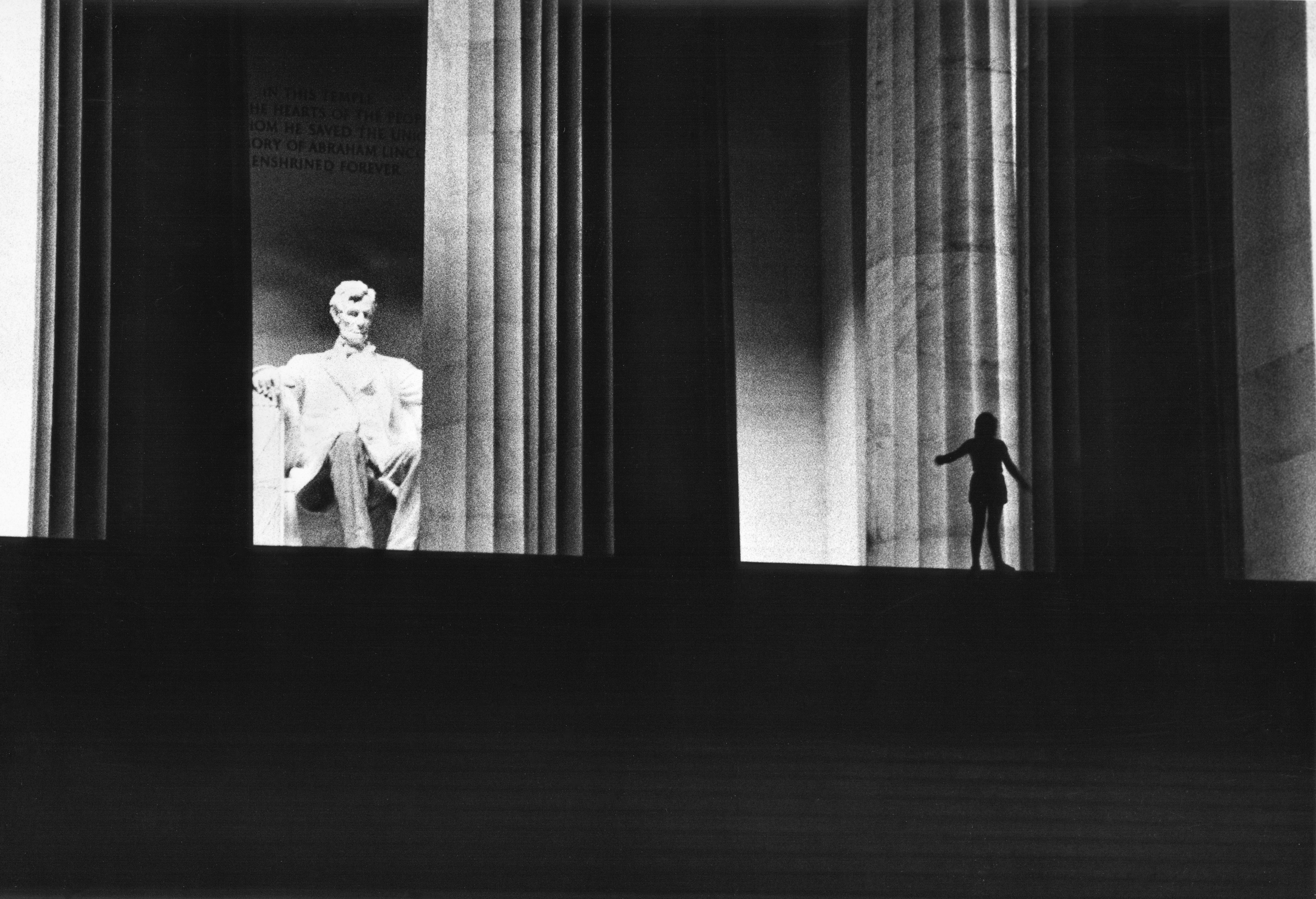
This image brings to mind History, not as a subject to be studied but as a lived experience of past performance. The posture of the woman above seems to say she is exhilarated, feeling the power of the place in that moment. As well, her juxtaposition between columns and the statue of Lincoln provides a symbol of humanity standing on the threshold, looking to the future from a background of struggle and achievement—triumph over adversity and a shift in social policy toward freedom for all.

The way I was taught early on, History amounted to a series of wars and power struggles, accounts of powerful individuals who led notorious lives in the context of creating or engaging in violence and abuses, always from the perspective of Western civilization. Nothing seemed to happen before then. I don’t remember any mention of other cultures in Africa, Polynesia, Australia, New Zealand, Central and South America (including the indigenous populations throughout the Americas) China and the rest of Asia. Japan was an exception because of World War II.   

Much later, graduate courses in anthropology introduced me to the history of diverse cultures. Wars and conflicts were included, but the emphasis was on values and customs, subsistence, architecture, creativity and belief systems. It opened my eyes to the validity of and underlying reasons for differences in perceived realities and how people responded to them. Whereas the study of history was about power struggles within and between whole systems, the focus of anthropology was on people and how they managed those systems. 

I learned that globally, irrespective of time, environment, religious beliefs or social conditions, even genetics, people’s commonalities are far greater than their differences. And the idea of race, a social construct  born of historical and contemporary social, economic, educational, and political circumstances, had no inherent physical or biological meaning. From the early 30’s anthropology textbooks cited studies showing that there were no “pure-blooded” people on the planet.

Humans are not divided biologically into distinct continental types or racial genetic clusters. Instead, the Western concept of race must be understood as a classification system that emerged from, and in support of, European colonialism, oppression, and discrimination.

American Association of Physical Anthropologists

We also learned that across cultures and at great time-depths, humans were motivated by the same quests—survival, affection, affiliation, trade, comfort,  technological development, creative expression and the making of meaning.

From the perspective of human evolution, a much broader category than History, the shape of a culture or civilization and how events unfold with them is largely determined by the perception of whom their component individuals see themselves to be—as a people, their identity as whole system. And significantly tied to it, a functioning sociopolitical structure that’s resilient and sustainable in the face of change.

After studying twenty-two collapsed civilizations, historian Arnold Toynbee found that what they had in common was inflexibility under stress and the concentration of wealth into a few hands. Another contributing factor “a loss of social unity in the society as a whole.” He said, “The West will terminally decline unless a new spiritually motivated minority emerges offering new creative leadership, bringing the society to a new level of consciousness and development.”

Systems scientists refer to this developing group as “Emergents.” (The topic of next week’s post). Basically, these are diverse people of faith guided by love, goodwill, planetary sustainability and justice for all. 

The fate of a civilization depends not only on its political system, its economic structure, or its military might. Perhaps, indeed, all of these ultimately depend in turn upon the faith of the people, upon what we believe and feel about man; about the possibilities of human nature; about our relation or lack of it to such intangibles as the meaning of morality or the true nature of value.”

Ashley Montague

In his day, Abraham Lincoln was such a person. Beyond but including his many accomplishments, his vision and integrity, I appreciate with gratitude the shift that he affected in the way we perceived ourselves—a nation united, a people undivided, “With liberty and justice for all.” From the perspective of human evolution—and American history—his creative leadership brought us to a new level of awareness and overall social advancement. 

For me, the Lincoln Memorial is not just a reminder of the man and his legacy. It’s one among many monuments around the world that celebrate the struggle and quest to discover what it means to be more fully human. On the surface, it may appear that History is about war and struggle. But those are actually the consequences of self-centered, separatist thinking. The greater story is the process of learning our true (spiritual) identity, including the potential we have when we unite to create a world that works for everyone.

In our time, what is at issue is the very nature of humankind, the image we have of our limits and possibilities. History is not yet done with its exploration… of what it means to be human.                           C.Wright Mills, American sociologist


Stories of Emergence

The Power of Emergents

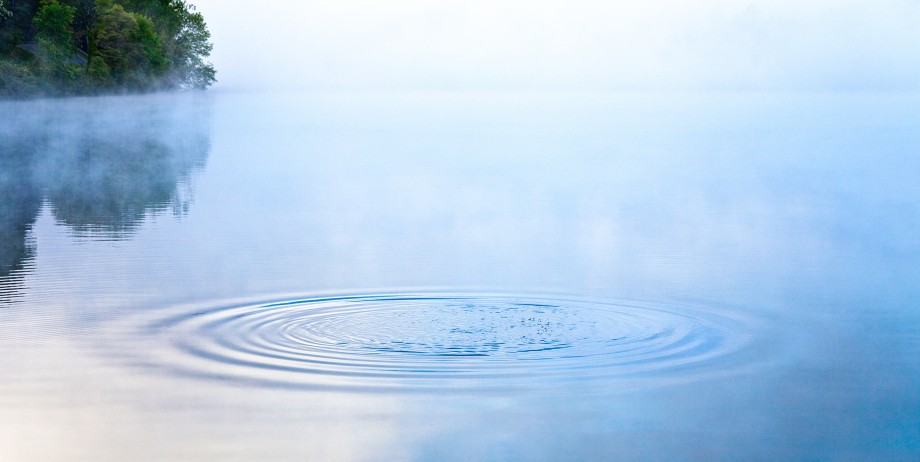
The earth’s atmosphere with watery clouds was established about three billion years ago. When creatures emerged with eyes around 100 million years ago, they probably beheld skies something like this. While researching the evolutionary timeline for this information, my attention peaked at the word “emergence,” defined by science as a process where something is coming into being. Among the insights gained from that investigation is that everything comes from something prior. And for us, the process of becoming is a story within a greater story.

The universe is not a place, it’s a story or an irreversible sequence of emergent eventsIt’s an ongoing creative event. The universe as a whole, and each being within it, is permeated with the power of emergence. 

                                 Brian Swimme, Cosmologist

In the book, The Universe Story, co-authored by cosmologist Brian Swimme and ecologist Thomas Berry, the observation was made that the challenge before us is to discover our personal story within the great “epic of being—the universe story.” The authors reminded me that our personal realities are a construct, that we’re the authors of our experience, particularly in how we respond to what’s happening around us, and the choices we make.

Expanding from a personal perspective and allowing a little imaginative perspective, if the individual stories of human beings going back 40,000 years ago were to be represented by blips of light, and the intensity of each was determined by its contribution to the whole, an animated video of human evolution would begin with dim flickers in Africa that accelerate, spread, and burst into a globe of light far brighter than the nighttime images of the planet from space. A large contributor to that light is the result of human”creativity” and “innovation.”

In whole-systems science and positive-change theory, human innovators are sometimes referred to as “emergents.” They literally emerge from the status quo but they’re not satisfied with it. Having experienced the dysfunction of no longer workable ideas, structures or ways of living, these people dream of something better. And as soon as possible they create or move toward it. For example, the Great Resignation movement, a consequence of the Covid-19 pandemic, is characterized by people developing a new story for themselves, like valuing a flexible lifestyle and working at home over a regular paycheck and being tied to a desk.

Emergents are often people who place a high value on health, personal growth and spiritual development. They can see themselves as social engineers or agents of positive change. In business and industry they’re working on alternatives to carbon-based energy, sustainable ecology, responsible forest management, animal and watershed conservation, health promotion, nutrition, applications of nanotechnology, energy-efficient transportation, artificial intelligence and the commercialization of space. These and others like them are recognized as visionaries, authors, life-coaches, globally-consciousness individuals, motivational speakers and teachers who champion authentic living, personal, social and global coherence, human potential and positive developments in every field. These people are easy to identify—in person and on the Internet—because they are already walking their talk, setting integrity to their values over fame and fortune.

Less obvious, but equally deserving of the label emergent, are family members, neighbors and everyday people who are quietly living moral, ethical and socially responsible lives, people looking for ways to work smarter and kinder with consideration for all and love of the planet. These people do a good job and take pride in their work, no matter how menial it may seem to others. Typically, they’ve opted out of the status quo and popular culture, at least in part, preferring the more quiet and substantive values of personal enrichment, fulfillment and service to others.

The coming of a spiritual age must be preceded by the appearance of an increasing number of individuals who are no longer satisfied with the normal intellectual, vital, and physical existence of man, but perceive that a greater evolution is the real goal of humanity and attempt to affect it in themselves, to lead others to it, and to make it the recognized goal of the race. In proportion as they succeed and to the degree to which they carry this evolution, the yet unrealized potentiality which they represent will become an actual possibility of the future.

Sri Aurobindo, Indian mystic, philosopher

Because the contributions of emergents have evolutionary survival value for the planet and all its inhabitants, I see them as paving the way toward a positive and more sustainable future. As the vanguard of whole system’s flourishing, they give us hope. And they deserve to be acknowledged, encouraged, and supported—by all of us, including the mass media.

After a talk at the World Future Society some years back, I identified emergents and their initiatives as part of a panel. An elderly woman commented afterward that she felt inadequate compared to the people I’d mentioned. “It’s just not in me to do that kind of thing,” she said. My response was to suggest she identify someone whose work she admires—whether or not she knew them personally—and support them however she could. It seemed to encourage her.

Each in our own way can shape our life-story to contribute to the whole, if even to pray. Actually, just be being alive we are contributing. Every day. The only question: What will be my contribution, and to what?

Change the story and you change perception; change perception and you change the world

           Jean Houston, Author, Author, human potential emergent


Authenticity / Going Home

Where is our true home?

Geese In Flight

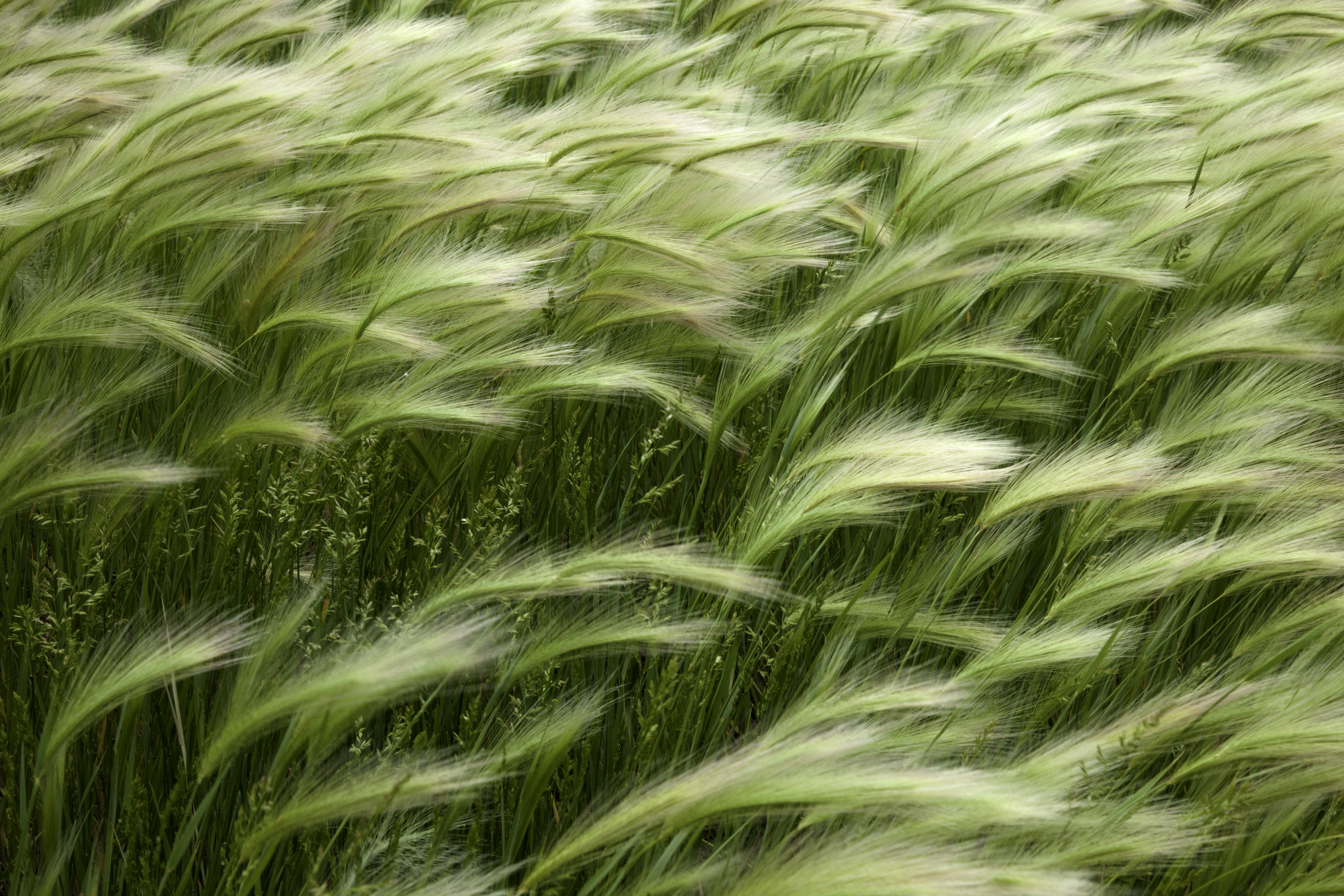
As these geese take flight, returning to the places they were born to find food and mates, my thoughts turn to the place we call “home.” For some, it’s where we were born, the house we lived in the longest or where we live now. If “Home is where the heart is,” it could simply consist of thoughts or memories of living together. What is it that makes a home? Is it the place? The house? The people who live in it? All of these? Something else? Something more?

I notice that as our location changes we make new homes. And I wonder about those who have several houses. Are they all considered home? Or is there one place that has priority? And do different members of the family consider the same place home? Sometimes I hear people talk about “Home-home” and “Home away from home.” So what constitutes home? Is it where the heart is? I think for most of us, it’s the household where we felt or now feel most connected and comfortable, the place where we can be our most authentic self.

The image of these geese, particularly their reflections on the water, has me pondering what it means to “return home.” Many of us go home for holidays, perhaps to reconnect with our roots, relatives and friends. Whether or not this involves travel, we return to the places where we found or currently find comfort, hopefully acceptance and the opportunity to be truly ourselves and be appreciated.

I also recognize that there’s an inner home, the place where the true Self resides. Returning there, connecting with that place in me, I’m inspired to live as I ought, not just as I want. Yasuhiko Kimura, a Japanese mystic and author who integrates spiritual philosophy and science, defines authenticity as “The clarity of being in which there is no self-deceit.” Liiving authentically then, is the expression of thought, word, and deed with integrity to purpose rather than social norms, circumstances or the expectations of others.

Going home in this sense is reconnecting and recommitting to a life of focused purpose—What am I here to be? As well as what am I here to do? One of the ways I do this is by reading through my Meditation Workbook, a collection of my own and other’s inspirational thoughts, poems, prayers, meditations, contemplations, essays and information—writings that have been important to me. As with photographs, they reflect back to me certain qualities of identity and aspiration. By reconnecting with my “family” of beliefs and values in those pages, I can better act deliberately in ways that reinforce them—always with an open mind and a willingness to modify them as consciousness evolves. As a source of inspiration, these materials always re-energize me and call me to center.

What a blessing it is to have comfortable and enriching homes, both in the world and in consciousness. The temptation is to think that these are due to circumstances. But just as a house is not automatically a home, both domains require continuous work—physically, mentally and spiritually. And like migrating geese, to get there we have to go there.

The light that shines farthest shines brightest at home.

              Rhoda and Homer Slabaugh (Amish)

Symmetry

An indication of balance and agreement

Train Trestle Symmetry

According to Nobel laureate Phil Anderson, “It is only slightly overstating the case to say that physics is the study of symmetry.” The word “symmetry” comes from the Greek, synnetria, meaning “Agreement in dimensions, due proportion, arrangement.”

I’ve chosen this theme for contemplation because, somewhere along the line, I’d gotten into the habit of noticing symmetries and associating them with the aesthetic sensibilities of harmony, proportion, and balance—touchstones in my everyday aesthetic awareness. 

Whenever I’m made aware of something symmetrical, whether in a garden or grocery store, on a digital clock or distant highway, I experience a little Aha!, a twinge of harmony. I’ve come to think of it as a sort of attunement to the fundamental patterning of the universe. The experience seems to say to me, “What you’re thinking or doing in this moment is in harmony with your purpose—and all is well.” I reached this conclusion because, over the course of many years, the feeling that “all is well” occurred consistently in association with sightings of symmetry. Subtle experiences like this are rarely talked about, yet imagination and pattern recognition are among the features that distinguish us from other members of the animal kingdom.

This is not to say that symmetry is the only or even primary arrangement of the universe. It’s not. Asymmetry is the other side of the coin—and just as significant. But to show the pervasiveness of symmetry and to help us know where to look, it commonly appears in many domains.

Accounting: (Balance sheets)

Aesthetics: (Symmetry in faces has been shown to be physically attractive)

Architecture: (Every civilization. Cathedrals, temples, mosques, pyramids, White House)

Art: (Pottery, jewelry, quilts, sand-paintings, carpets, furniture, masks)

Biology: (The DNA spiral. Bilateral animals: humans, plants, starfish, sea urchins)

Chemistry: (Symmetry underlies all specific interactions between molecules in nature)

Communities: (Certain suburbs, streets, city grids)

Consciousness: (Yin/Yang. Logic: If Paul is as tall as Karen, Karen is as tall as Paul)

Food: (Fruits and vegetables cut in half are all symmetrical)

Games: (Chess, Chinese Checkers, Playing Cards, Hop-Scotch, Jump-Rope)

Geometry: (Drawings and transformations, scaling, reflection, rotation)

Language: (The words—“Mom” “Dad” “Pop” “Nun”)

Mathematics: (Algebraic equations. Even and odd functions in calculus)

Music: (Canons, permutations, invariance, pitch, scales)

Nature: (Rainbows, raindrops, leaves, sand dunes. beehives, bird, birds, insects, reptiles)

Physics: (The symmetries of the laws of physics determine the properties of particles)

Roads: (Right & left lanes, cloverleafs, tunnels, overpasses)

Social Interaction: (Reciprocity, empathy, dialog, respect, justice, revenge)

Spatial relationships: (Vertical or horizontal. The photograph of the above train tressel)

Time: (Expressed in numbers: 9:09am , 10:10pm, 6:36pm, 1:41am, 3:33pm)

Transportation: (Cars, trucks, trains, airplanes)

It is the harmony of the diverse parts, their symmetry, their happy balance; in a word it is all that introduces order, all that gives unity, that permits us to see clearly and to comprehend at once both the ensemble and the details.

Henri Poincare, French theoretical physicist

________________________________________

smithdl@fuse.net

DavidLSmithPhotography.com

Photography Monographs (Select a book. Click on in it to turn pages)


Silence

Fence Shadows On Snow

Precious silence often accompanies a fresh and heavy snowfall. The contrast between it and the sounds we normally tune out, calls our attention to it. We go outside to watch and listen closely. We even seem to breathe easier as the snowflakes make a barely perceptible sound. Before the shovels and snowblowers come out, before the sounds of laughing kids and car engines turning over, there’s that moment when we stand still and relish the quiet.

I made this photograph in one such moment. I remember it well because it was one of those instances where, after I made several exposures, I lingered a while to listen to the stillness and watch as the evening light gradually diminished. For me, the sensibility of silence in this image is reinforced by the iron “guards” standing at attention with their spears, oblivious to the cold, wind and coming darkness. The regularity of the spear-shadows contrasts with the chaotic shadows of the trees, suggesting an integration of humanity (orderly lines) living in harmony and nature (disorderly shadows). Further, I notice that although the shadows take different forms, their brightness values are the same—a visual demonstration of unity in diversity.

In my experience silence seems to encourage more silence. Might the memory of past quiet moments, having been so refreshing and enriching—sometimes eliciting awe—prompt us to thirst for more? I think the centering that comes from being in nature at any time of year can be attributed as much to sound as to sight. The song of a bird, snow falling or leaves crunching underfoot, dripping or falling water or wind blowing through the trees are just a few of the sounds that connect us to the deepest roots of our physical being.

I find it curious, the role that the fence plays in contributing to the sensibility of this image. It seems the evocation would not be as potent without it. Wrought iron, being metal, dark and black somehow looks colder than the snow itself. Its spears, literally frozen in place, enhance the qualities of cold and silence. Workers and travelers often see snow as a nuisance. Kids see it as an opportunity for fun and a day off school. Practical considerations aside, stopping to take in its beauty and listen to the sounds of silence can be very enriching.

When words become unclear, I shall focus with photographs. When images become inadequate, I shall be content with silence.

Ansel Adams

Serenity

Where peace precipitates the power of potential

On the evening this photograph was made, the dominant sound in this airport parking lot was birds—a stark contrast to the busyness and clamor of cars, shuttle-busses and conversations that once pervaded it day and night for several years. The difference between the activity then and the serenity I experienced is heightened, I think, because the central structure existed, literally, to provide shelter. Ironically, the emptiness of the space in this image sort of fulfills the site’s purpose aesthetically by conveying the sense of peace.

The emptiness and quiet of the landscape encourages me to reflect upon its elements. Had there been cars, shuttle-busses and people in the photograph, my attention would have been drawn to the human rather than physical aspects of the image. Instead, the simplicity of elements and the long shadows direct my attention to the expanse of asphalt. I think of the forest it must have replaced, the animals and birds that were displaced, the mountains of sand and gravel, oil and paint that were used in its construction. It’s not that I object to this use of natural resources. I don’t. Building is what we humans necessarily do—it’s the activation of energy flowing from the desire to create and grow.

In addition to the raw materials that it took for this landscape and shelter to exist, I appreciate the army of individuals who envisioned, designed, leveled, supplied and built them, including the electricians who wired it for lighting and those who manufactured the glass and aluminum. Having traveled in countries where paved roads and electricity were barely functional, this facility stands as a testament to the power of collaboration.

The emptiness of a space designed to facilitate the movement of lots of people has a haunting quality. Not in a spooky way, but in the sense that purpose here is at rest. Potential. And because everything looks fairly new—no weeds pushing up through the asphalt, no fallen light poles or broken glass—there’s the hope of renewal. (And that hope has recently been realized. Today, this parking lot is back in action serving as an airline hub for a major freight company).

In serenity it’s easier to touch impermanence, ebb and flow, rising and falling, coming and going. It gives rise to the place in us where purpose discovers its most appropriate and creative action, for in the state of potential, all things are possible.

The more tranquil a man becomes, the greater is his success, his influence, his power for good. Calmness of mind is one of the beautiful jewels of wisdom. 

James Allen, British philosopher

Ladder of Success

How we define it moves us in that direction

Construction Ladder

Personally, spiritually, professionally, economically, socially, and politically we’re all climbing ladders toward “success.” What prompted the selection of this image for contemplation was hearing someone in a television commercial ask, “What do all artists seek?” His answer: “Recognition.” Ugh! I couldn’t let that go.

Did Michelangelo sculpt and paint to be recognized—or for money? What about Vincent Van Gogh or any of the masters of Eastern and Western civilizations? Twenty-first century, Western culture is so saturated with materialistic, competitive, end-product and celebrity values it’s hard for us to imagine anyone defining success as other than fame and fortune.

Case in point: My wife, Linda, observed that in an English class discussion her students said what they valued most was “making a contribution.” Ten years later the consensus was wanting to be known—famous. The latter perspective was echoed in my own teaching experience.

Since we largely define success for ourselves—consciously or unconsciously, I thought I would share some of the observations on the subject that I collected as quotes. Before presenting them, however, a perspective that I feel is important and missing from these perspectives is that success for many people is achieved more through process than product, particularly when the activity is aligned with their purpose. Not just “doing,” but “being”— why they’re here, on this planet. As noted on the home page, I write and photograph to feed my soul. Anything that may come of it for others is just “icing on the cake.” I know I’m not alone in this. So here’s what conventionally successful people said about it.

To laugh often and much; to win the respect of intelligent people and the affection of children; to earn the appreciation of honest critics and endure the betrayal of false friends; to appreciate beauty, to find the best in others; to leave the world a little better; whether by a healthy child, a garden patch or a redeemed social condition; to know even one life was breathed easier because you have lived. This is the meaning of success.

Ralph Waldo Emerson, philosopher


My mother said to me, ‘If you are a soldier, you will become a general. If you are a monk, you will become the Pope.’ Instead, I was a painter, and became Picasso.

Pablo Picasso, artist, painter


History has shown that the success of cultures and even of great civilizations is measured by the way they deal with crises; the greater the challenge, the greater the opportunity for positive response. The same is true for individuals.

George Leonard, author, social scientist


Individual success depends on environments that trigger the fulfillment of our genetic potential. Environments that motivate through fear literally shut down the potential for growth. Those that motivate through vision, open us up to express unforeseen possibilities.

Bruce Lipton, biologist


The key to modern success is human resources. How well you educate, train, and treat people in your society becomes more important than the coal you dig, trees you fell, or rivers you dam.

Herbert Striner, Economist, educator


We now have the technology, the resources and the know-how to make this world a 100% success for every human being on Earth.

R. Buckminster Fuller, engineer-philosopher


The soul of an enterprise bonds it together as one force giving it identity, purpose, direction and a reason for being… Many pooh-pooh the reality and value of soul in the corporate world but it is truly amazing how, given the same business circumstances, some companies do so much better than others. It is not soul that assures success, but it is the presence of soul that unifies the mission to achieve success… Companies with soul never lose sight of one thought – If you are not making history, you are history!

Bob MacDonald, Author, science journalist


Try not to become a man of success, but rather try to become a man of value.

Albert Einstein, scientist


Growth And Development

Nautilus Shell


The chambered nautilus is a creature that inhabits the Pacific and Indian oceans, today between depths of 600 to 1200 feet. Appearing in the fossil record before fish, dinosaurs and mammals some 500 million years ago, they grew up to 20 feet long! The spiral occurs as walls are formed to seal off and make chambers to regulate buoyancy. As displayed here, the image moves me to considerations of human growth, development and beyond.

In the shell’s central spot I see the point of creation and emergence, be it the womb of an individual mother, our Earth Mother or dark energy at the beginning of the universe. It can represent any beginning: the birth of a project, career, a new direction in life or the birth of a nation. With movement, the spiral begins, not as a straight line, but as a curved one. Largely because clocks tick off present moments, we think of time as a straight line between yesterday, today and tomorrow. But indigenous peoples all over the world perceived time as a spiral, repeating periods marked by the regular “journeys” of celestial bodies—gods in their view that were given names and personalities. For instance the ancient Maya—whose calendar was derived solely by observation and is accurate to within decimal points of our own—made detailed charts to indicate what happened in various cycles so the same or similar experiences could be anticipated on the next occurrence of the cycle. Researchers today refer to these periods as “calendar rounds.”

Movement gives rise to form—cells, walls in the nautilus shell, dark matter, stars and galaxies in the cosmos, knowledge in human beings, cities and governing constitutions in nations. Personally, I think of how many different people I have been since I became aware of myself as an individual. Form after form, experience after experience, role upon role, as interests, people and opportunities came and went, my personality, consciousness and priorities evolved. I’ve often said, “On this turn of the spiral…” I see things differently. I no longer believe “X” or want “Y.” With experience and education, the chambers of consciousness and perception widen, become more expansive and inclusive. It’s a process of reaching outward while remaining  connected, grounded perhaps. More boyant. All that came before is not lost, is present still, contributing to the next, more expansive part of “me.” As with everything in nature, growth and development is never a straight line. It’s a spiraling ascent—rounds that come around, providing opportunities to reexamine and do better than repeat.

All evolution is a dance of wholes that separate themselves into parts and parts that join into mutually consistent new wholes. We can see it as a repeating, sequentially spiraling pattern: Unity—Individuation—Competition—Conflict—Negotiation—Resolution—Cooperation—New levels of unity and so on. 

Elisabet Sahtouris

As Above, So Below

Realities that appear separate are one

DC6844

One of the benefits of a photographic image is that it presents us with a moment, a fraction of a second that holds us there so we can reflect and appreciate the subject matter—and possibly some significance it might have.

The live scene or situation in front of the camera is part of our continuous experience, so mentally and physically we’re always on the move with respect to it. We give it fleeting attention. Ah, nice forest, we think. Beautiful trees! And then we’re on to the next thing. Thoughts change in microseconds. We loose interest. We become distracted. And the scene changes. Everything changes.

But when we sit with an image, the act of focused attention—contemplation—promotes the inner assimilation of the subject matter in that captured moment. Spending time with a beautiful image can have the same, albeit more subtle, effect of recharging our batteries and resetting our priorities, like when we spend time in nature or goes on a retreat. We especially recognize these benefits are occurring when the experience or observation produces an inhale, a deep “breath of fresh air.” It’s an indication that we’ve made a connection, tasted the Ultimate Reality, and all is well. A bit of the life force has been assimilated.

Beyond assimilation, there’s more to be gained by contemplating an image (thus the nature of this blog). For instance in the above image the colors are beautiful and they mark a transition from one season to another. But spending more time with the image we go deeper and begin to see what else is going on.

There are meanings to be gleaned beyond surface appearances in every image, whatever the medium. A consideration for me here, is the nature and source of color—the sun and an interpreting brain, the experience being a mental construct based on a complex of wavelengths, surface characteristics, biological, neural and social conditions. I also think about the diversity of different species of trees and how they blend together to create a “symphony” of harmonizing colors, forms and textures. Going deeper still, the image serves as a metaphor for change itself—life, death, transformation and renewal.

As I observe the reflection of the forest on the water, an ancient adage came to mind: “As above, so below”—how human beings shape their world based on what we observe in the cosmos.  But the analogy doesn’t quite hold in this image. The reflection on the water is not a detailed or even accurate representation of the forest. Nonetheless, it is complimentary.

The reflection itself generates an opportunity for meaningful contemplation. When I put my hand up to the screen and crop out the line of trees, the reality and its “message” is “forest.” The reflection presents a different reality, prompting a sense of blending, merging, motion, and unity. Where we are, in time, space, family and culture determines what we see. And believe. Above, the forest reality representing the absolute is clear without distortion. Below, the reflected reality representing human consciousness— thoughts about what is real— is limited and distorted, constantly changing and blending. Nonetheless, it’s shimmering. Beautiful in itself. And a tantalizing preview of what’s to come.

Meanwhile, we keep looking up—literally and figuratively. Those who have stood back far enough, tell us that, although our personal realities are as diverse as there are persons, they and the Absolute are actually One.

As above, so below.

Hermes Trismegistus, Legendary Greek sage


Branching

How life moves in sustainable ways

Morning Glory

From universe to “nanoverse,” one of nature’s most common structural features is “branching.” Networks of all kinds, physical and intellectual, are grounded in a pattern that chemists refer to as “child” (smaller channels) and “parent” (larger) branches.

At the human level we see it in living systems—the brain, arteries and veins, leaves and trees. Branching occurs in chemistry, for example, when carbon atoms are cross-linked to form the hard plastic used in safety glasses. Branching made computers and the Internet possible. Flying at night we can clearly see the extensive branching of highway systems. Railways branch. There’s branching in mathematics and geometry. And we speak of “branch libraries” and businesses with branch offices and facilities. The phenomenon occurs wherever there is connection and flow—cities and suburbs, electrical systems, plumbing and sewer systems, streams and rivers, erosion, sand dunes and musical tunes. Branching is of the natural order.

Reflecting on the above image, I observe order within the chaotic, irregular lines. There isn’t one straight line, and no two of them are alike or even aligned. Yet there is cohesion, functionality and aesthetics. Systemically, I see the “parent” channels carrying water and nutrients to “child” and sub-offspring channels throughout the leaf. A microscope would reveal that each of the barren looking “fields” in between channels actually consists of a myriad of more interconnecting and intercommunicating cells. For me, the intricacy and complexity of these connections and flow channels triggers a deep appreciation of this pattern—seen on other celestial bodies as well—one that’s economical, resilient and life-supporting.

I also appreciate the pattern’s grace and harmony. Absent the color, and knowledge of the subject, one could imagine an extensive land with interstate highways, roads and lanes running through it. Zooming in would reveal a heavily populated area with living, thinking, decision-making beings—individual cells that have unique needs, wants and aspirations relating to survival, development, personal space and relationships. And they function together in harmony, as a whole! There are no battlefields, no indication of intolerant, greedy or power-hungry cells. The visual evidence alone would point to a system where sharing and collaboration are occurring throughout the land. Bring back the color and the entire space   would live up to the word “verdant.” Alive.

Might this pattern and process, which appeared on the Earth about 130 million years ago and is still visible and viable, suggest something in the way that human social systems ought to work—behaving  as we are in truth, interconnected and interdependent?

The vigorous branching of life’s tree, and not the accumulating valor of mythical marches to progress, lies behind the persistence and expansion of organic diversity in our tough and constantly stressful world. And if we do not grasp the fundamental nature of branching as the key to life’s passage across the geological stage, we will never understand evolution aright.

Stephen Jay Gould, Paleontologist, historian of science