
What the Olympics are Teaching Us About Hunan Unity
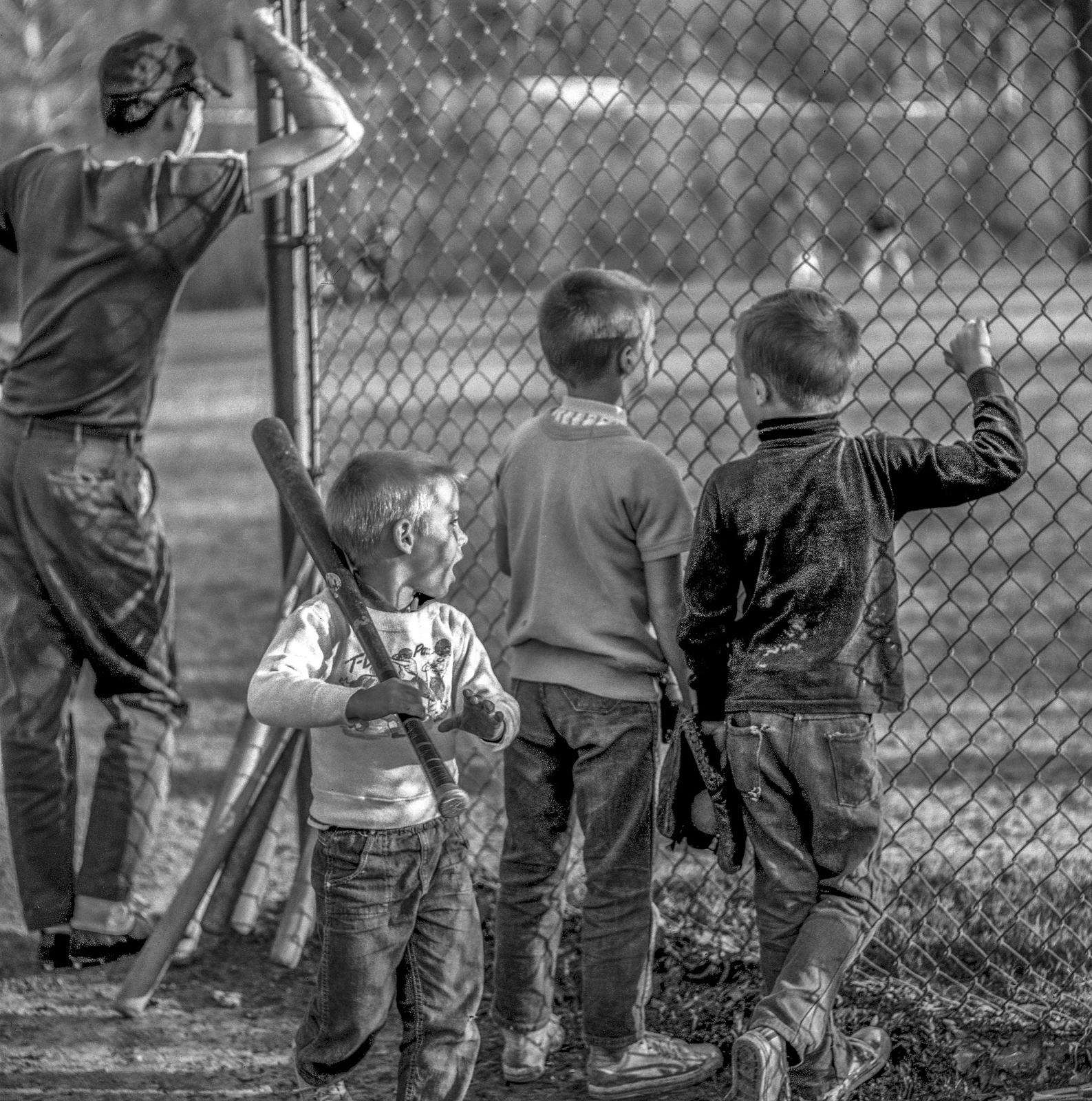
I’m not a sports person. Nonetheless, I have a deep appreciation for some of its guiding principles. From little league baseball to the sport of champions, sportsmanship demonstrates the effectiveness of whole systems thinking. Proud parents often observe that their children learn what it takes to “make it” (earn a living) in a complex world, particularly in the realm of jobs, careers and commerce. The most obvious lessons common to all sports are competition, discipline, focus, teamwork and appropriate responses to losing.
At all levels of sport, from a whole systems perspective, “competition” is currently the driving force. It’s the reason players and teams come together and work hard to reach a common goal. Whether the award is a fancy ribbon, trophy or gold medallion, it shouts to the world that “I’m a winner!” and “We’re the best!”
Winning
Physically winning creates a surge of adrenaline, dopamine and endorphins, proof that hard work has translated into a successful performance. In this heightened state of feeling alive, the senses are sharpened and pain is overcome. Psychologically when a long held goal has been achieved it reinforces the belief in one’s capability. It says, “I am a success.” The intense happiness and relief affirms a sense of self-worth and belonging—to a team or nation. Stress is relieved and gratitude is felt for coaches, family and others. Socially winning brings public acknowledgement, admiration and prestige. It can also lead to sponsorships, leadership roles and fame. Spiritually winning can create the transcendent feeling of timelessness, of being in the flow—life coming together around purpose and meaning, the feeling of participating in something larger than one’s self. And breaking limits. In a state of momentary presence and exhilaration, the inner and outer worlds seem to be aligned.
Synergy
The opening closing ceremonies of the Olympic Games are always exhilarating for me. Seen through the lens of whole systems science, synergy is evident: The spirit of the Games is greater than the sum of their parts. Televised worldwide, the “atmosphere” surrounding these events (the collective consciousness of the participants) moves us to do better and persevere when it comes to realizing our own potentials. In living systems, synergy occurs when people fall in love with a vision of themselves or when team members share a passion for achieving a common goal—such as winning a gold metal.
Among the Olympians, we see it in their smiles and hugs, the pride of representing a nation and the tears of both joy and defeat. On the whole, it’s the love of high principles (consciousness) established by the Greeks and passed down undiluted to today—that make the Olympic Games far more than a sporting event.
Core Principles of the Olympic Games—Their “Spirit”
Excellence: Not merely winning but giving one’s best in the joy of effort
Friendship: Sport as a means of mutual understanding across cultures
Respect: For opponents, rules, diversity and the environment
Peaceful Internationalism: Nations gathering in symbolic truce to compete under shared rules
Education Through Sport: Formation of character, of body, will and mind integrated
Human Dignity: Every athlete participates as an equal bearer of worth
Unity in Diversity: Many nations; one field of play
Notice: These are not competitive principles. They’re relational and aspirational. Competition is the structure, but it’s these values that constitute “The Olympic Spirit.”
How the Olympics Spirit is Greater Than the Sum of Its Participants
- No single athlete creates global significance. Together, through ritual and symbol their performance tells the story of human potential.
- For a brief period, the tensions of world politics soften. The system creates a space for peace, a temporary global truce which governments are not able to generate.
- Standards of excellence are elevated. Athletes push one another to levels no one could reach alone; the “field” raises the ceiling of human capability.
- Athletes become more than private persons. They symbolize communities and cultures, even humanity as a whole. Spectators get to experience themselves as participants in a global story.
- The rituals, particularly the opening and closing ceremonies, create a sacred atmosphere. And that creates cohesion.
- The Games make abstract ideals visible: courage, perseverance and grace under pressure. When thousands demonstrate these simultaneously, virtue becomes tangible and desirable.
Systemically, when coherence is strong, energy flows. And when energy flows, something greater (a higher level) appears. In this case, that “something greater” is what is described as the “Spirit of the Games.”
What if—The Paradigm of Love?
There’s a reason why we come into the world. And at some point the soul awakens us to it—our purpose. In order to realize it, the body comes equipped with specific gifts, which prompt development, sometimes to heightened levels of accomplishment. Currently, when a particular talent appears to have exceptional potential, the “culture” makes “winning”—the besting of others and the perks associated with it—the driving motivation for many athletes, coaches, sponsors, parents and friends.
In the paradigm of love the motivation would come from the increased fulfillment of one’s personal purpose. “Who am I as a person? What am I here to do?” Success would be measured by continuous growth toward excellence, with increasing opportunities to express and celebrate one’s talent. Whether individuals or teams, those with the same ability would become “partners” rather than competitors, “collaborators” intent on uplifting the sport as a whole. Athletes and teams would be asking each other, “What can I/we do to help you realize your potential?” In this scenario everyone wins; no one would lose. Evidence of this mindset was apparent in the recent Olympic Games where, across cultures, those who didn’t “metal” were hugged and joyously congratulated by those who did. More valuable than gold, silver or bronze were these unifying gestures of love and celebration.
Commenting on the 2026 Winter Olympics, Tara Lipinski said —
There really is an unspoken language between Olympians… It wasn’t all about the medals, winning or losing. Of course their careers are so important to them, but there was a deeper emphasis on who they are outside of being an athlete…
Successfully realizing one’s potential in a particular area is a step toward the even greater challenge of becoming a whole person. That is, attending to the full complement of personal gifts motivated by love, growth and joyful expression. The Olympic games reveal more than strength or speed. They tap into our longing to belong to something larger than ourselves.
For now, competition unites us, urging athletes toward excellence. But beneath the medals and anthems, another energy is emerging. We see it in embraces, shared tears and respect between rivals. Perhaps, on the next turn of the spiral the deeper victory will not be standing above others but standing within a field of shared joy and whole-person becoming—organized around what we love together: the Earth, the gift of life and the flowering of each person’s potential seen as a contribution to the sport, society and world; in this scenario, no one need lose for humanity to rise. The Olympic Games are not merely sporting events. From a whole system’s perspective, they can also be seen as rehearsals for planetary coherence.
___________________________________________
My other sites:
David L. Smith Photography Portfolio.com
Ancient Maya Cultural Traits.com: Weekly blog featuring the traits that made this civilization unique
Spiritual Visionaries.com: Access to 81 free videos on YouTube featuring thought leaders and events of the 1980s.
 Contemplative Photography