
How Love is Learned, Modeled and Shared From Early Childhood on
Kinds Of Love
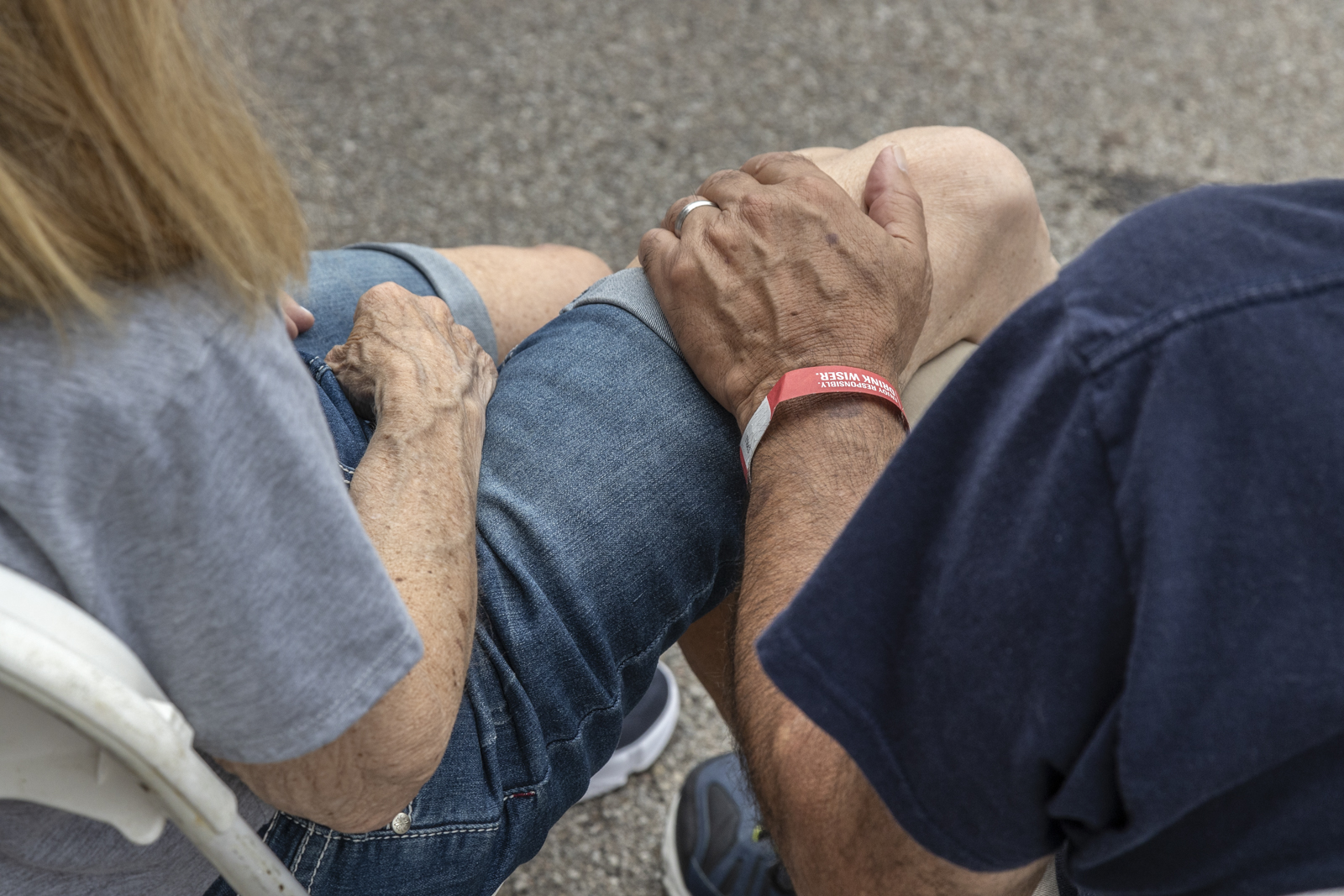
Love is a family of capacities. Some forms occur through biology, others through relationship and still others through deliberate moral and spiritual cultivation. As a felt experience, many types have been identified. Eros is romantic or erotic; Philia is friendship and affectionate; Storge is familial; Agapé is self-giving without expectation of return; Attachment love is safe and trusting; Companionate love is affection with commitment; Compassionate love is concern for another’s suffering and well-being; Self-Love is healthy self-respect and inner kindness; Biophilia is love of nature and the Earth (more than the human world) and Transcendent or Sacred Love is the experience of oneness—with God, Being itself or Creation. Notably, sages across spiritual traditions proclaim that love is not just an experience, it’s what we are.
In The News
When hate crimes are reported, love is often cited as the antidote. We hear it spoken by grieving families, faith leaders and communities trying to make sense of violence. Their call is often heartfelt, sometimes defiant, occasionally exhausted—but persistent. Love, they say, is the answer. Nelson Mandela once named the deeper truth beneath this plea: “No one is born hating another person… People must learn to hate, and if they can learn to hate, they can be taught to love.”
I wondered, is that true? Can love be taught? Is it being taught? If so, where, in what context and with what results? Researching, I learned that the strongest empirical studies don’t actually measure or teach “love” itself, but the related capacities that underlie loving behavior—empathy, compassion, emotional literacy and prosocial behavior. Because I believe that love can be learned directly, I’ll propose a teaching strategy based on my experience as a lifelong contemplative photographer.
Teachings Related to Love—That Work
Early Childhood Development
Neuroscience and developmental psychology show that the foundations of trust, love and relationship skills form very early, with experiences in infancy shaping future relationship patterns. Emotional interactions in the first months of life influence how people handle love, trust and conflict decades later. Similarly, classic developmental research finds that young children show empathetic and prosocial behaviors surprisingly early, and these behaviors are shaped significantly by the child’s environment and caregiving relationships — not just instinct.
Social-Emotional Learning (SEL)
School-based SEL programs explicitly teach skills including empathy, perspective-taking, kindness, and cooperation—all the elements that underpin loving relationships. Numerous empirical studies show that these programs increase prosocial behavior and reduce aggression. Roots of Empathy, a well-researched SEL curriculum used in elementary schools across multiple countries, has shown increases in empathy and caring behaviors and decreases in bullying and aggression. And research from UNICEF and educational psychology suggests empathy itself can be taught and nurtured through modeling, guided discussion and structured learning environments.
Parents & Teachers
Children learn emotional skills not in isolation but through relationships with caregivers, parents and teachers who model empathy, kindness and emotional responsiveness. (The Decision Lab)
Further evidence from UNIFEF demonstrates that when parents intentionally cultivate emotional awareness and compassionate responses, their children internalize these patterns as part of their social repertoire. Parents’ empathic behavior and emotional responsiveness, how they react to a child’s distress, predict their children’s empathic skills. (National Library of Medicine). Teacher-child closeness and emotionally supportive interactions in school correlate with greater empathy and emotional intelligence in children. (National Library of Medicine). And this aligns with decades of developmental psychology and observational learning research as a mechanism by which children internalize interpersonal ways of being.
Religion
Common to all organized religions is a call to love. A meta-analysis of 93 studies with over 11,000 participants showed robust effects of religious “priming” on prosocial outcomes, including helping behavior and fairness in experimental tasks. A similar review concluded that religious beliefs can increase cooperation and reduce selfishness in anonymous settings, pointing toward a causal influence of religious ideas on behavior. And weekly worship attendance is associated with more volunteerism and structured altruistic behavior, especially when norms of loving one’s neighbor are strongly emphasized. (Oxford Academic). Again, these results don’t measure love, but they suggest that religiously framed moral concepts can activate prosocial tendencies—behaviors closely associated with love—generosity, cooperation and empathy.
So, these personal and prosocial capacities can and are being taught with successful outcomes. That’s really good news! But given the preponderance of hate crimes in the news, there are many people, who in their youth didn’t have these capacities actualized. The reasons are many and complex. This is not the place to touch on them. What I can provide, as a lifelong contemplative photographer, are a couple ways to teach love directly.
Ways to teach love
Love is dynamic, it urges expansion. And wanting to be shared, the experience seeks expression.
Foster Expansion
Irrespective of age, venue, or class size the teacher says, “I’m going to ask you to write some words, but know ahead of time, no one will ever see them. You can destroy your list. Okay, now think about an object that you love. Any object. You don’t just like it. This is something you love! Write it down… Now think of something you love to eat. Write it down… ” (Continue: something they love to do, would love to have, a person they love, an animal or pet, something in nature).
“Of all the things you wrote, which of these brings the deepest feeling of love? (Pause). Notice where you’re feeling it—which part of your body? One part? Other parts? (Pause) Now, holding that feeling, look what I have here (an unexpected object). Wrap it in the glow of that feeling. (Pause) See if you can love it. (Pause). Look outside and select just one thing out there—something you’d never expect to love, like a chair, truck, telephone pole or trash can. Say to yourself that you love it. Wrap it in love. (Pause) What else can you love out there? Go from one thing to another, wrapping it with love. (Pause). Finally, see if you can back up in your mind’s eye and take in the whole scene—everything. Put it in a gigantic bubble of love….”
Once we love, we look for more to love—and more often, particularly when we realize that it can be a choice. Like the Barry Manilow song, Tryin’ To Get That Feelin’ Again we want the get it again—and again—and again…” In an advanced lesson with adolescents or adults, students could be asked to imagine someone they despise—and wrap them in a feeling of love. And then ask to what extent they can extend their love—Earth? Sun? Cosmos? The Creator?
Deepen Expression
Love is a feeling that wants to be shared; we can’t hold it in. As a companion to the above practice, any form of creative activity will accomplish this. Nothing new. As noted, I’ll suggest a “contemplative” approach, irrespective of the medium.
(Instruction) To contemplate is to hold our attention on just one thing— anything or anyone, even a thought or an image—to delve deeply into its essence and existence, how it came to be. Engage your imagination and backtrack that subject’s evolution down to its component parts (fibers, chemicals, plastics, glass, metal). Visualize how and where they were formed. Of what elements? Imagine the atoms or cells. Keep on going—formation of galaxies and stars.” The more we know about science, the deeper we can go. “How did they come to be?” Continuing, eventually, all contemplation leads to Source, creation and for some, The Creator.
If you wish to make an apple pie from scratch, you must first invent the universe.
Carl Sagan, Astronomer
Having made this kind of journey, students will see the subject they’ve chosen with “understanding eyes,” and be better equipped to express their love because they’ve touched the object’s essence or “Spirit” within the form. While others may not see what the creators see or experience in their creation, but they will know that it “holds” within it, deep appreciation and meaning. Ideally, each student would present their creation to others, to help them understand their meaning and intention. A vase, an artifact (art after an act), is not just a vase. It’s an expression of the consciousness, perception and intention of its creator.
Things made must resemble their maker in some deep way.
Beatrice Bruteau, Philosopher, author
____________________________________________________
My other sites:
David L. Smith Photography Portfolio.com
Ancient Maya Cultural Traits.com: Weekly blog featuring the traits that made this civilization unique
Spiritual Visionaries.com: Access to 81 free videos on YouTube featuring thought leaders and events of the 1980s.
 Contemplative Photography