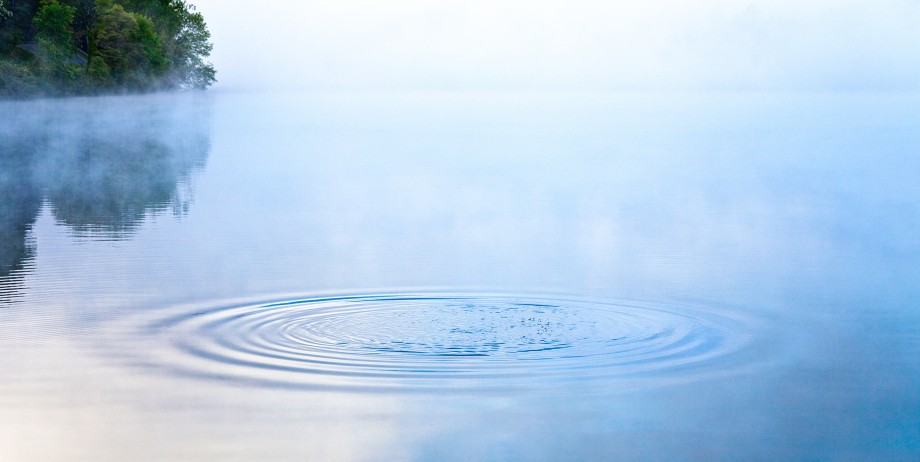
Everything alive has a unique purpose
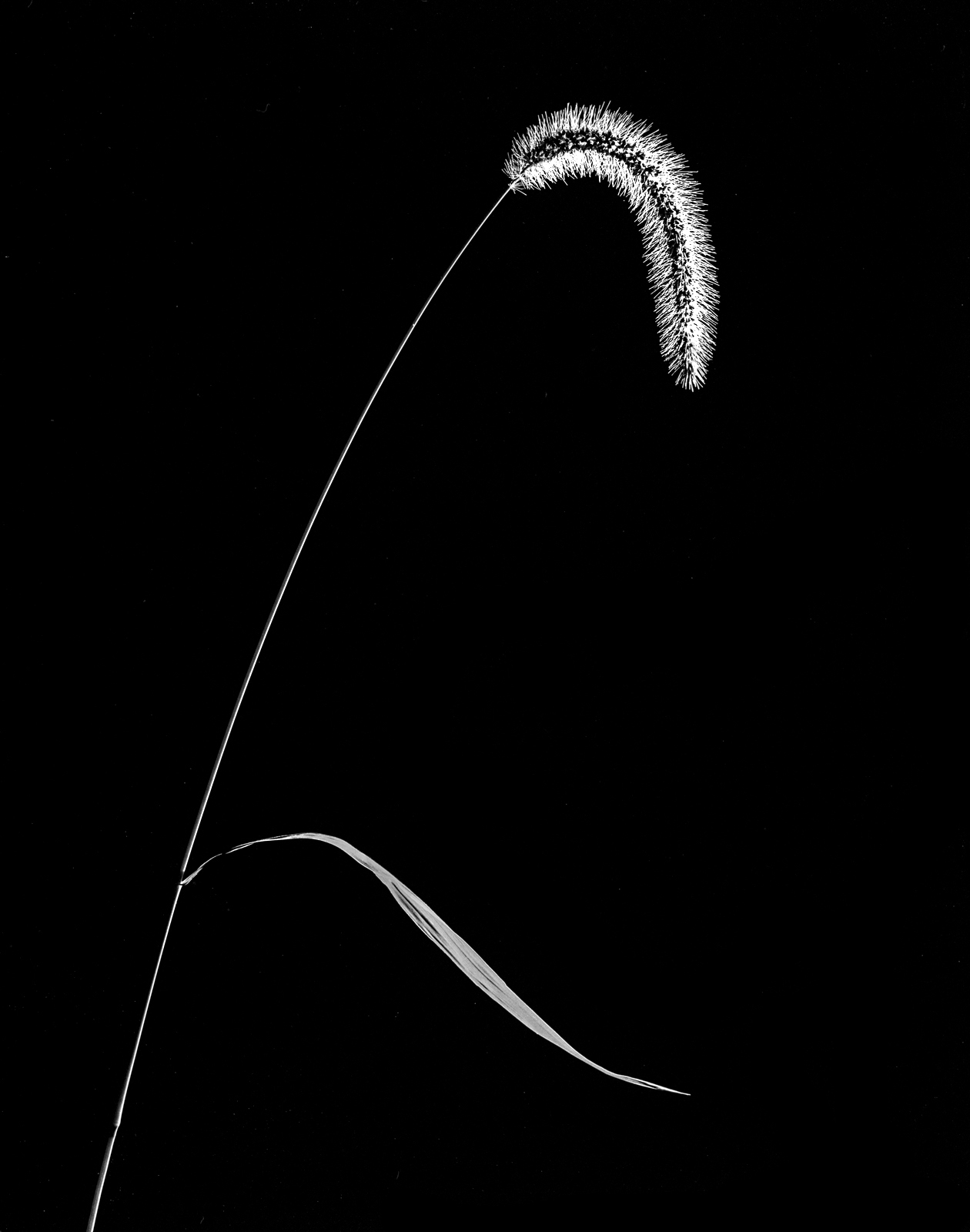
Bristle Grass (Setaria species)
I used to walk or drive by thousands of these and similar weeds every week. I barely noticed them, much less knew their names—until I singled this one out to photograph. A review of my catalog revealed that I had long been pointing a camera at patches of weeds. Around that time, I came across Ralph Waldo Emerson’s popular quote about a weed being “…a plant whose virtues have not yet been discovered.” That made sense, and I had some images to support it.
Going back to my roots in large format black and white film, I initiated a project to photograph individual weeds in my basement studio. Black and white film and controlled lighting helped to illuminate the virtues of these commonplace plants. By paying attention to them as individuals, I learned their names and gained an appreciation for their beauty, complexity and contribution to human well-being. Going forward in this post, I blend a description of each plant’s contribution to humanity along with some contemplations and quotes.
Beginning with bristle grass, its domesticated form—foxtail millet (Setaria italica)—was one of the world’s earliest grains, sustaining ancient civilizations in Asia, and serving as a resilient food source in dry, marginal lands. Today, both wild and cultivated varieties provide valuable forage for livestock and seed for birds. Their hardy growth helps prevent soil erosion and restore degraded ground. Beyond these features, bristle grass (Setaria) is a model plant in scientific research on photosynthesis, drought tolerance and crop improvement.
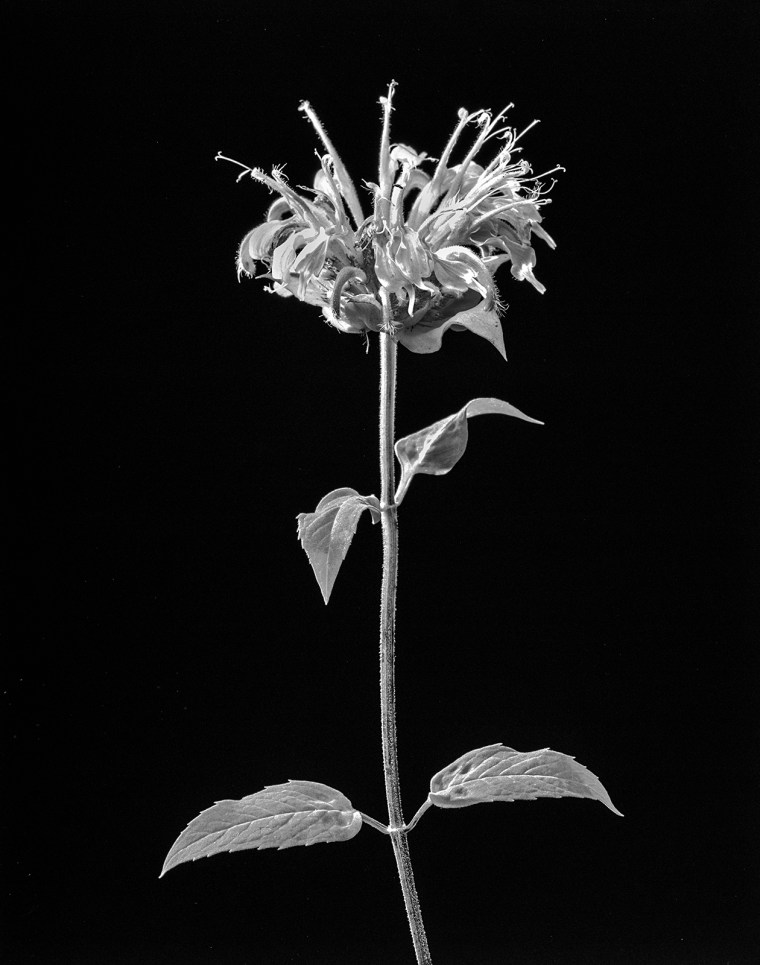
Milkweed
Indigenous peoples considered milkweed a source of medicine, food and fiber. It’s silky floss was used as insulation and later stuffed into life jackets during World War II. Ecologically, it’s indispensable as the sole host plant for monarch butterfly larvae and a rich nectar source for countless pollinators. Its deep roots help restore soils and prevent erosion, and its fibers and natural compounds are being studied for sustainable textiles, biofuels and medical uses. Far from being a nuisance, milkweed is a plant of nourishment, protection and renewal.
The process of photographing dozens of individual plants reminded me that we best discover the virtues of other people by getting to know them as individuals. Observing them in “clumps,” it’s easy to ignore, categorize, devalue or otherwise see them as a threat in some way, particularly when they’re different from us. Rather than considering plants or people as commonplace, peripheral to our interests or a nuisance, I remember that life has taken a particular form for good reason. And that makes all living beings unique, precious and beautiful.
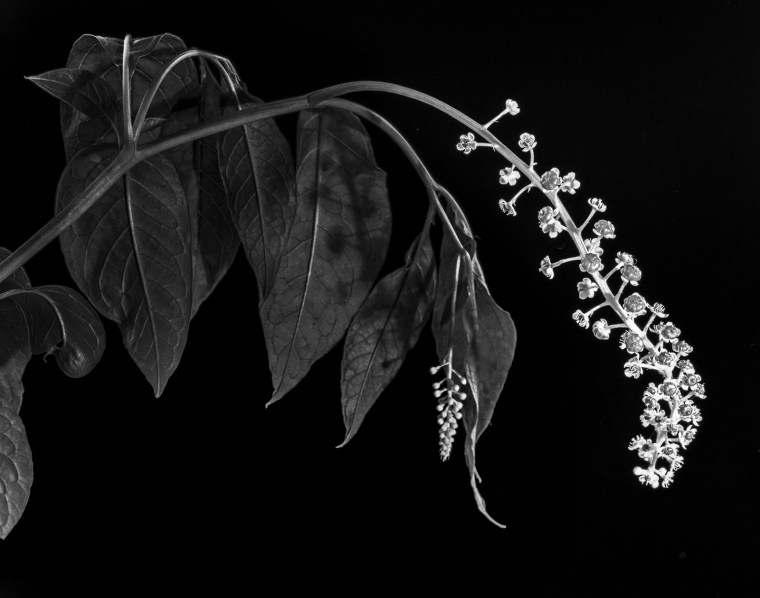
Pokeweed
Often feared as a poisonous nuisance, pokeweed has nevertheless played a notable role in human history. Native to North America, it was traditionally used by indigenous peoples and rural communities for medicine, dye and even food—its young shoots, carefully prepared, were eaten as “poke sallet,” a spring green of both nourishment and ritual. Its deep purple berries have long been used as a natural dye and ink, including in early American writing, and serve as food for birds and wildlife. Today, pokeweed is also studied for its antiviral and cancer-fighting compounds, showing promise in modern medicine. Though unruly and toxic if misused, pokeweed carries a legacy of resilience, healing and unexpected beauty.
I wonder, might the great American experiment in Democracy, be in fact the mechanism by which “we the people” shift our perception from separation and fear to unity and love? Are we Americans walking the path toward accepting others, respecting all human beings as they are and putting into practice—for ourselves and as a workable model for the rest of the world—the deep truth that “All men are created equal.”? If so, the challenge is not to revert to separation, censorship and consolidation but to put aside our smartphones and engage others individually, face-to-face, to build harmonious and collaborative relationships. After all, those we don’t know are also members of the global family, members whose virtues and diverse contributions we have yet to discover.

Burdock
Burdock, with its prickly burrs that cling stubbornly to clothing and fur, is often seen as a bothersome weed, yet it has given much to humans. Long used in traditional medicine across Europe and Asia, its roots and seeds were valued for purifying the blood, supporting digestion and treating skin ailments. In Japan, burdock root (gobo) remains a nutritious and popular food, rich in fiber and antioxidants. Its burrs inspired the invention of Velcro when a Swiss engineer studied its natural hook-and-loop design. The plant also provides nectar for pollinators and food for wildlife, reminding us that even the most tenacious weed can nourish, heal and spark human innovation.
If we are to direct evolution… we have to find an appropriate moral code to guide our choices. It should be a code that… specifies right as being the unfolding of the maximum individual potential joined with the achievement of the greatest social and environmental harmony.
Mihaly Csikszentmihalyi, Psychologist

Johnsongrass
Often cursed as one of the world’s worst invasive weeds, johnsongrass nonetheless carried unexpected gifts. Originally from the Mediterranean and introduced to the U.S. in the 1800s as a forage crop, it grows vigorously, offering abundant fodder for cattle when properly managed. Its deep roots help hold and enrich soils, and its fast growth can provide quick ground cover on eroded or disturbed land. Researchers have studied johnsongrass as a potential biofuel source, since it produces high biomass under poor conditions. Though it spreads aggressively and demands respect, this hardy grass embodies resilience and productivity, showing how even a troublesome plant can serve human and ecological needs.
Power rests in the conjunction of what the individual perceives of his own internal being, what he perceives in the world about him, and how he relates these perceptions to establish his relations with other human beings.
Richard Adams, English novelist, author of Watership Down.
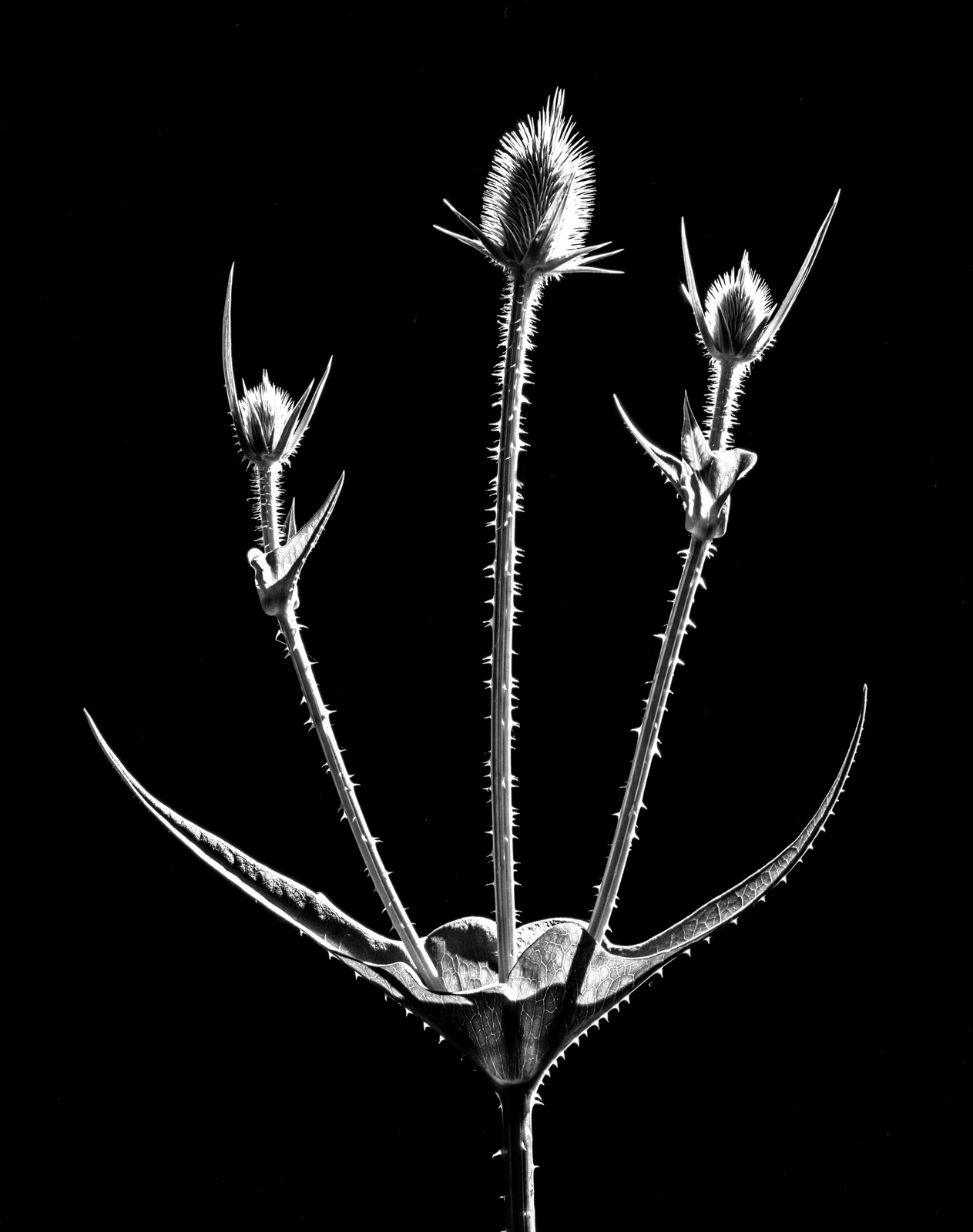
Teasel
With its spiny flower heads and tall, prickly stalks, teasel is often dismissed as a nuisance along roadsides and fields, yet it has served humans for centuries. In Europe, the dried seed heads were once indispensable in the textile industry, used to raise the nap on woolen cloth, giving fabrics their softness and sheen before metal tools were invented. Medicinally, teasel root has been valued in folk remedies, particularly in Chinese and European traditions, for supporting joints and circulation. Its striking flower heads are also beloved by pollinators, and in winter they feed finches and other birds with their seeds. Though bristly and unyielding in form, teasel has clothed, healed, and sustained both people and wildlife, proving its worth beyond its weedy reputation.
We must be whole to see whole. We must in a sense be beautiful to see beautiful. Art, at its most elevated is not so dependent upon skill as upon virtue. And virtue is preeminent dedication to a life of truth.
Richard Guggenheim, artist

Nettle
This plant stings the skin, so it’s often cursed as a plant to avoid—yet few weeds have served humans more generously. For millennia, nettle has been harvested as a highly nutritious spring green, rich in iron, protein and vitamins, often sustaining communities after long winters. Its fibers were spun into cordage and cloth in Europe long before flax and cotton, and its roots and leaves have been used in herbal medicine for inflammation, allergies and blood health. Nettle enriches soils with minerals drawn from its deep roots and provides food for butterflies and other insects. What seems at first a plant of pain is, in truth, a plant of nourishment, healing and strength—a reminder that life’s stings can conceal deep blessings.
While we and others occasionally experience barbs and stings, behind them are unique gifts and potentials which, if we choose, can be explored. Every living being, plant, animal and human expresses an outer form for reasons that are not always evident. What is known, however, is that each individual, as a member of a greater whole (species), is endowed with “life,” inner animated being. However simple or complex the form or consciousness, it emanates from the same Source. We may see it differently and call it by different names, but because we’re aware of our own inner experience we know it’s real and fundamental. Whenever and wherever we experience “clumps” of people, there’s much to be gained by engaging their members directly as individuals. The next time you observe a clump of weeds by the side of the road, remember—everything alive has a purpose.
____________________________________
For more such images check out my monograph: Weeds: God By The Side Of The Road. (Click on the book and expand the screen)
My other sites:
David L. Smith Photography Portfolio.com
Ancient Maya Cultural Traits.com: Weekly blog featuring the traits that made this civilization unique
Spiritual Visionaries.com: Access to 81 free videos on YouTube featuring thought leaders and events of the 1980s.
 Contemplative Photography
The photos are stunning
LikeLike
Thank you for the stunningly beautiful B&W bristle grass photos. And thank you for introducing me to Mihaly Csikzenthihalyi!
Paul Kennedy
LikeLike