
Chapter 8: Form
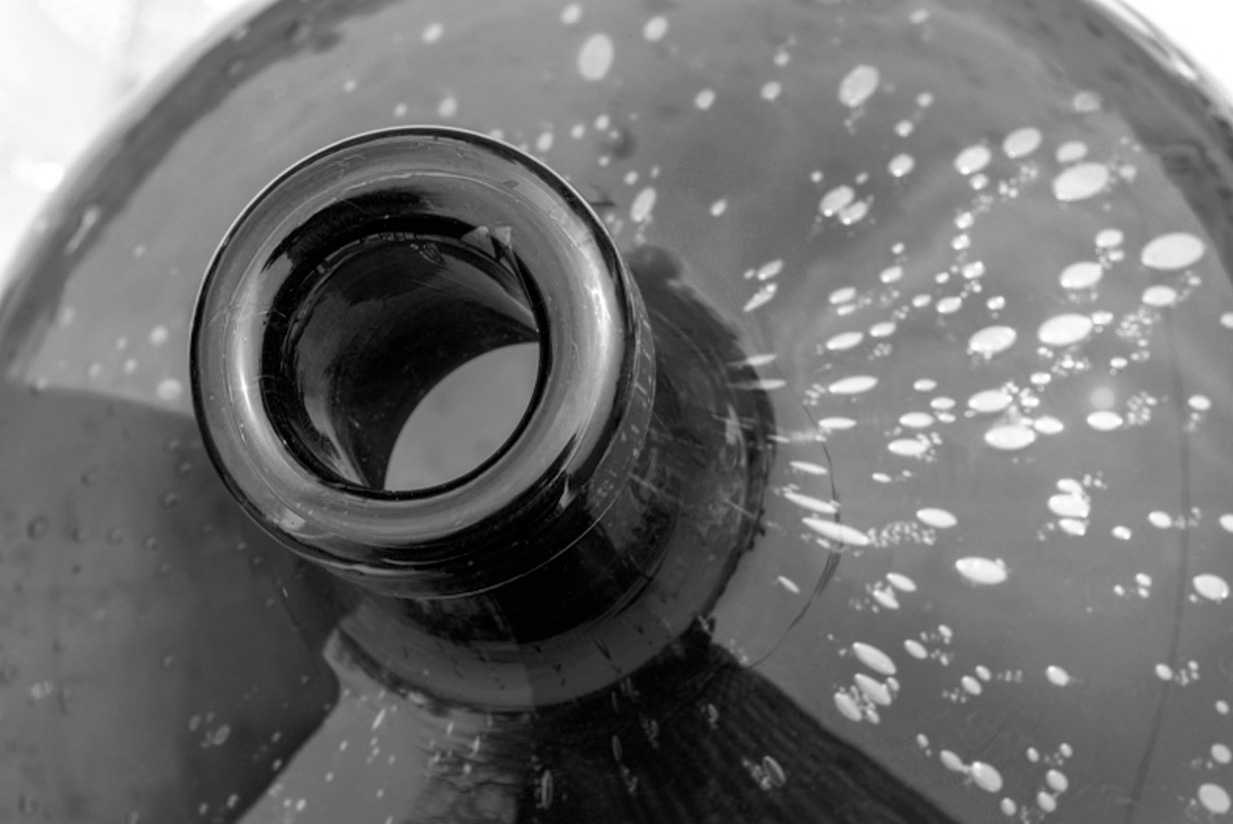
The shape of an object within a pictorial frame is two-dimensional. To emphasize its three-dimensions, artists use a variety of techniques to emphasize “form.” This can be “soft,” increasing a sense of presence, as if the viewer could feel the subject’s surface. Or “rigid,” angular or brittle, not inviting the sense of touch. While images in color represent forms beautifully, I’m illustrating in black and white because color tends to distract from the grays and gradations that make the sensibility of form and volume more apparent, especially on rounded and textured forms.
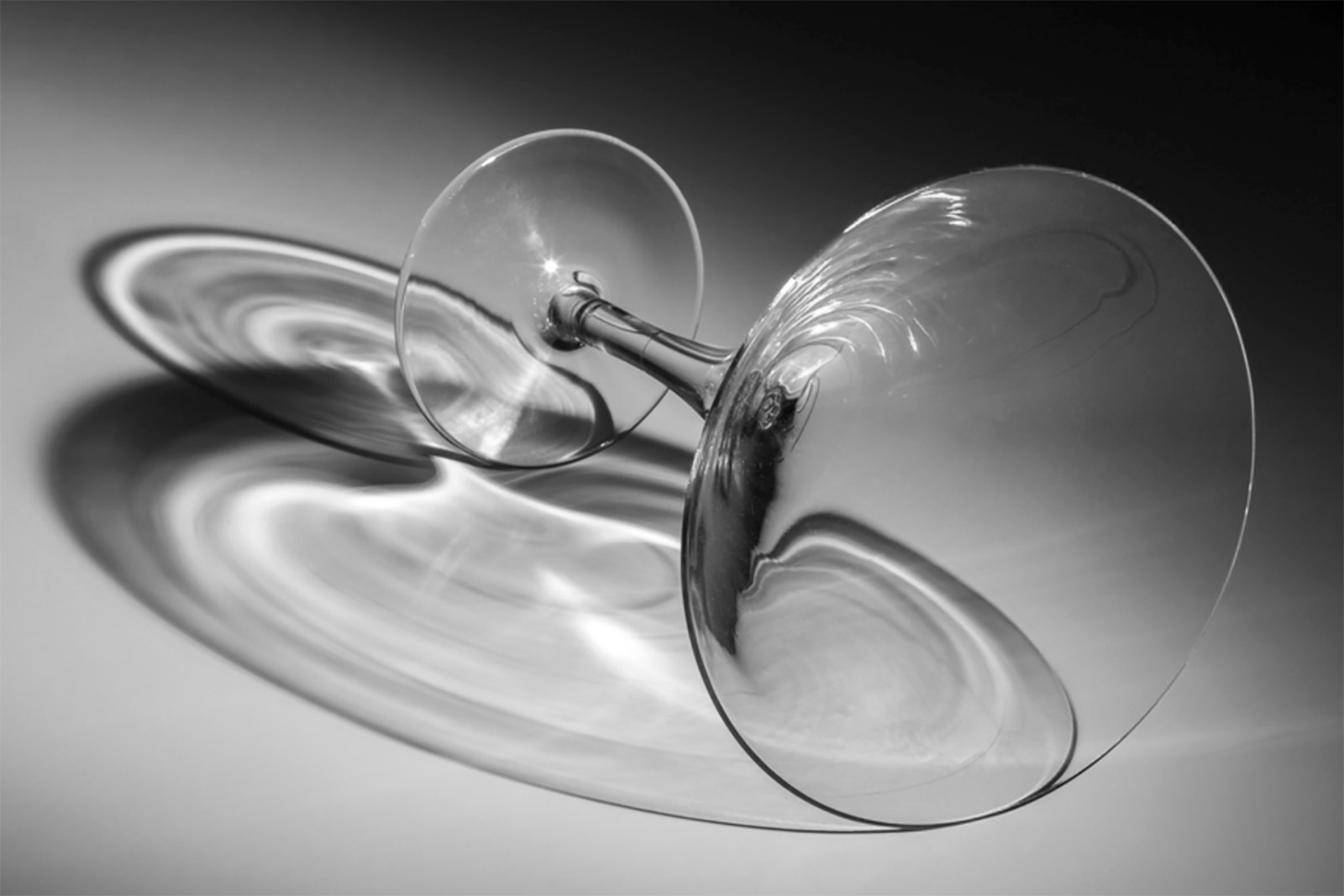
The jug and cocktail glass illustrate how forms evoke a certain feel. The former is soft and solid, the latter hard and delicate. Through lighting and composition, forms can lead the eye around the frame. Notice that the jug’s short depth of field grabs the eye and holds it on its thick mouth, where the glass repeats the sensibility of roundness in several places with long depth of field. There’s also a difference in volume suggested by the thickness of the jug compared to the thinness of the glass. I compare them here just to show how the different expressions of form create a sense of weight.
CREATIVE APPLICATION
Photographers use lighting, point of view (POV) and depth of field to accentuate the illusion of three dimensional subjects on paper, giving them a fuller, closer to reality, more tactile visual experience.
Lighting

Forms are enhanced when the light—diffuse or specular—comes from the side, raking or grading across a surface. It helps define a subject’s contours.
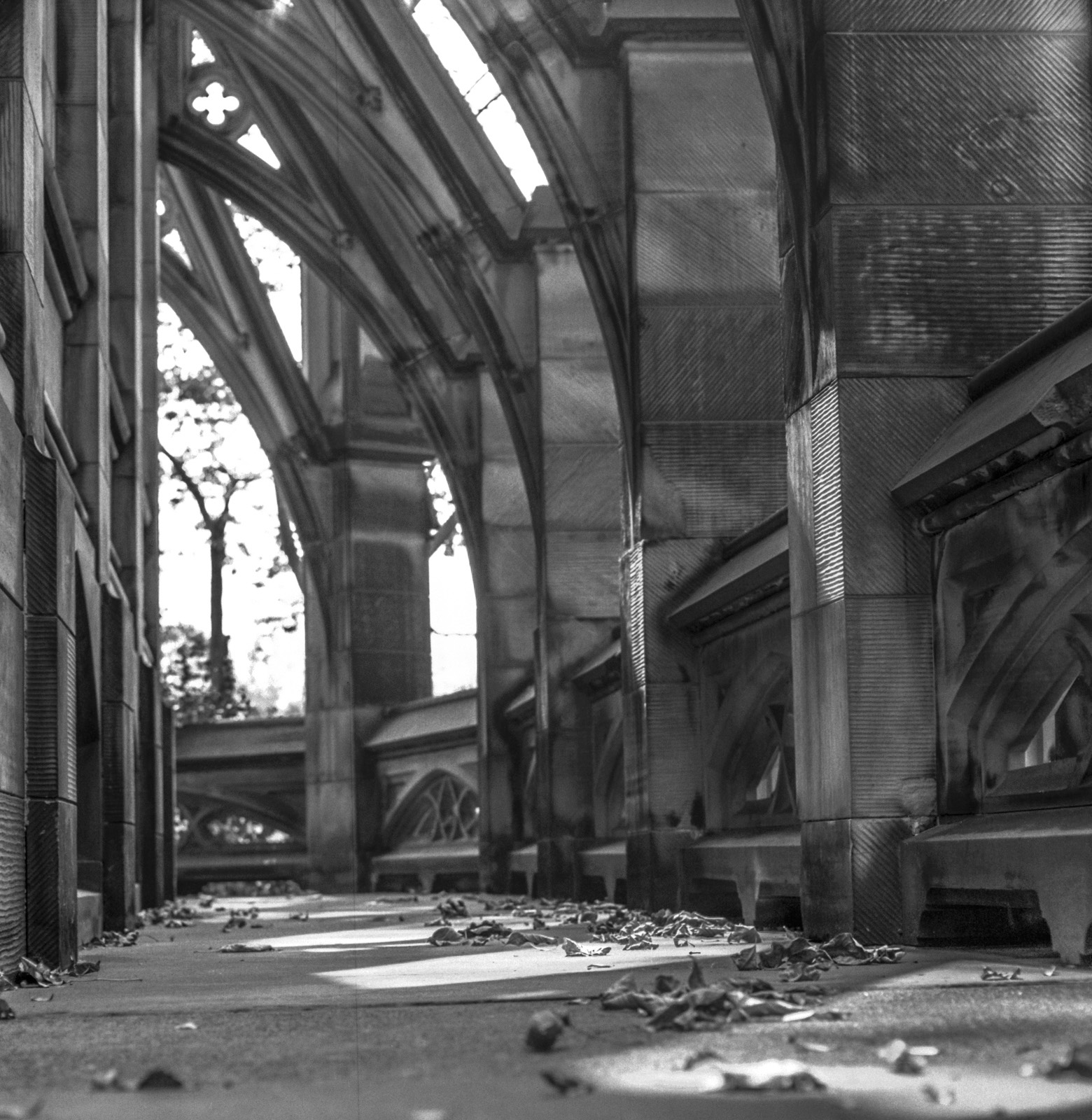
Outdoors, the angled light of “golden hour” (sunrise and sunset) enhances form with long shadows and high contrast.

Inside, low key lighting emphasizes form by creating gradations with highlights that attract the eye. The sensibility is soft and solemn. Edward Weston was a master of lighting and the use of a large format view camera. His photographs are sculptural, using deep shadows and careful lighting to reveal sensual, abstracted forms, particularly in natural objects and the human body. Check out and enlarge the titles “Shell 1927,” Pepper 1930,” “Cabbage Leaf, and “Church Door, Hornitos, 1940.” Notice how the lighting enhances these forms. Analyzing further, observe the direction and characteristics of the light source in these images. Is it specular or diffuse?

High-key lighting stresses the lines in a form through high contrast. It’s almost as if the lines were drawn. The mode is bright and energetic. Photographer Laura Letinsky plays with form, space and the aftermath of consumption in her high key images. Her themes include domesticity, ephemeralization and visual perception. And check out Platon. This renowned portrait photographer photographs world leaders and famous people against a white background, using high key “front” lighting. His images are stark and bold.
Point of View (POV)

Forms are enhanced when a subject is viewed from an angle that emphasizes its third dimension. Shooting from a low angle tends to make subjects (especially people) appear bigger, more powerful.
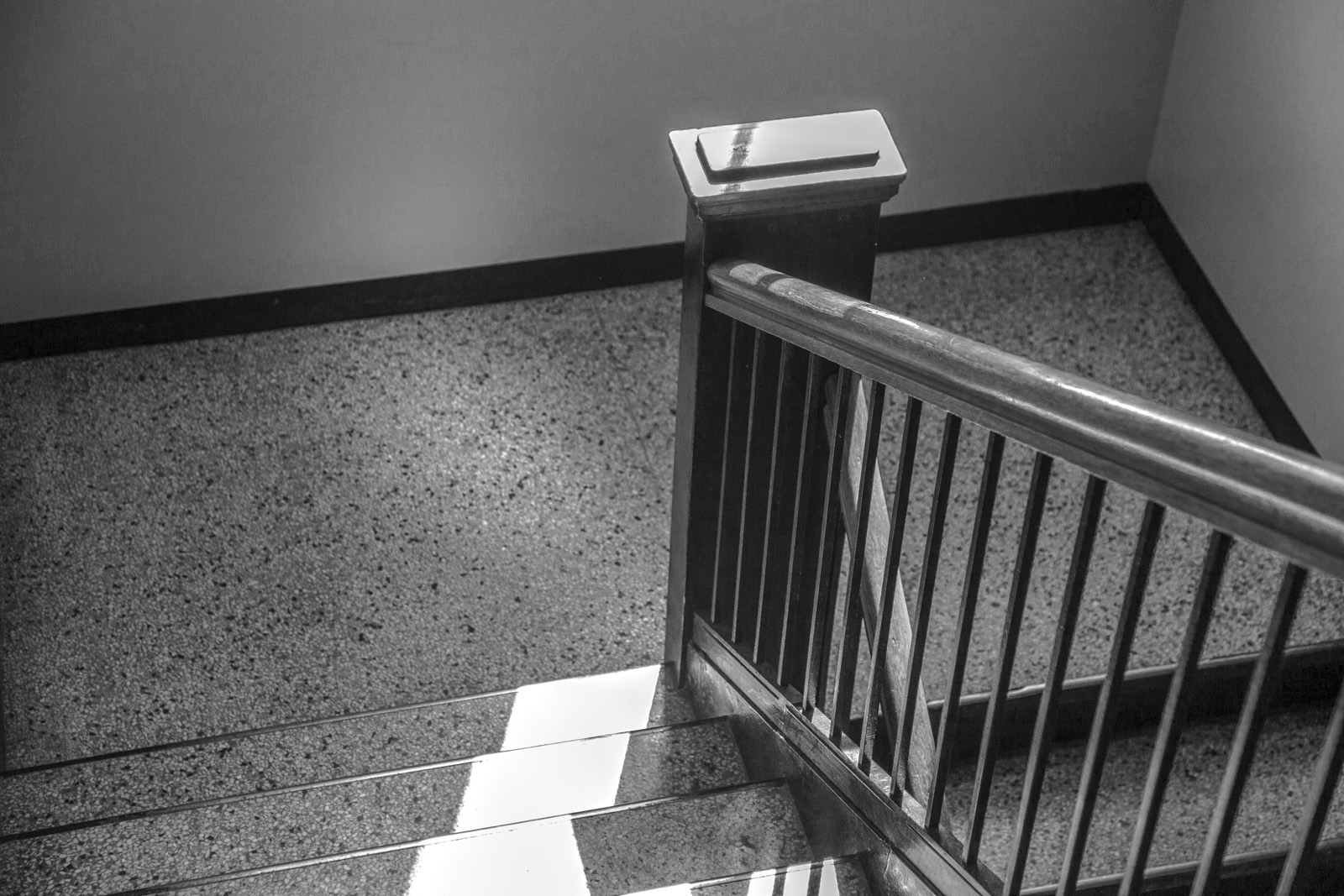
High angles, looking down, tend to flatten forms and diminish a subject. Wider aperture settings separate the dynamic center (foreground) from the background by reducing the depth of field. Photographic historians consider André Kertész to be one of the most important fine art photographers of the twentieth century. He famously said his objective was “to give meaning to everything.” With respect to point of view, he worked angles to emphasized form. My favorite photographs of his are “Budapest,” “Carrefour Blois,” “Chartres,” “Melancholic Tulip,” “Satiric Dancer” and “Chez Mondrian.” Enlarge to better appreciate.
Depth of Field

Form is enhanced when there are objects in front of or behind the primary subject. The relationship of one element to another contributes to a sense of depth in a two-dimensional medium, particularly when they overlap.

Form is always enhanced with rounded subjects. Shallow or narrow depth of field compels us to focus our attention on the foreground elements, the point of critical focus. Russian photographer Elena Shumilova uses shallow depth of field to blur colorful backgrounds and foregrounds to create a soft, dreamlike effect. Her collection features several images in each of the four seasons. Beautiful work!

Different levels of tonality, particularly on rounded forms that are sharp from foreground to background, contribute to a sense of depth. Take a look at images made by Alma Lavenson, an American photographer and member of Group f64 West Coast photographers in the 1930’s oriented toward sharp, detailed, and highly focused images. They rejected the soft-focus, painterly style of pictorialism. The name refers to the smallest aperture (f/64) on large-format cameras, which allowed for maximum depth of field and crisp detail throughout the image. Other members of Group f64 included Ansel Adams, Edward Weston and Imogen Cunningham.
CONTEMPLATING “FORM” IN ANOTHER CONTEXT
A painting or photograph emphasizes form, the quality of presence, when the subject matter is represented in three dimensions. The number “three” in dimensions of reality, applies to human beings and everything we experience in the world. As persons we are multidimensional. For instance, we have three modes of being—physical, mental and spiritual; body, mind, and spirit.
Parsing it further, according to Lajos Egri in The Art of Dramatic Writing, there are three dimensions that contribute to the revelation of character—physiology, which considers how a person’s body helps or hinders them in the pursuit of a goal, psychology that reveals a person’s thinking, and sociology, the socioeconomic and cultural aspects relating to status. According to Egri, these traits should provide a fiction writer with the information needed to develop a well-rounded, “multi-dimensional” character. The same in photography—well-rounded forms express a subject’s dimensions.
Larry Brooks, an author, speaker and coach in the art of storytelling, provides a model for introspection—how we see ourselves and others, and how others see us—by describing three “realms” of character. His first dimension, the “exterior landscape” of character, consists of “surface traits, quirks, and habits,” the personality we present to the world. His second dimension, the “interior landscape,” consists of “backstory and inner demons”—where we come from, our scars, memories, dashed dreams and resentments including our fears, habits and weaknesses, the things we prefer to hide from others. And yet he says, this is precisely what readers want and need to know because it helps them understand and empathize with the lead character.
Empathy is the great empowerer of stories. The more of it the reader feels, the more they’ll invest themselves in the reading experience.
Larry Brooks, bestselling author of six thrillers
Brooks’ third dimension of character is “action, behavior, and world view.” We take a stand, take risks, make decisions, dive in and execute. We go for what we want or need, follow our urges, seek answers to questions and create what we can imagine. And in the process of reaching for goals, we reveal what we’re made of—character in the sense of moral substance, or lack of it.
What we do and how we behave are a consequence of consciousness—who we think we are and how we perceive the world. Combined, how we think reveals our point of view—and vice versa. A gun, for instance, can variously be conceived as a threat, an object of art, or a deterrent to crime. And a border wall can be perceived as a solution to a problem, a challenge to be surmounted, an unnecessary expense or a symbol contrary to national values.
According to Larry Brooks, the art of developing a strong, empathetic character in a story is a matter of integrating inner, outer and expressive characteristics. I would suggest that the art of developing the fullness of personhood in real life involves the integration and effective management of our physical, mental and spiritual aspects—perceived as ever-evolving potentialities. As the British would say, “Personal growth is good form.”

Joy is the feeling that comes from the fulfillment of one’s potential.
William Schutz, social psychologist
 Contemplative Photography