
The Aesthetic Experience
Philosophers since Plato have sought to define and describe the aesthetic experience. Among them there’s agreement that it’s a capacity unique to human beings, a contributor to well-being and different for each individual, but there’s no consensus on what it is in essence.
This is understandable because the word “aesthetic” is an abstraction that refers to something ineffable, a non-physical phenomenon like “beauty,” “truth” and “goodness.” We only know it through cognitive and emotional experience. But just as we don’t need to say how a computer works to use it effectively, we can discover and utilize our aesthetic preferences without knowing what it is exactly.
One thing for certain, aesthetic experience has to do with how something looks and feels; it relates to beauty and taste, and is a central feature in creative expression, especially in considering or producing works of art.
Philosopher Immanuel Kant argued that, because aesthetics is a matter of judgment, only rational beings can experience it. “Rational beings need aesthetic experience, are significantly incomplete without it…” It “stands in fundamental proximity to moral judgment and is integral to our nature as moral beings.” After years of studying well-balanced and thriving individuals, psychologist Abraham Maslow ranked “aesthetics” high on his hierarchical pyramid of human needs — above physiological, safety, belonging, self-esteem and cognitive needs. In his scheme, “higher” needs don’t generally become active until the lower ones are being met.
Humans need beautiful imagery or something new and aesthetically pleasing to continue up towards Self-Actualization. Humans need to refresh themselves in the presence and beauty of nature while carefully absorbing and observing their surroundings to extract the beauty that the world has to offer. This need is a higher level need to relate in a beautiful way with the environment, and leads to the beautiful feeling of intimacy with nature and everything beautiful.
Abraham Maslow
Eric Booth, author of The Everyday Work of Art: Awakening the Extraordinary in Your Daily Life wrote that aesthetic experience consists in
- Noticing well
- Attunement to what attracts you so you find relevance everywhere
- Authentic response
- Making strong & flexible personal connections
- Attention to impulses
- The feeling of natural curiosity
- Asking good questions
- Making informed choices & seeing the consequences
To this list I would add “believing ourselves to be creative,” owning it as a natural and unique inheritance, free from the opinions or expectations of others. I would also emphasize Booth’s second item—“attunement”—because, along with joy, it’s how the soul informs us about its needs. In my experience, when an aesthetic hunger is satisfied, feelings of joy, awe, reverence or peace of mind, even the feeling of being able to breathe better, accompany it. In effect, the soul is saying, “Thanks, I needed that! More please.”
Some people say they aren’t creative. Others say “I’m logical, not artistic.” And we’ve heard the excuses: “I took an art class but didn’t keep it up.” “I used to draw but… (life happened).” Most young people emerge from high school thinking that art—creative activity—is something to do on the side, perhaps later in life, because the career opportunities are few and low-paying. It’s the unique school that stresses creativity and integrates it in the curriculum.
I see “artistic expression” and “being creative” as subsets of the aesthetic experience—how we see each other, the world and the cosmos. Understandably, not everyone can or wants to produce works of art. But everyone has an aesthetic. According to Szabolcs Keri of the National Institute of Psychiatry and Addictions in Budapest, we are born with the capacity to make judgments about how things look, and have preferences in the way they are arranged or displayed.
Creativity is related to the connectivity of large-scale brain networks. How brain areas talk to each other is critical when it comes to originality, fluency and flexibility. In highly creative individuals this connectivity is thought to be especially widespread in the brain, which may be down to genes that play a role in the development of pathways between different areas.
Szabolcs Keri, Professor of Cognitive Science
“Highly” creative people tend to express themselves through some art form, but everyone with an intact brain continuously exercises their aesthetic preferences. The music we make and choose, the foods we prepare, furniture we arrange and objects we purchase all require judgments based on preferences. This dress for the photograph, not that one. A wood desk for my office, not a glass and chrome one. Most everything, including our lives, are acts of creation. We are all, self-creators and co-creators.
Culture itself is an ongoing creative process, as are the many components that give it substance and character. I think of the Japanese who centuries ago turned the commonplace act of making tea into a high art. It’s an example of how special treatment, focused attention and contemplation beyond utility, can transform the ordinary into the extraordinary.
The Zen aesthetic shows us that all things are perfectly complete, just as they are. Nothing is lacking. Each one of us is already an artist, whether are we realize it or not. In fact, it doesn’t matter whether we realize it—this truth of perfection is still there. Engaging the creative process is a way of getting in touch with this truth, and to let it function in all areas of our lives.
John Daido Loori, author The Zen of Creativity: Cultivating Your Artistic Life
For me, the aesthetic experience is an energy, an impulse or urge, that both seeks and finds resonance in and attunement to the expression of Source, which in part is the physical universe. Said another way, it’s a “pull” of the heart to understand the Divine manifesting in the world, as the world.

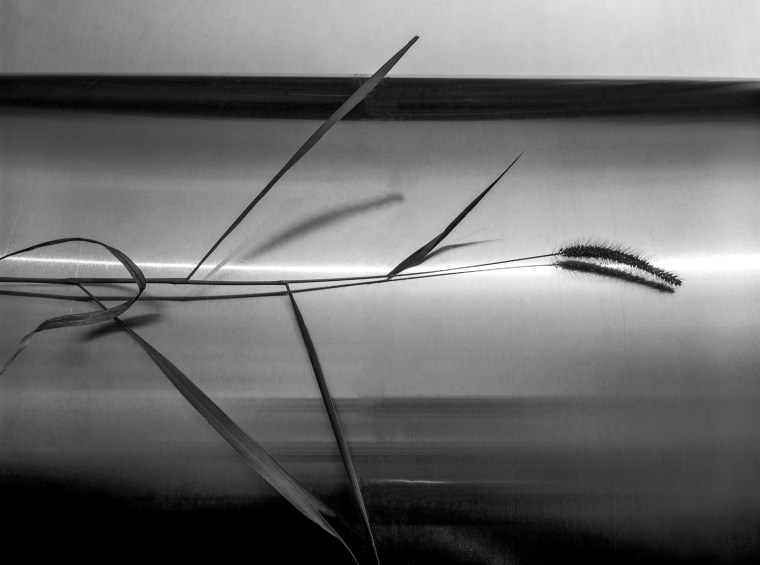
It took some time to see, but when my photographs revealed the pattern of my aesthetic preferences—simplicity, exquisite light, geometry, gradation—I began to look for them and their combination in the natural world, to focus on them. I continued to work with other dimensions, including color, composition, form, contrast and texture, but was always on the lookout for the dominant four. Because that’s where the joy was in the final print. Finding it challenging to find them with some frequency out in the world, I created setups at home where I could optimize my preferences.
Whatever your creative context, whether making a house a home, constructing a music playlist, a Zoom party, reading, writing, cooking, painting or photographing notice the pattern of your preferences, the elements that give you the most joy. Write them down. It’s your soul asking for more. Continuing, acting authentically in this way, we not only make a difference for ourselves, we make a contribution to the world—which doesn’t need another work of art. What it does need is individuals acting authentically from soul, expressing their unique figts.
To look at a thing is very different from seeing a thing. One does not see anything until one sees its beauty.
Oscar Wilde
Recommended Practice
COMPOSITION
- To develop your aesthetic “eye,” (seeing as if through new eyes) I can’t overestimate the value of continuously looking at the world—wide and close up—through a frame, any frame, a camera, smartphone or putting the forefingers of both hands together to make a frame. Get in the habit of composing. I recommend a tripod, but that’s not necessary. You’re not making good images here, just using a frame to organize visual elements within it. Don’t consider subject matter at all. Distracted from watching television or waiting in a line? Look away and compose. A stapler? Someone’s shoes? A cloud? Stop sign? Don’t name things. Move the frame up and down and all around to organize the lines, shapes, forms, brightnesses and shadows so they’re pleasing to your eye. When you’re satisfied, snap the picture if you like. Analyze them before you delete them. Does the composition work? Why? Why not? Are there elements that distract from the “dynamic center,” the point of critical focus—wherever it’s located? The more often you do this, the quicker you’ll develop your ability to compose elements within a frame that matter to you.
- Check out this blog post: Artistic Photography Explained: What it is and How to Use it? I like it because the author uses her photographs to illustrate many of the “aesthetic dimensions” that come next in this series.
- Also I recommend the book: Pictorial Composition (Composition in Art) (Dover Art Instruction) by Henri Rankin Poore. You might find it in your public library. He uses the works of painting masters (Cézanne, Hopper, etc.) to illustrate some of the aesthetic dimensions that that painters used.
AESTHETIC DEVELOPMENT
Begin to notice the consistent patterns in your work, especially the aesthetic qualities that trigger a “Nice” or “Wow!” in you.
 Contemplative Photography