
What we see depends on where we stand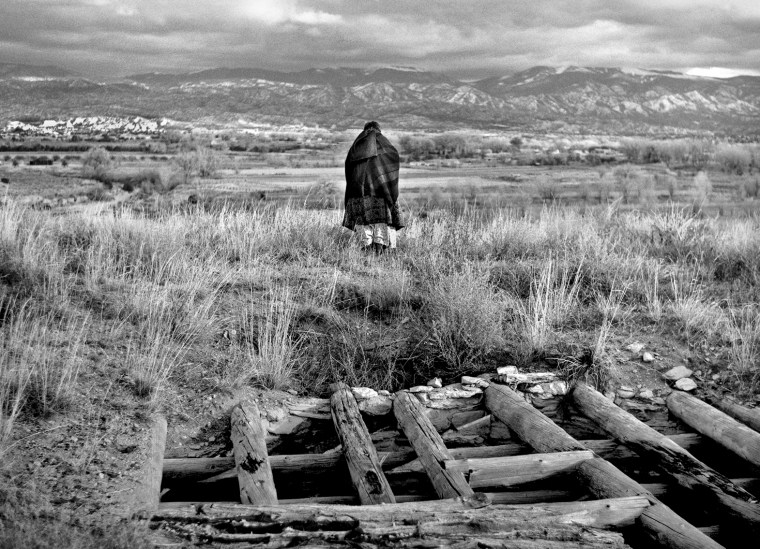

In a film script, Point of View (POV) can indicate the camera position or the viewpoint of a character. In a screening of an episode of “24,” the TV series featuring Kiefer Sutherland, the President of the United States and the Vice-president vehemently disagreed on whether or not to retaliate with a nuclear strike against a middle-eastern nation for a nuclear attack on Los Angeles.
The president wanted to wait for proof that the enemy was a particular nation, but the vice-president was eager to strike back immediately as a show of strength, saying he had enough proof. We viewers knew the truth, that terrorists from two other countries were behind the bombing, so we were pleased when Jack Bauer overcame the terrorists and secured the bombs at the last moment. After watching this drama unfold, it was abundantly clear that a simple but profound characteristic of human consciousness made a monumental difference: one’s point of view.
What we see depends on where we stand—literally and figuratively. And we act according to what we see. To a man barely surviving due to circumstances beyond his control, a social welfare program can be a matter of life or death. To a rich man the same program may seem like an unnecessary tax burden. In thinking about this, I realized that no two human beings see through the same eyes. No matter how close or related we are to one another, we each see the world from a unique point of view. And we don’t share identical interpretations of what we see.
For instance in this image you may see a pensive, elderly Native American woman, but because I knew her, I see a young and vibrant white woman who played the piano like a rock musician in her modern, upscale house. A primary factor that makes a great difference in perception is information. The more information we have and share, the closer we can come to agreeing upon what we see. For instance, the husband of the woman pictured above had a much more accurate perception of his wife. Then too, can anyone really know the truth of another person? Do we even know ourselves that well? Even the perception of myself is a point of view, an opinion that’s constantly changing. I’m not the person I was yesterday.
Our point of view develops when we first open our eyes. And due to the circumstances of life—age, ethnicity, geography, relationships, education, experiences, values and so on—we construct a gestalt, a “world view,” that is foundational to our personal reality, the truth of how things are for us to us. Curiously, the tendency is to think that our gestalt is better or more accurate than that of most people.
A related phenomenon that’s a consequence of our point of view, is the way we reach out to verify the truth and shy away from anyone or anything that’s in conflict with how we see things. And there are degrees of this. For instance I read science books by authors who don’t believe in God or an afterlife. I continue with these books, in spite of my beliefs to the contrary, because I appreciate the scientific method. On the other hand, if an author writing about quantum physics kept beating the drum to prove his anti-spiritual point of view so vehemently I would have put the book down, not because of the difference in our world views, but because he kept using physics to discredit my belief. I can appreciate an author who states his or her personal perspective; it helps me to know where they stand. But for me, proselytizing goes too far.
Point of view is a fascinating aspect of human consciousness. We’ll defend it to the death—as if it’s The Truth, rather than a personal truth, which is dynamic, ever changing. Dictators and politicians of every stripe rationalize war, even crimes against humanity, with the conviction that their side (point of view) must prevail. The domination paradigm is the ultimate statement of self-centeredness and ignorance—not understanding that living systems grow and thrive as a whole as a consequence of harmonious relationships within and beyond the bounds of leadership. I say “ignorance,” because violence, whatever the circumstance or motivation, only generates more violence.
Evolution is a bottom up process, like a pyramid. The same is true of social and biological systems. When a multitude of cells—figuratively at the bottom of the pyramid—are functioning in balance and and coherence, they support the superstructure. On the other hand, when a cell or group of them become greedy or go “rogue,” looking out for themselves believing their truth is the truth and their method must prevail, the inevitable result is systemic breakdown. Science has shown that evolution does not favor the fittest. It builds on individuals and groups that adapt to changing conditions.
In these days of political division and uncertainty, I am heartened by those who work with the light of intelligence and wisdom, for instance journalists and comedians who reveal untruth, factual inaccuracies, disinformation, false news, deceptions, ignorance and greed. They perform a healing service for the social body simply by identifying the cells that are causing breakdowns, helping us to understand points of view—perspectives—that are toxic for the body—so we can adjust to change appropriate to its health and well-being.
The most fatal illusion is the settled point of view. Since life is growth and motion, a fixed point of view kills anybody who has one.
Brooks Atkinson, American theatre critic
_____________________________________
My other sites—
Love And Light greetings.com: A twice-weekly blog featuring wisdom quotes and perspectives in science and spirituality intended to inspire and empower
David L. Smith Photography Portfolio.com: Black and white and color photography
Ancient Maya Cultural Traits.com: Weekly blog featuring the traits that made this civilization unique
 Contemplative Photography