
A gift freely given
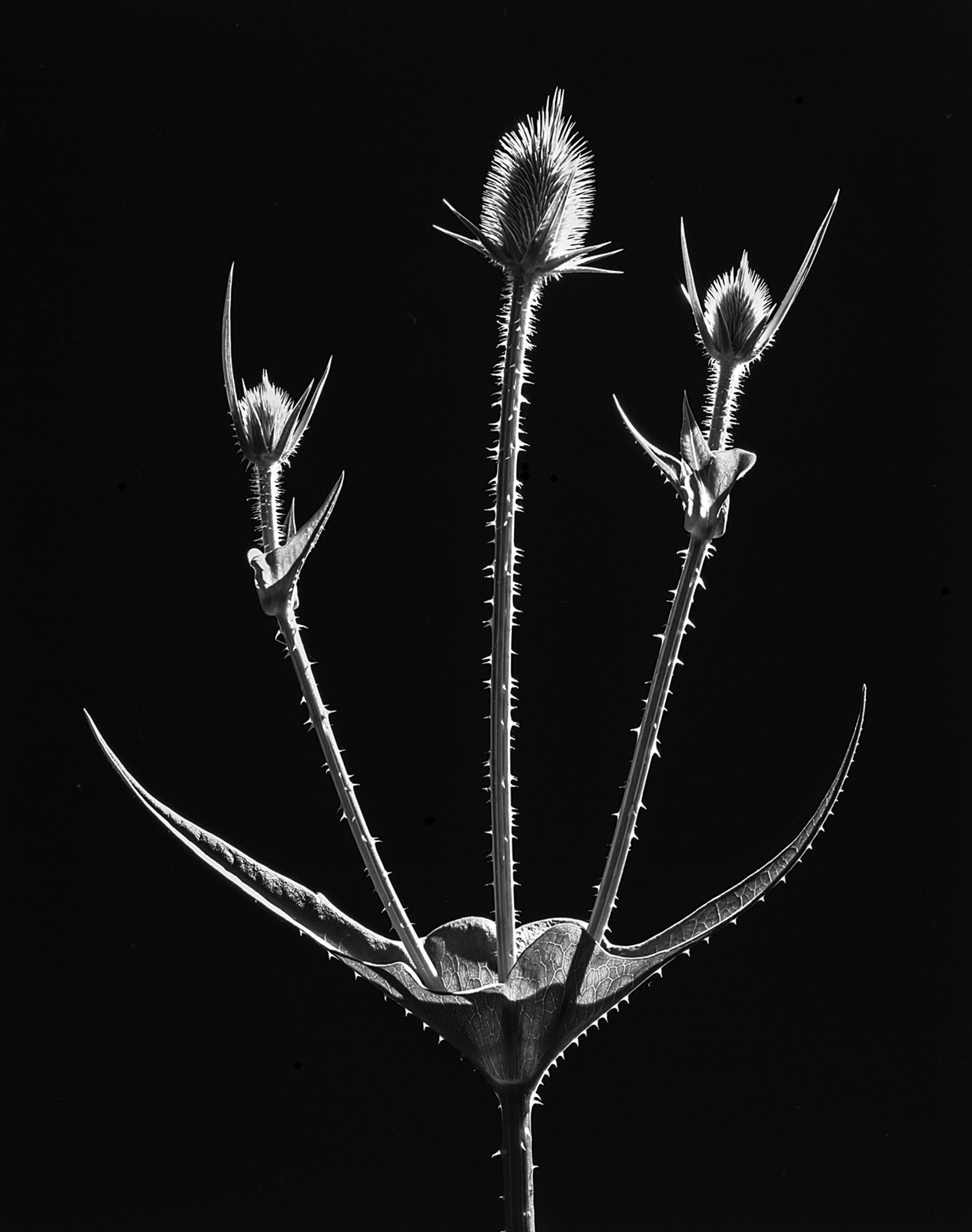
Oddly enough, the word that came to mind when I came across this image was “grace.” Considering the thorns and this subject being no longer living, I wondered why. I think it lies in the composition, the uplifted “arms” that seem to “praise” the thistles; the buds on each side have their arms raised as well, the totality expressing receptivity.
In grade school the nuns taught us that “grace” was a spiritual benefit, a freely given gift from God as sort of a step toward what they said was “redemption,” what I would call realization. What I remember about grace was that it was neither deserved nor earned. Given that, I think that everything that comes our way that lifts us up is such a gift, whether it be a dried thistle, rain, a pet, five-way chili, brisk walk or a good book. Come to think of it, it’s all a gift. Even the disagreeable and disastrous, suffering and cruelty—one way or another, it’s all the gift of being, choosing, doing, challenge and learning.
And part of learning, I think, is seeing the thorns—in life as in nature—not just as ways to get stuck, but as one of nature’s ways of insuring growth and evolution. I also think it’s the artist in all of us to see thorny structures as beautiful. Arguably the greatest gift aside from Being, is being able to see beyond and within.
You can have the other words—chance, luck, coincidence, serendipity. I’ll take grace. I don’t know what it is exactly, but I’ll take it.
Mary Oliver, Poet
You in the very immediateness of your present awareness, are in fact the entire world, in all its frost and fever, in all its glories and its grace, in all its triumphs and its tears. You do not see the sun, you are the sun; you do not hear the rain, you are the rain; you do not feel the earth, you are the earth.
Ken Wilber, American philosopher, writer on transpersonal psychology and integral theory
 Contemplative Photography